Japan doesn’t shut down for a week over New Year, but January 1 is a day worth planning around.
Convenience stores, shrines, and some shopping facilities stay open, while department stores, museums, and most independent restaurants close.
Here’s what’s open between December 28, 2026 and January 4, 2027, and how our family actually spends the holiday.

- Is Japan Really Closed Over New Year? The Short Answer
- The 2026–2027 New Year Calendar: Which Day Is the Real Problem
- What’s Open on January 1 (and What Our Family Actually Uses)
- Department Stores, Malls & Museums: When They Reopen
- Eating Over New Year: Toshikoshi Soba, Osechi, and Where You’ll Really Eat on Jan 1
- Cash, ATMs & Banks This Week
- Trains: The Rush Days to Avoid, Shinkansen Reservations, and the All-Night Trains on Dec 31
- Hatsumode for First-Timers: Meiji Jingu vs. a Neighborhood Shrine
- New Year’s Eve in Japan: Bells, Countdowns, and USJ
- Fukubukuro & Hatsuuri: The Once-a-Year Sales That Start Jan 1–3
- Tokyo, Kyoto or Osaka for New Year? Where to Be on Which Day
- Hotels: Why Dec 30–Jan 2 Costs the Most, and What’s Still Bookable
- It’s Cold: Layers and Kairo in One Paragraph
- A Sample Dec 31–Jan 2 Plan for a Family + FAQ
Is Japan Really Closed Over New Year? The Short Answer
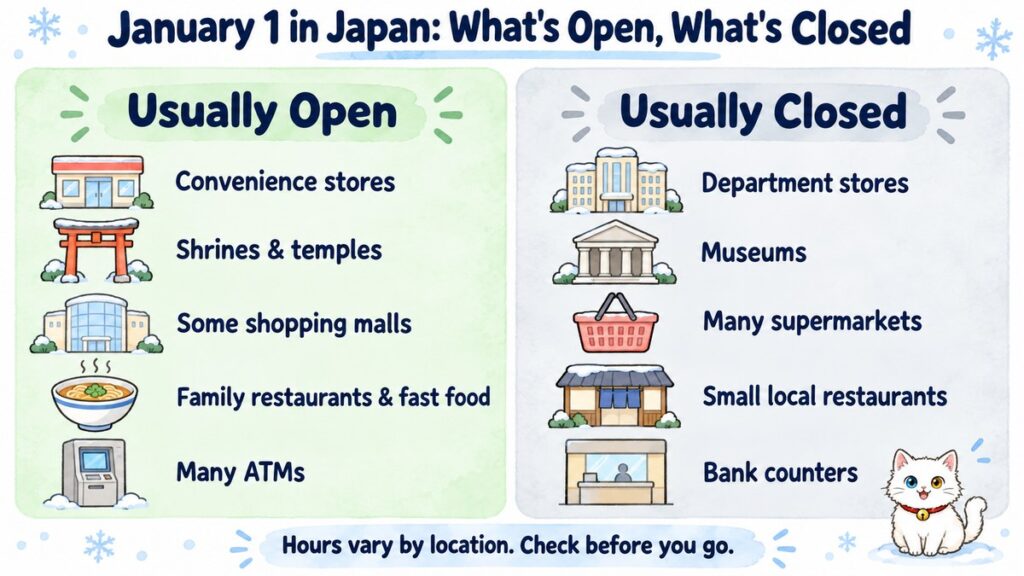
Your Japan trip doesn’t have to stop just because New Year’s Day falls in the middle of it. January 1 is the main day to plan around, as many shops and attractions close, while December 31 brings early closing times. You can still enjoy Japan from December 28–30 and January 2–4, although individual businesses may have holiday schedules.
The trick is to plan one quieter day rather than rearrange your entire trip.
Disclosure: This article contains affiliate links. If you book through one, I may earn a small commission at no extra cost to you.
Quick Answer: Three Things to Decide Before You Go
| What to plan | What you need to know |
|---|---|
| 1. Your hotel | December 30–January 2 is a high-demand period. Compare your dates with January 3 onward before booking. Compare Tokyo hotels on Agoda. |
| 2. Your Shinkansen seats | Reserved seats generally go on sale at 10 a.m. one month before travel. See Is the JR Pass Worth It?. |
| 3. Your January 1 plans | Choose places with confirmed holiday opening hours. Convenience stores, selected restaurants, shrines, and some shopping facilities give you options. See the January 1 section below. |
If you’re traveling with children, I’d start with a hotel that makes January 1 easy. A convenient location and somewhere to eat nearby can be more useful than an ambitious sightseeing schedule.
The 2026–2027 New Year Calendar: Which Day Is the Real Problem
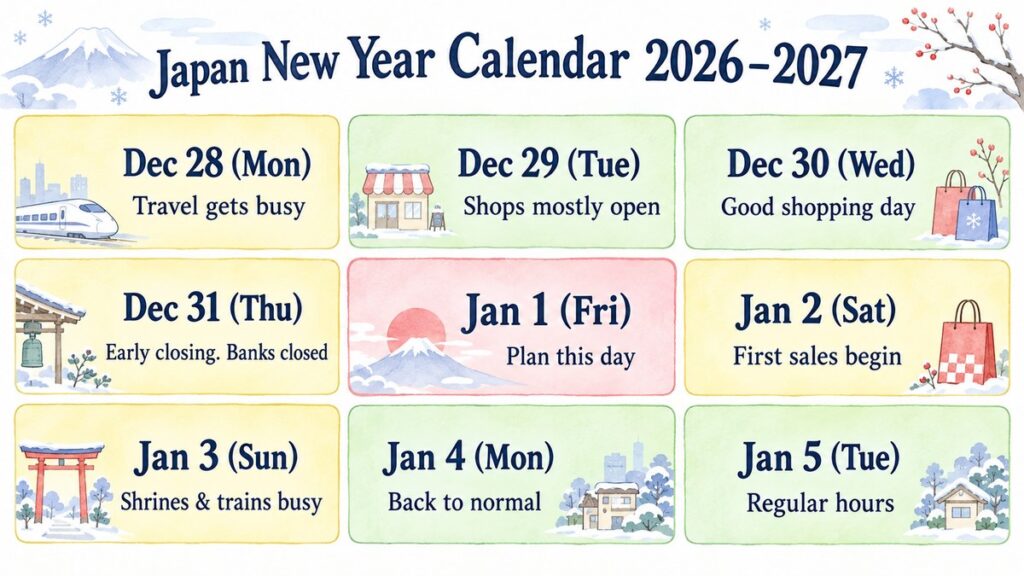
January 1 is the day that needs the most planning, but December 31 deserves almost as much attention if you want to eat out or shop. Here’s what to expect from December 28, 2026, through January 5, 2027.
| Date | What to expect |
|---|---|
| Dec 28 (Mon) | Many businesses are open, but holiday travel is getting busier. Check individual attractions and book long-distance trains. |
| Dec 29 (Tue) | Shops and restaurants are generally available, although some public facilities and museums may already be closed. |
| Dec 30 (Wed) | A useful day for shopping and sightseeing. Bank branches are generally open on weekdays, but some other services may have started their holidays. |
| Dec 31 (Thu) | New Year’s Eve. Many restaurants, shops, and attractions close early or remain closed. Bank branches are closed. Finish shopping and arrange dinner early. |
| Jan 1 (Fri) | New Year’s Day. Many supermarkets, department stores, museums, and independent restaurants are closed. Convenience stores, selected chains, shrines, and some shopping facilities remain available. |
| Jan 2 (Sat) | Many major stores reopen for their first sales of the year. Some museums and attractions also reopen, but holiday hours may apply. |
| Jan 3 (Sun) | More shops reopen. Popular shrines and long-distance trains can still be crowded. |
| Jan 4 (Mon) | Many businesses return to their regular schedules, while some attractions remain closed. |
| Jan 5 (Tue) | Regular weekday routines have largely resumed, although individual facilities may have extended holiday closures. |
I’ve had an experience where restaurants were already closed on New Year’s Eve and I couldn’t eat out. If your family wants a particular restaurant, check its holiday hours and book a table if possible. Otherwise, arrange something to eat before the afternoon is over.
What’s Open on January 1 (and What Our Family Actually Uses)
You won’t be left without food or basic supplies on January 1. The important thing is to know which businesses are likely to stay open instead of assuming every store follows its regular schedule.
Japan’s three major convenience store chains—7-Eleven, FamilyMart, and Lawson—have many locations that operate around the clock throughout the year. However, individual stores, particularly those inside office buildings or stations, may have shorter hours or close for the holiday.
Drugstores, Don Quijote stores, and major electronics retailers can also be options on New Year’s Day. Their opening hours vary by location, so check the specific branch before making a special trip.
You may also find food at restaurants inside major stations, family restaurants, beef-bowl chains, and fast-food outlets. There is no single nationwide holiday schedule for these businesses, and a familiar chain name doesn’t guarantee that its nearest branch will be open.
In my family, I don’t usually go to the supermarket on New Year’s Day because I’ve already stocked up on food for the holiday. I do sometimes visit a convenience store to pick up a few small things. You can do the same when you’re traveling—an open convenience store is often all you need for a few extra supplies on January 1.
Buy anything essential on December 31, then use a nearby convenience store or confirmed open restaurant for what you need on New Year’s Day. If you haven’t shopped in one before, Japanese Convenience Store Etiquette covers the everyday manners that make a quick stop easier.
If you need medication or help while traveling, your nearest pharmacy may be closed during the holiday. Save the information in Getting Sick in Japan before your trip so you have somewhere to start if your family needs help.
Department Stores, Malls & Museums: When They Reopen
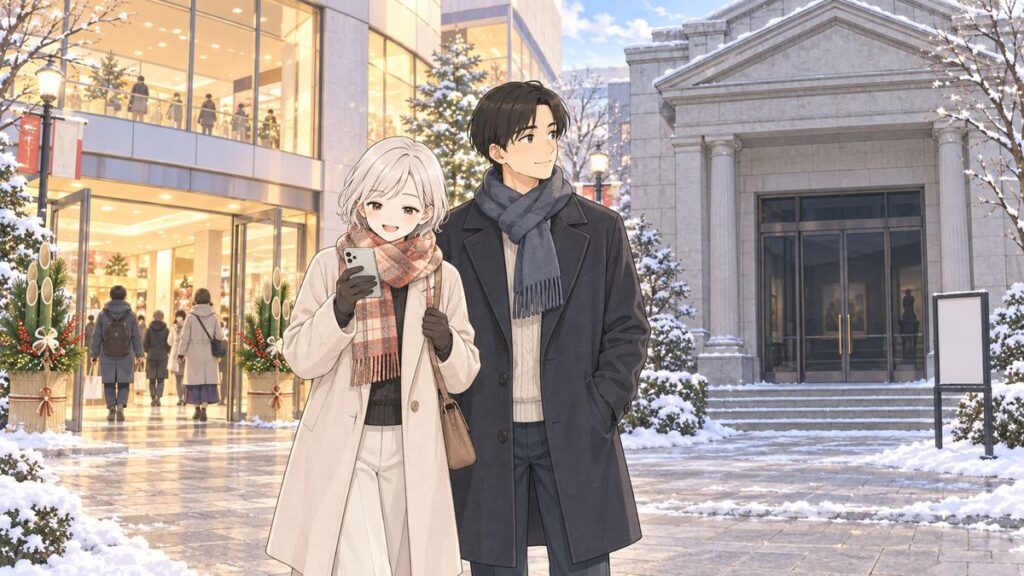
You can still go shopping over New Year, but reopening dates vary between shopping malls, department stores, and museums. Based on the 2025–2026 New Year schedules, here are examples of when major shopping destinations opened.
| Typical reopening date | Examples from the 2025–2026 holiday season |
|---|---|
| January 1 | LaLaport shopping malls, Tokyo Solamachi, and Laforet Harajuku |
| January 2 | Mitsukoshi Isetan department stores, Roppongi Hills, Omotesando Hills, and Lumine |
| January 3 | GINZA SIX, Matsuya Ginza, and Nihombashi Takashimaya |
Individual locations may follow different schedules. In the 2025–2026 season, Daimaru Tokyo’s lucky-bag sale began on January 3, while Nihombashi Takashimaya remained fully closed on January 2 and held its first sale at 10 a.m. on January 3.
Museums often close for longer, with one useful exception. The Tokyo National Museum has announced that it will close from December 26 through December 31, 2026, and open again on January 1, 2027. The hours for that day hadn’t been announced when this guide was written, and in the 2025–2026 season the museum opened from 1 p.m. on January 1, so check the official page before you set out.
One detail to watch at the same museum: from December 22 through December 25, 2026, only the Gallery of Horyuji Treasures and the Kuroda Memorial Hall stay open. If you want to see the main building or the Asian Gallery, visit by December 21.
Other museums follow the more familiar pattern. In the 2025–2026 season, the National Museum of Modern Art, Tokyo; the National Museum of Western Art; and the Museum of Contemporary Art Tokyo closed from December 28 through January 1 and reopened on January 2. The Tokyo Metropolitan Teien Art Museum remained closed from December 28 through January 5.
Those dates are previous holiday schedules, not confirmed dates for 2026–2027. Before visiting, check each facility’s official calendar, which is usually published in December.
Eating Over New Year: Toshikoshi Soba, Osechi, and Where You’ll Really Eat on Jan 1
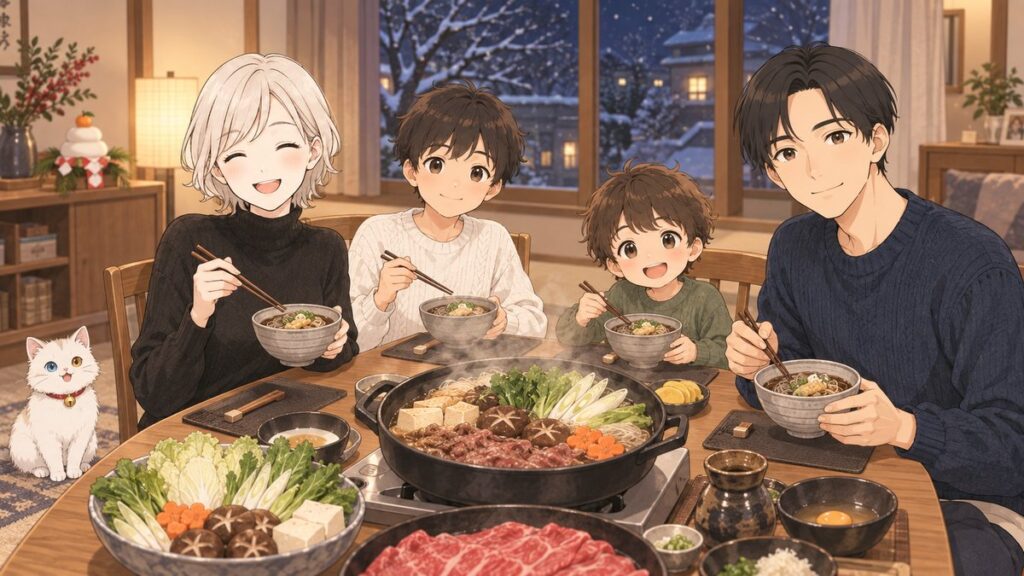
You can enjoy Japanese New Year food without finding a restaurant that serves a special holiday menu. Two traditional foods to look for are toshikoshi soba on December 31 and osechi during the first days of January.
In my family, we eat at home on New Year’s Eve. Sukiyaki is one of the meals we have, and we also eat toshikoshi soba to welcome the new year.
 Toshikoshi soba is a bowl of buckwheat noodles traditionally eaten on New Year’s Eve. The long noodles are associated with wishes for a long life, and eating them is a simple way for you to take part in the holiday.
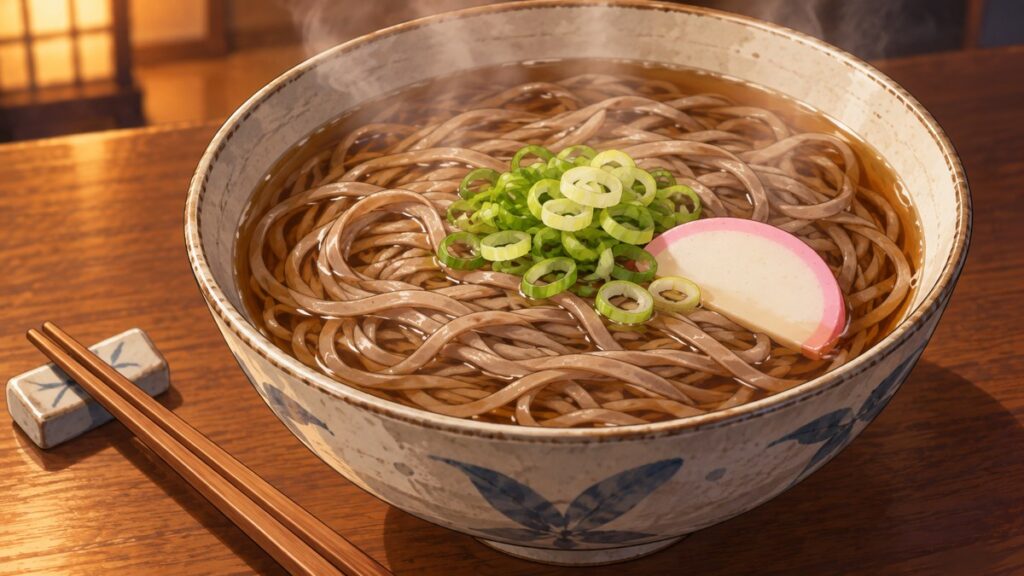
If you’d like to try toshikoshi soba while traveling, look for a soba restaurant serving it on December 31. You may also find packaged soba at supermarkets or convenience stores, but buy it early rather than waiting until dinner.
It’s disappointing to look forward to a particular meal and find the door closed, so confirm your dinner plans before the evening rather than walking out to look for somewhere.
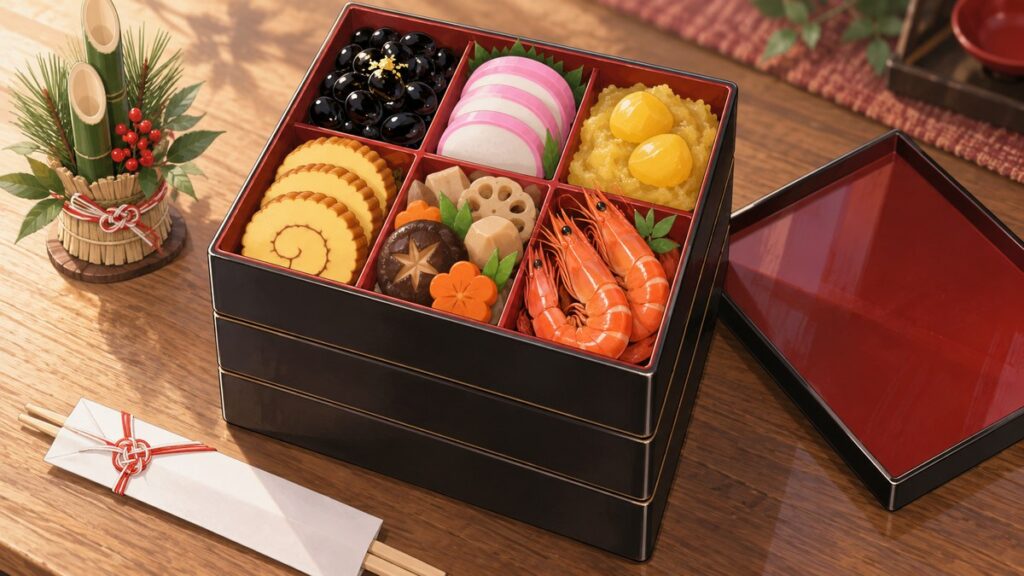
On New Year’s Day, my family eats osechi. These traditional New Year dishes are often arranged in tiered boxes and may include sweet black beans, fish, vegetables, and other foods with symbolic meanings.
You don’t need to buy an entire osechi box to enjoy the experience. Look for a hotel offering an osechi-style New Year breakfast or meal, or check the prepared-food departments in major department stores before they close for the holiday.
Some hotels and restaurants offer special New Year meals that require advance reservations. If you’re hoping to enjoy a particular osechi meal, check the menu and booking conditions before your trip rather than expecting to find a table on January 1.
Where to eat on January 1
For a practical family breakfast, your hotel’s breakfast service is a useful starting point. Check whether it will be available on New Year’s Day and whether you need to reserve a breakfast-inclusive plan.
For lunch and dinner, consider a restaurant at a major station, an open family restaurant, a beef-bowl chain, or a fast-food outlet. A convenience store can also provide a simple meal when you don’t want to spend your holiday searching for somewhere to eat.
If you’re traveling with young children, I’d keep a few familiar snacks and drinks in your room. A quiet January 1 doesn’t need to revolve around restaurant opening hours when you’ve already arranged the basics.
You can make December 31 your special food day and keep January 1 simple. Enjoy your soba or a reserved holiday meal first, then give your family a slower day after the celebrations.
Cash, ATMs & Banks This Week
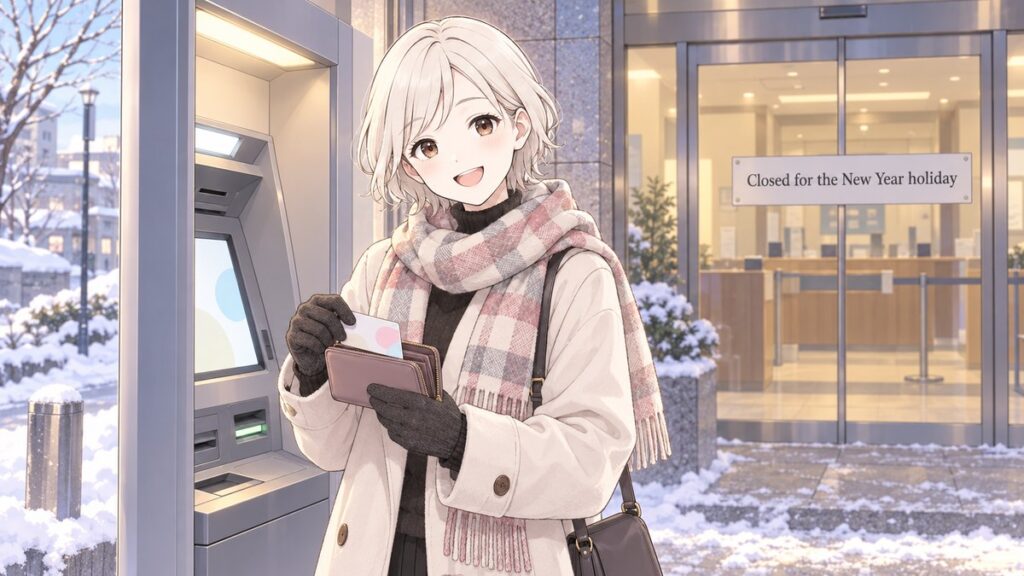
Get the cash you need before December 31, especially if your family plans to visit a shrine, eat at a small restaurant, or shop at a local market. You can still use many ATMs during the holiday, but bank counters won’t be available as usual.
Bank branches are closed from December 31 through January 3 under Japan’s banking holiday rules. This doesn’t mean your foreign card stops working, but you should know where to find a compatible ATM before you need cash.
Japan Post Bank publishes its New Year ATM arrangements each November. For the 2025–2026 New Year, it kept approximately 14,000 ATM locations, with around 18,000 machines, available from January 1 through January 4. Some ATMs, including certain machines in FamilyMart stores, charged fees throughout that period, and transfers to other banks were unavailable from December 31 at 11:55 p.m. until January 2 at 7 a.m.
The arrangements for the 2026–2027 New Year hadn’t been published when this guide was written. Treat the dates above as a guide rather than a confirmed schedule, and check Japan Post Bank’s November announcement if you plan to rely on its ATMs.
Seven Bank ATMs are generally available 24 hours a day, 365 days a year, including New Year and other major holidays. There are no regular system-maintenance shutdowns, but ATMs inside stores that aren’t open around the clock are accessible only during those stores’ business hours.
Seven Bank ATMs accept foreign-issued cards from Visa/PLUS, Mastercard/Maestro/Cirrus, UnionPay, American Express, JCB, Discover, and Diners Club. Before withdrawing cash, check whether your card is supported and whether your card issuer charges any fees.
Using a Foreign Card at Japan ATMs explains what to look for, while How Much Cash to Bring to Japan helps you decide how much cash to keep in your wallet.
Trains: The Rush Days to Avoid, Shinkansen Reservations, and the All-Night Trains on Dec 31
Book your long-distance trains early. In my experience, the year-end rush starts around December 28, and the Shinkansen and limited express trains get crowded.
For your 2026–2027 trip, expect heavier travel away from major cities on December 28–30 and a return rush on January 3–4. December 31 through January 2 may be quieter on some routes, but individual trains can still fill up.
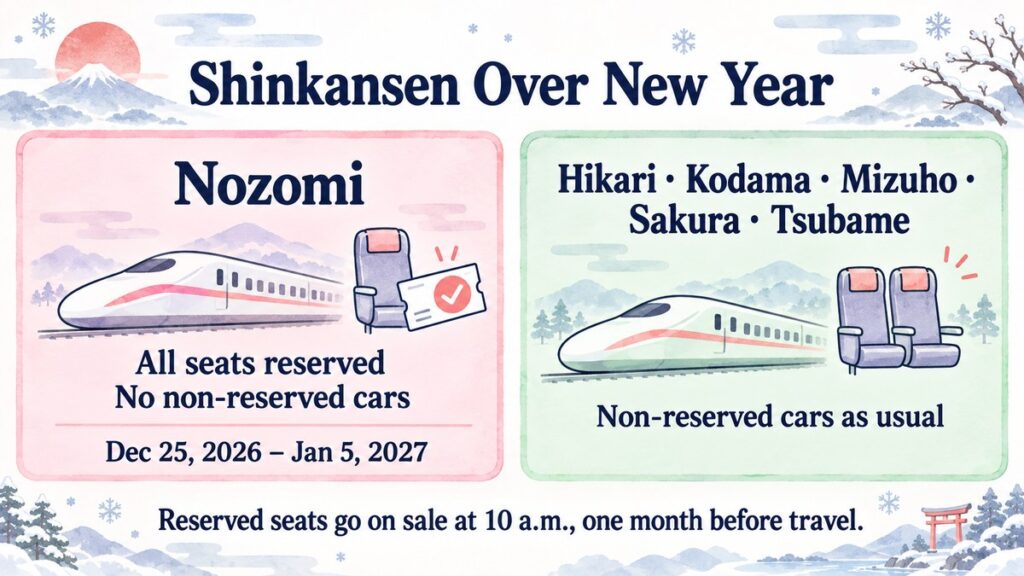
Shinkansen reserved seats generally go on sale at 10 a.m. one month before travel. If you’re traveling as a family, reserve early to improve your chances of sitting together.
 There’s one rule to know before you plan to board without a reservation. Every Nozomi train runs as fully reserved during the New Year period, and for this holiday that applies from December 25, 2026, through January 5, 2027. There are no non-reserved cars on Nozomi services on those dates.
Hikari, Kodama, Mizuho, Sakura, and Tsubame keep their usual non-reserved cars throughout the period. Even so, a reserved seat is the safer choice for a family travelling on the busiest days.
If you’re still deciding how to pay for those seats, Is the JR Pass Worth It? goes through when the pass actually pays off.
Will trains run all night on December 31?
All-night services vary by operator and year. For the 2025–2026 New Year, JR East operated all-night trains on six route groups in the Tokyo metropolitan area:
| Railway lines | Previous New Year’s Eve service |
|---|---|
| Yamanote Line | All-night service |
| Keihin-Tohoku / Negishi Line | All-night service |
| Chuo-Sobu Local Line | All-night service |
| Chuo Rapid Line | All-night service |
| Yokosuka Line | All-night service |
| Sobu Main Line / Narita Line | All-night service |
For the 2025–2026 New Year, Keisei Railway operated all-night local trains between Keisei Ueno and Keisei Narita, and between Oshiage and Keisei Kanamachi, approximately every 20–50 minutes. Keio operated all-night trains between Shinjuku and Takaosanguchi, approximately every 60 minutes.
Tokyo Metro, Toei Subway, and Seibu Railway did not operate all-night trains or extend their last trains, following weekend and holiday schedules instead. Keikyu did not operate all-night trains but extended its last-train services on December 31 and ran special limited express trains on January 1.
In the Kansai region, Kintetsu operated overnight services on selected routes, including the Nara, Kyoto, and Osaka lines. Keihan operated all-night trains on its Keihan Line network and the Iwashimizu-hachimangu Cable Line.
In Osaka, Osaka Metro did not operate all-night trains. JR West extended services on the Osaka Loop Line and Yumesaki Line until around 3 a.m. on January 1, rather than providing all-night service.
These are the 2025–2026 schedules, not confirmed services for the coming New Year. Check the 2026–2027 timetable for your route before making late-night plans.
Check the exact last train back to your hotel before staying out late. With children, I’d choose accommodation within walking distance of a late-night event rather than depend on an unconfirmed service.
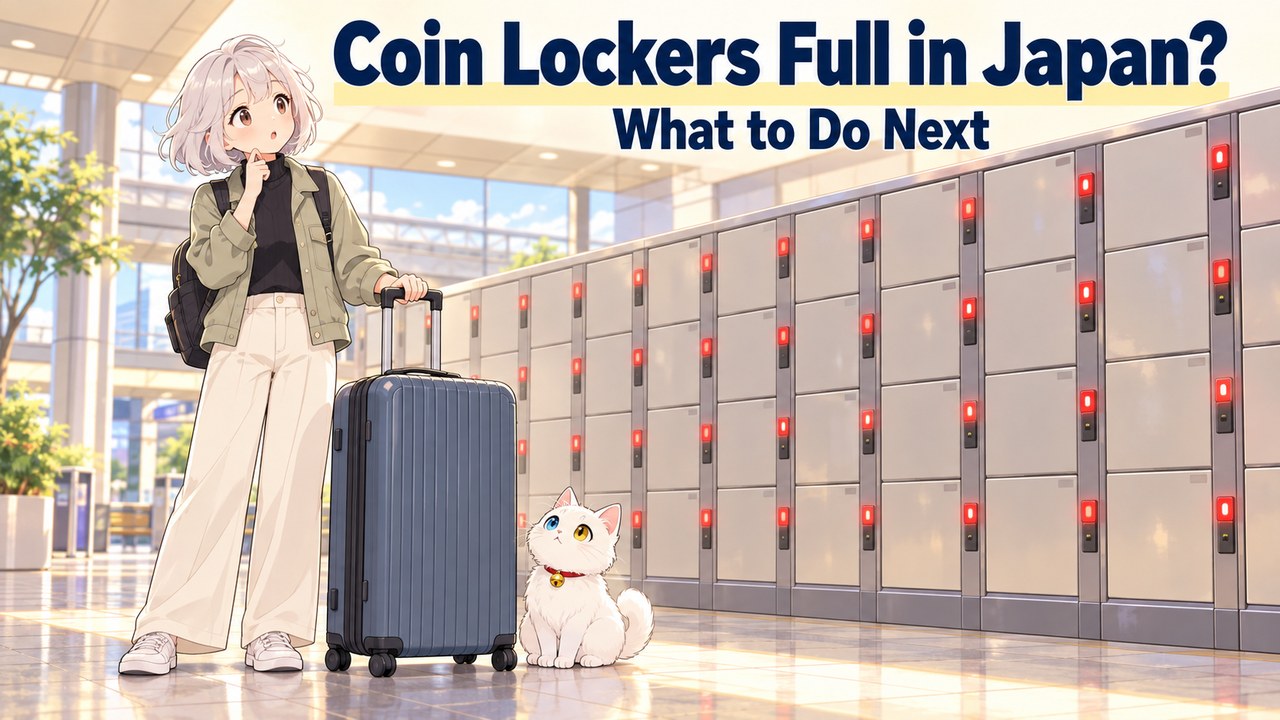
For city travel and luggage arrangements, see Suica vs Pasmo, what to do when the coin lockers are full, and Luggage Forwarding in Japan.
Hatsumode for First-Timers: Meiji Jingu vs. a Neighborhood Shrine
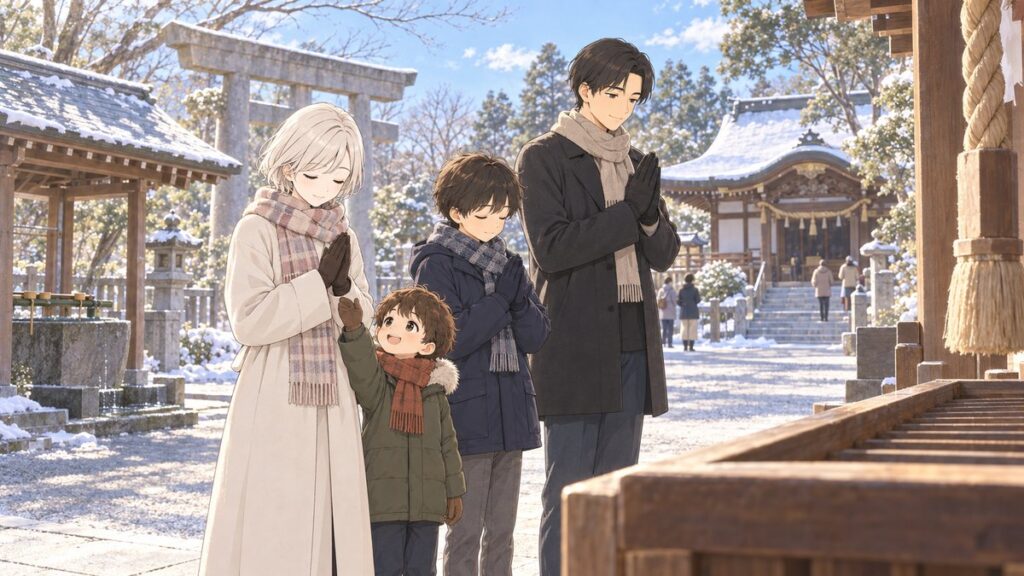
You can enjoy hatsumode, Japan’s first shrine visit of the year, without spending hours in a crowd. If you’re traveling with young children, choosing the right time and shrine can make your visit much easier.
Meiji Jingu in Tokyo is a famous destination for New Year’s prayers. Media estimates have put its New Year visitor numbers at around three million, so you should expect a very different experience from an ordinary weekday visit.
The shrine published the following opening times for the 2025–2026 New Year. The 2026–2027 times hadn’t been announced when this guide was written, so use these as a reference rather than a confirmed schedule.
| Date | Opening hours |
|---|---|
| Dec 31 | 6:40 a.m. until midnight, with the gates remaining open across the New Year |
| Jan 1 | Midnight–6:30 p.m. |
| Jan 2–3 | 6:40 a.m.–6 p.m. |
| Jan 4 | 6:40 a.m.–5:30 p.m. |
| Jan 5 onward | 6:40 a.m.–4:20 p.m. |
According to the shrine’s usual New Year guidance, crowds are particularly heavy from around 10 p.m. on December 31 to 3 a.m. on January 1, and after 10 a.m. during the first three days of January. Check the official schedule for your visit, including any changes to entry routes or access arrangements.
In my family, I prefer to wait until after the first three days of January to visit a shrine because that period is crowded. You can do the same by planning your visit for January 4 or later, or choose a smaller neighborhood shrine if you’d like to experience hatsumode earlier.
At a neighborhood shrine, you can still approach the worship hall, make an offering if you wish, and offer a quiet prayer. You don’t need to visit one of the country’s most famous shrines to take part in the New Year tradition.
For families bringing a stroller, check the shrine’s accessibility information and expected crowds before leaving your hotel. Stroller in Japan and How to Avoid Crowds in Japan can help you plan a more comfortable visit.
New Year’s Eve in Japan: Bells, Countdowns, and USJ
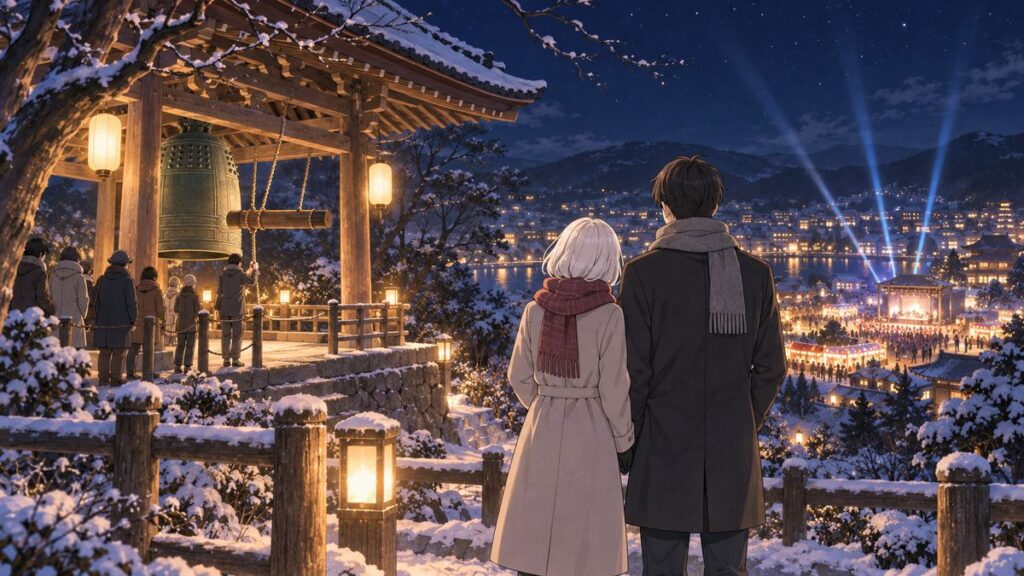
Your New Year’s Eve in Japan can be a quiet evening at a temple or a late-night celebration at a major attraction. Decide which kind of experience your family wants before making plans for December 31.
At Buddhist temples, you may hear joya no kane, the New Year’s Eve bell-ringing tradition. The bell is traditionally struck 108 times, although the schedule and opportunities for visitors to take part vary by temple.
If you’d rather spend the night at a theme park, Universal Studios Japan has announced NO LIMIT! COUNTDOWN 2027 for December 31, 2026.
The event is scheduled to run from 7 p.m. on December 31 until 9 p.m. on January 1. A special PARTY PASS allows guests to leave and re-enter during the event period, subject to the event’s conditions.
General ticket sales are scheduled to begin at 9 p.m. on November 4, 2026. Check the official website for the ticket options, prices, admission conditions, and any changes to the event schedule.
If USJ is already on your list, Is the USJ Express Pass Worth It? explains whether the paid pass is worth it on a busy day.
Tokyo Disney Resort has announced that its New Year’s Eve event will not take place on December 31, 2026, at either Tokyo Disneyland or Tokyo DisneySea. Both parks will follow their regular operating schedules rather than hold a special overnight countdown event. Don’t count on a street countdown in Shibuya either: the organized public event has been called off for several years in a row, and the arrangements for 2026–2027 hadn’t been announced when this guide was written.
Large fireworks festivals in Japan are more commonly associated with summer than New Year’s Eve, so don’t expect a fireworks display at every countdown location. If fireworks are an important part of your plans, choose an event that specifically confirms them.
One more date to remember: the Hakone Ekiden relay race takes place on January 2–3 each year. If you’re planning to drive around Hakone, consider visiting on another day to avoid race-related traffic restrictions and crowds.
Fukubukuro & Hatsuuri: The Once-a-Year Sales That Start Jan 1–3
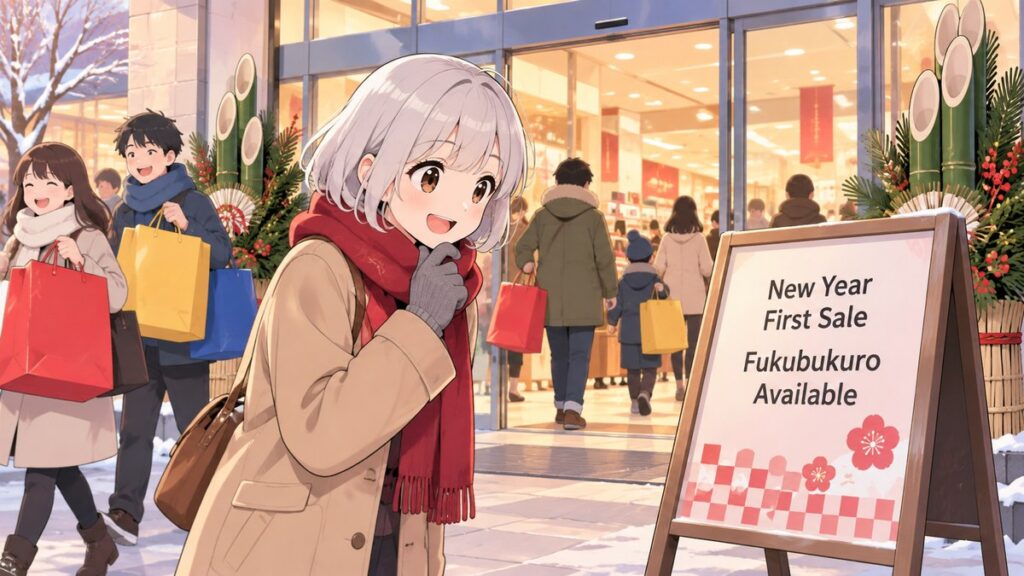
New Year is a popular time to shop in Japan because stores hold hatsuuri, their first sales of the year, and offer fukubukuro, special lucky bags containing a selection of goods. You can enjoy the atmosphere even if buying a lucky bag isn’t part of your plans.
Commercial facilities that open on January 1, such as LaLaport, Tokyo Solamachi, and Laforet Harajuku, have held New Year’s sales and lucky-bag events from the first day of the year. Many department stores begin their sales on January 2 or 3, often opening around 9–10 a.m.
Popular lucky bags may have limited quantities, advance reservations, or special entry arrangements. If you have a particular shop in mind, check its official announcement rather than assuming everything will be available when you arrive.
My family doesn’t buy lucky bags or line up for the first sales of the year, and not every Japanese family does. You can simply browse the reopened shops or spend that time enjoying another part of your trip.
If you’re planning to shop for gifts or other goods, my Japan tax-free shopping guide explains the shopping rules to know before you buy.
Tokyo, Kyoto or Osaka for New Year? Where to Be on Which Day
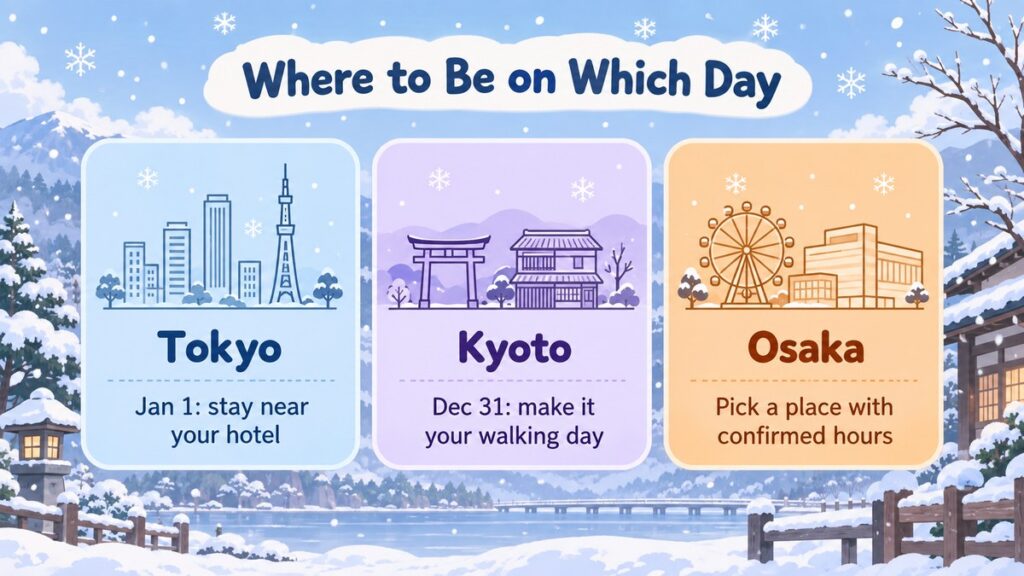
You don’t need to change cities because of New Year. Choose where to spend each day based on what’s open and how your family wants to celebrate.
| Date | Where to spend the day |
|---|---|
| Dec 31 | Choose a walkable area near a temple or shrine. Arrange dinner early and confirm your return transport. |
| Jan 1 | Stay near a city center or shopping area with confirmed open restaurants and facilities. Keep travel to a minimum. |
| Jan 2 onward | Shopping and sightseeing options expand. Choose destinations based on confirmed reopening dates. |
Tokyo: Plan January 1 around your hotel
In Tokyo, you can visit a shrine or an open shopping facility and spend the rest of the day near your hotel. Save department stores and museums for their confirmed reopening dates.
Kyoto: Make December 31 your walking day
Kyoto’s temples, shrines, and historic streets offer possibilities for a quieter New Year’s Eve. Enjoy a walk or toshikoshi soba at an open restaurant, then return to your accommodation before transport becomes less frequent.
Nishiki Market has no market-wide holiday closing schedule. Many shops close early on December 31 or take time off around January 1, but individual businesses set their own opening hours and holidays. Check the specific shops you want to visit before making plans.
Osaka: Choose a confirmed open destination
In Osaka, a shopping facility with confirmed January 1 opening hours can provide food, shopping, and somewhere to spend part of the day. If you’re visiting USJ, check whether your ticket covers the special New Year event or regular park admission.
For a train trip after the holiday rush, see 8 Kansai trains worth paying extra for.
Hotels: Why Dec 30–Jan 2 Costs the Most, and What’s Still Bookable
You can still find hotels in Japan over New Year, but December 30–January 2 is a high-demand period. If your dates are flexible, compare rates for January 3 onward before booking.
As of September 22, 2026, an Agoda search for two adults staying from December 30 to January 1 showed 5,010 available accommodation listings in Tokyo, 8,715 in Osaka, and 3,647 in Kyoto. These search results don’t guarantee a suitable room for every family.
Tokyo: Shinjuku Washington Hotel Main
Shinjuku Washington Hotel Main is one option to compare for a New Year stay in Tokyo. Its Agoda rating was 8.0 in the September 2026 research.
Check dates and prices for Shinjuku Washington Hotel Main on Agoda.
Osaka: Hotel Hankyu RESPIRE OSAKA
Hotel Hankyu RESPIRE OSAKA is an Osaka option with an Agoda rating of 8.9 in the September 2026 research.
Check dates and prices for Hotel Hankyu RESPIRE OSAKA on Agoda.
Osaka: Art Hotel Osaka Bay Tower
Art Hotel Osaka Bay Tower is another Osaka option, with an Agoda rating of 8.8 in the September 2026 research.
Check dates and prices for Art Hotel Osaka Bay Tower on Agoda.
All three hotels appeared among the moderately priced choices found in September. Before booking, compare room occupancy, bedding, breakfast, cancellation conditions, and access to restaurants and transport. For families, a convenient location and a room that accommodates everyone can make January 1 much easier.
Kyoto: Check your exact dates
Kyoto is also an option, particularly if you’d like to spend December 31 visiting temples or walking through historic neighborhoods.
Compare Kyoto hotels for your exact dates on Agoda, and check the walking distance from your station before you book.
Why should you book early?
Accommodation near countdown events and places known for sunrise views can attract strong holiday demand. Even when other rooms remain available, your preferred location or room type may sell out.
Compare the same property, room type, and number of guests across different dates rather than assuming every hotel follows the same price pattern. Availability and rates can change before you book.
Tokyo’s accommodation tax changes to a flat 3% rate on April 1, 2027. From that date it also covers guesthouses and private lodging, with an exemption for stays under ¥13,000 (about $84) per person per night. Dollar figures in this guide use a fixed comparison rate of 155 yen to the US dollar as of September 2026. Your December 2026–January 2027 stay still falls under the existing system.
For the other price and rule changes landing around your trip, see Japan Travel in 2026: Price Hikes and New Rules.
Choose accommodation that makes January 1 manageable, then plan the rest of your holiday around it.
It’s Cold: Layers and Kairo in One Paragraph
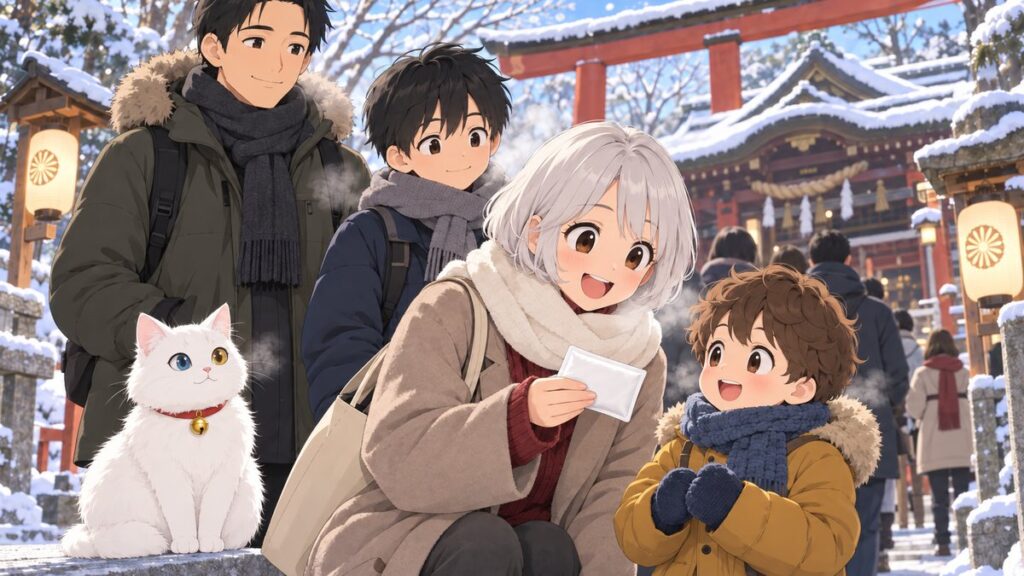
December and January can be cold in Japan, especially when you’re standing outside waiting to enter a shrine or walking around after sunset. Dress in layers so you can adjust your clothing when moving between heated buildings and the outdoors, and consider carrying disposable hand warmers, called kairo, for long periods outside. If you’re traveling with children, bring warm outerwear, gloves, and comfortable shoes, and don’t place a hot kairo directly against anyone’s skin. For more packing advice, see What to Wear in Japan in December and Winter and my Japanese winter dry-skin kit.
A Sample Dec 31–Jan 2 Plan for a Family + FAQ
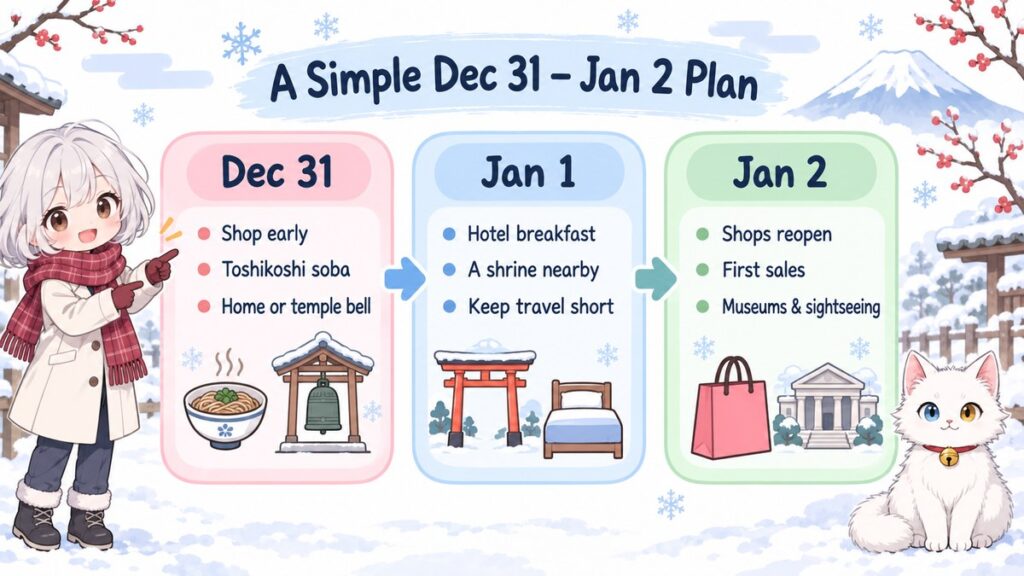
You can enjoy December 31 through January 2 without rushing between attractions. This three-day plan keeps New Year’s Day simple while leaving room for traditional experiences.
| Date | A family-friendly plan |
|---|---|
| Dec 31 | Finish shopping and arrange dinner before the evening. Enjoy toshikoshi soba, then visit a nearby temple or shrine if your family wants to stay out, or relax at your hotel. |
| Jan 1 | Have breakfast at your hotel or use a confirmed open food option. Visit a nearby shrine or shopping facility, keep travel to a minimum, and enjoy a relaxed evening. |
| Jan 2 | Visit shops, museums, or attractions that have confirmed reopening dates. Enjoy the first sales of the year if shopping interests you, or continue sightseeing. |
Keep January 1 flexible, especially with young children. You can always adjust your plans if a popular shrine is too crowded.
Is everything closed in Japan on New Year’s Day?
No. Many department stores, museums, supermarkets, and independent restaurants close, but convenience stores, selected restaurant chains, shrines, and some shopping facilities remain open. Check the specific locations you want to visit.
Is it a bad time to visit Japan?
New Year offers experiences such as toshikoshi soba, hatsumode, and the first sales of the year. Holiday closures, crowded long-distance trains, and higher hotel rates require some planning, but they don’t have to prevent you from enjoying your trip.
Do I need to book hotels earlier than usual for New Year?
Yes, particularly for December 30–January 2 or if you need a specific family-sized room. Booking early gives you more choice, while comparing January 3 onward may reveal different rates for the same hotel.
You don’t need to change your entire Japan trip because of New Year. Arrange your December 31 dinner, plan a quieter January 1, and secure your accommodation and train seats.
To fit all of this into the rest of your itinerary, use my 7-step Japan trip planning guide.
Find and Book Your New Year Hotel on Agoda
Now I’m curious about your side of the world — how does your country mark the New Year? Do the shops close for a day or two, or is January 1 business as usual? Tell me in the comments below. I read every single one!
I hope this guide has answered one of your questions and helped you feel a little closer to Japan.
May your Japan journey be filled with wonderful discoveries and memories you’ll treasure for years to come.
See you in the next guide.

Comments