
Planning a trip to Japan in 2026? You may have noticed that the information online doesn’t always match. One guide lists the Japan Rail Pass at ¥50,000 (≈$325), another says tax-free shopping still happens at the register, and alarming headlines warn of a ¥10,000 (≈$65) hotel tax. So what has actually changed — and how much will it affect your trip?
Prices are in yen, with rough dollar figures at about ¥154 to the dollar (September 2026). Exchange rates move, so treat the dollars as a ballpark.
I’ve gathered the latest prices, dates, and rules in one place, from here in Japan. From rail passes and lodging taxes to Suica cards and Mt. Fuji, here’s what you need to know to plan with confidence and avoid unexpected costs.

- The Japan Rail Pass Is Getting More Expensive — Again
- Japan’s Departure Tax Went Up, Too
- Tax-Free Shopping Is Changing — Pay First, Refund Later
- Kyoto’s Lodging Tax Is Rising — But Probably Not by as Much as You’ve Heard
- Suica and IC Cards: What Actually Works for Tourists in 2026
- New Rules at Popular Spots — and One Upcoming Change You Don’t Need to Worry About Yet
- Your Quick 2026 Pre-Trip Checklist
The Japan Rail Pass Is Getting More Expensive — Again
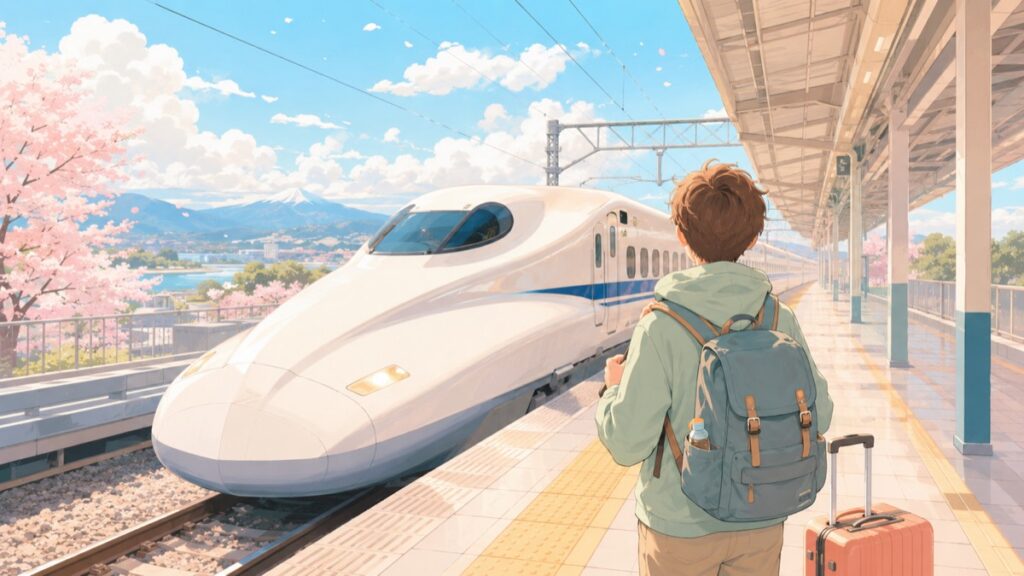
If the Japan Rail Pass has been sitting on your must-buy list, read this before you book. Starting October 1, 2026, the 7-day nationwide pass costs ¥53,000 (≈$345) for an adult — up from ¥50,000 (≈$325).
And yes — again. This is the second rise in just a few years. Back in 2023 it jumped from around ¥29,650 (≈$195) to ¥50,000 (≈$325). So if an older guide tells you the pass is “50,000 yen,” or worse, “under 30,000,” that number is already out of date.
| Nationwide Pass (adult, ordinary car) | New price from Oct 1, 2026 |
|---|---|
| 7 days | ¥53,000 (≈$345) |
| 14 days | ¥84,000 (≈$545) |
| 21 days | ¥105,000 (≈$685) |
 Booking with last year’s price in mind? You could walk away paying ¥3,000 (≈$20) more than you planned — per pass.
Here’s the honest part: for a lot of trips, the pass isn’t the automatic bargain it used to be. If you’re mainly circling Tokyo, Kyoto, and Osaka, buying individual tickets can actually come out cheaper. Whether it pays off really comes down to how far you roam — so I worked through that math for you in our full Japan Rail Pass guide, so you don’t have to guess before you spend.
Japan’s Departure Tax Went Up, Too

There’s a small tax hardly anyone mentions until they’re already home: the International Tourist Tax — the “departure tax.” As of July 1, 2026, it rose from ¥1,000 (≈$6.50) to ¥3,000 (≈$20) per person, every time you leave Japan.
 Here’s what trips people up: this isn’t a foreigners-only fee. Everyone flying or sailing out of Japan pays it — residents included. (Children under two are exempt.) So if you read somewhere that it only targets tourists, that’s not quite right.
You won’t queue at a counter to pay it, either. It’s folded into your plane or ferry ticket, so it slips by unnoticed — which is exactly why it’s easy to forget when you’re planning your budget. One useful detail: under transitional rules, certain tickets issued under transport contracts made before July 1, 2026 may still qualify for the old ¥1,000 (≈$6.50) rate. Because exceptions can apply, check the tax shown by your airline or travel provider.
On its own, ¥3,000 (≈$20) won’t break your trip. But it’s one more small line in a year full of them — and this guide is here so none of them catch you by surprise.
Tax-Free Shopping Is Changing — Pay First, Refund Later
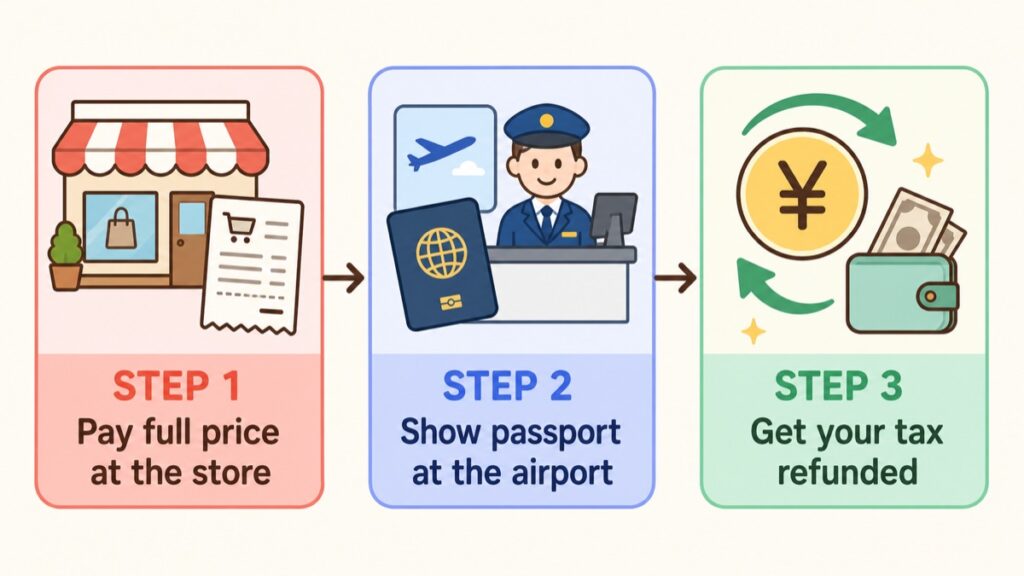
If part of your trip involves shopping — souvenirs, cosmetics, that camera you’ve been eyeing — this one’s for you. From November 1, 2026, Japan is changing how tax-free shopping works. Instead of skipping the tax right at the register, you’ll pay the full price first and get the tax back when you leave the country.
Here’s the new flow:
- At the store, you pay the full price, including consumption tax.
- When you leave Japan, present your passport to customs and be prepared to show the purchased items if requested.
- After customs confirms that the goods are leaving Japan, the tax-free shop or its refund operator returns the tax to you using its available refund method.
There’s an upside hiding in here, too. Those old rules that sealed cosmetics and snacks into special “do-not-open” bags are going away, and the fiddly split between “general goods” and “consumables” disappears with them.
One honest heads-up: as of mid-2026, the fine print — whether the refund comes back as cash, to your card, or through another method — and how long the customs process takes — isn’t fully settled yet. So if you’re shopping after November, keep your receipts, budget for paying the tax up front, and give yourself a little extra time at the airport. I’d rather you over-prepare than get caught out at the gate.
 Want the full picture — who qualifies, the ¥5,000 rule, store-by-store tips, and exactly what to do at the airport? I’ve put everything into my complete tax-free shopping guide.
Kyoto’s Lodging Tax Is Rising — But Probably Not by as Much as You’ve Heard

Maybe you’ve seen the headline: “Kyoto’s hotel tax is jumping to ¥10,000 (≈$65) a night!” It’s true — and it’s also the kind of half-fact that can scare you for no reason. From March 1, 2026, Kyoto shifts to a five-tier lodging tax based on your room rate, charged per person, per night:
| Room rate (per person, per night) | Tax (per person, per night) |
|---|---|
| Under ¥6,000 (≈$39) | ¥200 |
| ¥6,000 (≈$39) – under ¥20,000 (≈$130) | ¥400 |
| ¥20,000 (≈$130) – under ¥50,000 (≈$325) | ¥1,000 (≈$6.50) |
| ¥50,000 (≈$325) – under ¥100,000 (≈$650) | ¥4,000 (≈$26) |
| ¥100,000 (≈$650) and up | ¥10,000 (≈$65) |
See the pattern? That ¥10,000 (≈$65) rate only kicks in at luxury stays of ¥100,000 (≈$650) a night or more. For the comfortable, mid-range room most travelers actually book, you’re looking at ¥200 to ¥1,000 (≈$6.50) a night. And like the taxes above, everyone pays it — not just visitors from overseas.
One thing to keep on your radar: Kyoto isn’t alone. Other popular areas, including parts of Tokyo and Osaka, are revising their own lodging taxes too — so it’s worth checking the specific city when you book. Across a two-week trip, a few hundred yen a night adds up quietly, and it’s easy to leave out of your first budget. A small number to know, so it never surprises you at check-out.
Suica and IC Cards: What Actually Works for Tourists in 2026
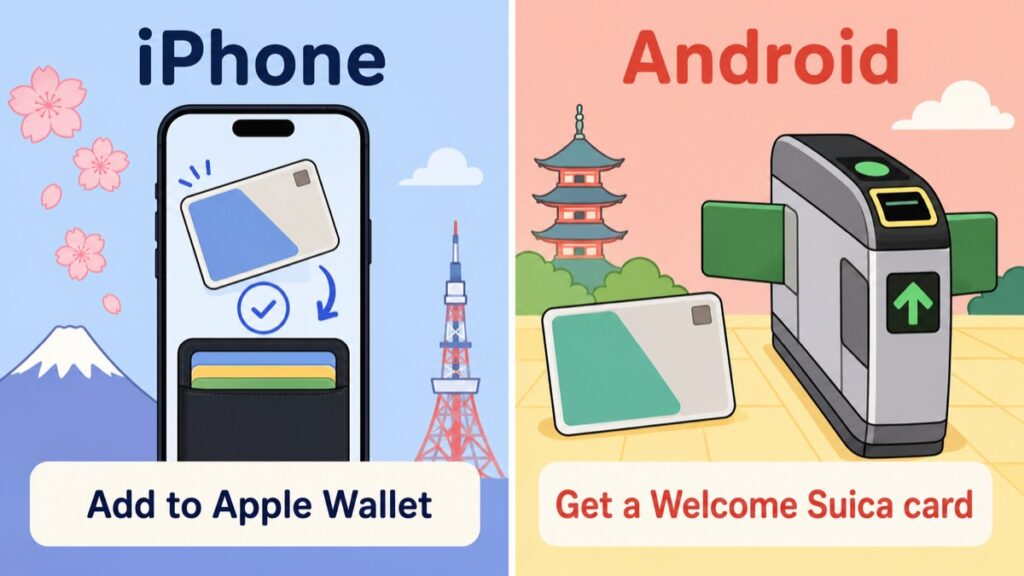
You may have bumped into some scary older posts saying tourists “can’t get a Suica anymore.” Good news: that’s out of date. The regular unnamed Suica and PASMO cards were paused during a chip shortage, but there’s a version made just for visitors — and depending on your phone, an even easier route.
If you have an iPhone, you’re in the smoothest lane. You can add Suica to Apple Wallet or use Welcome Suica Mobile, which is valid for 180 days. However, app downloads and top-ups may be restricted in some countries, and not every overseas card works reliably. It’s a good idea to carry a backup card or some cash as well.
If you have an Android phone from outside Japan, here’s the honest catch: most overseas Android phones don’t support Japan’s mobile IC system, so the app route usually won’t work for you. Your reliable move is the physical Welcome Suica — a tourist card with no deposit, valid for 28 days, sold at the airport and major stations once you arrive.
Either way, one tap gets you through the ticket gates and buys your convenience-store coffee — no fumbling for coins. Set it up before you fly (iPhone) or grab a card at the airport (Android), and you’ll skip one of the most common first-day headaches. Want the full picture — including the brand-new Tourist Pasmo, kids’ cards and the credit-card top-up trap? I’ve written a complete guide: Suica vs Pasmo for Tourists (2026).
New Rules at Popular Spots — and One Upcoming Change You Don’t Need to Worry About Yet

A handful of destinations have tightened their rules, and knowing them ahead of time saves you both money and awkward moments.
Mt. Fuji Now Has an Entry Fee and Climbing Restrictions
Climbing Mt. Fuji? It’s no longer free. All four trails charge a ¥4,000 (≈$26) hiking fee and require mountain-entry procedures. Entry is restricted from 2 p.m. to 3 a.m. unless you have a mountain-hut reservation.
The Yoshida Trail has a daily cap of 4,000 climbers, excluding mountain-hut guests, while the three Shizuoka-side trails do not have a daily cap. Registration procedures differ by trail, so check the current details on the official climbing site (fujisan-climb.jp) before you go.
Be Respectful When Visiting Kyoto’s Gion District
In Kyoto’s Gion district, some narrow lanes and other areas are private property, so do not enter without permission. Visitors are also asked not to stop, follow, touch, or photograph geiko and maiko without permission.
Penalties vary depending on the behavior involved, so it’s more accurate not to describe this as a single ¥10,000 (≈$65) “photo fine.” Stick to public streets, respect the people who live and work there, and always ask before photographing someone.
JESTA Is Coming — but Not in 2026
You may have heard that Japan is introducing “JESTA,” an online travel authorization similar to the US ESTA. It is coming — but not yet. The Japanese government currently aims to introduce it during fiscal 2028, which runs through March 2029.
If you’re traveling in 2026, you do not need JESTA. Don’t let a misleading headline send you filling out forms you don’t actually require.
Your Quick 2026 Pre-Trip Checklist
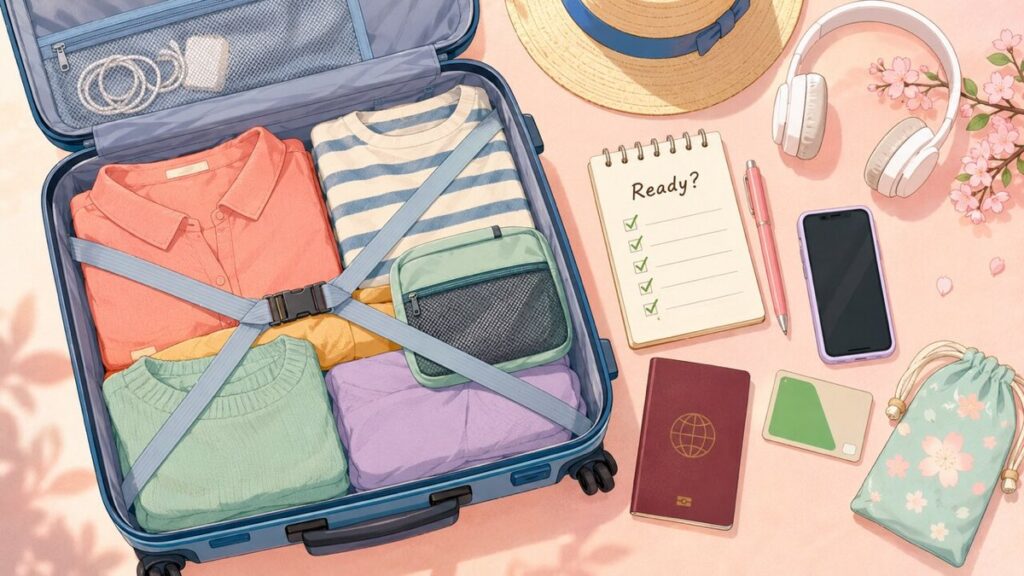
 Feeling like a lot changed at once? It did — so here’s the whole year on a single screen, so you can plan with confidence.
| What changed | When | What it means for you |
|---|---|---|
| JR Pass → ¥53,000 (≈$345) (7-day) | Oct 1, 2026 | Check if individual tickets are cheaper for your route |
| Departure tax → ¥3,000 (≈$20) | Already in effect | Just know it’s baked into your ticket |
| Tax-free → new refund system | Nov 1, 2026 | Pay tax up front, complete customs confirmation when leaving, and check the shop’s refund method |
| Kyoto lodging tax (now tiered) | Mar 1, 2026 | Usually ¥200–1,000/night; ¥10,000 (≈$65) only for luxury stays |
| Suica for tourists | Now | iPhone: add to Apple Wallet before you fly. Android: grab a Welcome Suica card |
| Mt. Fuji: ¥4,000 (≈$26) + reservation | Each summer | Check fujisan-climb.jp for the current season |
| Gion / photo etiquette | Now | Stay on public streets, ask before photographing |
| “JESTA” authorization | By Mar. 2029, not yet | You don’t need it before then |
And one thing that isn’t new but trips travelers up every year: sort your phone data before you fly — my Japan eSIM comparison covers the plans that actually work for tourists.
None of this should scare you off. Japan in 2026 is as wonderful as it’s ever been — a few numbers simply moved, and now you know exactly where. Plan around them, and you’ll spend your trip enjoying the ramen, the temples, and the quiet train rides — not untangling surprises.
 Now I’m curious about your side of the world — does your country add tourist or hotel taxes when you travel, or refund your tax at the airport the way Japan soon will? Tell me in the comments below. I read every single one!
I hope this guide has answered one of your questions and helped you feel a little closer to Japan. May your Japan journey be filled with wonderful discoveries and memories you’ll treasure for years to come.
 See you in the next guide.

Comments