
- Quick Answer: How Much Cash to Bring to Japan
- Is Japan Still a Cash Society in 2026?
- What’s in a Japanese Mom’s Wallet
- How Much Cash You’ll Actually Use, by Trip Length
- Where You Still Need Cash in Japan (and Where You Don’t Anymore)
- How Much Cash for a Family of Four
- Coins: The Part Nobody Warns You About
- Running Low? How to Get More Yen
- What to Do With Leftover Yen
- FAQ
- Final Thoughts
Quick Answer: How Much Cash to Bring to Japan
I’m a Japanese mom whose own wallet usually holds less than ¥10,000 (about $68). But if you’re visiting Japan, I still want you to arrive with some yen in your wallet — not because you’ll pay for everything in cash, but because there are a few everyday moments when cash is still the easiest option.
For the amounts below, dollar figures are converted at about ¥148 = $1 as of September 2026.
| Trip length | Budget — 1 person, more street food, small shops and temples | Standard — 1 person, mostly card | Family of 4 — 2 adults + 2 children |
|---|---|---|---|
| 3–4 days | ¥15,000–20,000 (about $101–135) | ¥10,000 (about $68) | ¥20,000–30,000 (about $135–203) |
| 1 week | ¥30,000–35,000 (about $203–236) | ¥20,000–30,000 (about $135–203) | ¥40,000–50,000 (about $270–338) |
| 10 days | ¥40,000–50,000 (about $270–338) | ¥30,000–40,000 (about $203–270) | ¥60,000–70,000 (about $405–473) |
| 2 weeks | ¥60,000–70,000 (about $405–473) | ¥40,000–50,000 (about $270–338) | ¥80,000–100,000 (about $541–676) |
These are estimates for the part of your trip you’ll actually pay in cash, based on dozens of real trip reports. They assume you’ll use cards for things such as hotels, Shinkansen tickets and larger purchases rather than carrying your whole travel budget in yen.
 For everyday use, I’d keep about ¥10,000–20,000 (about $68–135) in your wallet if you’re traveling alone, or ¥20,000–30,000 (about $135–203) for a family. That’s also a reasonable amount to have ready when you first arrive.
If you run low, you can withdraw more yen from a 7-Eleven ATM rather than carrying your entire cash allowance from day one.
Is Japan Still a Cash Society in 2026?
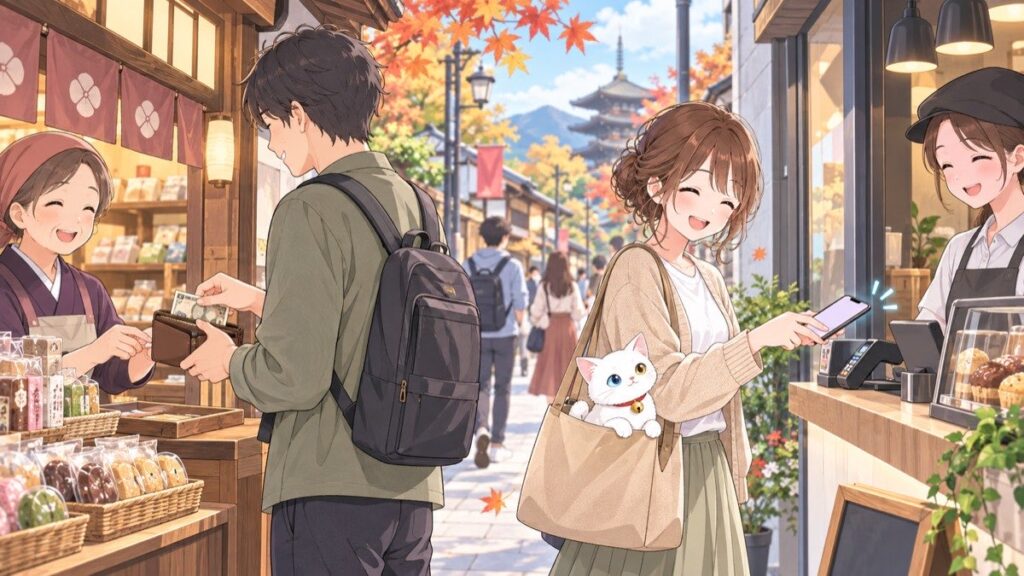
Japan is much more cashless than the old travel advice may make you think. About 58% of consumer spending in Japan was cashless in 2025, according to the Ministry of Economy, Trade and Industry.
That helps explain why you can find completely different answers when you search for how much cash to bring. Some advice still reflects a time when visitors needed much more cash, while newer advice comes from travelers who pay by card or phone most of the time.
 The biggest thing to understand is this: your total Japan travel budget and the amount you need in cash are not the same number.
A large trip budget does not mean you should carry that amount as yen notes. If your hotels, long-distance transport and bigger purchases go on a card, the cash portion can be only a fraction of your total spending.
If you’re trying to work out the full cost of your trip rather than the cash portion, use instead.
What’s in a Japanese Mom’s Wallet
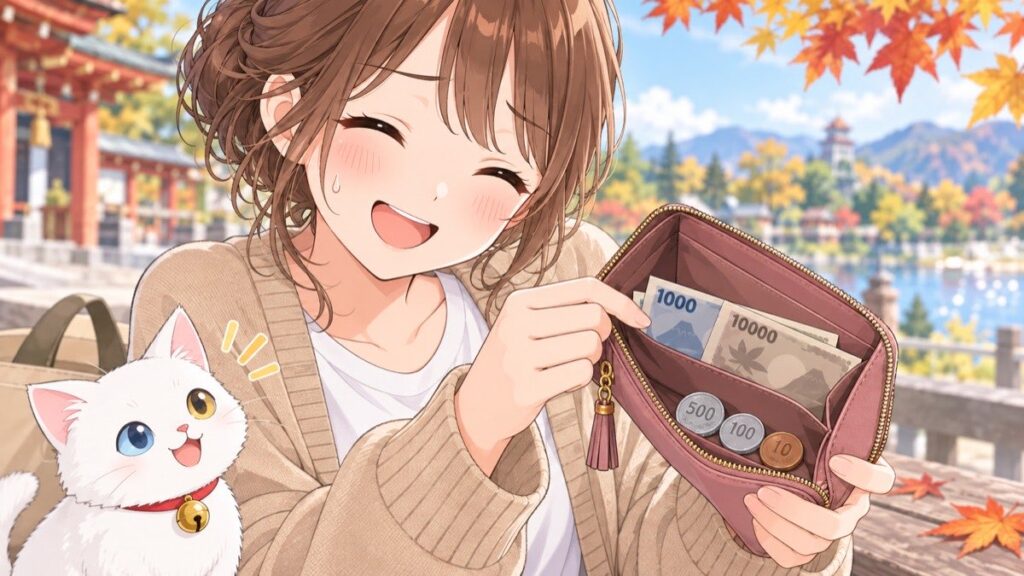
 My own wallet usually holds less than ¥10,000 (about $68), even though I live in Japan.
The places where I still reach for cash are mostly shrines and temples — for offerings, goshuin stamps or charms — small independent shops and festival stalls, and things related to children such as school collections, lessons, gacha machines and old-fashioned candy shops.
For almost everything else, I usually use a card or my phone.
That’s one reason I don’t think most visitors need to arrive carrying a large stack of yen. You do need a little cash, but you can let your card handle the places where cash is no longer necessary.
How Much Cash You’ll Actually Use, by Trip Length
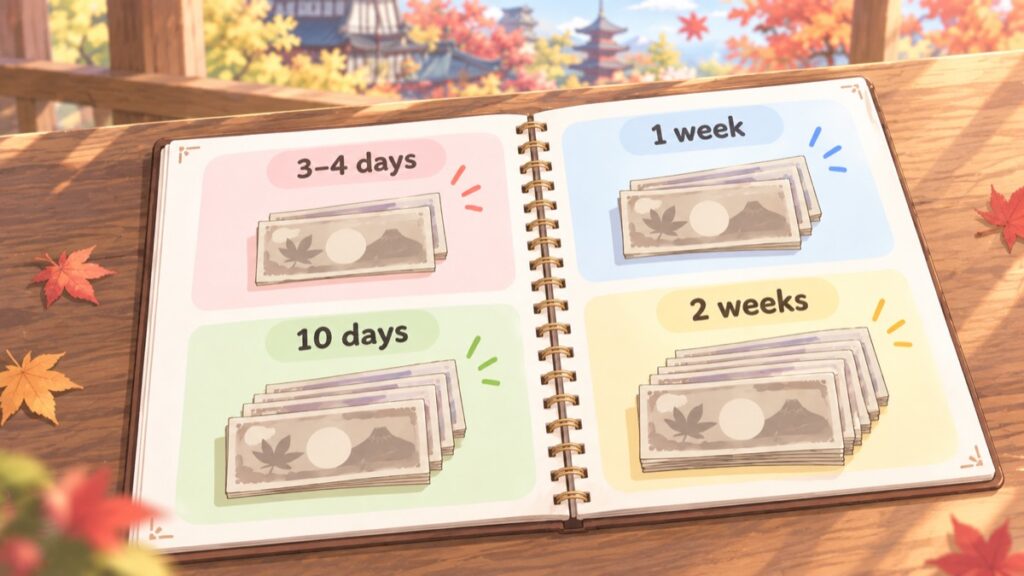
The table at the top gives you the simplest answer, but there’s a useful pattern behind those numbers.
A Standard traveler who mostly uses cards may need only around ¥3,000 (about $20) in cash on an average day. A Budget traveler may want to plan closer to ¥5,000 (about $34) per day because inexpensive small restaurants, food stalls and temples are more likely to create cash-only moments.
 That sounds backwards at first: spending less can mean carrying more cash. But if your days include more small local businesses and fewer places where you automatically pay by card, it makes sense.
If you can’t use a mobile Suica and will rely on a physical Suica card, add around ¥1,000 (about $7) per person per day as a rough guide for station top-ups. At station machines, a physical Suica card can only be topped up with cash — overseas credit cards aren’t accepted there. Mobile Suica can be topped up by card.
For the full Suica and PASMO setup, see .
Where these numbers come from
These estimates are based on dozens of real traveler reports from 2025 and 2026:
- Several card-first solo travelers reported using around ¥40,000 (about $270) over two weeks, while another brought ¥60,000 (about $405) and had ¥10,000 (about $68) left.
- Some travelers used less than ¥10,000 (about $68) over five days or found ¥10,000 (about $68) enough for one week.
- Budget travelers repeatedly suggested around ¥5,000 (about $34) per person per day.
- Family reports included ¥100,000 (about $676) for a family of four over two weeks, and ¥50,000–100,000 (about $338–676) for a family of three over two weeks.
- One traveler said ¥50,000 (about $338) covered ten days, with cash mainly needed in Kyoto and at temples.
There are people at the other end too. Travelers who use cash for shopping or game centers may spend several times these amounts; one report described taking ¥300,000 (about $2,027) for ten days, while another used ¥225,000 (about $1,520) over two weeks.
Where You Still Need Cash in Japan (and Where You Don’t Anymore)
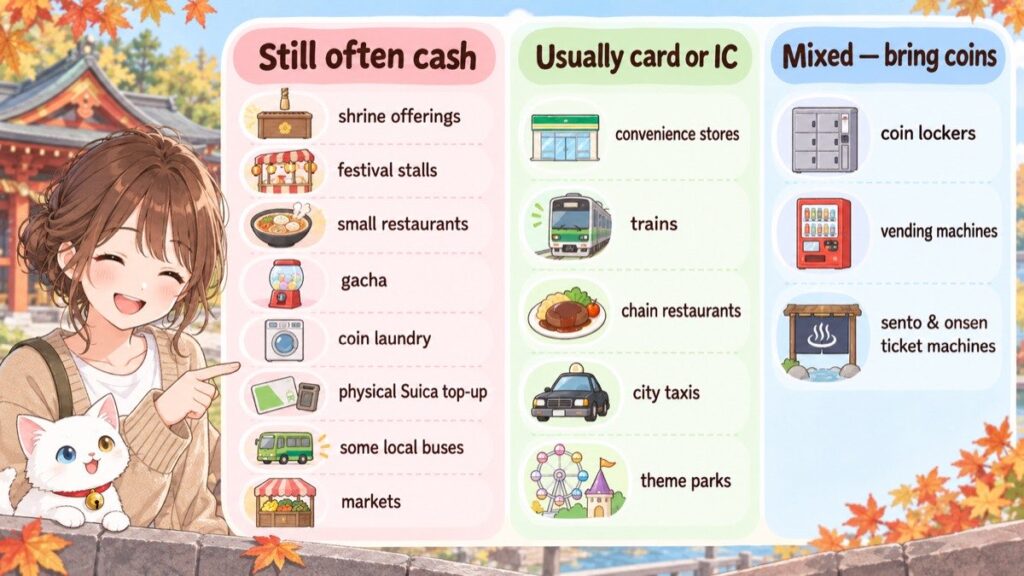
You don’t need to guess every time you leave your hotel. Think of Japan in three groups: places where cash is still common, places where cards or IC payments are usually easy, and places where either one may happen.
| How you’ll usually pay | Places |
|---|---|
| Still often cash | Shrine and temple offerings, goshuin and charms at smaller temples Festival food stalls Small independent restaurants and izakaya Gacha and crane games Coin laundries Physical Suica charging at stations Some regional buses and trams Some regional taxis Markets and flea markets |
| Usually card or IC OK now | Convenience stores Trains with IC cards or mobile payment Chain restaurants and larger stores City taxis, including many app-booked rides Theme parks |
| Mixed — bring coins just in case | Station coin lockers Vending machines Sento and onsen ticket machines |
 Even in the “Usually card or IC OK now” row, cash can still come in handy. Payment methods can vary by machine, shop or location, so keeping a small amount of yen with you is still the easiest backup.
For larger shopping, paying by card can also keep more cash in your wallet. If you plan to shop tax-free, see .
How Much Cash for a Family of Four
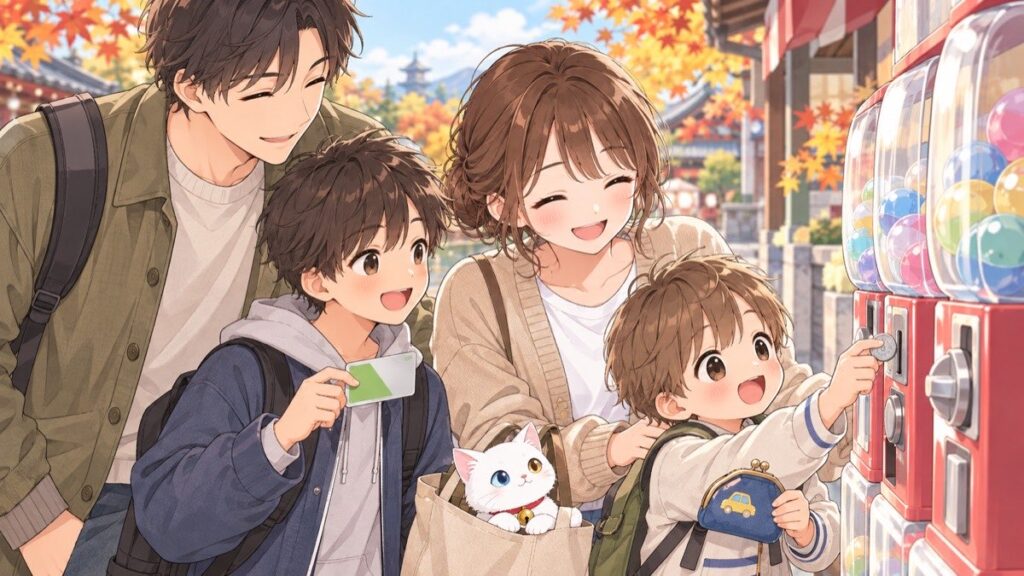
For a family of four — two adults and two children, mostly paying by card — I’d use these numbers as your starting point.
| Trip length | Family of 4 cash allowance |
|---|---|
| 3–4 days | ¥20,000–30,000 (about $135–203) |
| 1 week | ¥40,000–50,000 (about $270–338) |
| 10 days | ¥60,000–70,000 (about $405–473) |
| 2 weeks | ¥80,000–100,000 (about $541–676) |
 Children create lots of small cash moments. Think vending-machine drinks, gacha, candy shops and giving them a coin to place in the offering box at a shrine.
A small coin purse for a child is useful here. It gives them somewhere to keep the coins they’re going to use without mixing everything into the family wallet.
If your children will use child fares or their own IC cards, check and before you travel.
Coins: The Part Nobody Warns You About
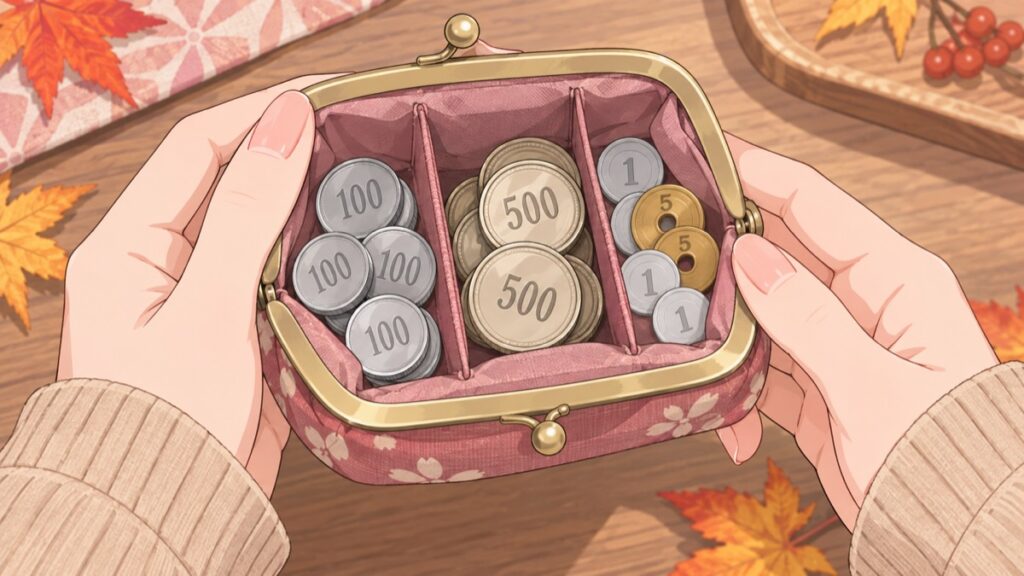
The notes are easy. The coins are what slowly take over your wallet.
 The most useful ones to keep are 100-yen coins (worth about 70 cents each) and 500-yen coins (about $3). You’ll run into them around gacha machines, vending machines, coin lockers and omikuji at temples and shrines.
The coins that tend to pile up are 1-yen and 5-yen coins (worth only a few cents), especially if you pay cash for small convenience-store purchases. My simple solution is to use a card at convenience stores when I can.
There’s also a very Japanese little habit that helps keep your change tidy. If something costs ¥980 (about $7) and you hand over ¥1,030, you get back a single ¥50 coin instead of a handful of small change.
At many convenience stores and supermarkets, automatic cash machines let you put several coins in together rather than handing them over one at a time. That can be a convenient place to use the small coins accumulating in your purse.
A 5-yen coin also has a cultural connection with go-en, or a good connection or relationship, which is why you may notice it around shrine visits.
You don’t need a complicated wallet for all of this. One small coin purse with a few dividers is enough.
Running Low? How to Get More Yen

 Running low on cash in Japan is not a reason to panic. International travelers can withdraw yen at places including 7-Eleven ATMs and Japan Post Bank ATMs, so you don’t need to carry your full trip allowance from the beginning.
That’s why I’d rather arrive with enough for the first part of the trip and withdraw more locally if needed than exchange a large amount before leaving home.
One traveler even reported receiving many ¥2,000 (about $14) notes when exchanging money before traveling; the notes are valid, but they were unusual enough that some people in Japan reacted with surprise.
For withdrawal instructions, fees and what to do if your card is declined, I’ve kept everything in one place:
Read the full guide to Japanese ATMs
What to Do With Leftover Yen
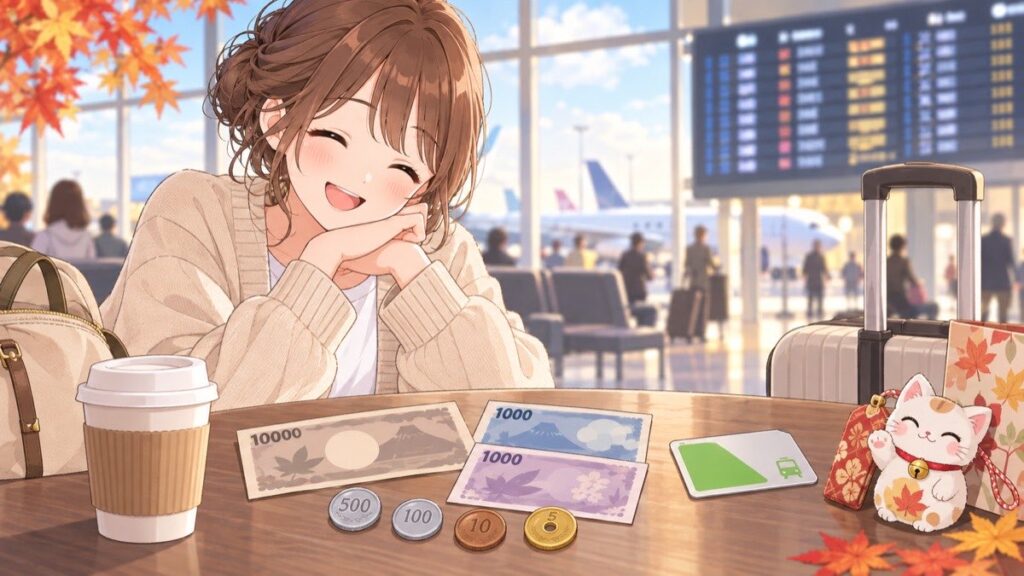
 Try to reduce leftover cash naturally on your last day rather than turning the trip into a race to reach exactly zero.
Small remaining amounts can go toward food stalls or souvenirs. Coins you truly don’t need can also go into donation boxes at the airport.
If you still have money on a Suica, some airport shops may allow you to use the remaining Suica balance and pay the rest another way.
And if another Japan trip is already in the back of your mind, keeping one ¥10,000 (about $68) note means you’ll already have arrival cash next time.
FAQ
Is ¥50,000 enough for a week in Japan?
If you mean ¥50,000 (about $338) in cash, yes — for a card-first traveler, that is comfortably within the cash range used in this guide. If you mean ¥50,000 (about $338) for your entire trip budget, no; this article covers only the part you expect to pay in cash.
How much cash can I bring into Japan without declaring?
If you enter or leave Japan carrying more than ¥1,000,000 (about $6,757) in cash or its equivalent, you need to make a customs declaration. Most travelers following the cash ranges in this guide will be far below that threshold.
Should I exchange money before I go?
You don’t need to exchange your entire expected cash amount before departure. Having enough yen for your arrival can be reassuring, then you can withdraw more locally if needed.
Do I need cash in Tokyo?
Yes, I’d still carry some. Even in Tokyo, ¥10,000–20,000 (about $68–135) in your wallet gives you a backup for smaller shops, temples and other places where your preferred digital payment may not work.
Can I use Apple Pay or my phone everywhere?
No. Phone payment is convenient in many places, but it isn’t accepted everywhere, and some shops may accept a physical card without accepting the payment method on your phone.
Take the actual card with you when you go out rather than relying only on your phone.
Final Thoughts

You don’t need to choose between “Japan is cashless now” and “Japan still needs cash.” Both can be true in the same day.
Keep enough yen for the small places and little experiences that still need it, use your card where it makes sense, and withdraw more only if you need it. If you’re planning the rest of your trip too, my step-by-step Japan trip planning guide can help you work through the bigger pieces one by one.
Carry a little, not a lot — and keep your 100-yen coins.
Do you still carry cash at home, or has your wallet gone digital too? What’s the one thing you still pay for in cash?
I hope this guide has answered one of your questions and helped you feel a little closer to Japan.
May your Japan journey be filled with wonderful discoveries and memories you’ll treasure for years to come.
See you in the next guide.



Comments