Japanese convenience stores — konbini — might be the best part of your trip that nobody warned you about. But they come with a handful of unwritten rules that locals follow without even thinking. I’m a Japanese mom of two living in Japan, and these are the small habits I’d teach a friend visiting for the first time — including the one thing I always do after using a convenience store toilet.
- You’ll Be in a Konbini Within Hours of Landing
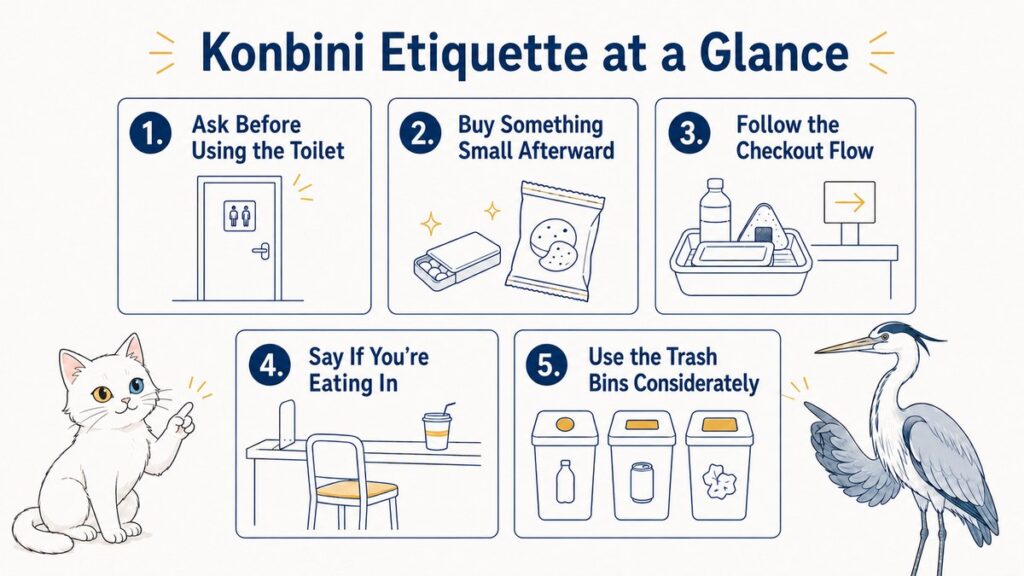
- Rule 1: Ask Before Using the Toilet
- Rule 2: Buy Something Small Afterward
- Rule 3: Checkout Manners — The Little Tray and Other Small Things
- Rule 4: Using the Eat-In Corner
- Rule 5: Where’s the Trash Can?
- Frequently Asked Questions
- A Quick Recap from a Japanese Mom
You’ll Be in a Konbini Within Hours of Landing

 Fresh off the plane, jet-lagged and thirsty, many travelers walk into a Japanese convenience store before they’ve even checked into their hotel. And honestly? That first konbini run feels a little magical — fresh onigiri, hot coffee, cold tea, and a level of cleanliness you may not expect from a corner store.
 But somewhere between the automatic doors and the register, a quiet worry creeps in. Can you use the toilet here? Where does your trash go? Nobody explains these things, and you don’t want to be that tourist.
So let me help. I’m a Japanese mom living in Japan, and konbini are part of my everyday life — especially with my kids in tow. None of what follows are official rules. They’re the small, unspoken habits locals follow without thinking, and learning just a few will make your trip smoother.
Rule 1: Ask Before Using the Toilet
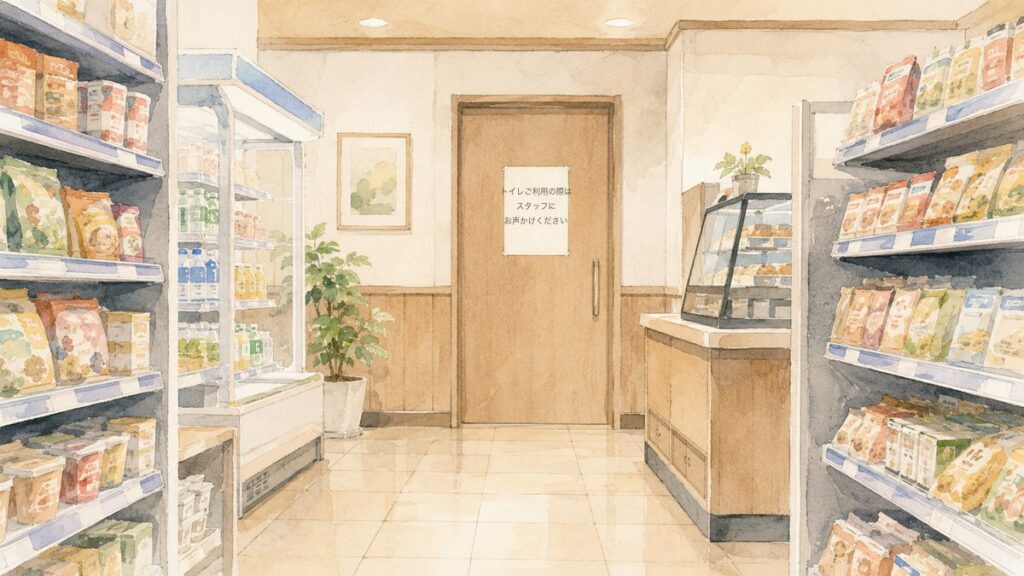
Here’s the good news: many konbini make their toilets available to customers, and yes, travelers are welcome too. But not every store has one, the rules vary by location — and there’s a local rhythm to it that starts before you walk to the back of the store.
Quite a few stores post a small sign asking you to tell the staff first. If you see one, just say “Toire o tsukatte mo ii desu ka?” — “May I use the toilet?” Can’t remember the phrase? Pointing toward the back and saying “toilet” works fine, and so does showing the phrase on your phone. The staff will understand right away — you’re not the first person to ask, I promise.
 One heads-up: not every store has one. City-center and station-area stores especially sometimes don’t offer a restroom at all, and a toilet may be temporarily closed for cleaning or maintenance. If you get an apologetic no, it’s nothing personal — try a train station, a department store, a shopping mall, or simply the next konbini down the street.
Rule 2: Buy Something Small Afterward
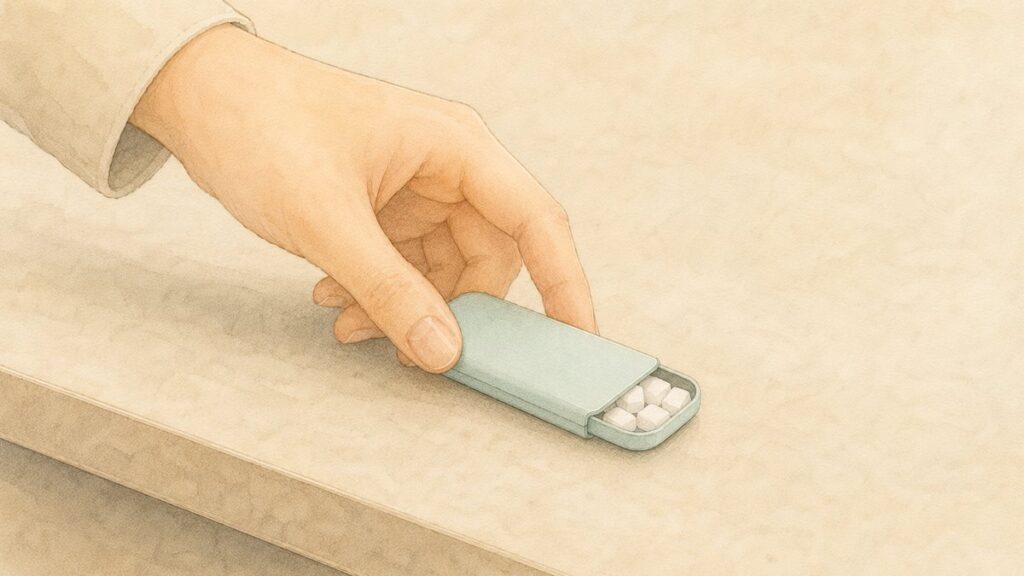
Now for the part no guidebook mentions, because it isn’t written anywhere: after using the toilet, buy something small. A drink, a little snack — even a small pack of mints is enough.
 I do this every time. My younger child is still small, so I end up borrowing konbini toilets more often than most people. And on the way out, I always pick up a snack or a drink. Nobody asks me to. It’s simply that the store helped me when I needed it, so I want to give something back.
🌸 A Quick Etiquette Tip (from a Japanese mom)
My habit: toilet first, then one small purchase — even just a pack of mints.
Is it mandatory? No. Nobody will scold you for leaving without buying anything.
For me, that small purchase is simply a quiet way to thank the store for providing and maintaining the toilet.
Rule 3: Checkout Manners — The Little Tray and Other Small Things
Konbini checkout is fast, friendly — and full of quick questions you didn’t see coming. The staff aren’t quizzing you; being asked is simply part of the service here. These are the three questions you’ll actually hear, and the answers that work.
“Fukuro go-riyō desu ka?” — Do you need a bag?
Plastic bags cost a few yen in Japan, so the staff always check. Answer “Hai, onegai shimasu” (yes, please) or “Daijoubu desu” (I’m fine, thanks).
“Atatamemasu ka?” — Shall I heat this up?
You’ll hear this whenever you buy a bento or anything microwavable. The same two answers work: onegai shimasu to warm it up, daijoubu desu to skip.
“Fukuro wakemasu ka?” — Shall I separate hot and cold items?
Buy hot food and a cold drink together, and they’ll offer separate bags. I usually answer “Issho de daijoubu desu” — together is fine. One less bag to carry.
 And here’s a little secret: whenever you’re asked something you don’t catch — a point card, chopsticks, a receipt — a polite “Daijoubu desu” with a small head shake safely declines almost anything. It’s the Swiss Army knife of konbini answers.
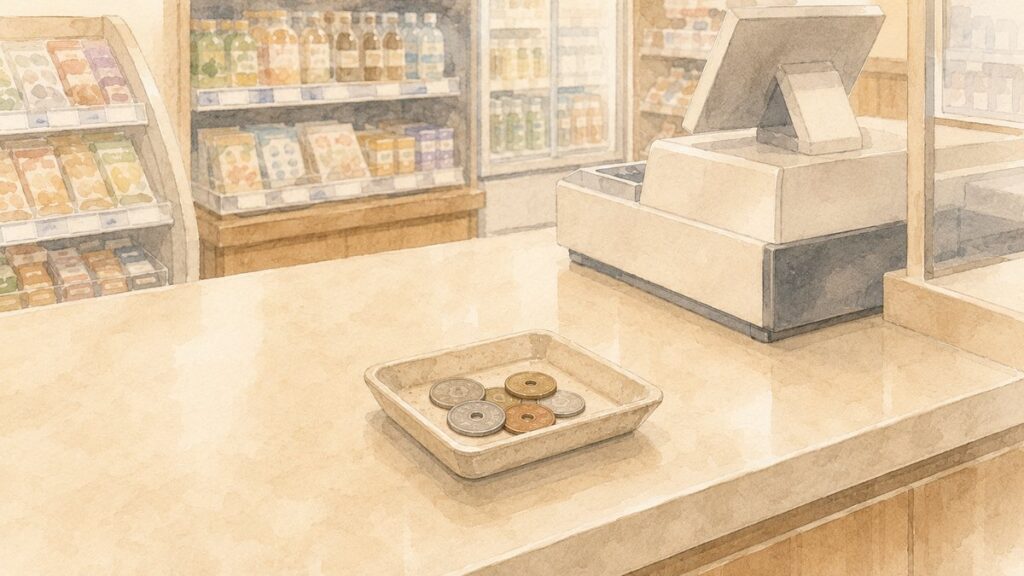
As for paying, I’m almost fully cashless these days, and konbini are one of the easiest places in Japan to pay that way — credit cards, transit cards like Suica, and phone payments all work at the major chains. One honest heads-up: available methods vary by store, and a foreign-issued card can occasionally fail, so keeping a little cash on you is still smart. Most konbini also have an ATM that takes foreign cards — I explain how they work in my Japan ATM guide for foreign cards. If you do use cash, place your money on the little tray by the register instead of handing it to the clerk — that’s exactly what it’s there for. Some stores use a self-checkout machine instead; just follow the screen and the cashier’s gestures.
Rule 4: Using the Eat-In Corner
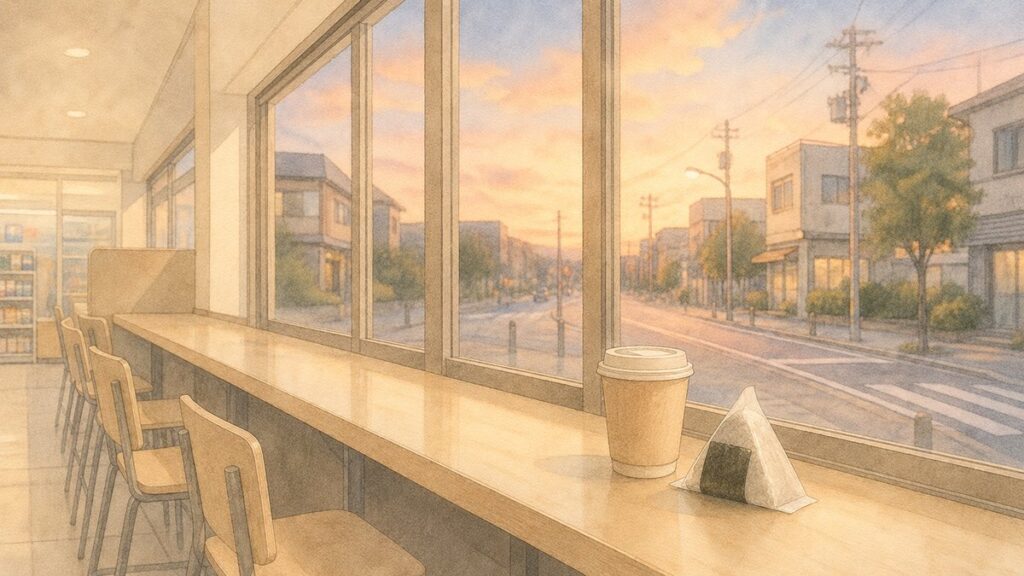
Spot a row of counter seats by the window? That’s the eat-in corner, and it’s exactly what it looks like: a place to enjoy what you just bought without hunting for a bench outside. On a rainy day — or in the middle of a sticky Japanese summer — it’s a small lifesaver.
 One detail many visitors miss: if you plan to sit down, tell the cashier before you pay. A simple “Koko de tabemasu” — “I’ll eat here” — does the job. In Japan, take-out food is taxed at 8% while eating in counts as dining at 10%, so the register needs to know. Some stores will ask you directly; others just put up a small sign.
The etiquette is simple. Eat what you bought at that store, take your trash to the bins when you’re done, and leave the seat the way you found it. Some stores have self-service hot water and a microwave — cup noodles included — while at others the staff heat eligible items for you. Facilities vary by store, so follow the signs or ask before using anything.
One last thing: the eat-in corner is for a short break, not a full afternoon. When seats are few and the store gets crowded, locals finish up and free the spot. Do the same, and you’ll blend right in.
Rule 5: Where’s the Trash Can?
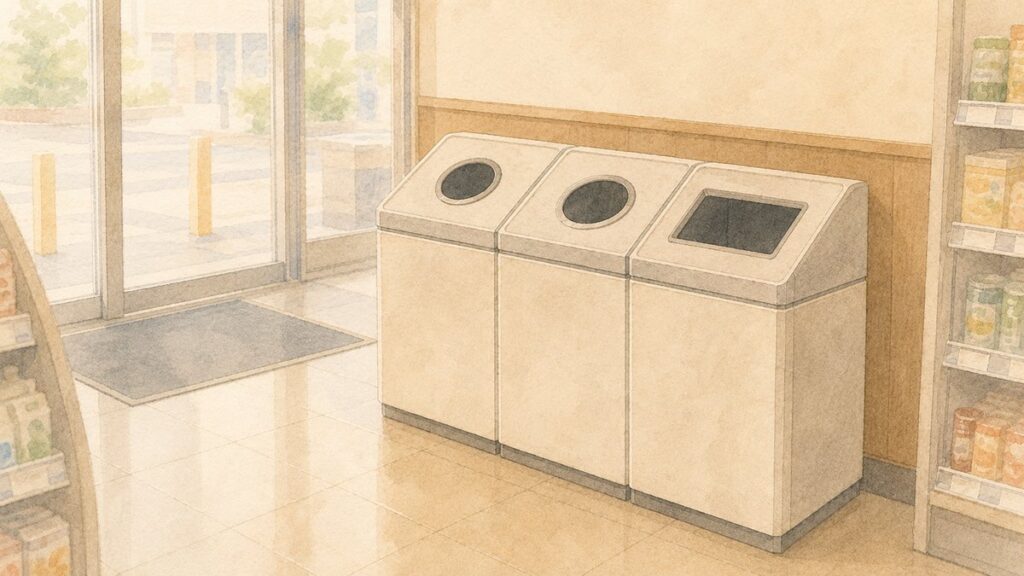
If you’ve walked around Japan for even half a day, you’ve already noticed: public trash cans barely exist here. Which is why the bins at a konbini — usually near the entrance or the eat-in corner — start to look like an oasis.
The unspoken rule is that those bins are for things you bought at that store — and policies vary, so some stores restrict what can go in or don’t provide a bin at all. Follow the sorting labels: burnable waste, plastic bottles, and cans are usually separated. But let me be honest with you: nobody minds a small piece of trash from your pocket — a candy wrapper, an empty bottle. Where it clearly crosses the line is arriving with a full bag of trash from your hotel room. Stores sort and pay to dispose of their own waste, and hotel rubbish puts an unfair burden on them.
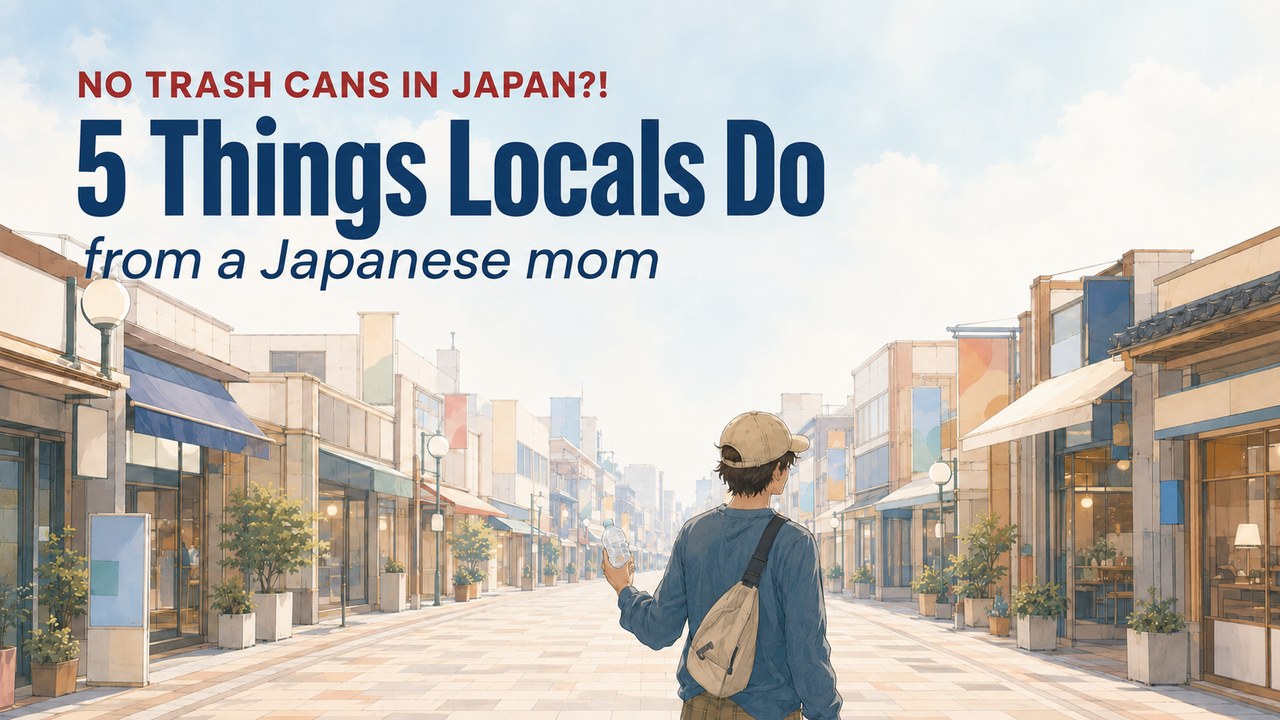
 So how do locals survive a whole country with almost no trash cans? The short answer: we carry our trash with us until we get home. The long answer — where to find bins, what to do with them on a full day out — is one I’ve now written a whole guide about: Why Are There So Few Trash Cans in Japan? 5 Things Locals Do.
Frequently Asked Questions
Can tourists use konbini toilets in Japan?
Many konbini let customers use their toilets, but not every store has one — check the sign and tell the staff first when asked. A toilet may also be temporarily closed for cleaning or maintenance.
Do I have to buy something after using the toilet?
No, it isn’t a rule, and nobody will stop you. Picking up a small snack or drink is simply my personal way of saying thank you to the store.
Can I eat inside a Japanese convenience store?
Yes — as long as the store has an eat-in corner and it’s open. Tell the cashier before paying, since food eaten in the store is taxed differently, and follow any posted time limits or store rules.
Can I use konbini trash bins for my own trash?
Not every store accepts outside trash, so use only bins that are clearly available to customers and follow the sorting labels. Never bring hotel or household rubbish — and if you’re unsure, carry your trash with you.
What should I say if I don’t understand the cashier?
“Daijoubu desu” (I’m fine, thanks) politely declines almost any offer, and “Onegai shimasu” accepts it. If you need help, start with “Sumimasen” — excuse me.
A Quick Recap from a Japanese Mom
If you remember just one thing from this article, make it this: none of these are laws. They’re small ways of giving something back — a pack of mints after borrowing the toilet, a seat freed up when the eat-in corner fills, a piece of trash carried a little farther.
Japan quietly runs on these tiny exchanges. And as a visitor, you don’t need to get them all right. Two phrases — onegai shimasu (yes, please) and daijoubu desu (I’m fine, thanks) — will carry you through almost any konbini moment.
And when things get confusing anywhere else in Japan, there’s one magic word that opens nearly every door: sumimasen. I’ve given that one an article of its own.
Enjoy your first konbini run. The onigiri is even better than you’ve heard.
What’s the closest thing to a konbini in your country? Is it open late — or all night like in Japan? I’d love to hear — tell me in the comments below!
If that konbini onigiri made you wonder why Japanese rice tastes the way it does, I wrote about that here: Is a Zojirushi rice cooker worth it?
I hope this guide eases even a little of any worries you may have about traveling in Japan — and helps make your trip a joyful memory you’ll carry with you for years to come.
 See you in the next guide!

Comments