
You’ve come back from Japan, and the rice at home tastes different. Before you spend a few hundred dollars on a Zojirushi, here’s what a Japanese mom would actually tell you — including the free trick that might solve it for you.

Disclosure: This article contains affiliate links. If you buy through one, I may earn a small commission at no extra cost to you.
In a hurry? Everything in this guide, in one list:
- Zojirushi Neuro Fuzzy NS-ZCC10 — the classic everyone recommends
- Zojirushi Micom NS-TSC10 — the budget-friendlier pick
- Browse all Zojirushi models — sizes and colors
These links are the North American (120V) versions — Japanese domestic models run on 100V, so buying at home is the safe choice here.
You’ve Tasted Real Japanese Rice — and Now Home Feels Different
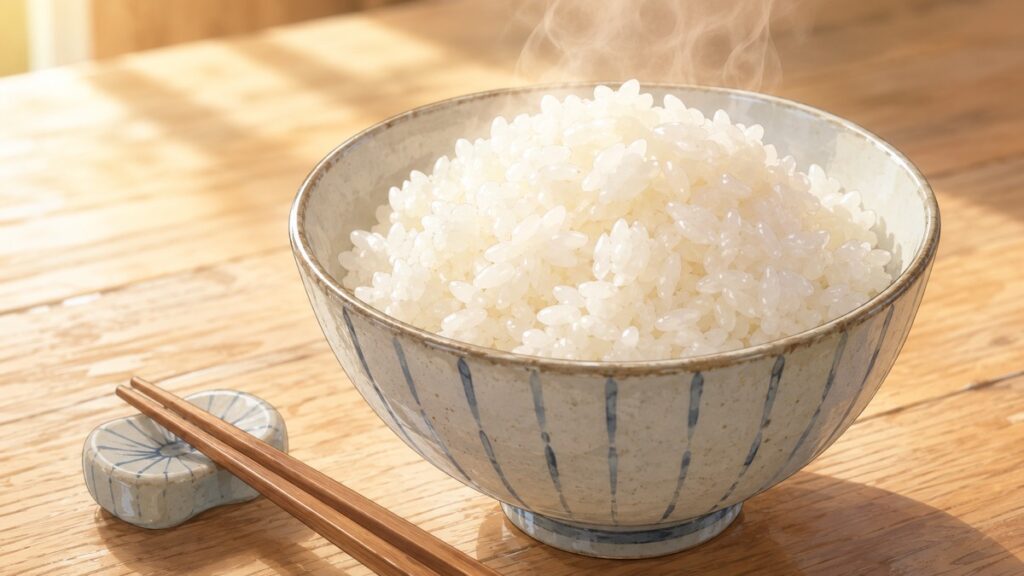
If you’ve been to Japan, you already know what I’m about to say. The rice was different. Even a plain onigiri from a convenience store had that soft, slightly sweet, bouncy texture — and somehow, the rice you make back home doesn’t taste like that.
 Here’s the part most visitors never see: that texture isn’t luck. Rice cookers are a familiar part of many Japanese kitchens, used almost daily, and families here compare models the way some countries compare coffee machines. Zojirushi is one of the names you’ll hear most often.
But then you check the price. A Zojirushi can cost several times what a basic rice cooker costs, and they’re sitting right there on the same page. That’s the moment most people freeze — and as someone who watches every yen at the supermarket, I completely understand.
So let me help. I’m a Japanese mom, and rice cookers have been part of my daily life for about 25 years — I grew up with one, and there’s one on my kitchen counter right now. Full disclosure: mine isn’t even a Zojirushi. I’ll tell you what it is later, and why I still think Zojirushi is worth talking about. Along the way, I’ll show you what that extra money actually buys — and the things Japanese families make in these machines that have nothing to do with plain rice. (A cheesecake is involved. We’ll get there.)
 Quick answer: a Zojirushi is likely worth it if you cook rice several times a week and you care about consistent texture, rice-specific settings, and keep-warm performance. If rice appears on your table only occasionally, a simpler cooker is probably the better value — and there’s a free trick further down that may get you most of the way there.
What the Extra Money Actually Buys
Here’s my confession first: the rice cooker on my counter is an Iris Ohyama, a Japanese budget brand, and my family has zero complaints about the rice. So no — you don’t need to spend a lot to eat well. Japanese kitchens run on affordable cookers too.
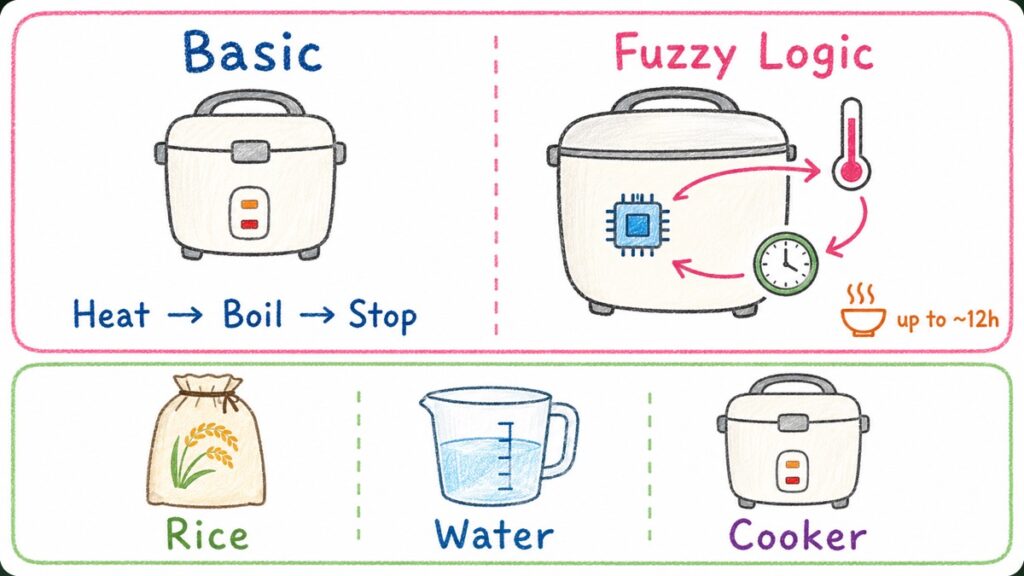
The difference is what happens beyond “decent.” A basic machine turns on the heat, boils, and stops. Zojirushi’s fuzzy-logic models use a microcomputer to make fine adjustments to cooking temperature and timing according to the setting you choose and the conditions inside the pot. That control can help produce rice that’s soft but springy and evenly cooked from top to bottom.
 I want to be straight with you about one thing, though, because it will save you money: the machine is only part of it. The rice variety, how fresh it is, how you rinse it, and how carefully you measure the water all matter just as much. A great cooker cannot turn the wrong rice into the rice you remember.
You’re also paying for what happens after cooking. In many Japanese homes, rice is cooked once and eaten across the day, so keep-warm quality matters. Zojirushi’s models include automatic and extended keep-warm settings; the company generally suggests keeping rice warm for no more than about 12 hours, and your manual will give the exact limit for your model.
So here’s my honest line: if you cook rice a few times a month, a basic cooker is probably enough — mine is. If rice is a regular part of your meals and you want the same result every time, that’s when the extra cost starts to make sense.
Which Zojirushi Should You Actually Buy?
Most people shopping for their first Zojirushi land on the same two models. The choice isn’t really “better vs. worse” — it’s about which settings you’ll use.
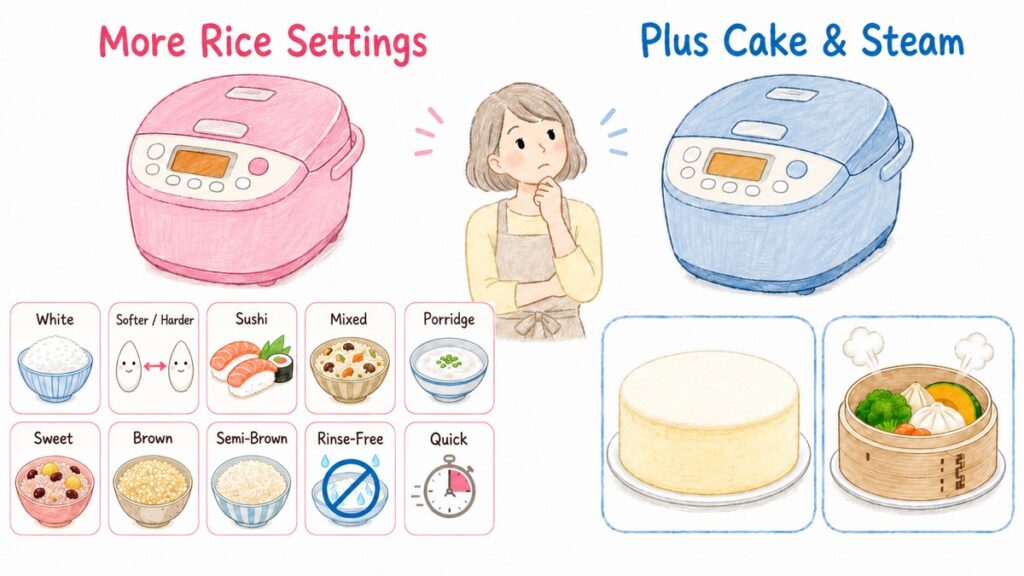
The Neuro Fuzzy (NS-ZCC10) is the rice-focused one. Its menu settings are almost all about rice: white rice in regular, softer and harder textures, sushi rice, mixed rice, porridge, sweet rice, brown and semi-brown rice, rinse-free rice, and a quick setting. It’s rated at 680 watts and made in Japan.
The Micom (NS-TSC10) covers fewer rice variations but adds two settings the Neuro Fuzzy doesn’t have: Cake and Steam. That cake setting is the part I want you to notice — Zojirushi printed it right on the control panel, which means rice-cooker cakes are something the manufacturer officially supports, not just an internet experiment. It’s rated at 610 watts and made in China, in a factory Zojirushi operates.
Both hold up to 5.5 cups of uncooked rice. One important note: that’s 5.5 Japanese rice cups, and one rice cup is about 180 mL (roughly 6.1 fl oz) — noticeably smaller than a standard US measuring cup. The Neuro Fuzzy is the slightly smaller machine on the counter (10 x 13-1/8 x 8-1/4 inches versus 10-1/8 x 14 x 8-1/2 inches), which matters more than people admit in a small kitchen.
So: choose the Neuro Fuzzy if you want the widest range of rice settings. Choose the Micom if Cake and Steam sound like things you’d actually use.
Both are sold on Amazon in the North American (120V) versions: the Zojirushi Neuro Fuzzy NS-ZCC10 and the Zojirushi Micom NS-TSC10. Check the current price there, because it moves around more than you would expect for a rice cooker.
 Before you order, check three things. First, buy the model made for your country. Japanese domestic models run on 100V; North American models are 120V. A plug that fits doesn’t mean the voltage matches, and Zojirushi doesn’t recommend using its appliances abroad with a converter or adapter. Second, check the full model number and electrical rating — Japanese and North American versions look similar but aren’t interchangeable. Third, buy from Zojirushi or a recognized retailer: in the US and Canada, Zojirushi’s limited warranty on electrical products generally runs one year, applies only to units purchased and used in those countries, and excludes internet auction purchases. If you’re reading from somewhere else, check your local Zojirushi site or an authorized seller before ordering, because availability, voltage and warranty terms differ by country.
Japanese Families Don’t Just Cook Rice in These
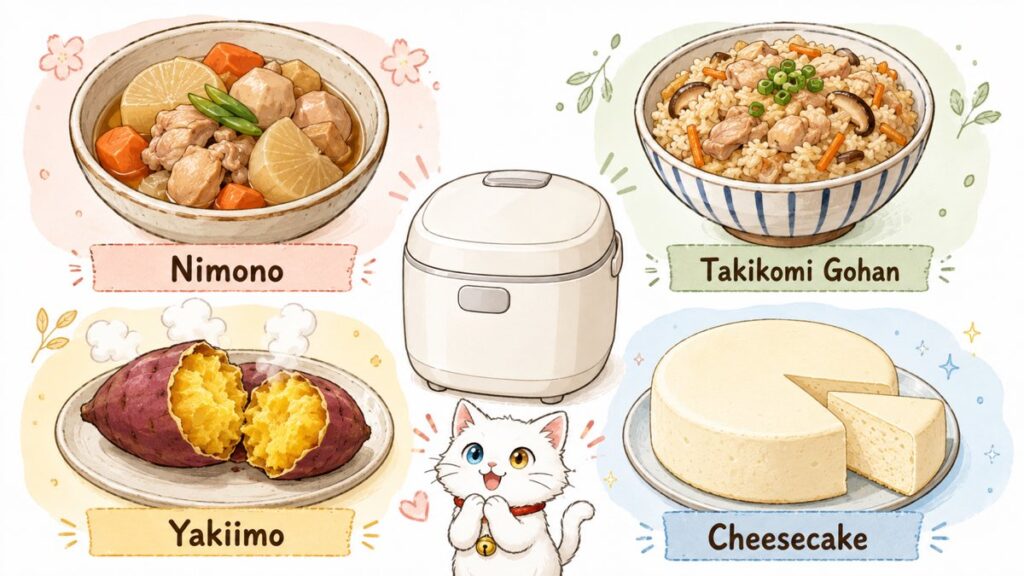
Here’s the part that surprises almost every visitor I talk to. In a Japanese home, the rice cooker isn’t a single-purpose gadget sitting in the corner. It’s a machine built around one obsession — rice — and Japanese makers have poured decades of engineering into exactly that. But that same control over heat, steam and timing means some models can do more than rice.
 How much more depends entirely on the model. The NS-TSC10 has dedicated Cake and Steam settings; the NS-ZCC10 is built for rice, porridge and mixed-rice dishes. Before you try any of what follows, check what your own machine is actually designed to do — that’s the difference between a fun experiment and a broken appliance.
One more piece of honesty before we go on. Everything in this section is something I’ve made in my own rice cooker, which is an Iris Ohyama, not a Zojirushi. These are my experiences with rice-cooker cooking in general — not tests of the two models above.
Nimono (simmered dishes)
Nimono — the simmered dishes at the center of Japanese home cooking — is what I make most. Root vegetables, chicken, soy sauce, a little sugar and mirin, lid closed, and you walk away. What I love is how deeply the flavor soaks in while it sits there, and what it does to root vegetables: daikon, carrot and taro come out tender and fluffy right through to the middle.
Takikomi gohan (rice cooked with its ingredients)
Then there’s takikomi gohan — rice cooked together with its ingredients rather than served beside them. Chicken, mushrooms, carrot, a little soy sauce and dashi. It’s one of the most ordinary dinners in Japanese homes and it’s wonderfully hands-off, but the order does matter: measure the rice and water first, then lay the ingredients on top without stirring them into the rice. Use the mixed-rice setting and stay within the ingredient limits in your manual. Then close the lid and forget about it. On a night when nobody in the family has energy left, this is what saves us.
Yakiimo (roasted sweet potato)
Yakiimo — roasted sweet potato — is the one I most want you to try. In Japan it’s a winter comfort food, sold from trucks that drive slowly through neighborhoods playing a song. A rice cooker gets you surprisingly close to that at home: sweet, soft, no oven required.
 But let me be honest with you, because that’s the deal I made at the top of this site. If you’re in Japan, look for the ready-made kind first — many Don Quijote stores and supermarkets sell it warm, though it depends on the store and the season. When I find it, I honestly prefer theirs to the one I make at home, and I say that as someone who has made it plenty of times. It’s one of those small, unglamorous parts of daily life here that I’d genuinely miss if I moved away. The rice cooker version is what you make once you’re home and there’s no Don Quijote around the corner anymore.
Cheesecake
And yes — cheesecake. This is the one that makes English-speaking readers stop scrolling, and it isn’t a stunt: Zojirushi designed the NS-TSC10 with a dedicated Cake setting, so this is something the manufacturer built for. It won’t brown on top the way an oven-baked cake does, and how it turns out depends on the recipe you follow and on staying within your manual’s limits for batter and ingredients. But I’ll put it the way I actually say it at home — for how little effort it takes, tasting that good almost feels like cheating.
Questions People Ask Before Buying

How long does it take to cook rice?
Longer than you might expect, and this is the honest trade-off. Fuzzy-logic machines include a soaking stage in the cooking program, which is part of why the texture comes out the way it does — but it means you can’t decide at 6:50 that you want rice at 7:00. Reviewers used to boiling rice on the stove in twenty minutes consistently name this as the thing to adjust to. There’s a quick setting for the nights you forget, but the everyday rhythm here is to start the rice first and cook everything else around it.
Is it a pain to clean?
Not really, but it’s a daily habit rather than an occasional one. The inner pan and the inner lid come out and get washed after use — the Neuro Fuzzy’s inner lid is designed to detach for exactly that. Hand-wash them; they aren’t made for the dishwasher. That’s about two minutes a day, and it’s the same routine I’ve had with every rice cooker I’ve owned.
Will it work with my outlets at home?
Only if you buy the version made for your market. Zojirushi’s North American models are rated for 120V; Japanese domestic models are built for 100V, and a matching plug shape doesn’t make them compatible. Zojirushi also doesn’t recommend using its appliances overseas with a voltage converter or plug adapter. Outside the US and Canada, check your local Zojirushi site or an authorized seller — voltage, availability and warranty terms vary by country.
I already have a cheap rice cooker. Should I upgrade?
Probably not — at least not yet.
I still use an inexpensive Japanese brand at home, and my family eats well every day. A cheap cooker makes good rice. That part is true, and I’m not going to pretend otherwise.
 Before you replace anything, try this: cook Japanese short- or medium-grain rice and measure the water carefully. Even an excellent rice cooker can’t make long-grain rice taste like the rice in a Japanese onigiri — that’s the rice, not the machine. A lot of people who think they need a new cooker actually need different rice.
After that, there are three situations where upgrading makes sense. The first is if rice has become something you eat most days, not once in a while. The second is if you cook brown rice or takikomi gohan and it keeps coming out uneven. The third is if you want particular settings — rinse-free rice, softer or harder white rice, cake — that your current machine simply doesn’t have.
If none of those sound like you, save your money. Wanting the expensive one isn’t a reason.
Can you really bake a cake in a rice cooker?
On a model with a Cake setting, yes — the NS-TSC10 has one printed on the panel. It won’t brown on top the way an oven does; it comes out closer to a steamed cake, dense and moist. The result depends on the recipe, and your manual will tell you how much batter and which ingredients the machine is designed to handle.
A Tip From a Japanese Mom (This One’s Free)
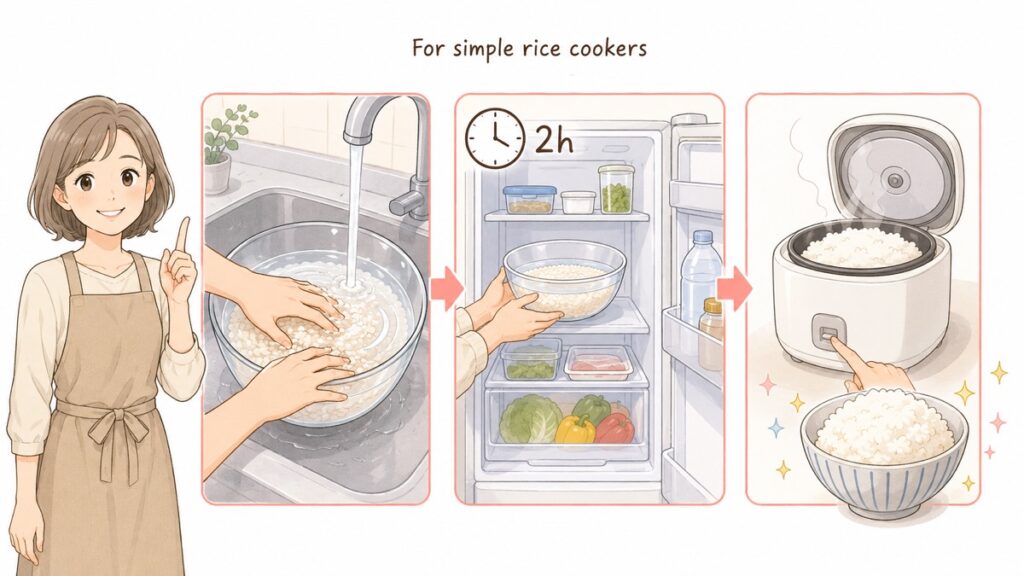
 Before you spend anything, try this.
If you’re using a simple rice cooker — the kind that just heats, boils and stops — wash your rice, add the cooking water, and let it soak before you start the machine. I put mine in the fridge for about two hours. Cold soaking lets the grains take in water slowly and evenly, all the way to the center, before any heat reaches them.
I know how small that sounds. The first time I did it properly, the difference genuinely surprised me — same rice, same machine, noticeably better texture.
One caveat, because it matters: fuzzy-logic machines like these Zojirushi models already include a soaking stage in their cooking program. If that’s what you own, follow the manual rather than adding a long presoak of your own.
So if you have a basic cooker, try this first. If your rice suddenly tastes closer to what you remember from Japan, you may not need to buy anything at all. And if you’re still curious about a Zojirushi afterwards, at least you’ll be upgrading from your own best result, not from a shortcut.
One more thing you’ll find in a Japanese kitchen: a proper rice bin. Rice is a dry food, but left in an open bag it can pick up moisture, odors and, in warm months, pantry bugs. Many Japanese households keep it in an airtight bin instead. If you’d like one, look at Yamazaki’s airtight rice bin — it holds a full 10 kg (22 lb) bag, comes with a measuring cup, and is shaped so the last grains are easy to scoop out: Yamazaki Airtight Rice Bin 10 kg (Black).
If you’re building a small Japanese kitchen from abroad, two more guides cover the rest of the set: which Japanese knives are actually made in Japan, and Japanese gifts you can order without going to Japan.
So, Is It Worth It?

If you take one thing from this guide, let it be this: the rice you loved in Japan wasn’t magic, and it wasn’t only the machine. It was good rice, treated patiently — the right variety, rinsed, soaked, cooked slowly, and eaten with everything else on the table.
A Zojirushi automates the patient part and gives you settings a basic cooker doesn’t have. That’s a real thing to buy. But it isn’t the only way in. Try Japanese short-grain rice. Try the cold soak. Cook rice a few more times. If you then find yourself wanting something your machine can’t do, that’s when an upgrade will actually feel like an upgrade.
Check Zojirushi rice cookers on Amazon
Before you order, confirm four things:
- Capacity — 5.5 Japanese rice cups is smaller than 5.5 US cups
- Voltage and full model number for your country
- The menu settings you’ll actually use (Cake and Steam only on the NS-TSC10)
- Warranty terms where you live, and buy from an authorized seller
And if your current cooker already gives you rice you enjoy, there’s no need to replace it yet.
Whichever cooker ends up on your counter, please make the cheesecake. It’s the most Japanese thing you’ll do all week, and it takes almost nothing.
And if reading this has you plotting a return trip to eat that rice at the source — I’ve mapped out a full 10-day Japan itinerary with real 2026 prices.
 Now I’m curious about your side of the world — do you cook rice at home, and does your family have a rice cooker sitting on the counter like ours does? Tell me in the comments below. I read every single one!
I hope this guide has answered one of your questions and helped you feel a little closer to Japan. May your Japan journey be filled with wonderful discoveries and memories you’ll treasure for years to come.
See you in the next guide. 



Comments