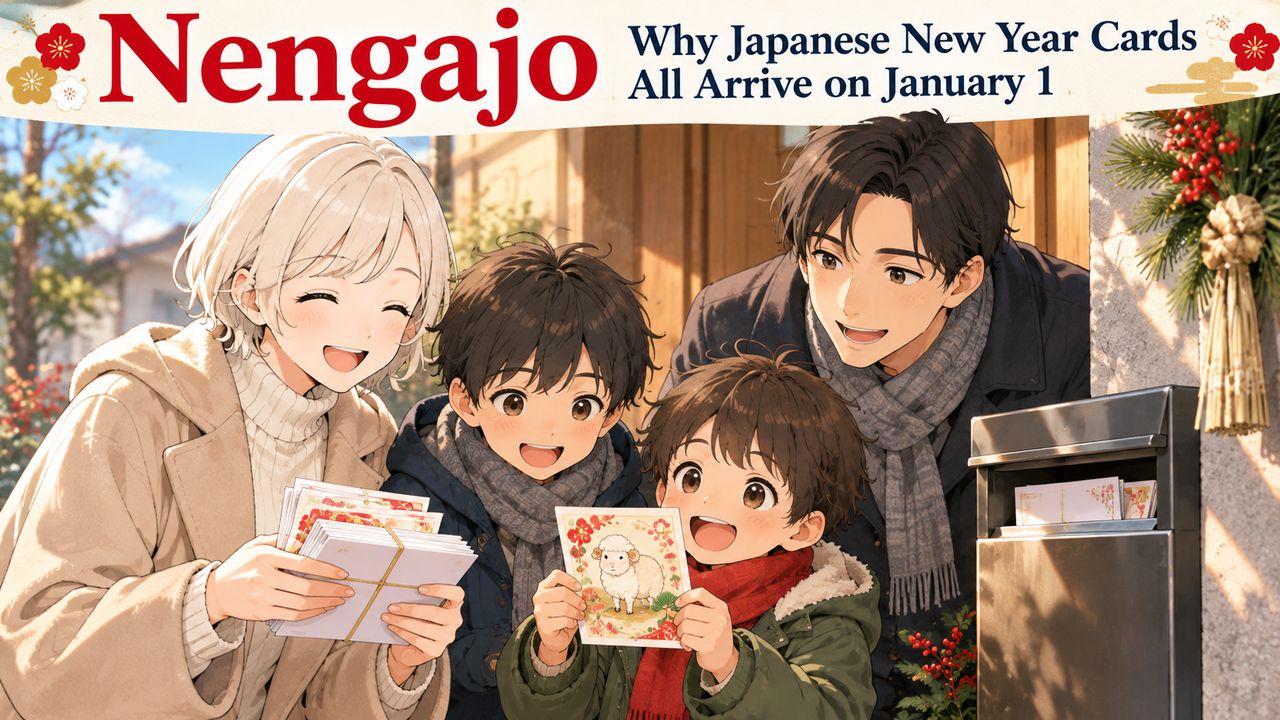

A stack of postcards on New Year’s morning
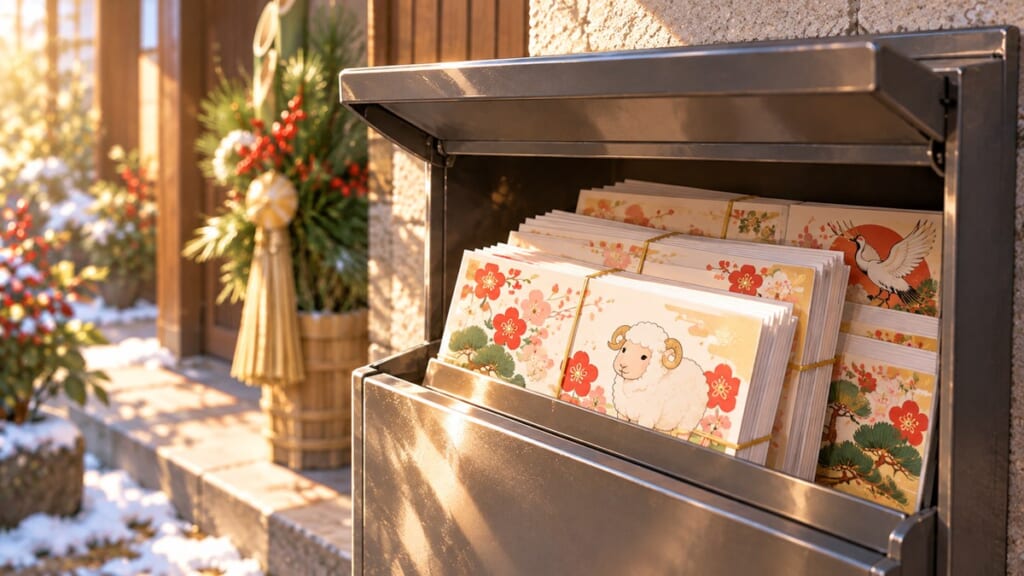
 Imagine opening your mailbox on January 1 and finding a whole stack of postcards waiting for you. Not bills. Not advertisements. New Year’s greetings from people who remembered you before the year even began.
 Here’s the clever part: those cards were mailed in December. Japan Post holds them and arranges for them to be delivered together on New Year’s Day.
They’re called nengajo (年賀状), Japan’s traditional New Year’s cards. And that little stack of postcards tells a story about a custom that’s still familiar in Japan, even as fewer people take part in it.
This is episode 14 of Little Things in Japanese Life, where I share the everyday details of Japan that are easy to walk past without noticing.
How it works
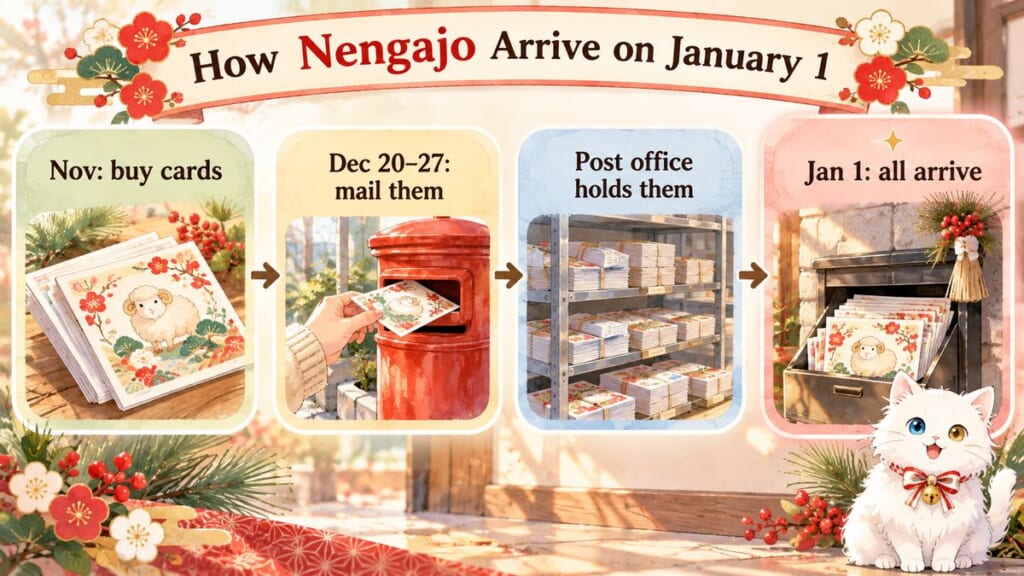
The secret to nengajo is simple: you write your New Year’s greeting early, and Japan Post handles the timing. Instead of delivering each postcard as soon as it arrives, the postal service collects New Year’s mail for a special January 1 delivery.
For 2027 nengajo, here’s the schedule:
- November 2, 2026: Official New Year’s postcards go on sale.
- December 20, 2026: Japan Post starts accepting New Year’s mail.
- By around December 27, 2026: Mail your cards for January 1 delivery.
- January 1, 2027: New Year’s cards are delivered together.
Mailing before December 20 could mean ordinary delivery before New Year’s Day. Mailing after December 27 doesn’t guarantee January 1 delivery.
 These dates can change each year, so check Japan Post’s announcement for the year you’re sending cards. Make sure your postcard is clearly marked as New Year’s mail, too. Official nengajo postcards already have the Japanese character 年賀 (nenga) printed on them.
 There’s even a little surprise built into the official cards. Each one comes with a lottery number, and a drawing is held in January. So the postcard isn’t necessarily finished being interesting once you’ve read the greeting!
Why Japan does it this way
Think about someone you care about but won’t see during the New Year holidays. A handwritten greeting arriving on January 1 can feel like a small way of celebrating together, even from a distance.
That’s part of what makes this delivery system so lovely to me. The post office helps people share their greetings on the same day, turning something as ordinary as checking the mailbox into a New Year’s moment.
What people write
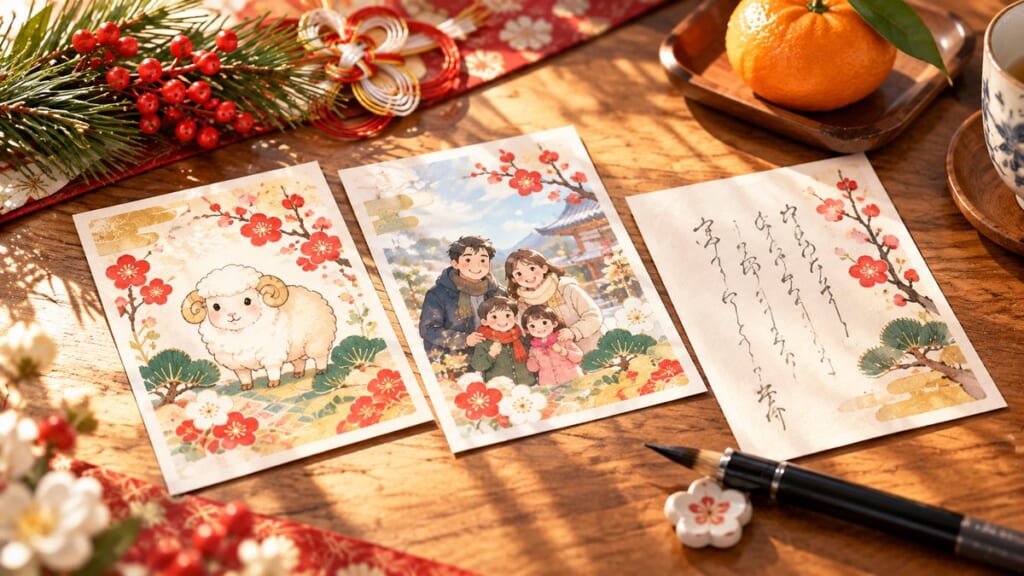
Open a nengajo and you might see a cute animal, a family photograph, or a carefully written message. Some cards are colorful and playful, while others are simple, with just a few lines of handwriting.
One common design is the animal of the Japanese zodiac, called eto (干支). For 2027, it’s the sheep, or hitsuji (未・ひつじ). You might see sheep illustrated on postcards alongside traditional New Year’s decorations.
The greeting itself doesn’t need to be long. A familiar phrase is “Akemashite omedetou gozaimasu” (あけましておめでとうございます), meaning “Happy New Year.”
People may also thank the recipient for the past year and ask for their continued friendship or support in the coming year. Sometimes there’s a short handwritten note alongside a printed design, adding something personal to a card that might otherwise look like many others.
Family photographs are another familiar style. For someone you don’t see often, a photo and a few words can be a way to share a small update about the family.
When a family is in mourning
There’s also a quieter side to this custom. When someone in the family has passed away, people may send a mochu hagaki (喪中はがき), usually around November to early December, to let others know they won’t be sending celebratory New Year’s greetings that year.
Fewer cards every year
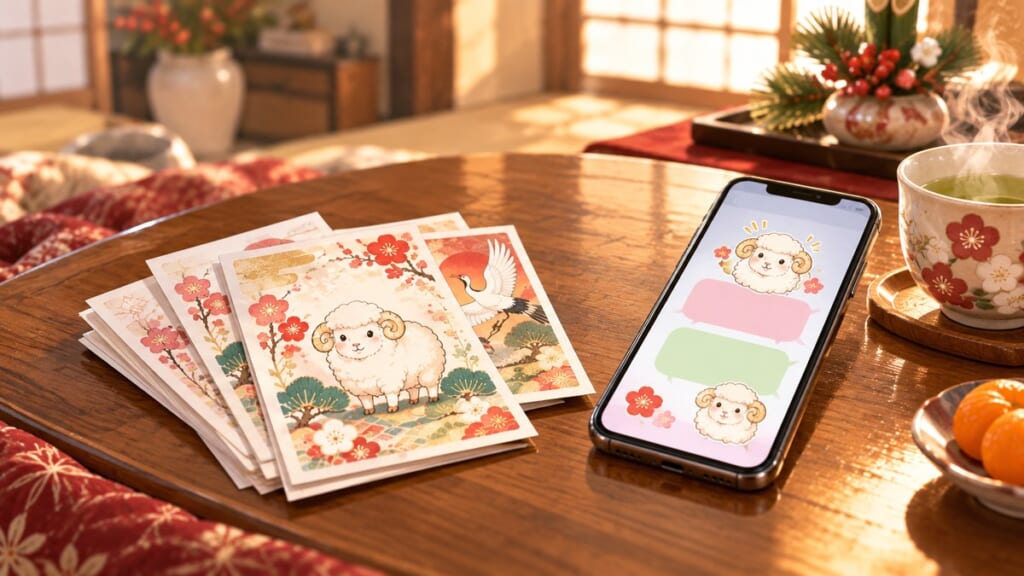
Now here’s something that might surprise you: nengajo are becoming much less common.
In the early 2000s, Japan’s New Year’s postcard production reached a peak of roughly 4.4 billion cards. For 2027, Japan Post’s initial print run is about 556 million. That’s a dramatic change for something that was once such a familiar part of the New Year season.
These are production numbers, not the number of people sending cards. Still, they show how much the custom has changed.
Today, many people exchange New Year’s greetings through messaging apps like LINE instead. You can send a message without preparing postcards, writing addresses, or making a trip to the mailbox.
Japanese even has a word for ending the tradition: nengajo-jimai (年賀状じまい). It means letting people know, often through a final New Year’s card, that you won’t be sending nengajo from the following year onward.
My family stopped, too
To be honest, my family stopped sending nengajo, too. My children don’t write them either. So yes, I’m explaining a tradition that my own household no longer practices. A little awkward? Maybe!
But I don’t think that makes the custom any less interesting.
Preparing cards can take time, especially when someone has a long address list. And when a quick message can carry the same New Year’s greeting, it’s understandable that some people choose a different way.
At the same time, a postcard has its own charm. Someone chooses it, writes your name, and sends something you can actually hold.
I don’t think there’s a right side to choose here. The way people exchange greetings is changing, but the wish behind them can still be the same.
Send one yourself?
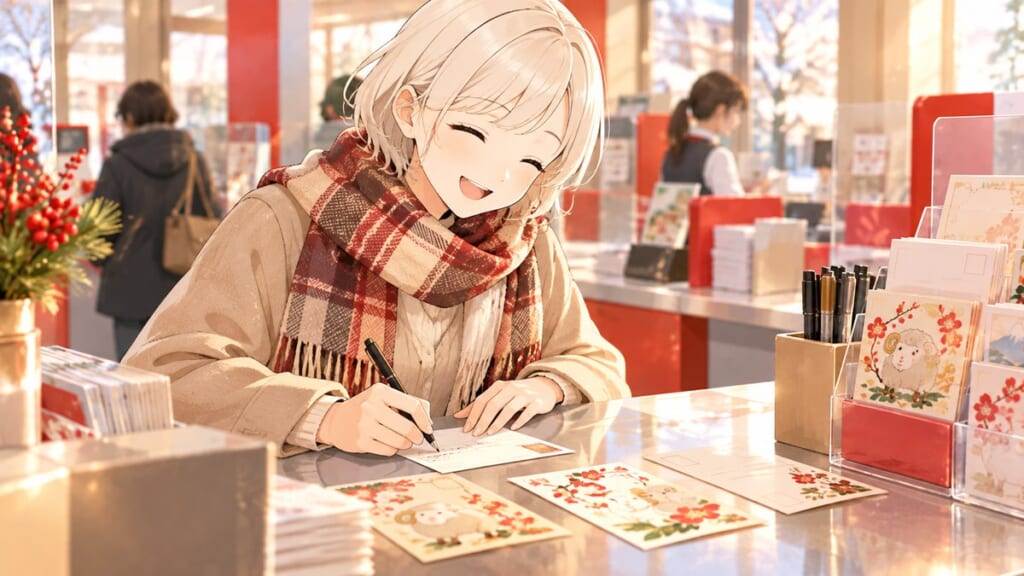
 Have a friend in Japan? A nengajo could be a sweet surprise. You don’t need an elaborate design. A New Year’s greeting and a personal sentence are enough.
If you’re in Japan:
- Buy a nengajo at a post office.
- Write your friend’s Japanese address and a greeting.
- For 2027, mail it December 20–27, 2026, for January 1 delivery.
Sending a nengajo outside Japan?
- Write “AIR MAIL” and “POST CARD” on the address side.
- Add the required extra postage.
- Leave the lottery number and printed 年賀 marking intact.
International nengajo don’t receive special January 1 delivery treatment, so check delivery times before sending.
 And if you’re visiting Japan around the holidays, there’s more to discover beyond postcards. My guide to what’s open in Japan over New Year can help you plan around holiday opening hours, while my guide to where to stay in Tokyo for New Year’s is a place to start if Tokyo is on your itinerary.
There’s something rather nice about a winter evening at the kotatsu with a warm drink and a postcard waiting to be written. If you’re curious about another little part of Japanese winter life, take a look at my story about the kotatsu, the heated table that makes staying indoors especially tempting.
Maybe the next nengajo you see will be a postcard in someone’s mailbox. Or maybe it’ll be a New Year’s message lighting up a phone screen. Either way, there’s a person on the other end.
What about you? Are you more of a handwritten-card person or a quick-message person when the New Year comes around? Tell me in the comments!
Thanks for reading! Next time, let’s peek into another little corner of life in Japan.
See you in the next episode.
Comments