

A whole fish? Not necessarily
You like eating fish. But cleaning it, dealing with the smell, picking out bones, and washing up afterward? Suddenly, chicken sounds easier.
Here’s something you might not expect: in Japanese supermarkets, much of the fish is already cut, cleaned, and ready to cook. You don’t have to start with a whole fish and a sharp knife.
 As a mom living in Japan, I regularly buy salmon, saury, horse mackerel, and other seasonal fish for meals at home. I’m always happy when the messy part is already done.
This is the tenth little discovery in my Little Things in Japanese Life series. Today, we’re taking a look at a supermarket fish counter — a surprisingly interesting corner of everyday life in Japan.
Fillets, sashimi packs, and grilled fish

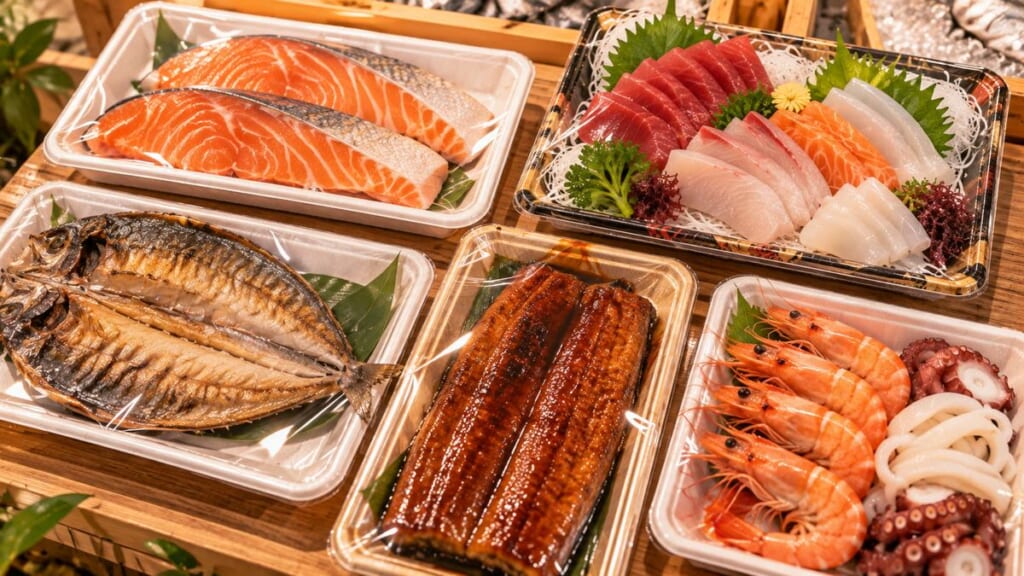
- Fillets and slices: Salmon (sake or shake), yellowtail (buri), and cod (tara) come portioned for grilling, simmering, or seasoning. Some still contain bones or skin, so check the package.
- Sashimi packs: Thin slices of raw fish come arranged in trays, sometimes with several kinds in one assortment. They’re ready to serve without cooking.
- Cooked fish: Depending on the store, you’ll find grilled, simmered, or fried fish near the seafood or prepared-food section. Cooked, glazed eel (unagi kabayaki) is another option, while butterflied mackerel is often sold ready for grilling.
- Other seafood: Squid, octopus, and shrimp also come cleaned, sliced, boiled, or otherwise prepared. I buy these at home too.
Why Japan sells fish this way
 Fish has a place in many Japanese home meals, but preparing it takes time and creates waste. Having it cleaned and portioned at the store can make dinner easier, especially in a busy household or small kitchen, with fewer fish scraps to clean up afterward.
“Could you clean this for me?”
Yes, some Japanese supermarkets offer a service where fish counter staff can clean or fillet a whole fish for you.
Depending on the store, staff may prepare the fish in several ways:
- Cleaning: Removing scales and internal organs.
- Sanmai-oroshi: Cutting the fish into three sections — two fillets and the central backbone.
- Butterflying: Opening the fish flat, often for grilling.
I’ve actually asked supermarket staff to prepare a whole fish for me before. They cleaned and cut it neatly, which saved me from doing that part at home.
 There’s one thing to remember: not every supermarket offers the same service. The available preparations, possible charges, and whether someone can help at that moment depend on the store.
If you’re buying fish in Japan, try asking at the counter:
“Kono sakana, sabaite moraemasu ka?” (この魚、さばいてもらえますか?)
It means, “Could you clean or cut this fish for me?”
You can point to the fish and check whether the staff can prepare it the way you want.
And if you enjoy preparing fish yourself, your cutting board matters too. I talk about the differences between Japanese cutting-board materials in my guide to Japanese cutting boards.
Fish of the season
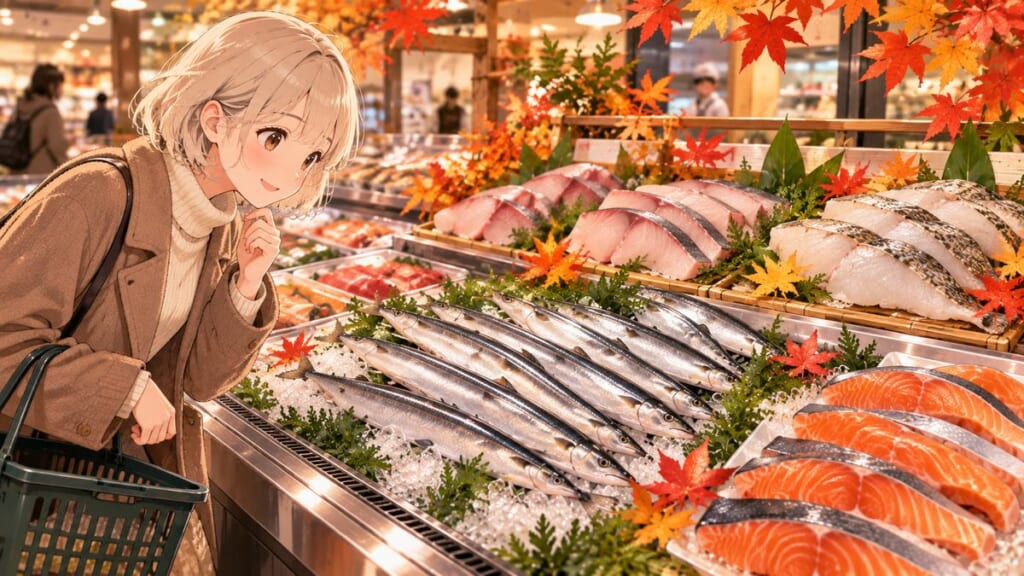
One thing I like about Japanese supermarket fish sections is how the selection changes with the seasons:
- Autumn: Silver Pacific saury (sanma) and autumn salmon (akizake), caught around the salmon’s autumn spawning period.
- Winter: Winter yellowtail (kanburi), prized for its rich, fatty flesh, and cod (tara), another cold-season favorite.
At home, I buy seasonal fish such as saury and salmon, along with yellowtail, mackerel, and cod. The seafood section gives me different choices as the year moves along.
When seasonal fish start appearing prominently in the display, it’s a small reminder that the season is changing. You don’t need a calendar hanging above the fish counter to notice.
But seasonal favorites don’t always arrive in the same abundance.
Pacific saury catches have been low in recent years. Japan’s catch improved in 2025, reaching around 65,000 metric tons, but that was still roughly one-fifth of the levels recorded during the much more plentiful years of the late 2000s.
So the familiar autumn sight of silver saury comes with a reminder that seafood availability can change, too.
For travelers
You don’t need a kitchen to enjoy Japanese supermarket seafood.
 If you’re traveling in Japan, a sashimi pack or a tray of ready-made nigiri sushi can make a simple hotel-room dinner. No stove, no cutting board, and no complicated preparation.
You may also notice discount stickers on some packs in the evening. They can be a nice surprise, although the selection and timing vary by store.
 Before buying raw fish, check three things:
- Use-by date: Look for shōhi kigen (消費期限) on the label.
- Storage: Keep the fish chilled and plan to eat it the same day. If your room has a fridge, it may help keep the pack cold until you’re ready.
- Raw consumption: Look for 刺身用 (sashimiyō, for sashimi) or 生食用 (namashokuyō, intended for raw consumption) on fish sold for raw preparation. Don’t assume every fresh-looking fish pack is meant to be eaten raw.
And fish is only part of the supermarket dinner story. Japan’s prepared-food sections offer all kinds of dishes you can take away, which I explore in my guide to Japanese supermarket osozai.
Maybe the next time you visit a Japanese supermarket, you’ll spend an extra minute in front of the fish counter. What looks like an ordinary dinner ingredient might tell you something about the way people live.
I’m curious: how is fish usually sold where you live — whole, filleted, already cooked, or something else? Tell me in the comments. I’d love to hear what your local fish counter looks like.
Thanks for reading! Next time, let’s peek into another little corner of life in Japan.
See you in the next episode.




Comments