
- The 30-Second Answer: Which of the Three Fits Your Trip
- Side by Side: Airports, Shinkansen, Night Moves and How Confusing the Station Is
- Shinjuku: Big, Bright, and Easy to Get Lost In
- Shibuya: Shopping at Your Door, a Station Still Being Rebuilt
- Tokyo Station: Quiet Nights, the Fastest Shinkansen, and Disney by Train
- Big Suitcases: Which Base Means the Fewest Transfers?
- From the Ticket Gate to Your Bed: Exits, Elevators and Rainy Days
- With Kids, Solo, or as a Couple: Three Lines Each
- Late Nights: Getting Back After Dinner
- None of the Above: When Ueno, Asakusa, Akasaka or Ebisu Fit Better
- Our Hotel Picks: Three per Area, All Within a 10-Minute Walk
- FAQ
- How We Would Choose for Our Own Family
The 30-Second Answer: Which of the Three Fits Your Trip
 You’ve opened another Tokyo hotel comparison, and now even the station exits sound like a decision. There isn’t one perfect answer: a comfortable room near a useful station can matter more than the neighborhood name, as individual travelers also describe on Reddit. Choose by your travel plans, your evenings, and the people and luggage coming with you.
 Tokyo Station is my starting point if you’re continuing to Kyoto or Osaka by Shinkansen and also visiting Disney. Shinjuku suits you if you want dinner choices after sightseeing and an airport bus to your hotel. Shibuya fits shopping, a younger atmosphere, and couples who want their evenings nearby; Shinagawa’s Shinkansen platforms are reached via an approximately 15-minute train ride, plus the transfer walk.
Disclosure: This article contains affiliate links. If you book through one, I may earn a small commission at no extra cost to you.
Quick booking list: the 9 hotels in this guide (Agoda)
- Shinjuku: Hotel Sunroute Plaza Shinjuku, JR Kyushu Hotel Blossom Shinjuku, Keio Plaza Hotel Tokyo
- Shibuya: sequence MIYASHITA PARK, Shibuya Excel Hotel Tokyu, Cerulean Tower Tokyu Hotel
- Tokyo Station: Hotel Ryumeikan Tokyo, Hotel Metropolitan Tokyo Marunouchi, The Tokyo Station Hotel
Room prices change daily. Enter your whole party and read the cancellation terms before you pay.
Not sure yet? Start with one of these three
One hotel per area, each about 3 minutes from the station.

Shinjuku: Hotel Sunroute Plaza Shinjuku
South Exit, 3 minutes; airport bus stop at the hotel
Tip: enter your dates and number of guests first — Agoda only shows rooms and prices after that.

Shibuya: Shibuya Excel Hotel Tokyu
Station-connected in Mark City; 3 minutes from the JR Central Gate
Tip: enter your dates and number of guests first — Agoda only shows rooms and prices after that.

Tokyo Station: Hotel Ryumeikan Tokyo
Yaesu North Exit, 3 minutes
Tip: enter your dates and number of guests first — Agoda only shows rooms and prices after that.
Photos: Agoda. Room prices change daily — the full comparison is below.
These are exit-to-hotel walking estimates, not platform-to-bedroom times. I selected the options using official railway, bus and hotel information alongside travelers’ accounts; as a mother living in Japan, I give particular weight to the last stretch with a child and a suitcase.
Side by Side: Airports, Shinkansen, Night Moves and How Confusing the Station Is
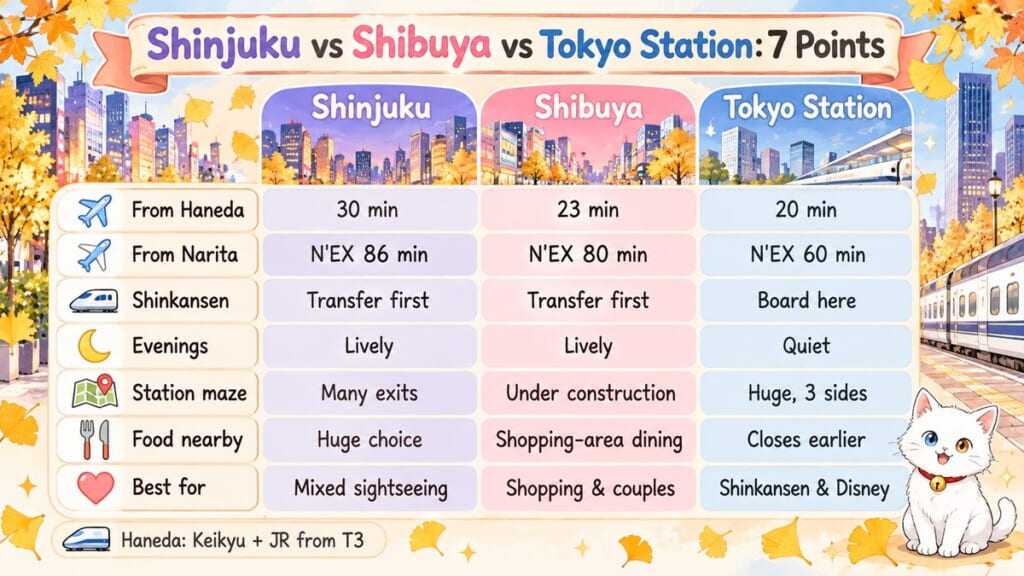
Airport times below are approximate, and N’EX means the Narita Express. Haneda figures use Keikyu with a JR change at Shinagawa; allow extra time for walking between trains, waiting and reaching your hotel.
| What matters | Shinjuku | Shibuya | Tokyo Station |
|---|---|---|---|
| From Haneda | Keikyu + JR: 30 min from T3 / 33 min from T1–2; direct airport buses | Keikyu + JR: 23 min from T3 / 26 min from T1–2; direct airport buses | Keikyu + JR: 20 min from T3 / 23 min from T1–2; bus to Yaesu North Exit (Tekko Building) |
| From Narita | Direct N’EX, about 86 min; airport buses | Direct N’EX, about 80 min; airport buses | Direct N’EX, about 1 hour; airport buses |
| Shinkansen to Kyoto/Osaka | Train to Tokyo, about 15 min, or Shinagawa, about 20 min; then transfer | Train to Shinagawa, about 15 min; then transfer | Board here; Kyoto about 130 min by Nozomi |
| Evening journeys | Convenient if dinner is in Shinjuku | Convenient if dinner is in Shibuya | Plan a train home if spending the evening in western Tokyo |
| Station navigation / construction | Many exits; west-side redevelopment | Multiple levels; redevelopment and changing routes | Large station; choose Marunouchi, Yaesu or Nihonbashi; distant Keiyo platforms |
| Nearby food | Broad choice around the station, including evening dining | Shopping-area restaurants and lively dinner streets | Station dining and business-district restaurants; check closing times |
| Trip fit | Mixed sightseeing, dinner out, hotel bus arrivals | Shopping, couples, evenings around Shibuya | Onward Shinkansen, Disney, quieter evenings |
Read the row that describes your hardest journey first, then use the evening row to break a tie. The direct N’EX entries describe normal service; the airport section below flags a construction-related exception.
Shinjuku: Big, Bright, and Easy to Get Lost In
Choose Shinjuku if you want plenty of dinner options after sightseeing and a hotel that an airport bus can reach directly. Its size is useful when your plans spread across Tokyo, but less appealing if every outing means guiding a small child through another unfamiliar passage.
 For a manageable starting point, look south. Hotel Sunroute Plaza Shinjuku is about 3 minutes from the South Exit or Koshu-kaido Gate, while JR Kyushu Hotel Blossom Shinjuku is about 3 minutes from the South Exit. Both are also about 3 minutes from Busta Shinjuku, the expressway bus terminal; Sunroute has its own airport bus stop.
For the west side, Keio Plaza Hotel Tokyo is about 5 minutes from Shinjuku’s West Exit and has airport bus service. If arriving at Tochomae Station on the Oedo subway line, the hotel directs stroller users to Exit A4, which has an elevator.
 Shinjuku’s west-side building project is scheduled for completion in fiscal 2029; that isn’t a completion date for the entire station. Kabukicho is lively and crowded, so I wouldn’t choose a room there solely because its listing says “Shinjuku.” If quiet sleep is your priority, compare the actual street and recent room-noise comments before booking.
Shibuya: Shopping at Your Door, a Station Still Being Rebuilt

 Choose Shibuya when shopping and your evenings are part of the reason you’re visiting Tokyo. You can put down your bags and head back out locally, which makes more sense than choosing another base and repeatedly returning here for dinner.
Shibuya Excel Hotel Tokyu makes the station connection especially relevant: it’s inside Shibuya Mark City, about 3 minutes from the JR Central Gate. Follow the hotel’s current access guide for your arrival line rather than assuming the Hachiko Exit is the starting point for every hotel.
The wider station-area redevelopment is scheduled to finish in fiscal 2034. Expect construction hoardings and route changes for years; the practical response is to save the latest hotel directions close to your trip.
Shibuya is about 7 minutes from Shinjuku on the Yamanote Line, while Shinagawa is about 15 minutes away for the Shinkansen. Those links keep a shopping-focused stay compatible with onward travel, but they don’t remove station walking. If you’re carrying large cases through several transfers, or want subdued streets every night, I would weigh that against the appeal of being beside the shops.
If one of those Shibuya evenings is for the view, SHIBUYA SKY is the open-air rooftop of Shibuya Scramble Square, right above the station. Tickets are for a set date and time, and sunset slots are the hardest to get, so book SHIBUYA SKY tickets once your Tokyo dates are fixed.
Tokyo Station: Quiet Nights, the Fastest Shinkansen, and Disney by Train
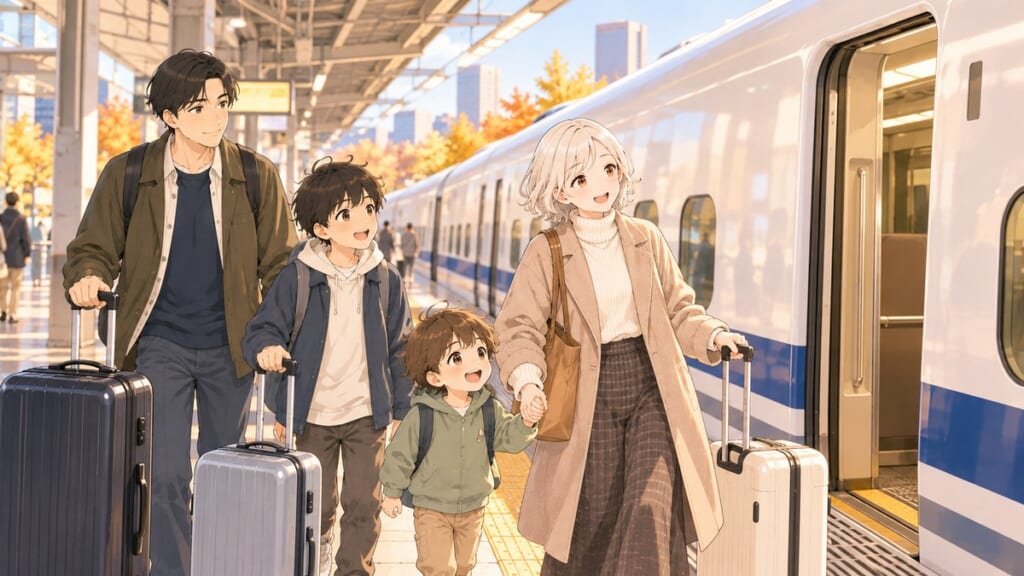
 Choose Tokyo Station if your departure for Kyoto or Osaka is the part you most want to simplify. The Tokaido Shinkansen starts here, and Nozomi services reach Kyoto in about 130 minutes. Of the three bases, it’s the quickest way onto the Shinkansen, because there’s no local train to take first.
 For Disney, the Keiyo Line reaches Maihama in about 20 minutes. Its platforms are deep underground and roughly a 10–15-minute walk from the other main platforms, so that short train ride isn’t your hotel-to-park journey. With a stroller, I would plan the elevator route before deciding how early to leave.
How to Buy Tokyo Disney Tickets
Marunouchi is the red-brick station side, with a more restrained evening atmosphere; Yaesu has the airport bus stop used here and a business-district feel. Hotels around the station can lean toward higher prices, though your dates and room type matter more than a broad area label.
“Boring at night” depends on what you want after dinner. If you want busy streets and another spontaneous stop, Shinjuku or Shibuya fits better; if you want a calmer return, Tokyo Station can suit you nicely. Shops and restaurants may close earlier than you expect, so choose a dinner option with hours that match your arrival.
Big Suitcases: Which Base Means the Fewest Transfers?
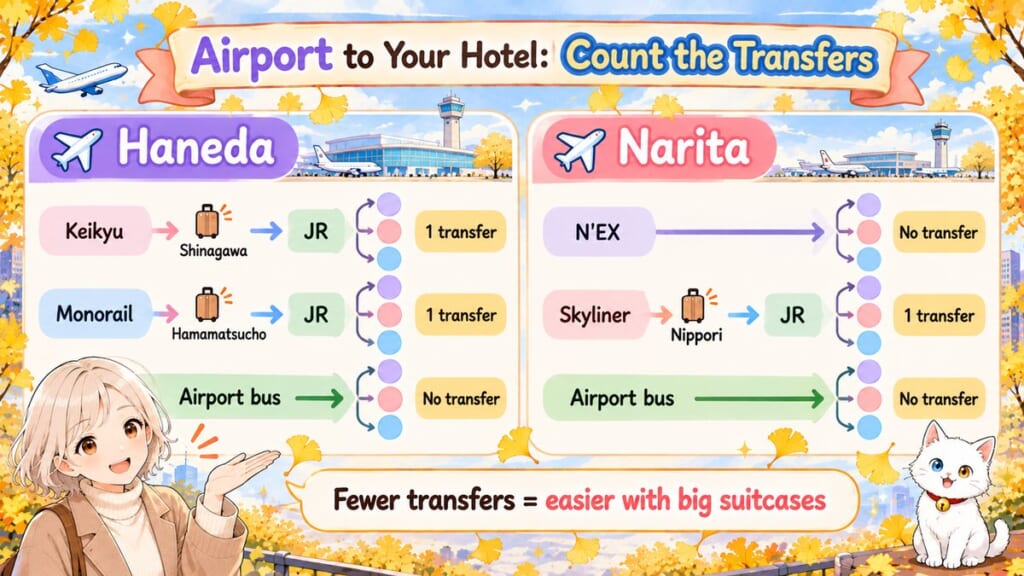
 For bulky luggage, count the times you must move it between vehicles before comparing journey minutes. From Haneda, Keikyu via Shinagawa and the monorail via Hamamatsucho both involve a JR transfer for these bases; an airport bus can avoid that change. From Narita, a suitable N’EX service normally reaches all three stations without changing trains.
Fares below are adult one-way fares unless labeled otherwise, as of October 2026. Dollar amounts use a fixed conversion of 155 yen to US$1, rounded to whole dollars; they aren’t live exchange rates.
From Haneda, Airport Limousine fares are ¥1,400 (about $9) to Shinjuku, ¥1,300 (about $8) to Shibuya, and ¥1,200 (about $8) to Tokyo Station. Allow roughly an hour as a broad planning guide, with the actual journey depending on your stop and road conditions.
From Narita, ordinary-car reserved N’EX fares are ¥3,140 (about $20) to Tokyo Station and ¥3,330 (about $21) to Shibuya or Shinjuku. The N’EX TOKYO Round Trip Ticket costs ¥5,200 (about $34) for eligible non-Japanese passport holders and covers an outbound and return journey within 14 days. If you’re flying home from Kansai, you don’t need a Narita return just because it’s sold as a discounted ticket.
N’EX Tickets on JR East’s Official Site
Is the Narita Express Worth It?
On some dates, planned engineering work stops certain N’EX services short of Shinjuku and Shibuya, so check JR East’s notices for your travel date.
The Skyliner is another Narita option, but for these three bases you change to JR at Nippori. Its quick airport leg doesn’t remove the task of taking your luggage to another platform; compare the complete route before choosing it over a direct train.
Skyliner on Keisei’s Official Site
Narita Airport Limousine fares are ¥3,600 (about $23) to Shinjuku or Shibuya and ¥3,100 (about $20) to Tokyo Station. Allow roughly 1½–2 hours, depending on traffic and stops; select a departure that actually serves your hotel. The Tokyo Station route uses Yaesu North Exit at Tekko Building, rather than dropping you at the station-connected hotels.
Airport Limousine Official Site
For the next leg, bringing your cases on the Shinkansen makes Tokyo Station’s lack of a local-train transfer valuable. If you forward them instead, confirm the delivery date and receiving hotel’s arrangements, then keep what you need before delivery in a smaller bag. That can make your everyday dinner location a more useful deciding factor.
Luggage Forwarding in Japan: Is It Worth It?
From the Ticket Gate to Your Bed: Exits, Elevators and Rainy Days
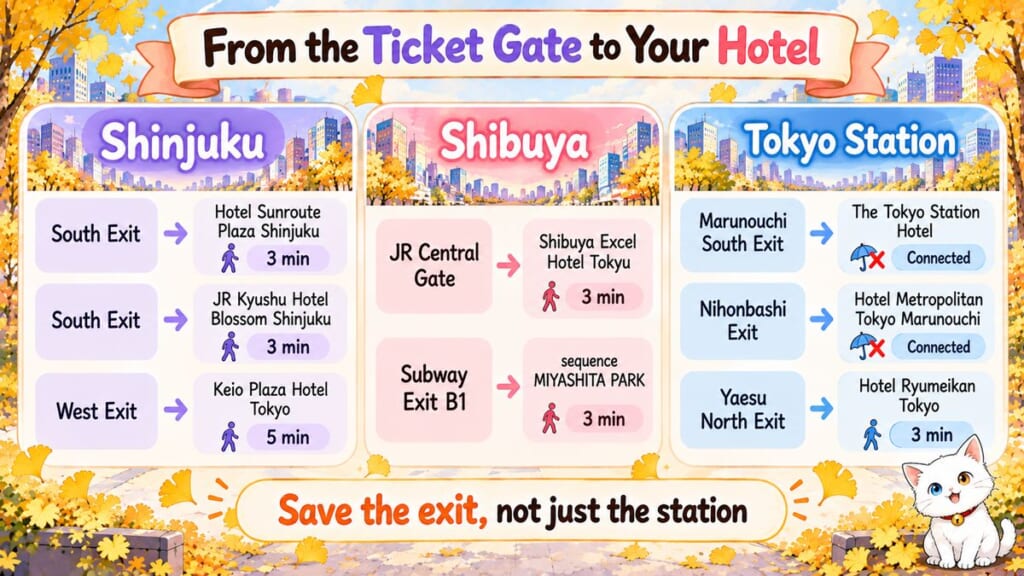
 A hotel’s walking time starts at a particular exit, not wherever your train happens to stop. With children and luggage, I would check the arrival platform, usable elevator and hotel entrance together; a short outdoor walk can still follow a long indoor journey.
At Shinjuku, the West Exit and south-side gates send you into different streets. Save the South Exit or Koshu-kaido Gate route for Hotel Sunroute Plaza Shinjuku, rather than following the first exit sign you notice. For Keio Plaza Hotel Tokyo, save the West Exit route or Tochomae’s elevator route instead.
In Shibuya, Shibuya Excel Hotel Tokyu has the Mark City connection, while sequence MIYASHITA PARK is about 7 minutes from the JR Hachiko Exit or 3 minutes from subway Exit B1.
At Tokyo Station, The Tokyo Station Hotel connects to Marunouchi South Exit, Hotel Metropolitan Tokyo Marunouchi connects to Nihonbashi Exit, and Hotel Ryumeikan Tokyo is about 3 minutes from Yaesu North Exit. Station connections can reduce exposure to rain.
The Airport Limousine stop is on the Yaesu side, opposite the Marunouchi side used by The Tokyo Station Hotel. Don’t infer an entrance from the word “Marunouchi” in another hotel’s name.
With Kids, Solo, or as a Couple: Three Lines Each
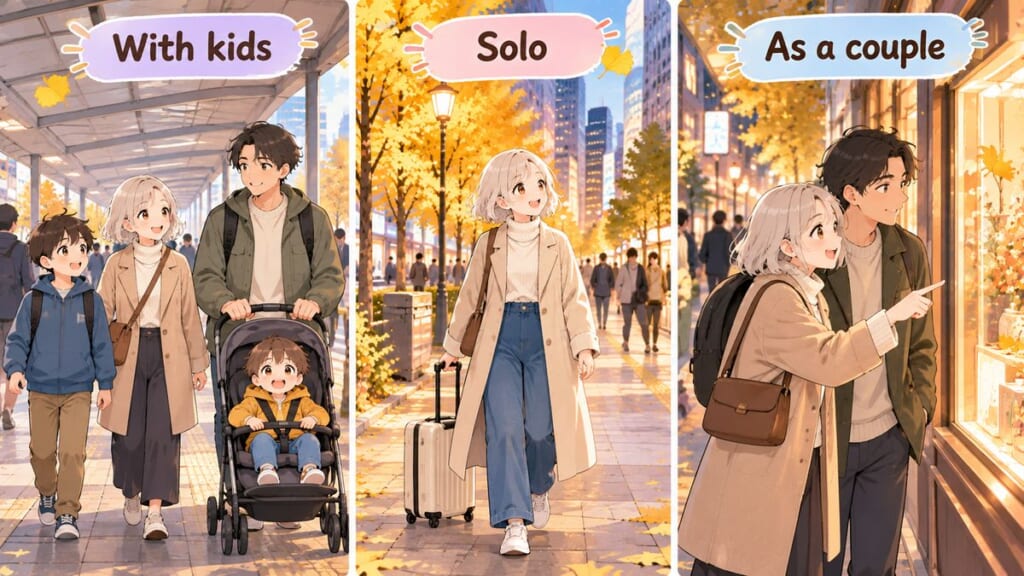
With kids: I’d start with Tokyo Station if avoiding rain and simplifying the onward journey matter most.
Shinjuku can also work if you settle the exit route before booking.
Check the actual beds and occupancy for everyone’s ages in my guide to Tokyo hotels for a family of 4 in one room.
Solo: Shinjuku’s South Exit gives you several nearby options, including Hotel Sunroute Plaza Shinjuku and JR Kyushu Hotel Blossom Shinjuku.
If shopping is the attraction, consider sequence MIYASHITA PARK in Shibuya.
Choose the return route you feel comfortable repeating; my guide to staying in Tokyo solo walks through it.
As a couple: I’d choose Shibuya for shopping and lively evenings together.
Tokyo Station fits a calmer ending to the day and a convenient onward departure.
Let your usual dinner plans decide between them, then compare the room you would actually book.
 For a year-end visit, start with the same area decision, then check how holiday arrangements affect your dates. My guide to where to stay in Tokyo for New Year’s Eve covers that extra layer.
Late Nights: Getting Back After Dinner
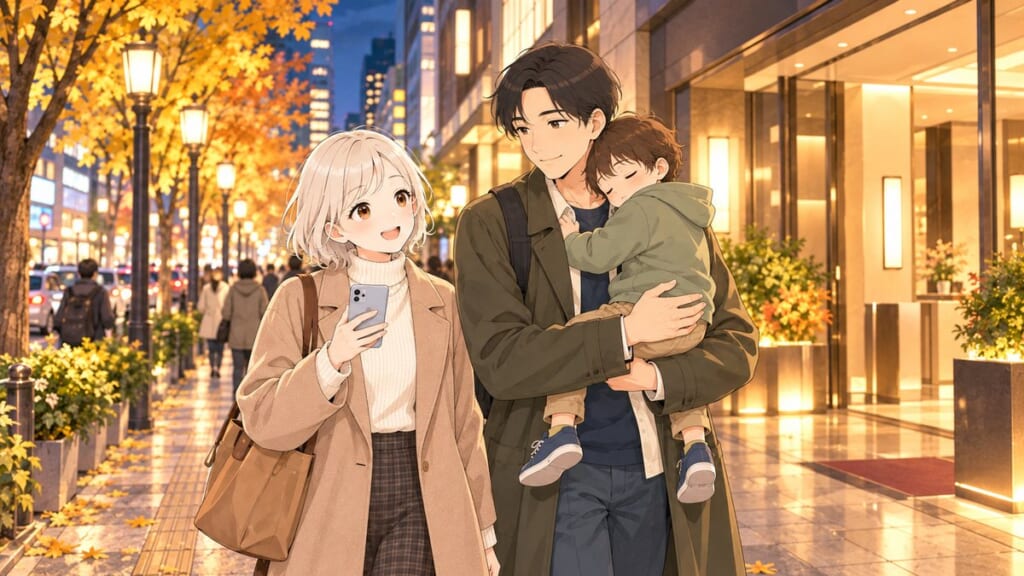
Stay near the evenings you want to repeat, especially if you dislike watching the clock over dinner. Shinjuku and Shibuya let you finish locally; Tokyo Station means planning a ride back when your evening is across town.
Yamanote Line trains serve all three stations into the midnight hour, while the Chuo Rapid Line links Shinjuku and Tokyo; it doesn’t serve Shibuya. Late Yamanote services can terminate at Ikebukuro, Osaki or Shinagawa, so a train still running isn’t necessarily a train to your hotel. Search your complete return journey for the actual date and direction before settling in for another drink.
After your last usable train, plan on a taxi if you’re beyond a comfortable walk. Around Kabukicho or Dogenzaka, think in practical terms: crowds, lighting and the distance to your own hotel entrance. If a child is likely to fall asleep at dinner, I would put that distance ahead of the neighborhood’s reputation.
At sequence MIYASHITA PARK, the park-side entrance closes from 23:00 to 08:00. During those hours, use the hotel’s dedicated elevator at the northern end of RAYARD MIYASHITA PARK; save that entrance before heading out.
None of the Above: When Ueno, Asakusa, Akasaka or Ebisu Fit Better
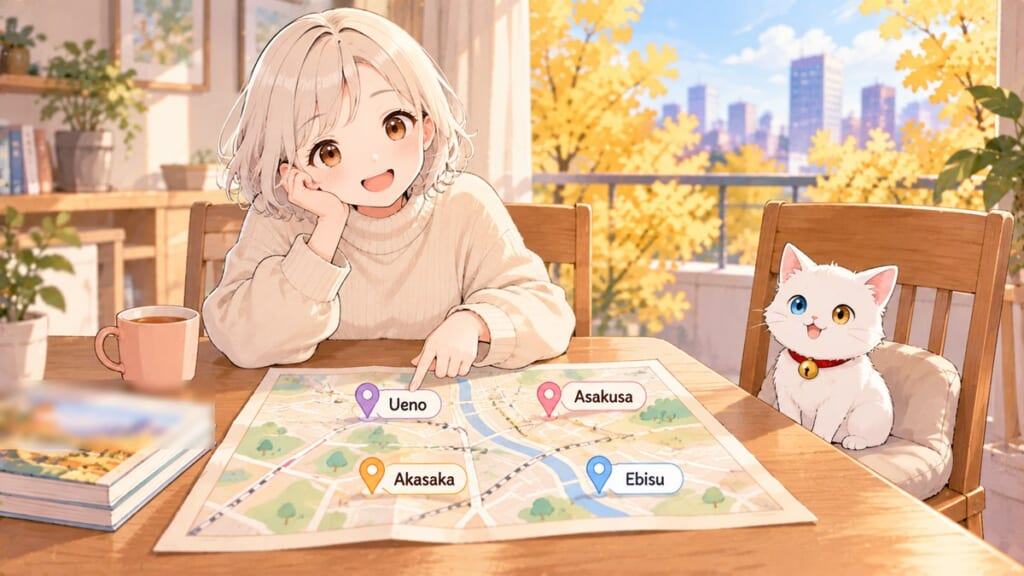
 You don’t have to choose a large interchange simply because it’s famous. If the thought of navigating one every morning already feels tiring, a different neighborhood may fit your daily plans better.
Ueno makes sense if you’re arriving on the Skyliner and planning more time in eastern Tokyo or journeys north. Match your hotel approach to the station you actually arrive at: Keisei-Ueno and JR Ueno aren’t the same station.
Asakusa is worth considering for a family that wants a traditional neighborhood feel and time around the temple streets. Look at your sightseeing map first; it becomes a less persuasive choice if your plans repeatedly take you back to Shibuya.
Akasaka is an option if you want a central subway base and would prefer a quieter hotel street to a huge station frontage. Choose the block carefully, since restaurants and evening activity are part of Akasaka too.
Ebisu is worth a look if dinner is central to your trip but you want a less hectic setting than Shibuya’s busiest streets. Check the walk to your room just as carefully here; a neighborhood label doesn’t tell you how that last stretch feels.
If these alternatives only give you more tabs to open, return to the comparison table’s first row. Start with your airport arrival, then let your evenings and luggage settle the choice.
Our Hotel Picks: Three per Area, All Within a 10-Minute Walk
These nine options keep the advertised station walk short while giving you different spending levels. “Lower–mid,” “mid” and “splurge” are broad planning labels, not a promise about the price on your dates; enter your full party and compare the final room conditions.
| Hotel / booking | Station exit and walk | Airport Limousine stop | Budget guide |
|---|---|---|---|
| Hotel Sunroute Plaza Shinjuku | Shinjuku South Exit / Koshu-kaido Gate, 3 min | At hotel | Lower–mid |
| JR Kyushu Hotel Blossom Shinjuku | Shinjuku South Exit, 3 min | No hotel stop; Busta Shinjuku, 3 min | Mid |
| Keio Plaza Hotel Tokyo | Shinjuku West Exit, 5 min | At hotel | Splurge |
| sequence MIYASHITA PARK | Subway B1, 3 min / JR Hachiko Exit, 7 min | No hotel stop | Lower–mid |
| Shibuya Excel Hotel Tokyu | Mark City connection; JR Central Gate, 3 min | Shibuya Mark City / hotel stop | Mid |
| Cerulean Tower Tokyu Hotel | Shibuya West Exit, about 5 min | At hotel | Splurge |
| Hotel Ryumeikan Tokyo | Tokyo Yaesu North Exit, 3 min | No hotel stop; use Yaesu North Exit (Tekko Building) | Lower–mid |
| Hotel Metropolitan Tokyo Marunouchi | Tokyo Nihonbashi Exit connection | No hotel stop; use Yaesu North Exit (Tekko Building) | Mid |
| The Tokyo Station Hotel | Tokyo Marunouchi South Exit connection | No hotel stop; use Yaesu North Exit (Tekko Building) | Splurge |
Photo: Agoda.

Photo: Agoda.

Photo: Agoda.
In Shinjuku, start with Sunroute for a hotel bus stop and a south-side route, Blossom for the same general station approach, or Keio Plaza for the west-side splurge. For a family, I would narrow the room options by beds before comparing decorative touches.

Photo: Agoda.
Photo: Agoda.

Photo: Agoda.
In Shibuya, sequence suits a shopping-centered plan, Excel makes the station connection the deciding feature, and Cerulean is the splurge option with an airport bus stop. The bus timetable and your arrival line can make the choice clearer than comparing lobby photographs.
Photo: Agoda.

Photo: Agoda.

Photo: Agoda.
At Tokyo Station, start with Ryumeikan for the Yaesu approach, Metropolitan for its Nihonbashi connection, or The Tokyo Station Hotel for a splurge at Marunouchi South. Open the candidate that matches your route, then check room occupancy, cancellation terms and your dates before booking.
FAQ

Shinjuku or Shibuya for first-timers?
I’d start with Shinjuku if you want varied sightseeing, dinner choices and a hotel airport-bus stop. Choose Shibuya if shopping and evenings there are the focus; a hotel with a clear arrival route matters more than which name sounds easier.
Is staying near Tokyo Station boring at night?
It can feel too quiet if you want busy late-night streets, but that doesn’t make it a poor base. Choose it for dinner followed by a calmer return, and check restaurant hours if you’re eating late.
Can I get from Narita to all three without changing trains?
Yes, suitable N’EX services normally reach Tokyo, Shibuya and Shinjuku without a change. Choose a service serving your destination and check the construction notice in the airport section before booking.
Do I need to stay near the Shinkansen if I’m going to Kyoto?
No; Shibuya has the Shinagawa connection, and Shinjuku gives you access via Tokyo or Shinagawa. Staying by Tokyo Station is most useful when removing that extra transfer outweighs the location you would enjoy during the rest of your stay.
Should I split my stay between two areas?
For a continuous 3–7-night Tokyo stay, I would usually keep one hotel. Packing, moving your bags and checking in again adds work; split only if the change solves a specific problem, such as a different departure plan.
How We Would Choose for Our Own Family

 For my family, with two children, large cases and a Shinkansen journey to Kansai afterward, I would start with Tokyo Station. That is how I would apply these conditions, rather than a claim that every family should make the same choice.
First, I would give the luggage-heavy departure extra weight. Second, I would decide whether dinner near the hotel and an earlier return suited the trip; third, I would compare the room’s beds and the elevator route with both children in mind. A suitable room at Hotel Ryumeikan Tokyo would be my first comparison, with the station-connected options worth considering if avoiding outdoor walking mattered more.
If those same plans instead involved dinner in Shinjuku most evenings and a convenient hotel bus arrival, I would change the answer. Your base should follow the trip you’re taking: where you’re going, how you spend your evenings, and who and what you’re bringing.
Choose the area, open one hotel, and check its room for your party. For the rest of the planning order, use my 7-step guide to planning a first trip to Japan.
Tip: enter your dates and number of guests first — Agoda only shows rooms and prices after that.
Which of the three fits your plans, and what made the decision difficult? Tell me in the comments.
I hope this guide has answered one of your questions and helped you feel a little closer to Japan.
May your Japan journey be filled with wonderful discoveries and memories you’ll treasure for years to come.
See you in the next guide.




Comments