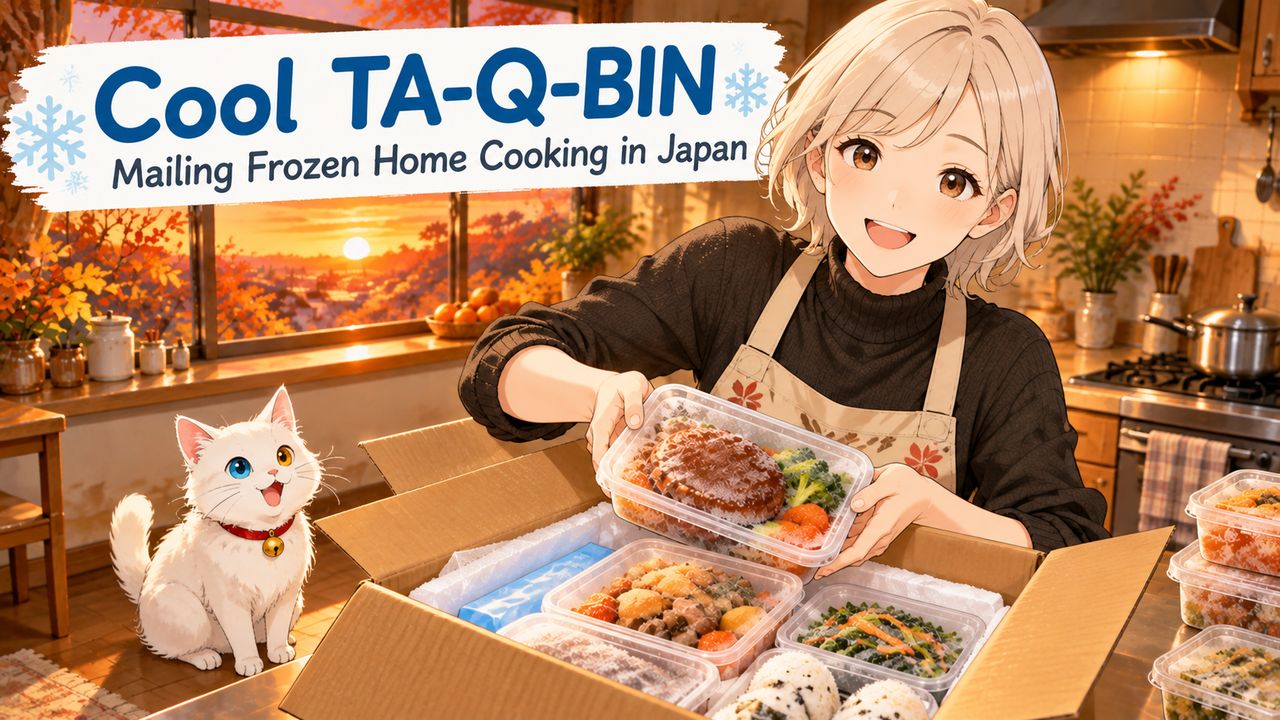
This is the first story in my new series, Little Things in Japanese Life.

The day I learned you can mail frozen food
Imagine opening your front door and finding a box of homemade food from your family. Not a box of cookies or something that can sit on a shelf. Actual frozen meals, still frozen, delivered to your home.
In Japan, you can send frozen food across the country using a delivery service called Cool TA-Q-BIN. A box of home cooking or seafood can travel from one home to another, sometimes arriving as soon as the next day, without needing to be thawed along the way.
I’ve used this service to send things to family and relatives, and I’ve received plenty of cold deliveries myself. For a long time, it was simply part of everyday life. I didn’t really stop to think about how remarkable it was.
Then I started looking at it from a different angle. Someone can prepare food, freeze it, pack it into a box, and send it to someone they care about. The food travels through a delivery network while its temperature is carefully managed.
That’s quite a lot happening behind one little cardboard box, isn’t it?
What “Cool TA-Q-BIN” actually is
Cool TA-Q-BIN is a temperature-controlled delivery service operated by Yamato Transport, the Japanese delivery company known for its black-cat symbol. The service began in 1988, introducing Japan’s first temperature-controlled home delivery system.
There are two types. The chilled service uses equipment set to 0–10°C (32–50°F), while the frozen service uses equipment set to −15°C (5°F) or below. That means you can choose the appropriate service for food that needs refrigeration or freezing.
 There’s one detail I want you to know: Cool TA-Q-BIN maintains the temperature of your food, but it doesn’t freeze or chill it for you. You need to refrigerate or freeze everything properly before handing it over. Think of it as keeping your food cold on its journey, not preparing it for the journey.
Parcels can be up to Size 120 (a combined length, width, and height of 120 cm, or about 47 inches) and 15 kg (about 33 pounds). You can also choose a delivery time window, making it easier for the person receiving the food to be home. Delivery dates depend on the destination, and a few remote islands aren’t covered.
Why Japan does it this way
 Giving food to family, sharing seasonal specialties, and sending a little something to someone you care about are familiar parts of life in Japan. Cool delivery fits naturally into those habits, especially when the food you want to share needs to stay cold.
Maybe you want someone to enjoy seafood from a coastal region or a homemade dish you’ve prepared. Instead of sharing a recipe, you can send the food itself. I like that something so practical can feel so personal.
What people send with it
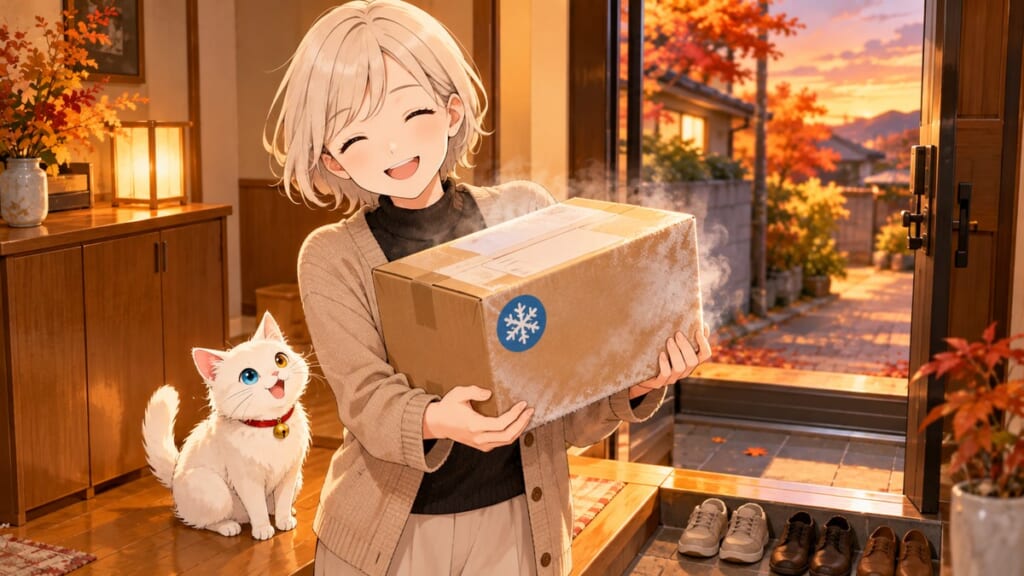
So what would you actually find inside one of these cold boxes? Here are four familiar examples:
- Homemade dishes prepared by family
- Seafood, including crab
- Food ordered from shops
- Furusato nozei thank-you gifts
 I’ve received all four types myself. Furusato nozei, often translated as “hometown tax donation,” lets people make eligible donations to local municipalities and receive regional products as thank-you gifts. Ordering regional food to your door like this has its own name in Japan, which I explain in my story about otoriyose.
Home cooking doesn’t need a special occasion. You can share a favorite dish with family, as long as it’s properly cooled, packed, and suitable for shipping.
Can travelers use it?
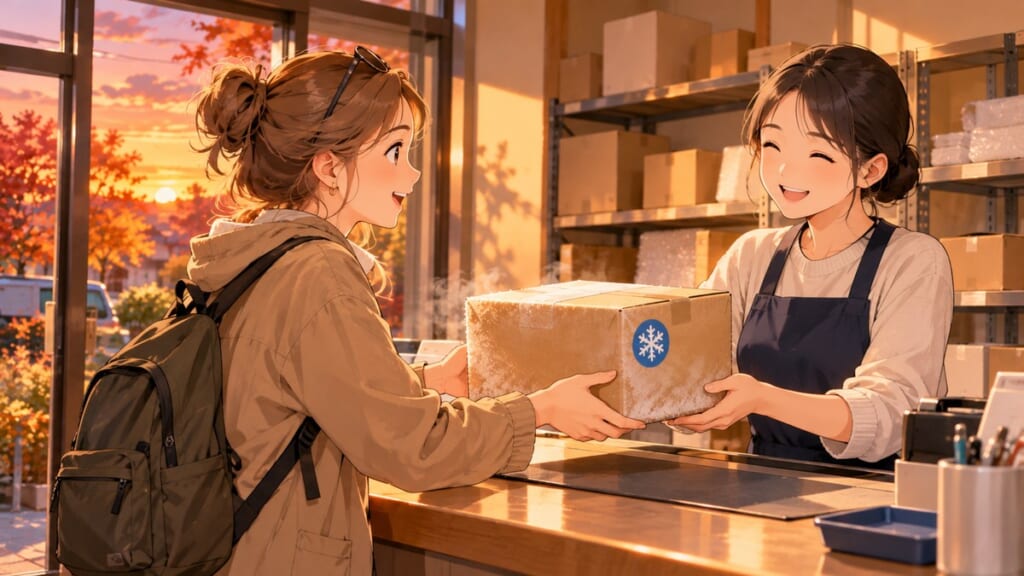
Yes, travelers can use Cool TA-Q-BIN for domestic deliveries in Japan. If you find fresh or frozen food you’d like to send to someone at another address in Japan, the service may be useful.
 But here’s a detail worth knowing: you cannot send Cool TA-Q-BIN parcels from convenience stores. Some convenience stores handle ordinary TA-Q-BIN parcels, but not chilled or frozen ones. Curious about what else you can do at a Japanese convenience store? My guide to Japanese convenience store etiquette walks you through it.
For Cool TA-Q-BIN, here’s where you can and can’t send your parcel:
- Yes: Yamato Transport sales offices and pickup service
- No: Convenience stores, regular parcel agencies, and delivery lockers
If you’re staying at a hotel, ask the front desk whether they can arrange a chilled or frozen shipment. Don’t assume that a hotel offering ordinary luggage shipping also handles Cool TA-Q-BIN. It’s something to check with that particular hotel.
And if you’re sending food to another hotel, check with the receiving hotel first, too. Make sure it can accept the delivery and keep the food at the required temperature until you collect it.
One more small distinction: if you’re simply trying to send a suitcase from one hotel to another, that’s ordinary luggage forwarding, not Cool TA-Q-BIN. I’ve covered that separately in my guide to luggage forwarding in Japan.
The catch: it stays in Japan
Here’s the limitation that matters most if you’re reading this from overseas: Cool TA-Q-BIN itself only delivers within Japan. You can’t use this particular service to send a frozen box of food straight from Japan to your home abroad.
So if you fall in love with a regional seafood specialty during your trip, you might be able to send it to someone elsewhere in Japan. But Cool TA-Q-BIN won’t take that same box across an international border for you.
That’s why I think of it as one of those little experiences you can appreciate while you’re actually in Japan. You don’t necessarily need to ship something yourself. Even knowing that a family can share frozen home cooking this way adds another layer to the everyday life you’re seeing around you.
And if you’re back home and still craving a little Japan in your daily routine, there’s another way to explore. I’ve collected ideas in my guide to Japanese gifts without going to Japan for enjoying Japanese things without making the trip.
A small thing I’m grateful for
 When I think about the cold deliveries I’ve sent and received, what stays with me is the connection between people. A homemade dish or a box of crab can travel across Japan while its temperature is carefully managed.
Every delivery depends on people collecting, sorting, transporting, and delivering the box. Those are busy jobs, and choosing a time when someone can receive the parcel helps reduce missed deliveries.
I used to think of Cool TA-Q-BIN as simply a way to send food. Now I see the care behind an ordinary box arriving at someone’s front door.
Next time someone asks what daily life in Japan is like, maybe this is the little thing you’ll tell them about.
And now I’m curious: if you could send one frozen homemade dish to someone you love, what would you choose? Tell me in the comments! I’d love to hear about a food you’d want to share, or whether you’ve ever tried a temperature-controlled delivery service.
Thanks for reading! Next time, let’s peek into another little corner of life in Japan.
See you in the next episode.


Comments