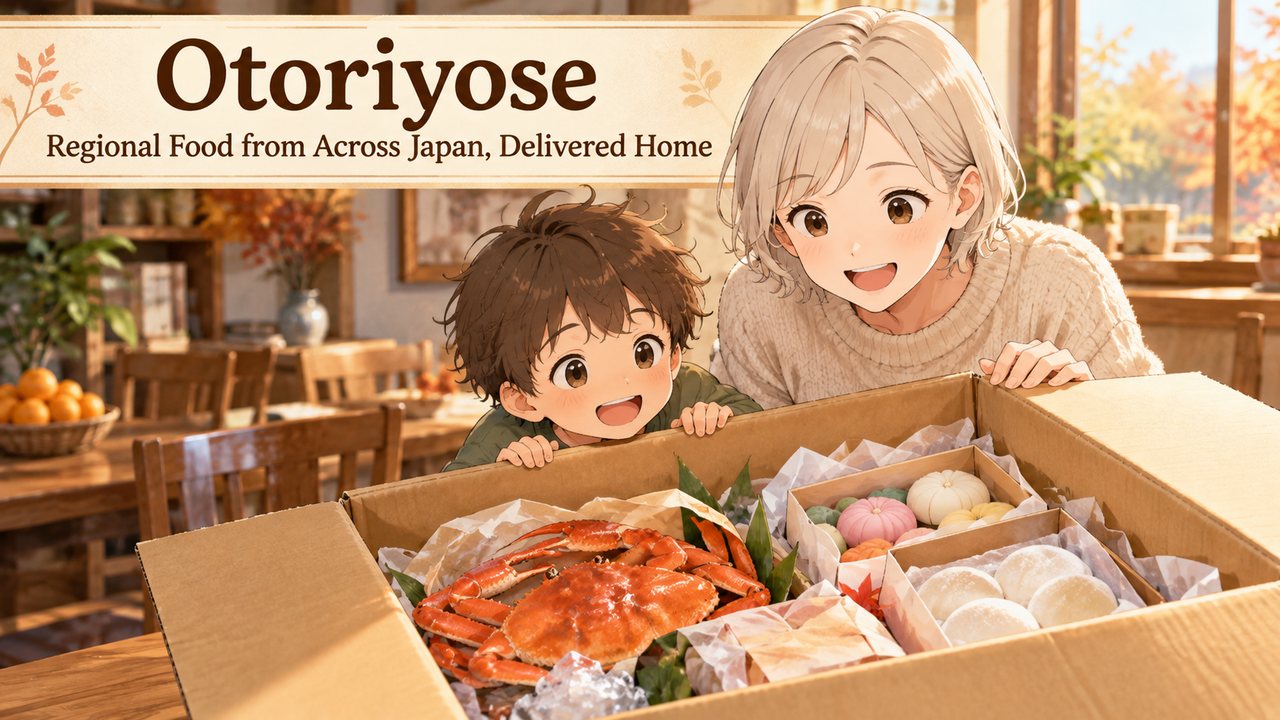

A box from the other end of Japan
 Have you ever tasted a local specialty in Japan and wished you could have it again at home? Here, people actually do that, and there’s a word for it.
In Japan, there’s a name for ordering regional food from another part of the country and having it delivered to your home: otoriyose (お取り寄せ). You don’t have to travel all the way back to enjoy specialties from places you can’t easily visit.
I order regional food for my home, too. Sometimes a little taste of another place is exactly what you feel like having at home.
This is episode 15 of Little Things in Japanese Life, where I share the everyday Japanese habits that are easy to overlook but fun to discover.
What otoriyose means
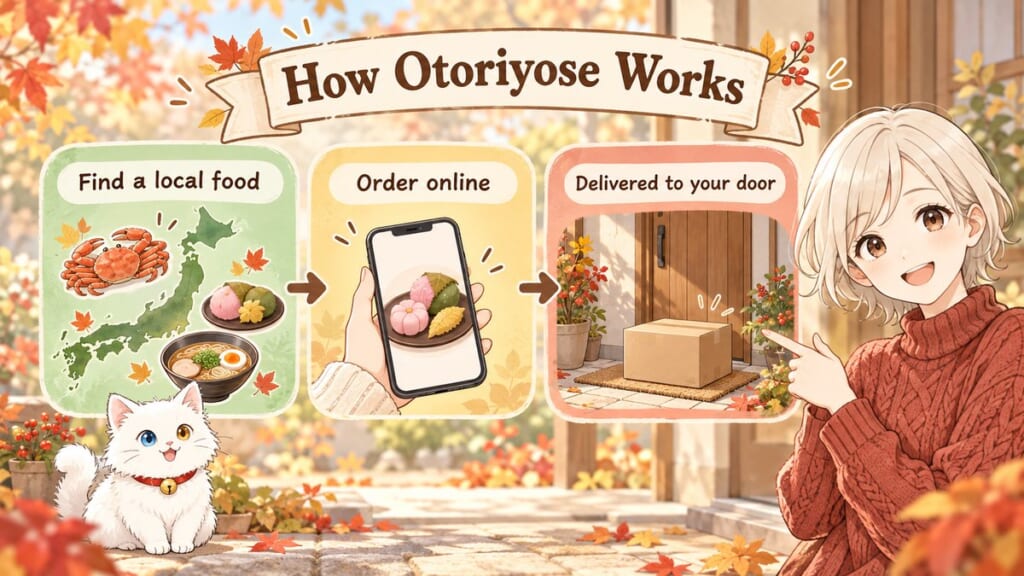
Otoriyose is a way of shopping for food from different parts of Japan, usually through online stores or other mail-order services. Instead of choosing only what’s available in your neighborhood, you can order regional specialties and have them shipped directly to your home.
It’s not limited to food you buy for yourself. Otoriyose can also be a gift, especially when you want to send someone a specialty from a particular region.
Maybe you discovered a sweet at a department store’s regional food fair. Or perhaps you tried something during a trip and later found a shop that takes online orders. Otoriyose gives you a way to enjoy that kind of local food again, if the shop offers delivery.
 Furusato nozei, or hometown tax donations, is a system where eligible taxpayers in Japan can donate to a municipality they choose and may receive a tax deduction within certain limits. Many municipalities also send local products as thank-you gifts, and I’ve received food through this system at home, too.
Why Japan does it this way
Different regions of Japan are known for different foods, and bringing back local specialties as souvenirs is a familiar part of traveling here. Otoriyose feels like an extension of that idea: even when you can’t visit a place, you can still bring a little of its food culture into your home.
What people order
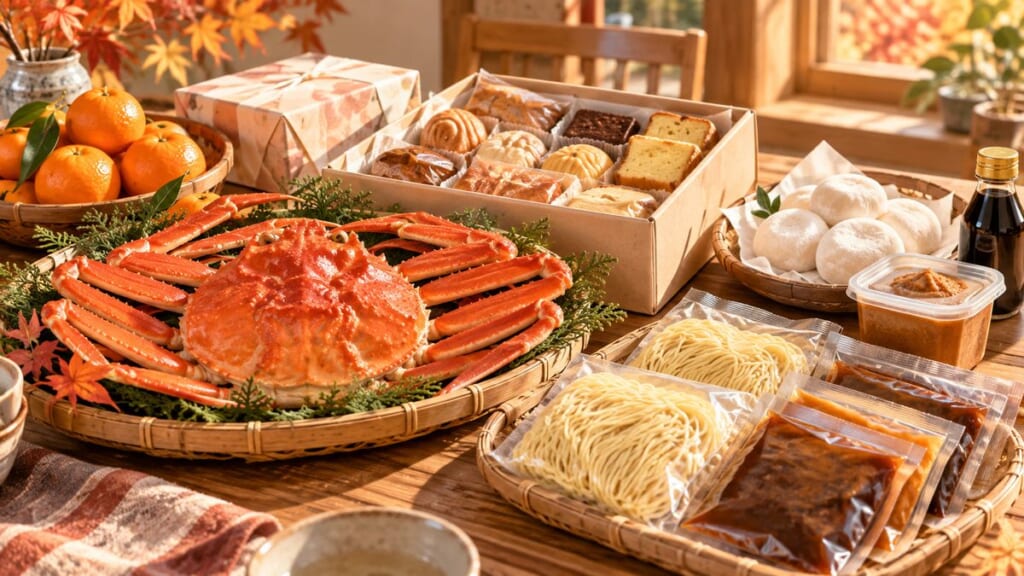
So what actually goes into an otoriyose box? There’s a surprisingly wide range, from everyday ingredients to foods you might save for a special meal.
 A recent survey of 400 married adults in their 30s to 50s (Netshop Tantosha Forum, February 2026) found that meat products, seafood, and Western-style sweets were among the commonly purchased categories. About half of the respondents said their families ate otoriyose food at least once every three months.
Here are some examples of the local food people order:
- Meat and meat products: Beef, ham, and sausages can be ordered from shops outside your area. Some are intended for a particular meal, while others can become part of your everyday cooking.
- Seafood: Fish, crab, and other seafood can travel from their region of origin to a home kitchen using chilled or frozen delivery. It’s an appealing option when you’re planning a seafood meal.
- Sweets: Cakes, baked treats, and other regional confections give you plenty to explore. Some can travel at room temperature, while others need refrigeration or freezing.
- Fruit and pantry ingredients: Seasonal fruit, rice, soy sauce, and miso are other examples. Otoriyose isn’t only about elaborate food; it can also bring regional ingredients into ordinary meals.
- Ramen and mochi: I’ve ordered ramen from other regions and mochi, along with crab, other seafood, sweets, and other local specialties.
Why it works
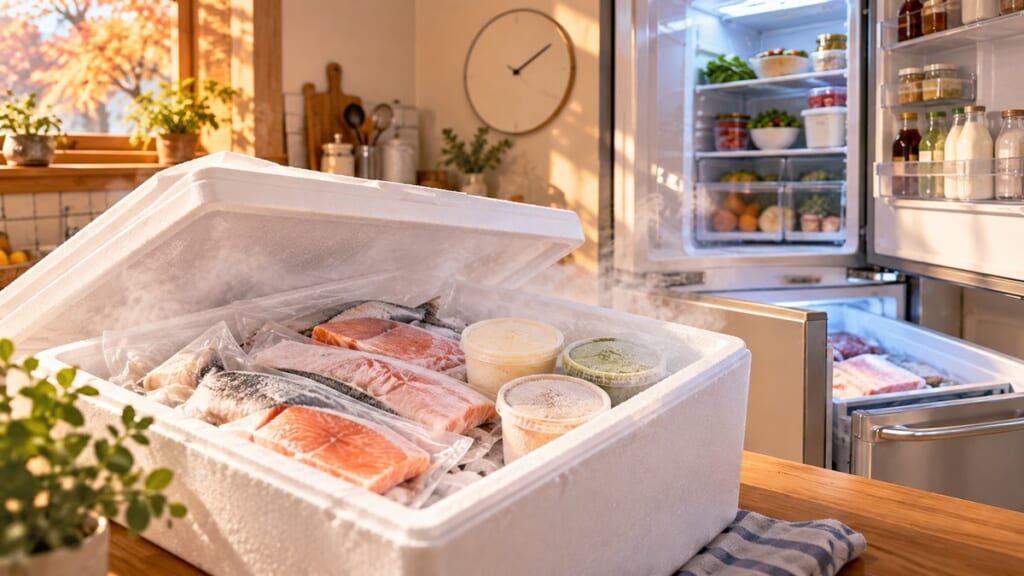
Here’s the part that makes ordering fresh regional food possible: Japan has delivery services designed to transport food at controlled temperatures. Without them, getting seafood or refrigerated sweets from a distant shop to your door would be much more difficult.
For example, Yamato Transport’s Cool TA-Q-BIN uses refrigerated equipment set between 0°C and 10°C (32°F–50°F) or frozen equipment set to −15°C (5°F) or below. That’s how seafood and chilled sweets can travel across Japan.
 Ice cream needs special handling: Yamato asks senders to pack it in insulated boxes with enough dry ice, because frozen delivery alone may not keep it cold enough. You also can’t pick a delivery date for ice cream.
I’ve talked more about how it works in my story about Cool TA-Q-BIN.
There’s another useful detail: you can often choose a delivery date and time slot, depending on the shop, product, and delivery service. That matters when you’re expecting food that should go straight into the refrigerator or freezer.
If you’re curious about arranging deliveries around your day, I explain that system in my story about delivery time slots in Japan.
What you can enjoy from home abroad
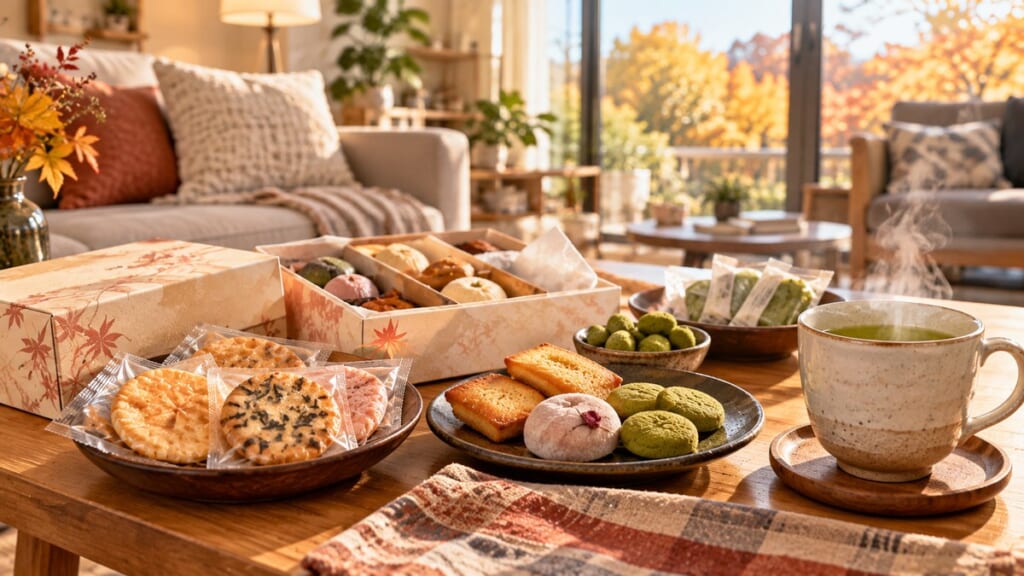
Now you might be thinking, “I’d love to order something from Japan, but I don’t live there.”
The catch is that many Japanese shops ship only within Japan. Some forwarding services can help buy or ship items, but fresh food is often excluded, and food imports depend on the rules of the destination country. Before ordering anything edible, check your country’s import restrictions and the seller’s shipping conditions.
But you still have ways to bring a little Japan home. Shelf-stable Japanese snacks and other Japanese goods may be available through international online stores, depending on where you live and what they can ship.
If you’d like to start exploring, have a look at my guide to Japanese gifts you can buy without going to Japan.
And if you’re still traveling in Japan, there’s another way to discover local food without arranging delivery. Department store food halls and supermarket prepared-food sections can be fun places to explore, especially when you’re looking for something to enjoy during your stay. You can find more ideas in my story about Japanese supermarket osozai.
 I like the thought that a food from somewhere far away can become part of an ordinary day at home. No big travel plan needed — just a little curiosity about what another region has to offer.
Now I’m curious about you: which Japanese regional specialty would you love to have delivered to your door? Tell me in the comments. I’d love to hear what you’d choose.
Thanks for reading! Next time, let’s peek into another little corner of life in Japan.
See you in the next episode.


Comments