Little Things in Japanese Life — Episode 11.

When the soup bases fill the supermarket shelf

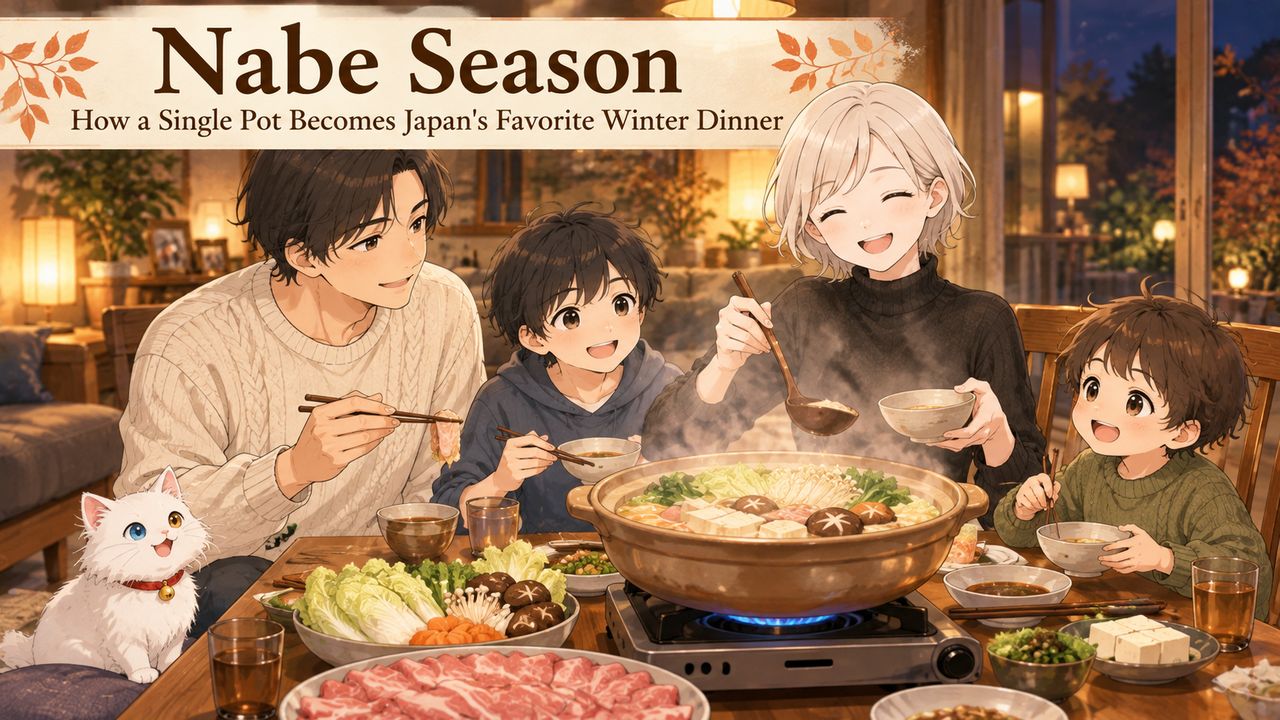
 You can tell winter is getting closer in Japan without checking the weather forecast. Around October, supermarket shelves start filling with ready-to-use nabe soup bases, and the selection seems to grow as autumn deepens. That’s one of my little signs that hot pot season is here.
You’ll see packs of broth for all sorts of flavors, from light dashi to spicy varieties. Many are straight soup bases, meaning you pour them into the pot without diluting them. I use these store-bought bases at home, too.
And what exactly are they for? Nabe, or Japanese hot pot, is a dinner that keeps cooking right in the middle of the table. It isn’t one particular recipe. It’s a way of eating that makes a chilly evening feel like time to gather around.
One pot, everyone shares
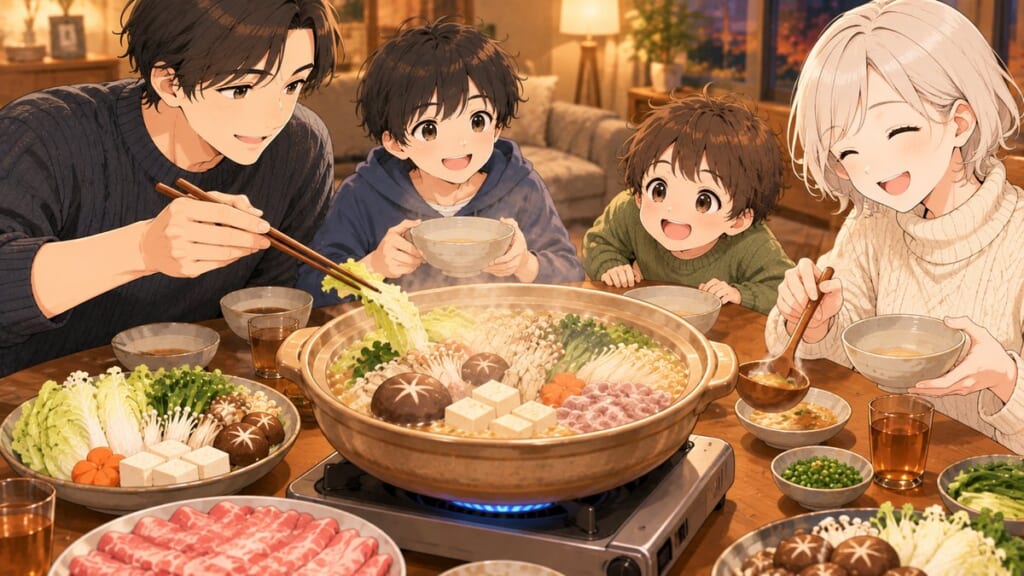
Picture a large pot bubbling gently at the center of the table. Often it’s a donabe, a traditional earthenware pot, sitting on a portable gas stove so the food can simmer while everyone eats.
Inside might be sliced meat, seafood, tofu, napa cabbage, mushrooms, and other vegetables. The broth cooks the ingredients, and each person transfers the ready pieces into a small bowl. As the pot empties, more ingredients go in.
The important part is that dinner doesn’t arrive all at once, already divided into individual portions. People share the same pot, watch what is ready, and keep the meal going together.
 There’s even a word for the person who manages the timing: nabe bugyo. This unofficial “hot pot boss” decides when to add ingredients and when they’re ready to eat. Every pot apparently needs a manager!
Popular kinds
If you’ve wondered what goes into a Japanese hot pot, the answer depends on which one you choose. In a survey published in December 2025, more than 24,000 people chose their favorite nabe, with yose-nabe coming first, followed by kimchi nabe, mizutaki, and motsu-nabe.
Yose-nabe: The familiar all-rounder
Yose-nabe combines meat, seafood, tofu, mushrooms, and vegetables in a flavorful broth. It’s a handy first nabe to try because there’s room for a mix of ingredients.
Mizutaki and motsu-nabe: Two Fukuoka favorites
Mizutaki is a chicken hot pot associated with Fukuoka, traditionally prepared by simmering bone-in chicken to make the broth. Motsu-nabe, another Fukuoka specialty, uses beef or pork offal with vegetables and a seasoned soup. You’ll find motsu-nabe beyond Fukuoka, too.
Kimchi, sesame soy milk, and tomato: Different moods
Kimchi nabe has a spicy, tangy broth, while sesame soy-milk nabe takes a creamy direction. Tomato nabe brings tomato-based soup to the table. These are among the flavors that show how much variety fits under the word nabe.
Sukiyaki and shabu-shabu: Thinly sliced meat
Sukiyaki cooks thin slices of beef and vegetables in a sweet-salty mixture of soy sauce, mirin, and sugar. It’s often eaten with beaten raw egg; in Japan, eggs handled for raw consumption are used for this.
With shabu-shabu, you swish thin slices of meat through hot broth until fully cooked, then dip them in ponzu or sesame sauce. The swishing sound is where the name comes from.
 At my house, winter brings a rotation of yose-nabe, mizutaki, sukiyaki, shabu-shabu, tomato nabe, Chinese-style hot pot, and motsu-nabe. Changing the flavor means nabe can come back to the dinner table again and again without feeling like exactly the same meal.
Why Japan does it this way: A shared pot suits a cold evening, and much of the preparation can be as simple as cutting vegetables and other ingredients. It’s also an easy way to bring a generous mix of vegetables to the table. The cooking and the eating happen together, which is a big part of the appeal.
The best part: the end
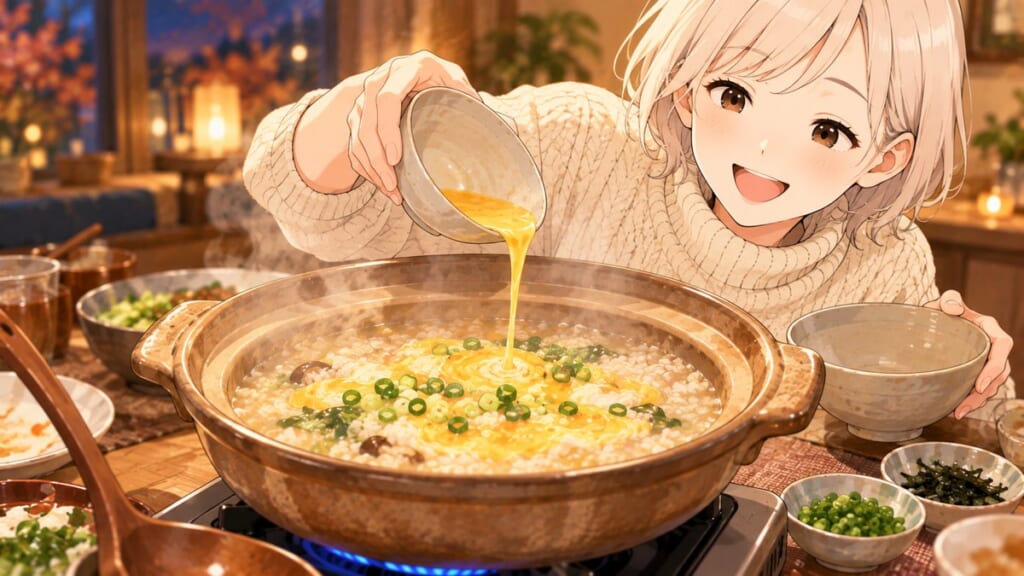
Here’s a detail you might miss if you’ve only seen photos of nabe: the meal isn’t quite over when the meat and vegetables are gone. There’s still the shime, the finishing course.
By then, the remaining broth has taken on flavors from everything that cooked in it. Instead of tipping it away, you can add cooked rice and beaten egg, then simmer them together to make zosui, a comforting rice dish. Let the egg cook through, and the last little bit of broth becomes another part of dinner.
Rice isn’t the only option. Some people add udon noodles, and ramen is another popular finish, especially with certain strongly flavored soups. Motsu-nabe, for example, is often finished with noodles.
 I’m firmly on Team zosui. For me, the thought of that rice soaking up the leftover soup is reason enough to leave a little room at the end. The ingredients may be the main event, but the ending has its own fans.
Try it at home or on your trip
If you want to make nabe at home, start with a deep pot and, if you want to cook at the table, a suitable tabletop burner. You don’t need a donabe to try it; an ordinary deep pot that works with your heat source is fine.
 For a straightforward first try, choose yose-nabe:
- Prepare some vegetables, tofu, mushrooms, and your choice of meat or seafood.
- Cook them in broth until done, serve the cooked pieces in small bowls, and add more ingredients as you go.
- When everyone has finished the main ingredients, it’s time for the shime.
In Japan, ready-to-use nabe soup bases make this easier, and I use them myself. You may be able to find Japanese nabe soup bases at an Asian grocery store where you live. If not, you can still start with a simple broth and ingredients you enjoy. Follow the instructions for your burner, including ventilation and safe pot size.
Missing Japanese home cooking between hot pot nights? A bowl of miso soup is an easy place to start. Here’s my 5-minute miso soup recipe and the miso pastes I’d pick.
 Visiting Japan in winter? Look for nabe on menus at izakaya, restaurants specializing in hot pot, or a ryokan dinner. Different places offer different styles, so checking the menu or meal plan is worth it if you’re hoping for a particular kind.
If Japanese everyday food makes you curious, there’s more to explore in my story about Japanese supermarket osozai. And if you’re planning a cold-weather visit, my guide to what to wear in Japan in winter can help you prepare. Once dinner is done, the kotatsu is another little window into winter life at home.
So next time you see a pot bubbling in the middle of a Japanese table, remember: dinner might have a second act.
What would you put in your nabe, and would you finish with zosui or noodles? Tell me in the comments.
Thanks for reading! Next time, let’s peek into another little corner of life in Japan.
See you in the next episode.




Comments