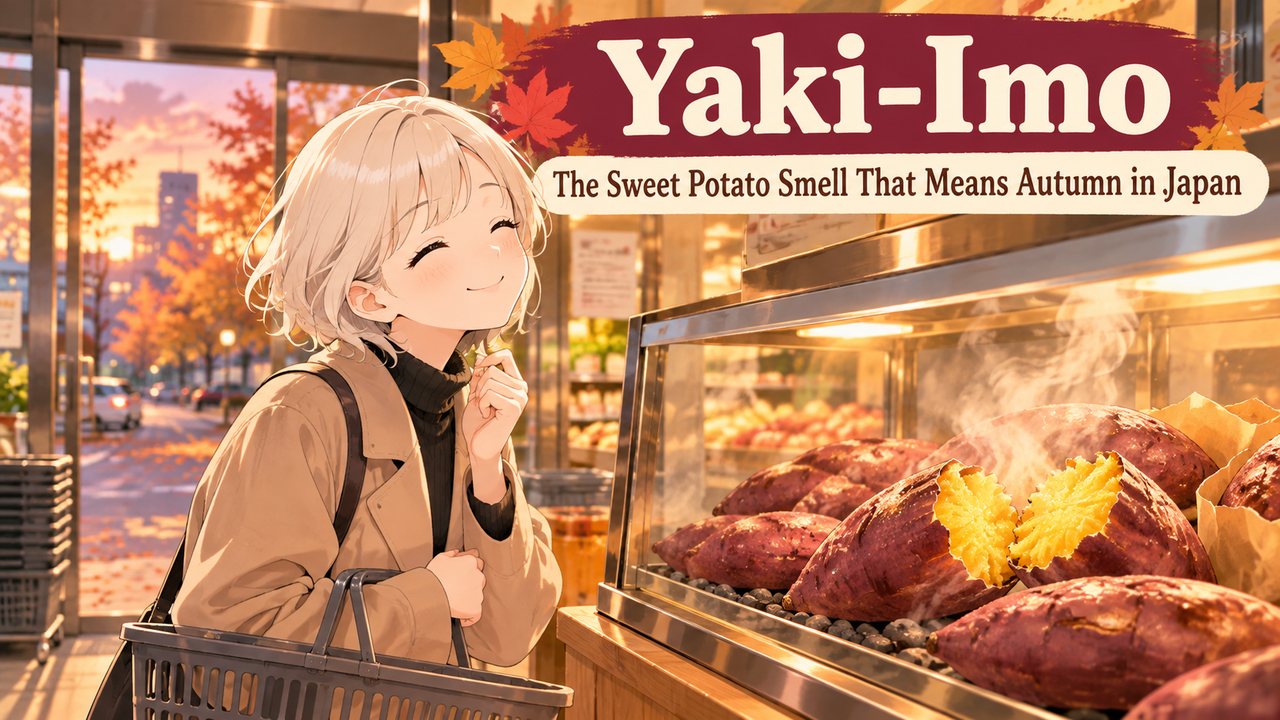

That smell near the supermarket entrance
Walk into a Japanese supermarket in autumn, and you might catch a sweet, toasty smell before you even grab a basket. There’s a good chance it’s coming from a machine roasting sweet potatoes near the entrance.
That’s yaki-imo (焼き芋), one of Japan’s little autumn pleasures. And yes, the supermarket near my home sells it too.
I love how something as ordinary as grocery shopping can come with a reminder that the seasons are changing. There’s no festival, no special occasion, and no need to make a reservation. Just a sweet potato, slowly roasting while everyone goes about their day.
This is the third little story in “Little Things in Japanese Life,” a series about the everyday details that make living in Japan interesting.
What yaki-imo is
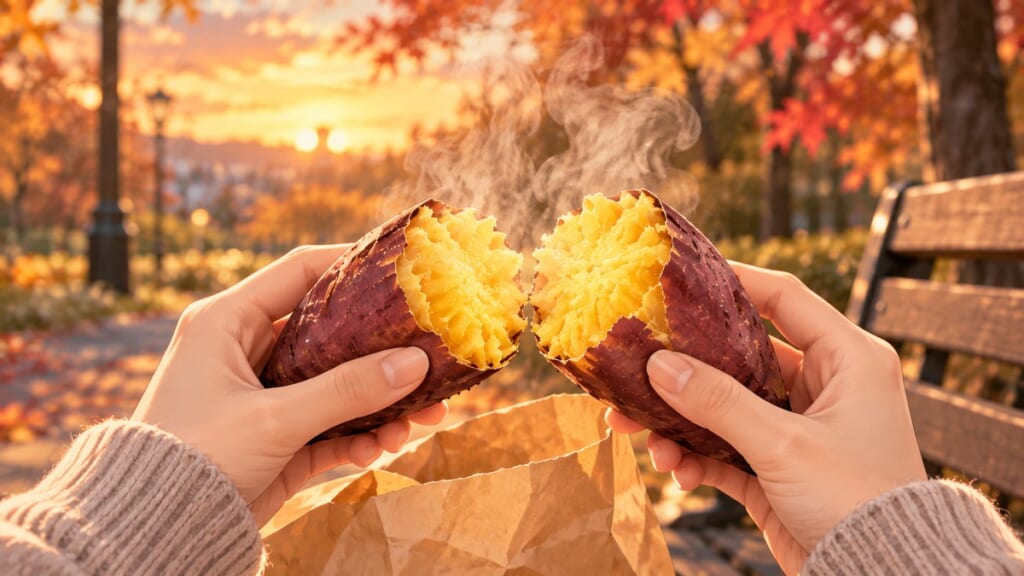
Yaki-imo literally means “roasted sweet potato.” It’s a whole sweet potato cooked slowly until the inside becomes soft, sweet, and fragrant. No sugar or honey needs to be added.
Traditional ishi-yaki-imo (石焼き芋) is roasted among heated stones. These days, supermarkets often use special electric roasting machines instead. The equipment has changed, but that slow cooking is still part of what makes yaki-imo special.
 Here’s the interesting part: sweet potatoes contain starch, and as they heat up, enzymes help turn some of that starch into maltose, a type of sugar. Keeping the inside around 65–75°C (149–167°F) for a while encourages this process. At higher temperatures, those enzymes gradually lose their activity.
So the sweetness isn’t simply about adding something sweet. It’s about giving the potato time.
And not every yaki-imo feels the same when you bite into it. Roughly speaking, there are two kinds:
- Moist and sticky (nettori): varieties like Beniharuka and Anno-imo. Beniharuka can taste rich and honey-sweet, almost creamy.
- Fluffy and flaky (hokuhoku): varieties like Naruto Kintoki. Closer to a soft, steaming baked potato.
People don’t always sort varieties the same way, and the texture also depends on how they’re cooked. There’s no need to memorize the names. You might just discover that you’re a “sticky potato person” or a “fluffy potato person.” Even a sweet potato can start a friendly debate.
Why Japan does it this way
Part of yaki-imo’s appeal is how well it fits the colder months. A warm potato can heat your hands while you hold it, and it’s a filling snack without needing much preparation.
It also has a long history as an everyday food. Stone-roasted sweet potatoes became more widespread after World War II, and mobile vendors were a familiar sight through the 1970s.
Today, a freshly roasted potato still feels like a simple way to enjoy the season. Sometimes the smallest seasonal traditions are the easiest ones to bring into an ordinary day.
Where you’ll find it

You don’t have to visit a specialty shop to try yaki-imo. In fact, a supermarket is probably the easiest place to start.
Supermarkets: Follow the sweet smell
Look near the entrance or the checkout area. Some supermarkets have a roasting machine or a heated display case holding potatoes that are ready to eat. They’re often wrapped in paper bags, making them easy to carry.
My local supermarket has one too. It’s not a rare food you need to hunt down, just part of everyday shopping.
You’ll notice yaki-imo most in autumn and winter. Some big chains sell a lot of it, too: discount retailer Don Quijote has reported annual sales of more than 10 million roasted sweet potatoes.
Convenience stores: Only some locations
Convenience stores can be another option, but don’t expect to find freshly roasted sweet potatoes in every one. What you will find in autumn is a shelf full of seasonal konbini sweets made with sweet potato and chestnut.
Some Lawson Store 100 locations roast yaki-imo right in the store, though availability varies by location. FamilyMart has also sold packs of chilled roasted sweet potatoes, which is a different experience from buying a hot, fresh one.
Product availability varies by store and season, so it’s worth looking rather than making a special trip for one.
If you’re curious about these little everyday shops, there’s more to explore in my guide to Japanese convenience store etiquette.
Yaki-imo trucks: The sound of an older tradition
 Now, here’s a sound you might not expect to hear in a Japanese neighborhood: “Ishi-yaki-imo!”
Some small trucks drive through residential streets, using speakers to announce their roasted sweet potatoes.
I’ve heard that call myself. It’s quite different from seeing a supermarket display, because you hear the vendor before you necessarily see the truck.
These mobile sellers are said to be less common than they once were, but they haven’t disappeared. If you happen to hear one during a winter visit, you’ll know what that announcement means.
How people eat it
The best part about eating yaki-imo is that you barely have to do anything.
 Take the warm sweet potato out of its paper bag, break it open with your hands, and enjoy the soft inside. Just be careful with the steam and the hot skin. A freshly roasted one can be surprisingly hot.
You can eat the skin if you like it, or leave it aside. Some people prefer the fluffy varieties, while others love that sticky, almost dessert-like texture.
My family buys yaki-imo quite often. It’s an easy snack to have at home, and there’s something lovely about a food that doesn’t need a recipe, toppings, or a complicated explanation.
You might also come across hiyashi-yaki-imo (冷やし焼き芋), or chilled roasted sweet potatoes. These are cooked first, then cooled in the refrigerator and eaten cold. They’ve become another way to enjoy sweet potatoes, including during the summer.
The cold version has its own appeal, but if this is your first yaki-imo, I’d suggest starting with a warm one. That sweet smell is half the story.
Try it on your trip
If you’re visiting Japan between November and February, add one tiny thing to your plans: have a look near the entrance of a local supermarket.
You don’t need a famous destination or a special food tour. Just look for:
- A roasting machine or a warm glass case near the entrance or checkout
- Sweet potatoes wrapped in paper bags
- The Japanese characters 焼き芋
One sweet potato usually costs about ¥200–400 (roughly $1–3 as of October 2026), depending on the shop and size.
 Even in its paper bag, the potato can be hot enough that you’ll want to handle it carefully. Gloves can be handy on a cold day, especially if you’re already dressed for winter sightseeing.
If you’re planning what to pack for the colder months, here’s my guide to what to wear in Japan in December & winter.
And don’t worry if you can’t find a roasting machine in the first supermarket you visit. Not every shop has one, and stock can sell out. Trying another supermarket is perfectly fine.
While you’re there, take a peek at the deli corner, too. Many Japanese families pick up dinner there on busy nights, and I wrote about it in my guide to Japanese supermarket osozai.
Next time you notice a sweet smell outside a Japanese supermarket, will you stop and see where it’s coming from? Maybe that small detour will become one of the things you remember about autumn in Japan.
Have you ever tried yaki-imo, or heard a sweet potato truck calling through the streets? I’d love to hear what you thought in the comments.
Thanks for reading! Next time, let’s peek into another little corner of life in Japan.
See you in the next episode.



Comments