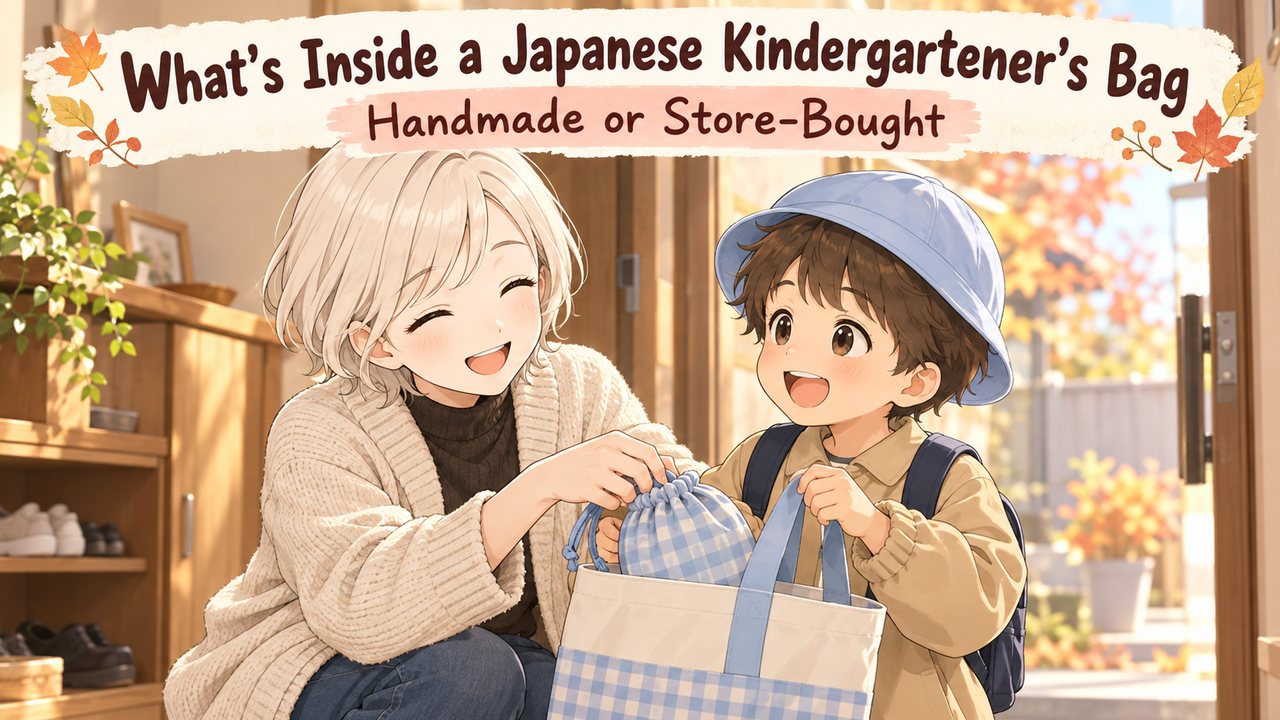

The small bag with a big list
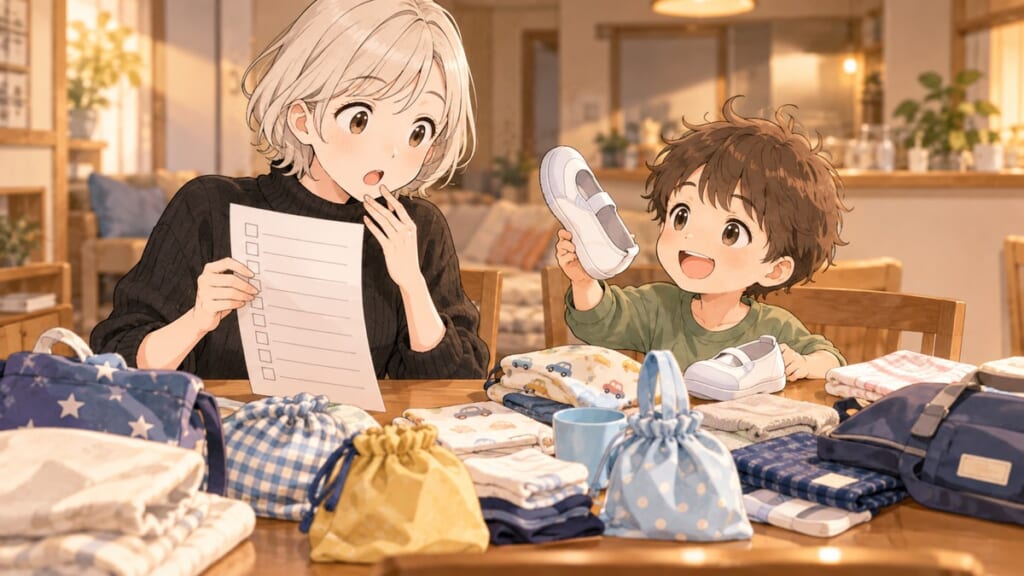
 You’d think a kindergartener’s school bag would be simple to pack, right? A lunch box, maybe a towel, and off they go. But in Japan, you’ll find little bags for lunch boxes, cups, and indoor shoes — and you’re asked to put your child’s name on just about everything.
That’s a lot of preparation for someone who’s only three, four, or five years old!
This is episode 16 of Little Things in Japanese Life, where even a child’s school bag has a story to tell.
Japan’s kindergarten year begins in April, but the preparation often starts in late winter. After the kindergarten orientation, parents receive a list explaining what their children need to bring, sometimes with specific measurements for each bag.
What goes inside
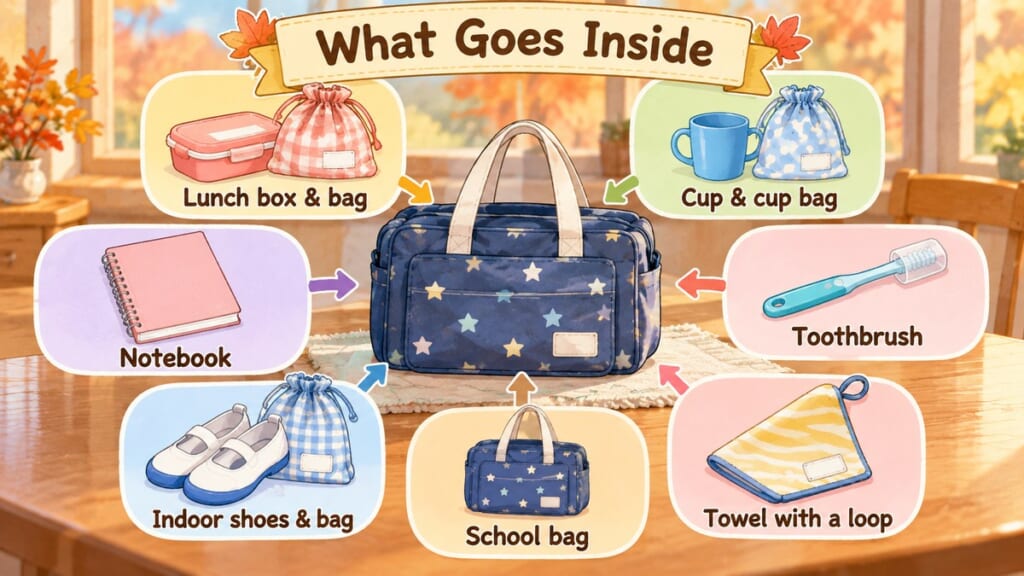
So what does a Japanese kindergartener actually bring to school? Here are some common items you might find on a kindergarten supply list.
- School bag (tsūen bag): A tote-style bag used to carry kindergarten supplies. Some schools specify its shape or size.
- Lunch box and lunch bag: The lunch box (bento box) goes into its own little bag. The lunch bag might be a drawstring bag that a child can open and close.
- Cup and cup bag: A small drinking cup gets a separate drawstring bag, too. Yes, another bag inside the bag!
- Toothbrush with a cover: Some kindergartens ask children to bring a toothbrush for use after meals. A cover keeps the toothbrush protected when packed away.
- Hand towel with a loop: The little loop allows children to hang their towel on a hook instead of leaving it on a shelf.
- Indoor shoes and shoe bag: Children change into indoor shoes (uwabaki) at kindergarten, and the shoes have their own carrying bag.
- Communication notebook or attendance book: These help the kindergarten and family keep in touch or record attendance. The kindergarten often provides or specifies the notebook.
 Not every kindergarten asks for the same things, and the sizes and styles can vary. This list focuses on kindergarten; daycare may require additional supplies, such as bedding covers for nap time.
Why Japan does it this way
 There’s something interesting about all these little bags. Having a separate place for each item can help children practice taking out their own belongings, using them, and putting them away again.
Think about a child hanging up a towel by its loop or returning indoor shoes to their shoe bag. Those are small everyday actions, but they’re also opportunities to become a little more independent.
You’ll find a similar idea in Japanese school life, where students often take part in looking after their classrooms. I wrote about that in my story about why Japanese students clean their own schools.
Name labels on everything
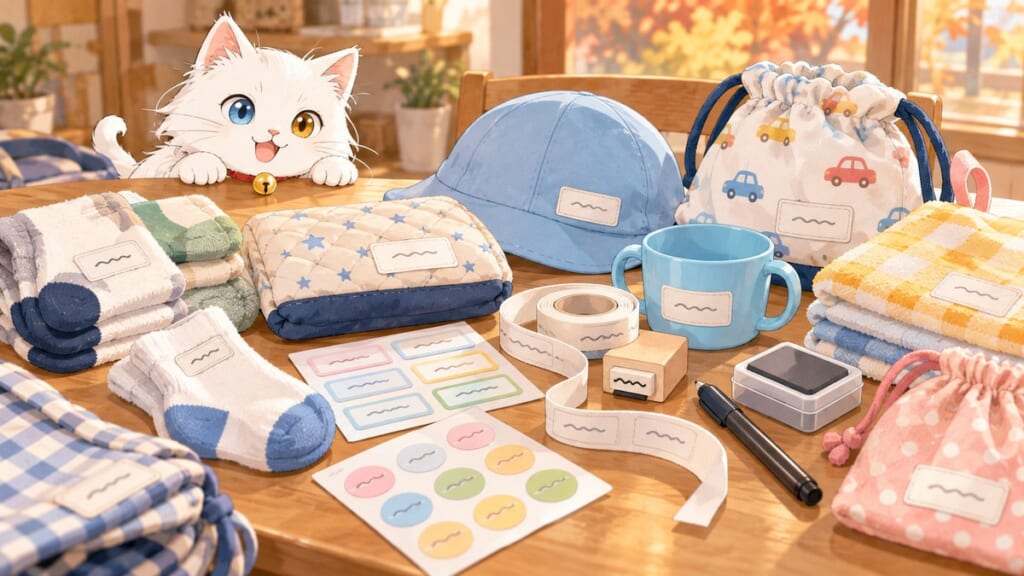
Now imagine you’ve gathered all those supplies and think you’re finished. Not quite. There’s still the name-writing.
You’re often asked to label everything your child brings to kindergarten, including clothes, hats, socks, bags, and smaller items. That way, when similar belongings get mixed up, it’s easier to return them to the right child.
And there are several ways to do it:
- Name stamps: An onamae stamp can make repeated labeling easier, especially when you have lots of items.
- Name stickers: These come in various sizes, with waterproof versions for things that need washing.
- Iron-on name tape: Useful for labeling certain fabric items, including clothing and bags.
- Permanent marker: Simply writing a name by hand is perfectly normal, too.
 I’ve prepared kindergarten supplies as a parent, and I can tell you that writing all those names was a lot of work. It’s not just the big school bag — even the little things need attention.
The handmade bag question
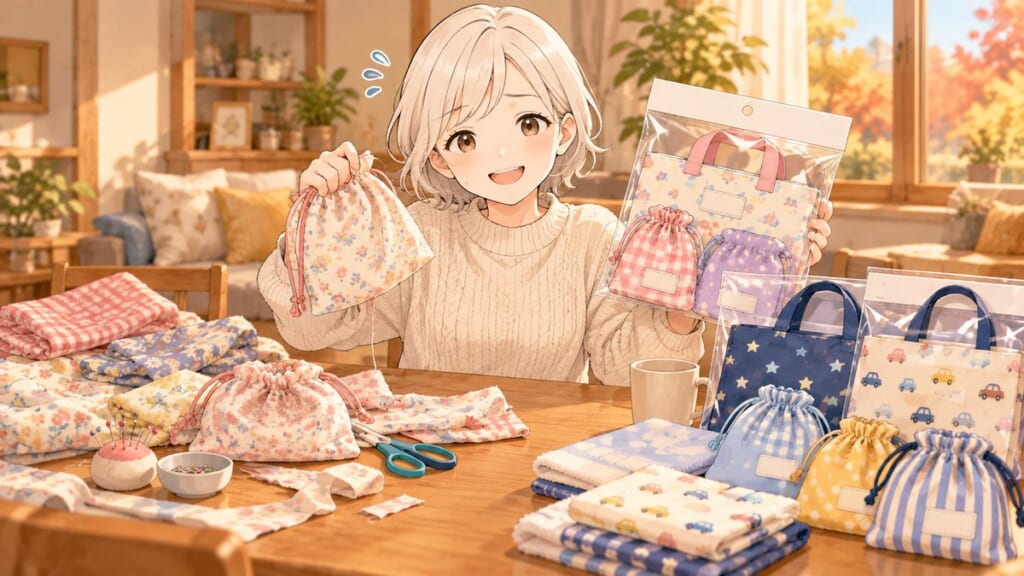
Here’s a question you might have after seeing all those bags: do Japanese parents really have to sew them?
Sometimes, kindergartens ask families to prepare handmade items such as lunch bags, drawstring bags, or school totes. They may also specify measurements or particular shapes so the bags fit the school’s needs.
In one 2017 survey in Japan (Mynavi News, 301 women with children), about two-thirds of the mothers surveyed said their kindergarten or daycare had asked for handmade items. That doesn’t mean every school requires them today, but it shows how common such requests were among the women surveyed at the time.
For parents who enjoy sewing, making a bag can be a chance to choose fabric and create something personal. For parents who are busy or don’t feel comfortable with a sewing machine, though, the request can be stressful.
I know that side of it. Sewing isn’t my strong point, so when I prepared kindergarten supplies, I made some items myself and bought others.
These days, I feel that parents have more room to choose. Some enjoy making their children’s bags, while others prefer buying ready-made ones.
And there are plenty of store-bought kindergarten supplies available now, including lunch bags, shoe bags, and cup bags. Some sellers even offer made-to-order bags in the measurements requested by a kindergarten.
To me, a handmade bag isn’t proof of how much a parent cares, and buying one doesn’t mean a parent cares any less. Sometimes the best choice is simply the one that works for your family.
A sweet thing to see
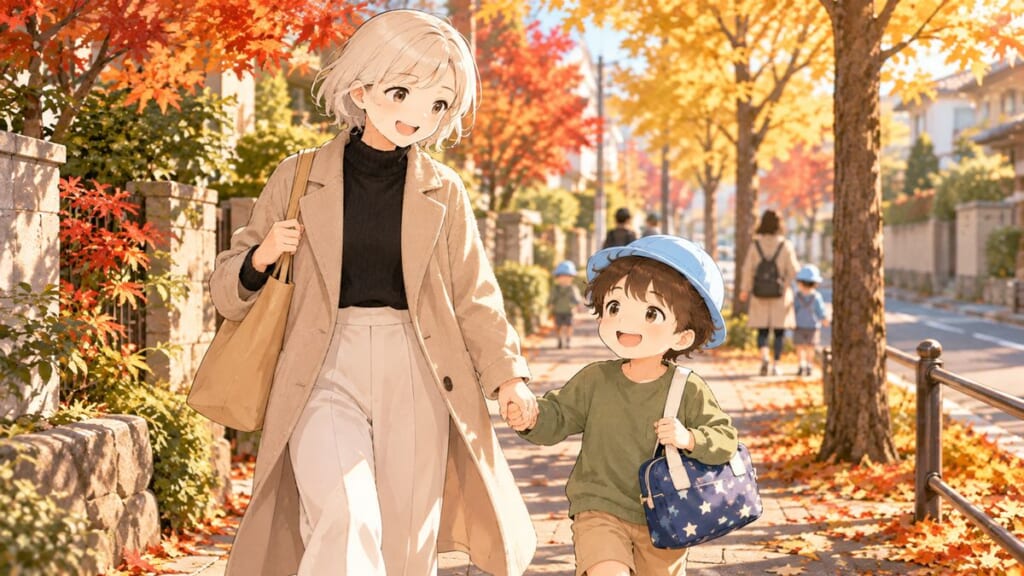
If you visit Japan in the morning, you might notice young children heading to kindergarten with a parent or riding a kindergarten bus. Some wear matching hats in their school’s chosen color and carry small bags that are part of their daily routine.
 It’s a lovely little detail of everyday life. Behind each of those small, name-labeled bags, there’s usually a parent who got everything ready, whether the bag was sewn at home or picked out at a shop.
If you’re planning a trip with little ones, I’ve gathered more ideas in my guide to Japan with kids. You can also explore the lunch boxes themselves in my guide to made-in-Japan bento boxes.
And if you’re visiting in November, you might come across another tradition involving young children and their families: Shichi-Go-San, a celebration of children’s growth.
Next time you notice a little kindergarten bag, you might find yourself wondering what’s tucked inside. Or perhaps you’ll think about the person who had to put a name on every last thing.
What did you carry to school when you were little? I’d love to hear about it in the comments.
Thanks for reading! Next time, let’s peek into another little corner of life in Japan.
See you in the next episode.
Comments