

The moment it starts raining, umbrellas appear
 Have you ever noticed how quickly umbrellas appear on the streets of Japan when it starts to rain? One minute, you can see everyone’s faces. The next, there’s a little sea of umbrellas moving down the sidewalk.
And here’s something you might not notice in a photo: rainy days in Japan come with all sorts of little systems and unwritten rules. Where you leave your umbrella, what you do with it before entering a shop, even how you carry it on a train — there’s a quiet rhythm to it all.
For the eighth episode of Little Things in Japanese Life, let’s follow the rain and see what happens to all those umbrellas.
 Japan’s rainy season, tsuyu, generally runs from June into July, starting earlier in Okinawa and Amami. Typhoons are especially common in August and September, and autumn brings rainy spells too. Even as the leaves change color in late October, an umbrella can come in handy.
Umbrella stands and plastic sleeves

You’re about to walk into a shop, but your umbrella is dripping wet. What should you do with it?
At many shops and department stores in Japan, the answer is waiting by the entrance. Look for one of these:
- Umbrella stand: Leave your closed umbrella here while you shop. Some stands have little locks.
- Plastic umbrella sleeve: Slip your closed umbrella into a long, narrow plastic bag before entering.
- Water-removing machine: Use it to remove some of the rainwater from your umbrella.
 The sleeve is basically a tiny raincoat for your umbrella. Yes, your umbrella gets its own raincoat.
You don’t need to use every option. Just follow the setup at the entrance.
Why Japan does it this way
The practical reason is simple: wet umbrellas can leave puddles on the floor. Keeping water near the entrance helps reduce slippery floors and makes the space more comfortable for the next person walking in.
There’s a little thoughtfulness behind the routine, too. You can see it as a way of looking after a shared space without needing to say anything. Nobody wants to leave a trail of water for the person behind them.
The clear umbrella from the convenience store
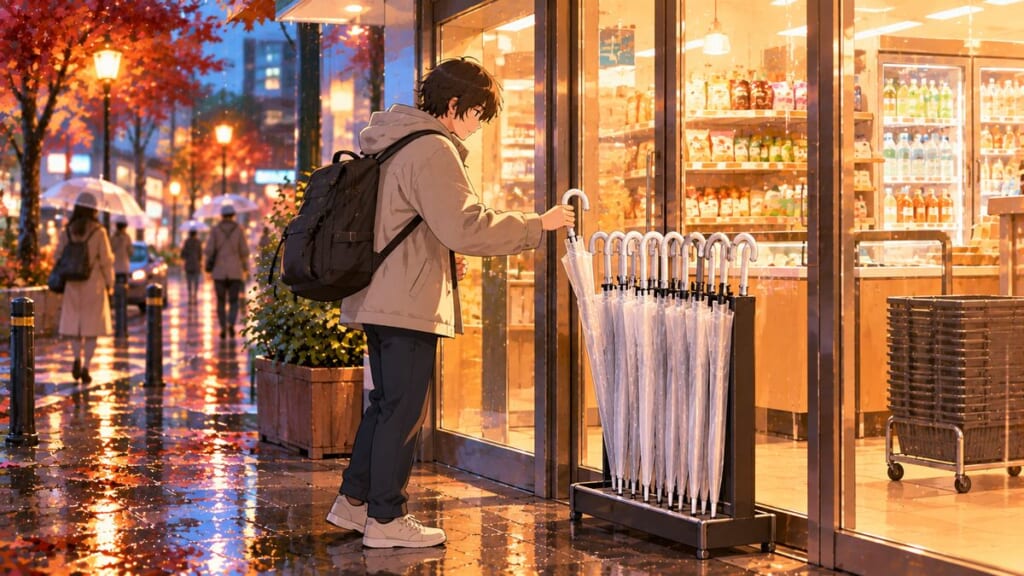
Caught in a sudden downpour without an umbrella? A convenience store might be your easiest solution.
Many Japanese convenience stores, known as konbini, sell clear plastic umbrellas. They’re easy to recognize: transparent canopies, simple handles, and a design that looks almost identical from one umbrella to the next.
I’ve bought a clear umbrella in a hurry when unexpected rain caught me out, too. Sometimes, you just need to get out of the rain.
But why are clear umbrellas so common in Japan?
Part of the answer is how widely available they’ve become. The numbers and history tell an interesting story:
- Umbrella sales: Older reports estimated annual umbrella sales in Japan at around 120–130 million, with roughly half being plastic umbrellas.
- The 1950s: A Japanese umbrella maker developed Japan’s first plastic umbrella.
I also like that you can see what’s ahead through a clear umbrella.
The less charming part? Buying another umbrella every time you’re caught in the rain can leave you with more umbrellas than you need. As a mom thinking about all the little things that accumulate at home, that part definitely makes me pause.
If you’re curious about other small shopping habits during your trip, you can also explore my guide to Japanese convenience store etiquette.
The downside: lost and “borrowed” umbrellas

There’s one problem with a whole crowd of clear umbrellas: they can be very hard to tell apart.
I’ve left umbrellas behind on trains and in shops. I’ve also had a clear umbrella disappear from a shop’s umbrella stand after I left it there. When so many of them look alike, it’s difficult to know whether someone picked up the wrong one or what actually happened.
 I’d love to pretend I’m always the careful one in this story. Unfortunately, my own umbrella-forgetting record says otherwise.
And I’m far from the only person who loses track of an umbrella.
In Tokyo in 2025, police recorded about 330,000 found umbrellas, while only around 9,000 were reported lost. That’s a huge gap. Perhaps many people simply replace a missing umbrella instead of reporting it.
One railway company’s figures for fiscal 2022 also showed that umbrellas were its most common category of lost property, making up roughly one-fifth of forgotten items.
So yes, umbrellas really do get left behind. A lot.
 Here are a few ways to make rainy days a little easier:
- Add a ribbon or sticker: Mark the handle of your clear umbrella so you can recognize it.
- Bring a distinctive umbrella: Choose one you can easily identify as yours.
- Try umbrella sharing: Some stations and shops offer services where you can borrow an umbrella and return it at another participating location. One goal is to reduce disposable plastic umbrellas.
And if you do leave something on a train or in a shop, don’t assume it’s gone forever. My guide to getting lost items back in Japan explains what you can do next.
Your rainy-day kit for Japan
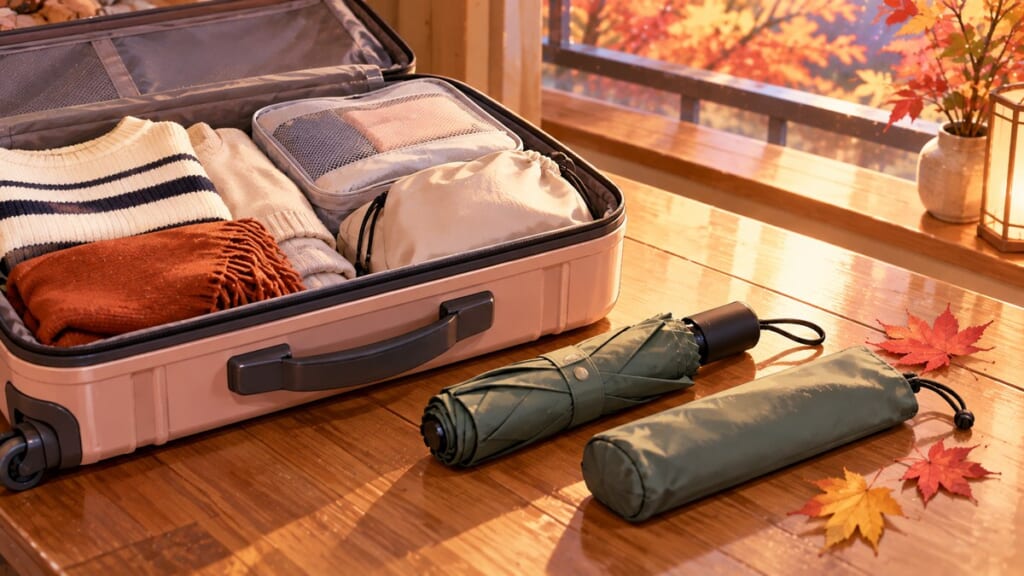
For a trip to Japan, you only need a few rainy-day habits. Here’s my simple kit:
- Pack one compact folding umbrella: Keep it in your travel bag so you’re ready for sudden rain.
- At shop entrances: Look for an umbrella stand or plastic umbrella sleeves. If neither is available, keep your closed umbrella from dripping on people or floors.
- At stations: Carry your closed umbrella with the tip pointing down, not horizontally toward other people.
- On trains: Keep your umbrella closed and close to your body so it doesn’t brush against other passengers.
For more useful things to pack, take a look at my guide to Japan travel accessories. And if your trip is coming up in the cooler months, my guide to what to wear in Japan in November can help you think about the rest of your suitcase.
The next time you see a street full of clear umbrellas in Japan, take a closer look at what happens when everyone reaches a shop entrance. A whole little routine unfolds around something as ordinary as rain.
Now I’m curious: are you the type who always remembers your umbrella, or the type who realizes it’s missing five minutes too late? Tell me in the comments — I promise I’m in no position to judge.
Thanks for reading! Next time, let’s peek into another little corner of life in Japan.
See you in the next episode.




Comments