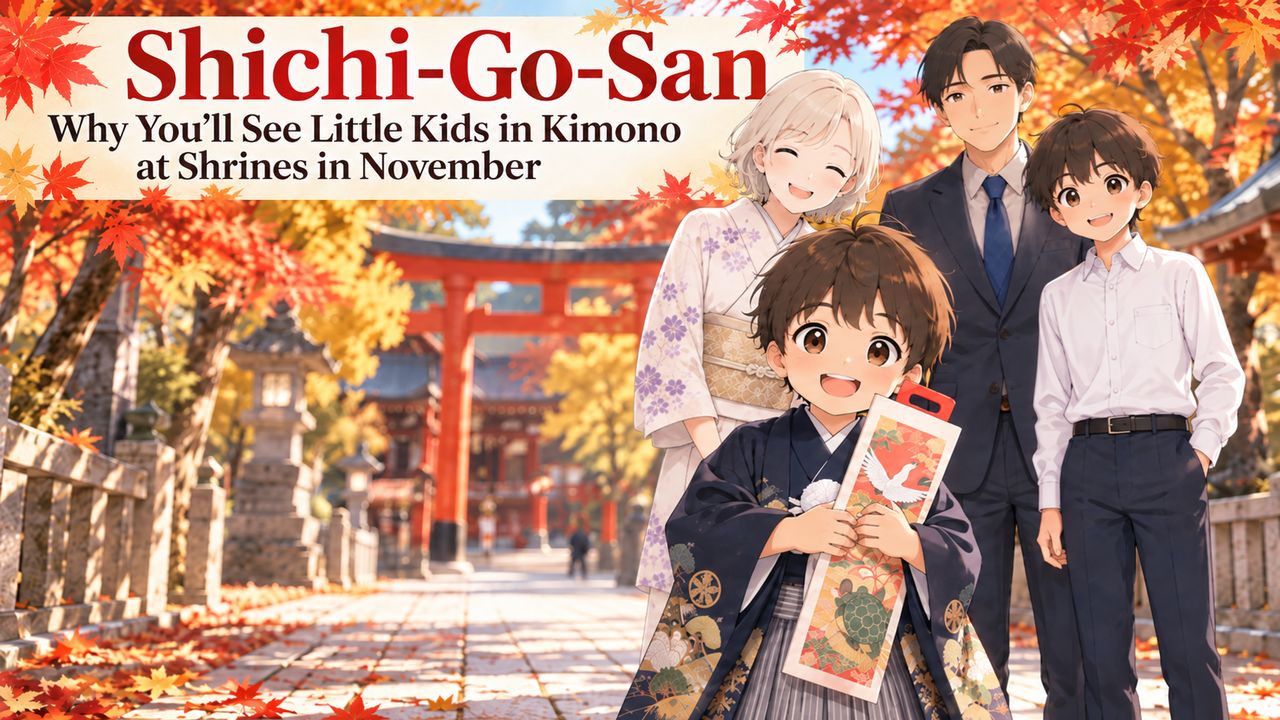

Tiny kimono at the shrine
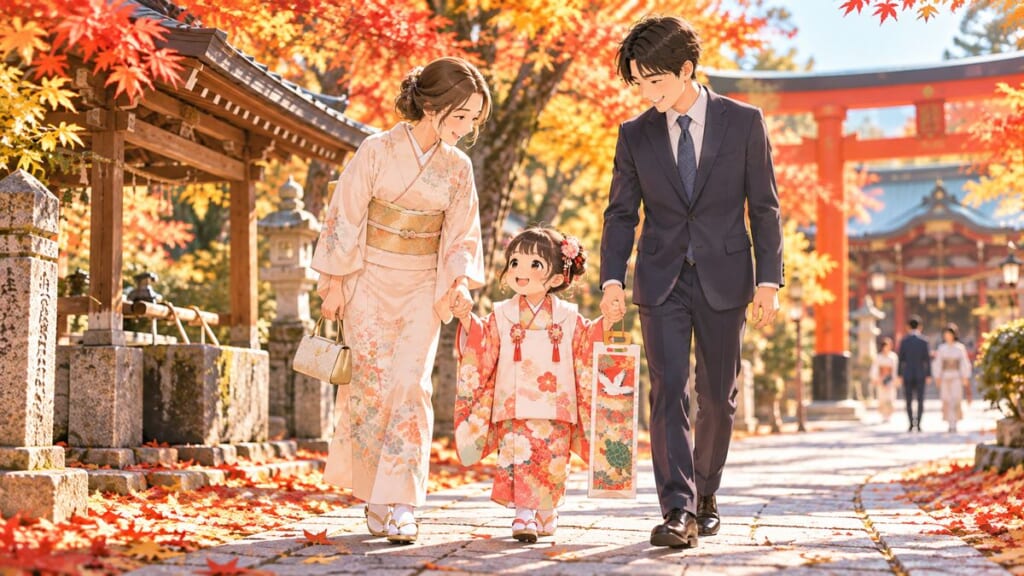
You’re walking past a shrine in November when you spot a tiny child in a beautiful kimono. The adults nearby are dressed up too, and someone is holding a long, colorful paper bag. Wait, is there a festival happening?
Not quite! You’ve just spotted Shichi-Go-San, a Japanese celebration of children’s growth at ages three, five, and seven.
The name literally means “seven-five-three.” Families visit shrines to give thanks for how much their children have grown and to pray for their health.
 I’ve celebrated Shichi-Go-San with my own family, too. It’s one of those days that reminds you how quickly little kids grow up.
This is episode 12 of Little Things in Japanese Life, where I share the everyday traditions and little details that make life in Japan interesting.
What Shichi-Go-San celebrates
Shichi-Go-San is about something surprisingly simple: your child has made it to another milestone, and that’s worth celebrating.
Families traditionally visit a shrine to say thank you for their children’s growth and pray for their good health in the years ahead. Think of it as a special family day to recognize how far a little person has come.
 So why the numbers three, five, and seven?
Traditionally, girls celebrated at ages three and seven, while boys celebrated at five (and often three). These ages were connected to old childhood ceremonies, including growing out one’s hair, wearing hakama trousers for the first time, and moving from children’s clothing ties to a proper kimono sash.
But traditions aren’t identical everywhere. The ages and customs vary by region and family, and some families now celebrate all three milestones regardless of gender.
You may also hear about two ways of counting age. Shichi-Go-San was traditionally celebrated using kazoedoshi, a system that counts a baby as one year old at birth, but many families today use their children’s actual ages instead.
Why November 15?
The traditional date is November 15, but it’s not a national holiday. Many families choose a nearby weekend in November, when everyone can make time for the shrine visit.
In colder regions, including parts of Hokkaido, families may celebrate earlier in October.
 One story traces the November 15 date back to a celebration for a shogun’s son in 1681. The tradition also has roots in older ceremonies marking important stages of childhood.
Why Japan does it this way
Long ago, when medical care was far more limited, seeing a young child grow safely through the early years was something families couldn’t take for granted.
Celebrating at three, five, and seven offered a chance to pause and say, “You’ve grown this much. Thank you.”
That’s the part I find most touching. Even today, behind all the beautiful outfits and photographs, the heart of Shichi-Go-San is a family’s wish to see their child keep growing up healthy.
Chitose-ame: the long candy
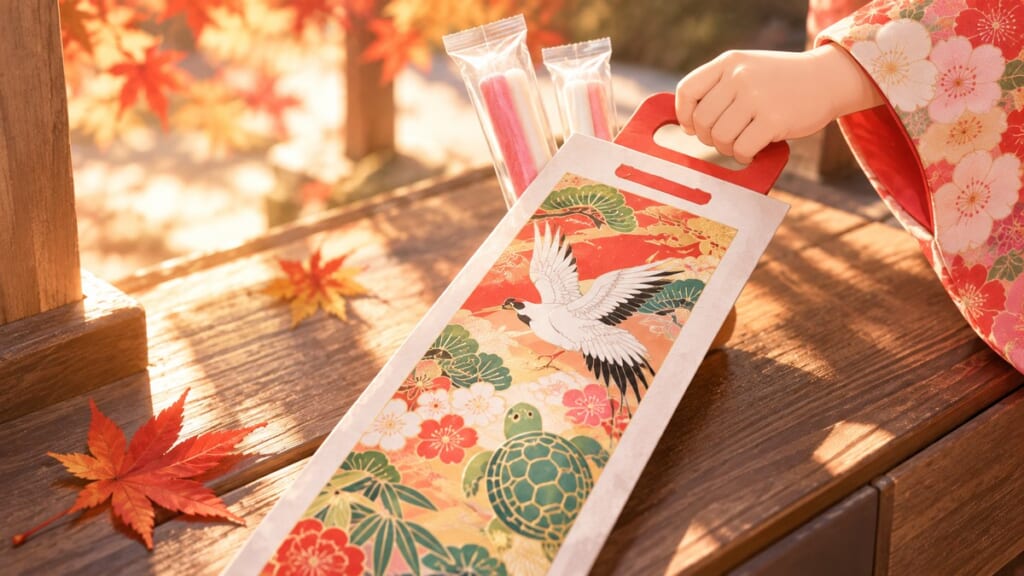
See that long paper bag the little child is carrying? It probably holds one of the sweetest symbols of Shichi-Go-San: chitose-ame.
Chitose means “a thousand years,” and ame means candy. The name carries a parent’s wish for their child to enjoy a long life.
Inside the bag are traditionally long, thin sticks of candy, often in red and white. The shape itself is part of the symbolism: a long piece of candy for a long, healthy life.
The bags are often decorated with lucky images, such as cranes and turtles, which symbolize longevity, or pine, bamboo, and plum blossoms, which are associated with good fortune.
And the bags can look enormous next to the children carrying them. A tiny kid holding a candy bag that seems almost as tall as they are? That’s a pretty adorable sight.
The candy is said to have originated with a seller in Asakusa during the Edo period, who offered long sweets associated with wishes for longevity.
It’s more than a treat. It’s a small, colorful way of saying, “I hope you have a wonderful, long life ahead.”
Photos, rentals, and the real-life chaos
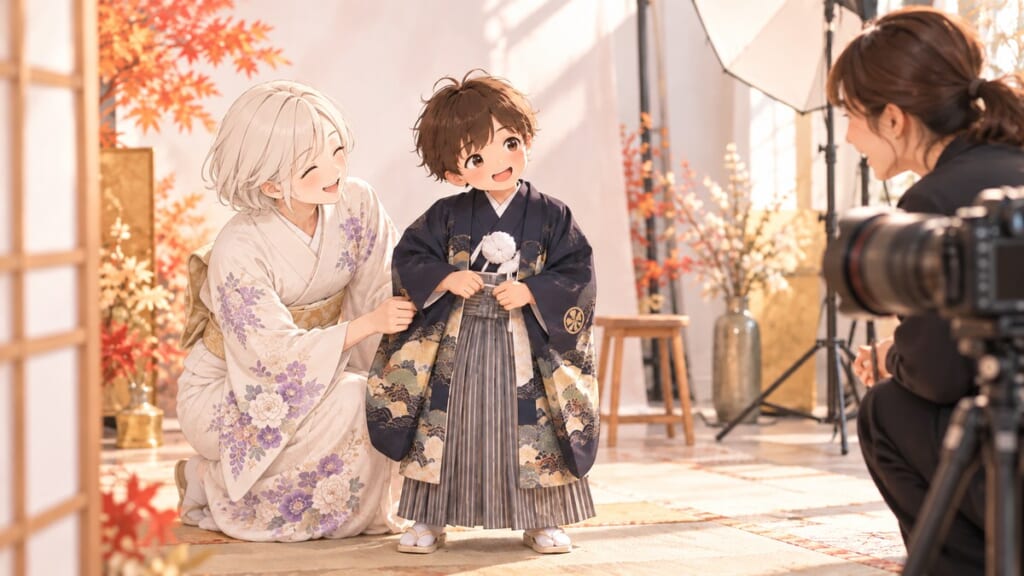
Those beautiful Shichi-Go-San photographs you might see? There’s often a lot happening behind the scenes.
Many families combine a shrine visit with a professional photo session. Some rent kimono for the day, while others buy the outfits to keep.
My family visited a shrine and had photos taken at a studio. We bought the kimono instead of renting.
 The finished pictures are lovely, but here’s what doesn’t make it into the album: there was some fussing on our big day, too. Of course there was. A special occasion doesn’t magically turn little kids into perfectly cooperative models!
Unfamiliar clothes and a long day of preparations and photos can be tiring for young children. For parents, organizing everything from outfits to photos can take quite a bit of time and money, too.
Still, it’s special to have a record of such a short stage of childhood. For me, Shichi-Go-San isn’t about a flawless day. It’s about pausing to notice that your child is growing up, even if the day gets a little messy.
If you visit a shrine in November
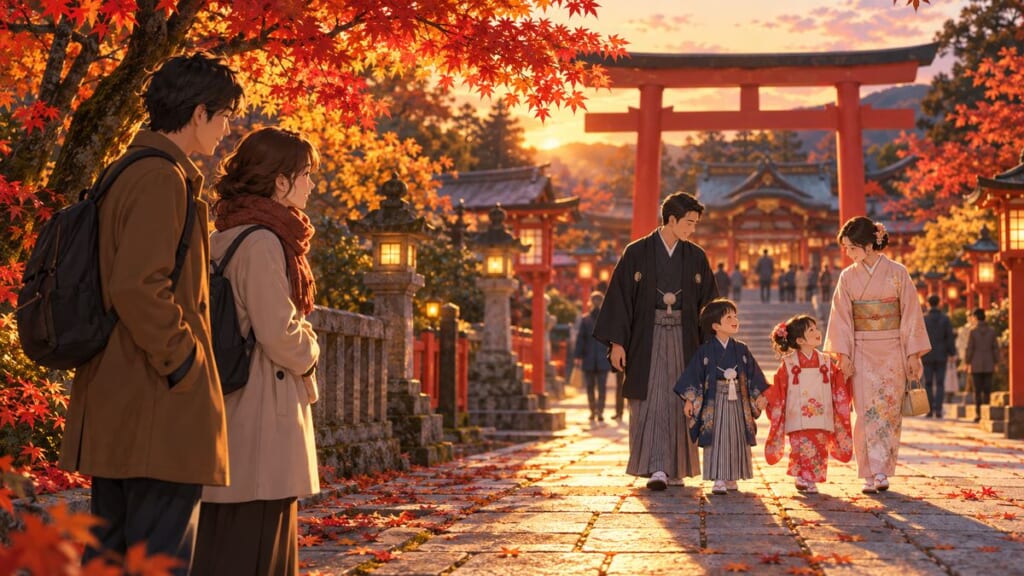
If you’re traveling in Japan during November, you might spot Shichi-Go-San families at shrines, especially on weekends around November 15.
You’ll recognize the celebration by the children’s beautiful outfits, the dressed-up family members, and sometimes those long chitose-ame bags. With the autumn leaves around the shrine grounds, it can be a lovely scene.
And yes, it’s fine to visit a shrine where families are celebrating Shichi-Go-San. Just remember that you’re watching a personal family milestone, not a performance for tourists.
 If you’d like to enjoy the atmosphere respectfully, here are a few things to keep in mind:
- Watch quietly and give families space. They’re there to celebrate their children.
- Don’t photograph children or families without permission. If you’d like a picture, ask first, and respect a no.
- Keep pathways clear. Avoid standing in the middle of an approach or walking directly in front of a family having photographs taken.
- Enjoy the details from a distance. The clothing, the candy bags, and the autumn setting can tell you plenty without interrupting anyone.
You don’t need to participate in the ceremony to appreciate it. Sometimes simply knowing what you’re seeing makes an ordinary walk feel a little more special.
 If you’re planning an autumn trip, my guide to what to wear in Japan in November can help you prepare for the cooler weather. And if you’re visiting with children of your own, you’ll find more practical ideas in my guide to Japan with kids.
Next time you spot a tiny child in kimono carrying an oversized candy bag, you’ll know there’s a family celebrating another little milestone. Funny how three small numbers can hold such a big wish, isn’t it?
How does your family celebrate the moments when children grow a little older? I’d love to hear about your traditions in the comments.
Thanks for reading! Next time, let’s peek into another little corner of life in Japan.
See you in the next episode.


Comments