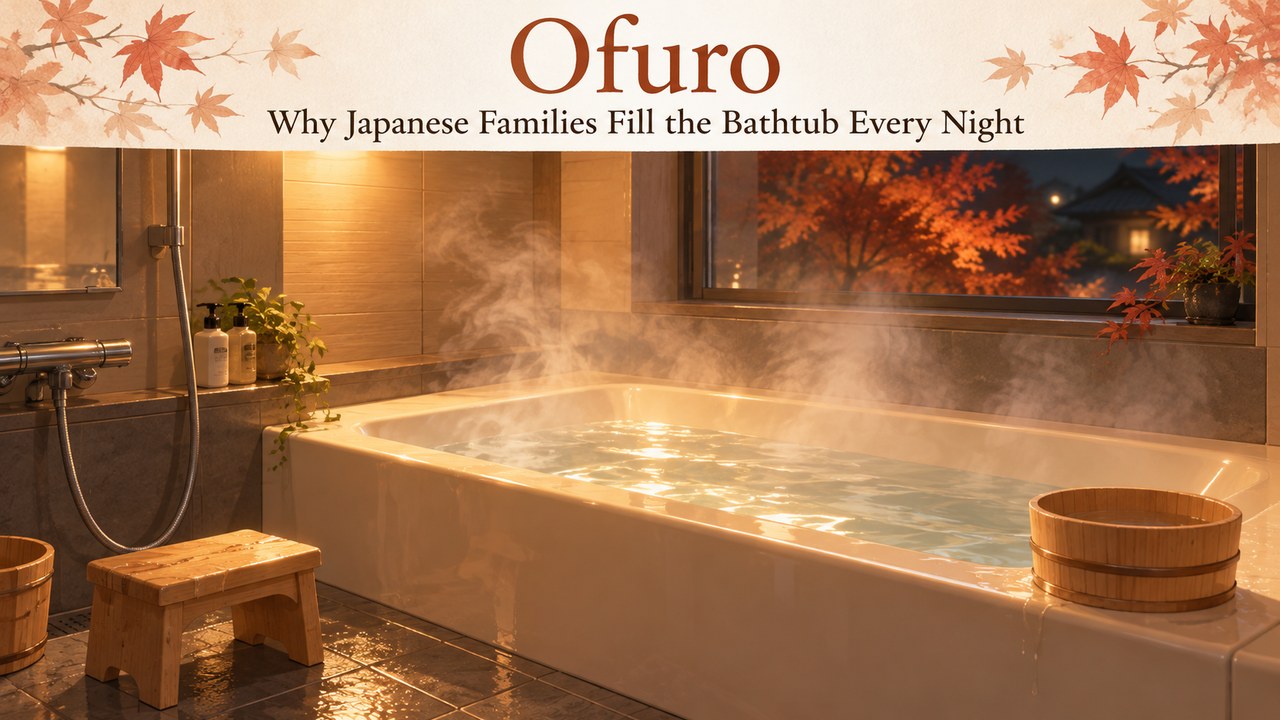
Little Things in Japanese Life — Episode 2. This time, let’s peek into an everyday Japanese bathroom.

“Had your bath yet?” — the evening question
 Here’s something that might surprise you about Japanese family life: the whole family can take turns soaking in the same bathtub water. Yes, the same water. And no, nobody washes in it!
In Japan, we call a bath ofuro (お風呂). For many families, it’s more than getting clean — it’s a familiar evening routine, especially in winter. At my house, we fill the tub every winter night. It feels ordinary to me, but there’s something interesting about the routine.
Does everyone in Japan take a bath every night, though? Not quite. One 2021 survey found that about 70% of people in Japan soak in the tub every time they bathe in winter. That’s a lot of bath lovers, but plenty of people take showers instead, too.
And the part about sharing the water? There’s a simple reason it works. The secret isn’t in the bathtub itself — it’s what happens before anyone steps inside.
Wash first, soak second
In a Japanese-style bathroom, you get clean before getting into the bathtub. The tub is for soaking, not scrubbing. Here’s the usual order:
- In the separate washing area, wash with soap, or on some nights simply rinse off the sweat with warm water. This quick rinse is called kakeyu (かけ湯).
- If you used soap or shampoo, rinse it all off.
- Step into the tub and enjoy the warm water.
- Get out and leave the water for the next person.
 Because everyone washes or rinses first, the bathwater stays much cleaner, so family members can take turns without refilling the tub. It isn’t perfectly clean forever, of course. Families eventually drain the used water and clean the tub.
So why soak at all? Japan has cold winters in many regions, and warm water is a pleasant way to warm up. For some people, those few quiet minutes also offer a break after a busy day. It’s not an obligation, but in many households, a warm soak is a familiar way to end the evening.
The talking bathtub button
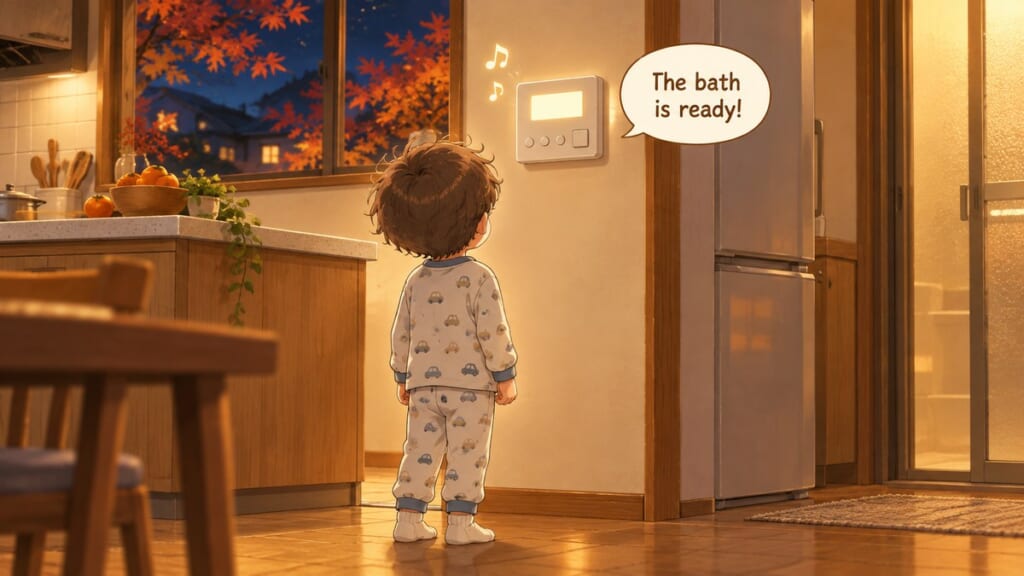
Now for one of my favorite little details about Japanese home life: some bathtubs practically announce when they’re ready. Well, technically, it’s the water heater doing the talking. The bathtub hasn’t developed a personality. Not yet, anyway.
Many Japanese homes have a water-heater control panel that can handle much of the bath preparation. Depending on the system, here’s what it can do:
- Automatic filling: Press a button to fill the tub to your selected temperature and water level.
- Voice announcement: A melody and spoken message tell you when the bath is ready.
- Reheating: Warm cooled bathwater again or maintain its temperature.
On a system with voice announcements, you might hear:
「お風呂が沸きました」
Ofuro ga wakimashita.
“The bath is ready!”
 Yes, it actually talks. And my own water heater says it, too!
The reheating function is called oidaki (追いだき). It can be handy when family members bathe at different times and the next person wants warm water without refilling the tub.
A bath-ready melody and voice announcement appeared on a Japanese water-heater remote control back in 1997. Not every home has the same equipment, but if you hear “Ofuro ga wakimashita!” in Japan, you’ll know what it means.
 And what happens to the water afterward? Some households reuse leftover bathwater for laundry, sometimes with a special pump that transfers the water to the washing machine. My family doesn’t do that, but it’s another way some people make use of the water before draining the tub.
Trying it in Japan
You don’t need to visit someone’s home to experience a Japanese-style bath. If you’re traveling in Japan, here are four places to try:
- Your hotel room: Many rooms, including business hotel rooms, have a small bathtub in a compact unit bath.
- A hotel with a daiyokujo (大浴場): Enjoy a soak in a large communal bath.
- A sento (銭湯): Visit a neighborhood public bathhouse.
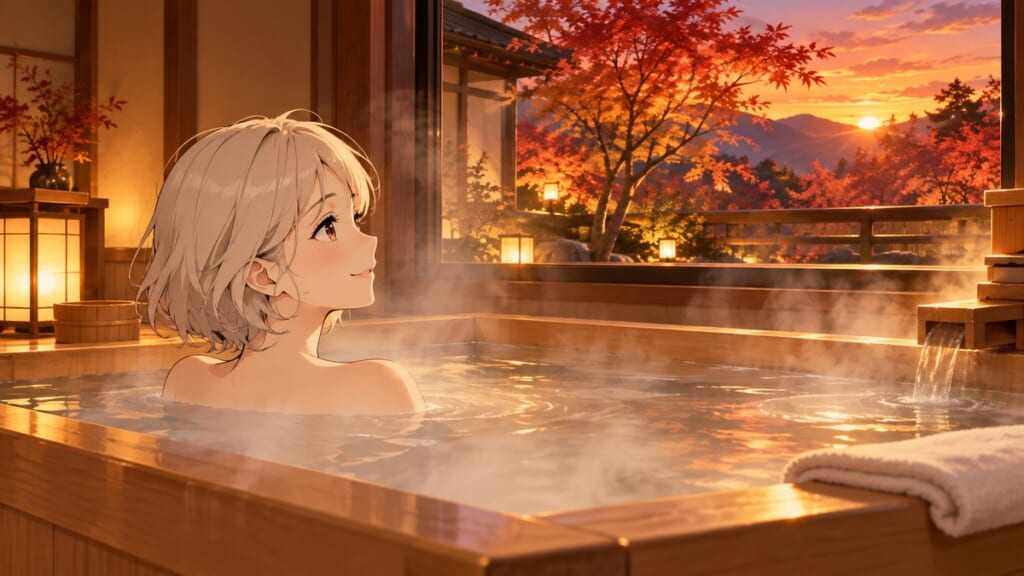
- A ryokan or onsen: Try a traditional inn or hot spring, sometimes with views of gardens or seasonal scenery.
One thing to know about hotel unit baths: the shower may be directly over the tub, without a separate washing area. If you’re bathing alone in your private room, simply wash and rinse as the layout allows.
And imagine soaking in a ryokan bath while looking out at autumn leaves. That sounds like a lovely way to spend a chilly evening.
If you prefer to bathe privately, some accommodations offer private baths or rooms with their own bathing facilities. You can explore those possibilities in my guide to private onsen near Tokyo, Kyoto & Osaka.
 There’s one important difference between your own hotel bathtub and a shared public bath. At sento and onsen, wash and rinse your body before entering the communal water, and keep your towel and hair out of the tub. You can find more tips in my Japanese onsen guide before your first visit.
 Not visiting Japan anytime soon? You can still enjoy a little ofuro-inspired time at home. You don’t need a talking water heater — just a warm bath and a few minutes to do nothing. Japanese bath additives, called nyuyokuzai (入浴剤), can add another little touch. Explore them in my guide to Japanese bath salts.
So, if you hear a cheerful voice announcing that the bath is ready during your next trip to Japan, you’ll know what’s going on. It’s one of those little things about Japanese life you might find yourself telling a friend about tomorrow. The only question left is: would you like to be the first person in the tub, or the next?
I’d love to hear what you think! Would you try sharing the same bathwater after everyone has washed first, or does the idea still feel a little surprising? Tell me in the comments.
Thanks for reading! Next time, let’s peek into another little corner of life in Japan.
See you in the next episode.

Comments