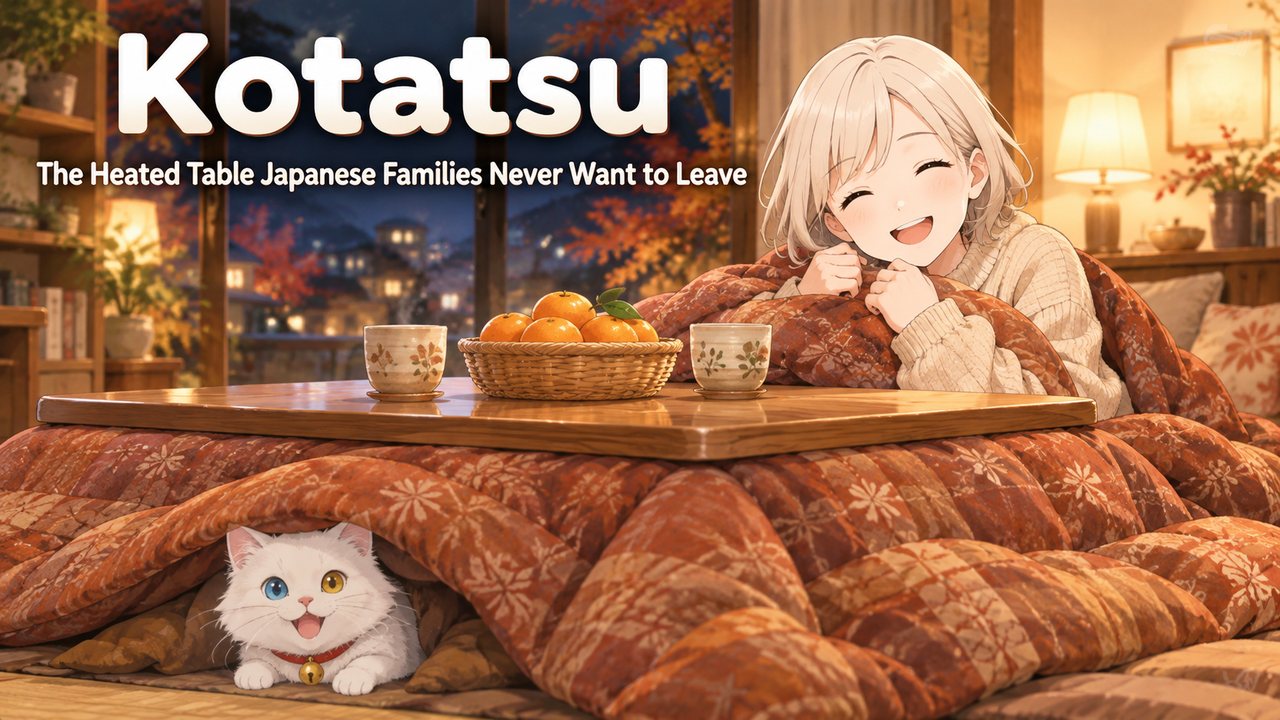
Little Things in Japanese Life — Episode 7. Today, we’re finding a little piece of winter hiding under a table.

The day the kotatsu comes out
What if your living room table suddenly became the warmest spot in the house? In many Japanese homes, that’s exactly what happens when winter comes. The table becomes a kotatsu — a low, heated table with a thick blanket tucked around it.
 My family still has one, and I bring it out around November every year. For me, that’s when winter really begins. The calendar can say whatever it likes, but once the kotatsu comes out, the season has officially changed in my house.
And here’s the funny thing about this little table: it’s not just somewhere to put your tea. It’s somewhere you put your legs, settle in, and suddenly become much less interested in getting up again.
If you’ve spotted a kotatsu in a Japanese anime, there’s a simple idea behind that blanket — and a whole little world of family life around it.
How it works
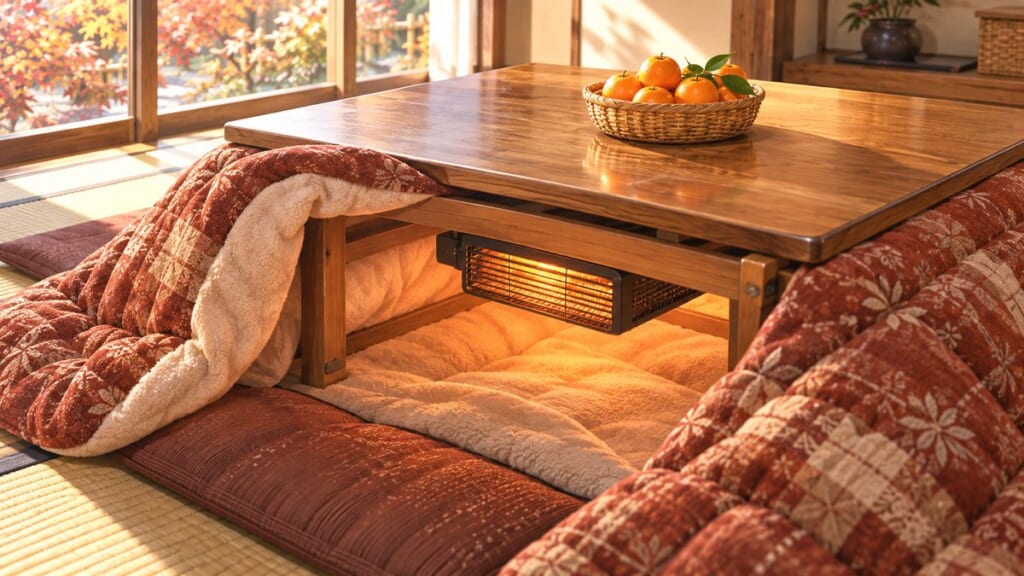
So, what is a kotatsu, and how does it work? It has three simple parts:
- A low table frame with an electric heater attached underneath.
- A thick futon blanket covering the frame.
- A separate tabletop placed over the blanket to hold it in place.
You sit on the floor, slide your legs underneath, and the warm air stays trapped under the blanket. The heater warms that enclosed space rather than the whole room. Your upper body stays outside, so the rest of the room may still feel chilly.
Many modern furniture-style kotatsu can also work as ordinary low tables. Remove the blanket when the weather gets warmer, and you can keep using the table throughout the year. When November comes around again, the blanket goes back on.
 The idea is much older than electricity. Early kotatsu developed around traditional sunken hearths called irori, with a wooden frame and covering to hold in the warmth. Portable versions later became popular, and electric kotatsu began spreading across Japan in the late 1950s.
The heating method has changed, but the basic idea is still easy to recognize: gather around one warm spot and keep the heat close to the people who need it.
Mikan and kotatsu
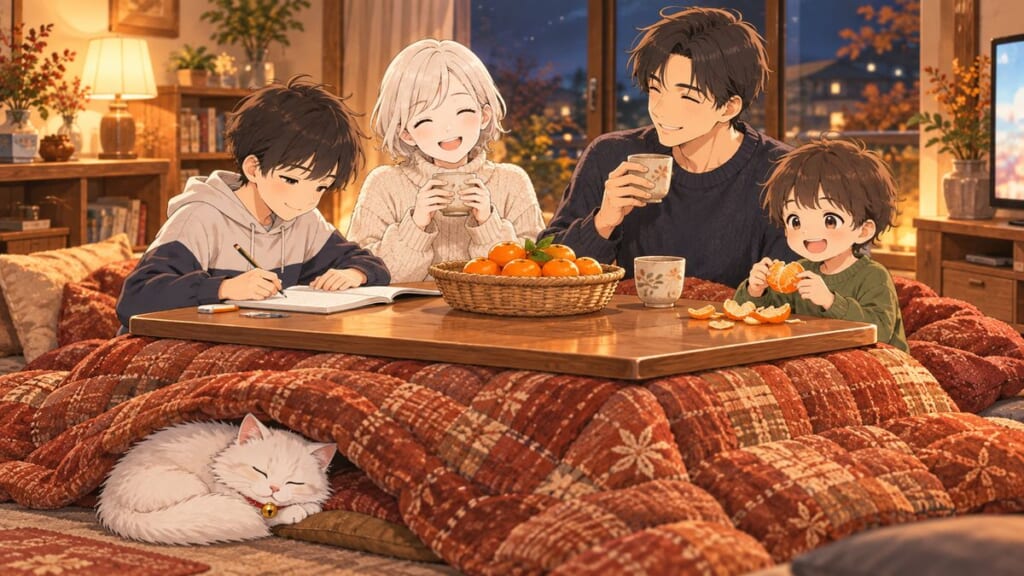
Picture a kotatsu in winter, and there’s one more thing you might see sitting on top: a bowl of mikan, those small Japanese mandarin oranges you peel with your fingers. Kotatsu and mikan are such a familiar winter pairing that the two almost belong in the same picture.
It’s an ordinary scene, not a special ceremony. A family can sit around the table with their legs under the blanket, watching television, chatting, or doing homework. Someone reaches for another mikan, and nobody has much reason to move.
That’s part of what makes the kotatsu more than a piece of furniture. It gives everyone a shared place to gather, even when they’re doing different things. You don’t need a planned family activity to spend time together around the same table.
Of course, there’s a small problem with somewhere this comfortable: once you’re inside, getting out starts to feel like a big decision.
 And yes, someone in my family falls asleep in our kotatsu almost every night. I’m not naming names, but I’d really appreciate it if the actual bed got a little more attention!
Why it suits Japanese homes
A kotatsu is a clever way to warm the people in a room without trying to warm every corner of the room itself. Instead of filling the whole space with heated air, it keeps the warmth concentrated around your legs and feet.
That can make it a useful choice for saving electricity. A kotatsu generally uses less power than an air conditioner heating an entire room, although actual energy use depends on the equipment and how it’s operated. It also has an obvious limitation: if you walk away from the table, you leave that warm little space behind.
Why Japan does it this way
Traditionally, many Japanese homes had sliding doors and spaces that allowed air to move through the house. Older homes can feel cold in winter, so a kotatsu offered warmth where people were sitting.
Low tables, floor cushions, and sitting on tatami have also long been part of Japanese domestic life. A heated low table fits naturally into that arrangement.
Of course, Japanese homes don’t all look or feel the same. Some have modern insulation and whole-room heating, while others still have chilly hallways or cold floors. A kotatsu can make one area comfortable, but it doesn’t solve the problem of a cold house.
 And a little caution matters. Japan’s National Institute of Technology and Evaluation has warned about kotatsu accidents linked to improper use or carelessness, particularly in January and February, so it’s worth following the safety instructions that come with it.
Where travelers can try one
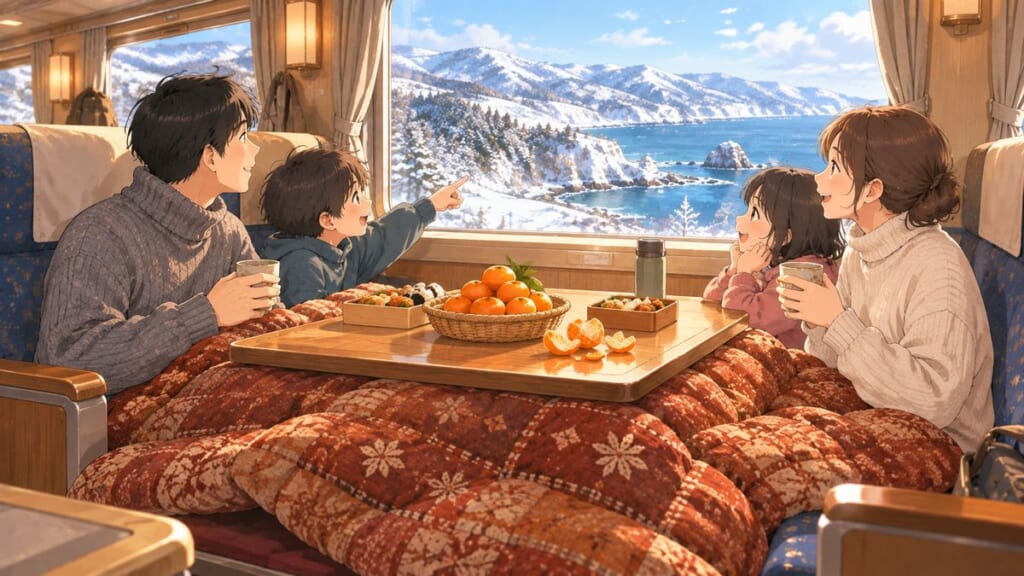
Want to experience a kotatsu during a winter trip to Japan? You don’t need to visit someone’s home. Some traditional Japanese inns, restaurants, and even sightseeing trains offer opportunities to sit under one.
 For accommodation, try searching for “ryokan with kotatsu” or “kotatsu room Japan”. Look through the room descriptions and photographs rather than assuming every Japanese-style room has one. Even at a traditional inn, a kotatsu may be available only in certain rooms or during the colder months.
Restaurants and cafés can be another possibility. Search for “kotatsu seating” together with the city or area you’re visiting. Some places set up kotatsu seating for winter, but check whether those seats are available on your travel date and whether you need to reserve them.
 And here’s an unusual one: a kotatsu on a train. Sanriku Railway in the Tohoku region has operated a winter sightseeing service known as the kotatsu train, where passengers can sit under kotatsu blankets while looking out at the scenery. Its winter services have operated on weekends and holidays, but check the railway’s latest schedule and reservation details before planning a trip around it.
If you’re visiting Japan in winter, remember that a warm kotatsu won’t keep you comfortable while you’re exploring outside. For help preparing your suitcase, take a look at my guide to what to wear in Japan in winter.
And if you’re staying home but love the idea of bringing a little Japanese winter into your everyday life, my guide to Japanese winter essentials has more ideas for making the colder months feel cozy.
So now, when you spot a low table covered with a blanket in a Japanese anime, you’ll know what’s hiding underneath. And if you ever get the chance to slip your legs into a real kotatsu, I have just one question: how long do you think you’ll last before deciding you don’t want to get up?
I’d love to hear about your winter routines, too. Where does everyone tend to gather in your home when the weather turns cold? Tell me in the comments!
Thanks for reading! Next time, let’s peek into another little corner of life in Japan.
See you in the next episode.




Comments