As an Amazon Associate, I earn from qualifying purchases.
Quick list: everything linked in this guide
- Spring layers (Amazon US): women’s packable down jacket, women’s rain jacket, men’s rain jacket, folding umbrella, women’s waterproof sneakers, stick-on heat packs (kairo)
- Already in Japan or ordering from Japan (Amazon Japan): Hokkairo heat packs, MUJI packable down, ASAHI Top Dry shoes
- Cherry blossom outings (Klook): Nakameguro night cherry blossom tour, Fushimi Jikkokubune boat tour, Sagano Romantic Train
- Kimono rental (Klook): Kyoto, Asakusa, Tokyo
Cherry blossom tour dates move with the bloom each year, so check the dates before you book.

- Quick Answer: Is Japan Cold in March and April?
- March and April Weather in 6 Cities (Sapporo to Okinawa)
- Early March vs. Late March vs. Early April vs. Late April
- The Spring Layering Formula: Do You Need a Down Jacket?
- Cherry Blossom Season: Night Viewing and Hanami
- Rain, Wind and Umbrellas in Spring
- Shoes for Long Walking Days (and Taking Them Off)
- Cherry Blossom Photo Outfits and Kimono Rental
- Hokkaido and Tohoku in March: It’s Still Winter
- Spring in Japan with Kids
- What to Buy in Japan: Uniqlo, GU and Sizing
- Japan Spring Packing List: March vs. April
- FAQ
- Final Thoughts: What to Wear in Japan in March and April
Quick Answer: Is Japan Cold in March and April?
You step outside into beautiful spring sunshine, but the morning air still feels like winter. That’s Japan in March and April — and it’s why packing for cherry blossom season can be surprisingly tricky.
Is Japan very cold in March? It can be, especially in early March and after sunset. For Tokyo, Kyoto, and Osaka, bring a lightweight down jacket, long sleeves, and layers you can remove.
Is Japan cold during April? Usually less so. A light jacket or cardigan is often enough during the day, but you’ll still appreciate an extra layer in the morning and evening.
Early March and late April need very different suitcases. And if you’re visiting Hokkaido, you’ll need warmer clothes than someone heading to Tokyo.
 Your quick spring packing guide:
| When and where | What to wear |
|---|---|
| Early March, Tokyo/Kyoto/Osaka | Lightweight down jacket + sweater + long pants |
| Late March | Light down or lined jacket + removable layers |
| Early April | Light jacket + long-sleeved top + cardigan |
| Late April | Long sleeves + light jacket for cooler hours |
| March in Hokkaido | Winter coat + waterproof, slip-resistant boots |
A few options to explore before you pack (both clothing links below are women’s styles):


Packable Down Jacket (women)
For early March and cold evenings. Folds into a small bag.
Prices change often — please check the latest price on each store.


Packable Waterproof Rain Jacket (women)
For April showers and wind. Packs down small.
Prices change often — please check the latest price on each store.
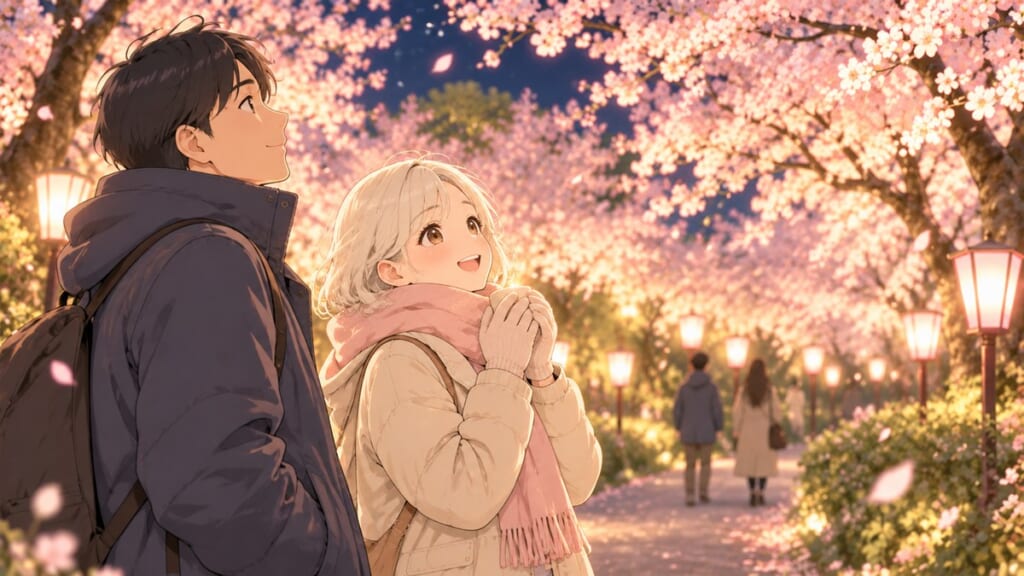
Nakameguro Night Cherry Blossom Tour (Tokyo)
A 3-hour evening walking tour with an English-speaking guide. Bring a warm layer.
Prices and tour dates change with the season — check the latest on Klook.
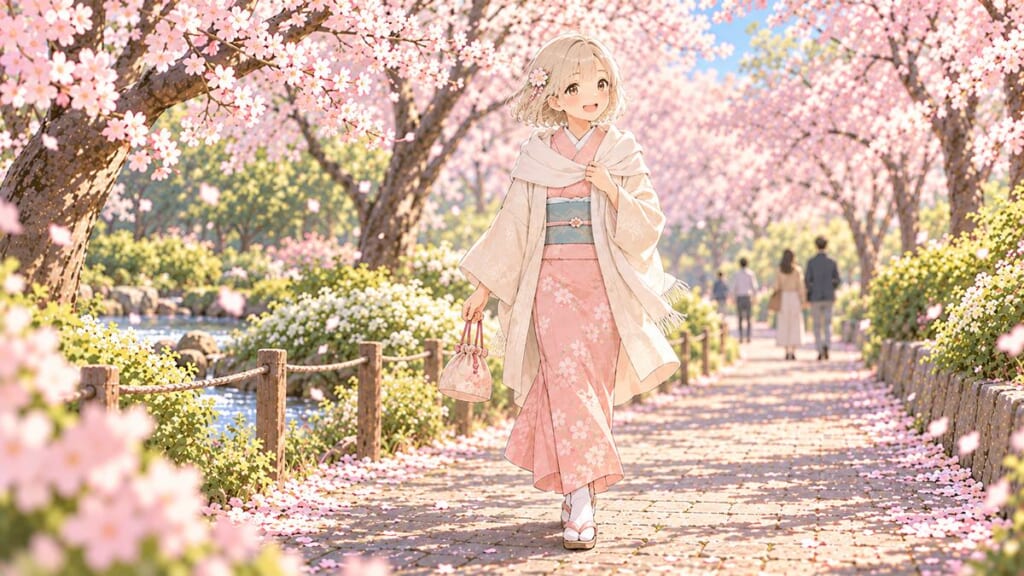
Kyoto Kimono Rental (Kiyomizu area)
Rated 5.0/5 by Klook users (Oct 2026). Ask about a warm haori jacket for chilly days.
Prices and tour dates change with the season — check the latest on Klook.
March and April Weather in 6 Cities (Sapporo to Okinawa)
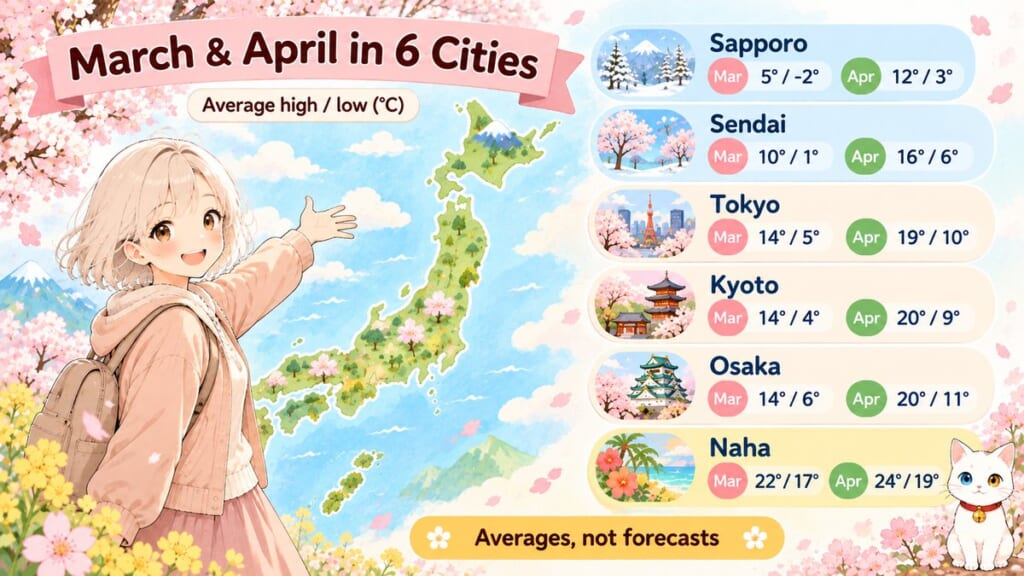
Japan’s spring weather changes dramatically depending on where you’re going. A jacket that feels right in Osaka might not be warm enough for Sapporo, while Okinawa can already feel pleasantly warm.
Here are the Japan Meteorological Agency’s 1991–2020 climate normals. The temperatures are average daily highs and lows, not forecasts for your travel dates.
| City | March high / low | April high / low | Rainy days March / April |
|---|---|---|---|
| Sapporo | 4.5 / -2.4°C (40 / 28°F) | 11.7 / 3.4°C (53 / 38°F) | 13.9 / 9.6 |
| Sendai | 10.0 / 1.4°C (50 / 35°F) | 15.5 / 6.3°C (60 / 43°F) | 7.1 / 7.7 |
| Tokyo | 14.2 / 5.0°C (58 / 41°F) | 19.4 / 9.8°C (67 / 50°F) | 9.2 / 9.5 |
| Kyoto | 14.1 / 4.3°C (57 / 40°F) | 20.1 / 9.2°C (68 / 49°F) | 9.5 / 9.4 |
| Osaka | 14.2 / 6.0°C (58 / 43°F) | 19.9 / 10.9°C (68 / 52°F) | 9.1 / 9.2 |
| Naha (Okinawa) | 21.9 / 16.7°C (71 / 62°F) | 24.3 / 19.1°C (76 / 66°F) | 10.9 / 10.3 |
Source: Japan Meteorological Agency, 1991–2020 climate normals. Rainy days are days with at least 1 mm of precipitation.
How to Read These Temperatures
 Look at both the high and the low before deciding what to pack. Tokyo’s March average high is 14.2°C (58°F), but its average low is only 5.0°C (41°F) — quite a difference when you’re walking outside after dinner.
Here’s a simple clothing guide for planning your days:
| Temperature | A practical starting point |
|---|---|
| Around 10°C (50°F) | Jacket + long sleeves + optional sweater |
| Around 15°C (59°F) | Light jacket or cardigan |
| Around 20°C (68°F) | Long-sleeved top, with a light layer available |
These are starting points, not strict rules. Wind, rain, sunshine, and how long you’re standing outside can change what feels comfortable.
Kyoto and Tokyo have similar monthly averages, but your morning plans matter just as much as the city. Someone heading out early for sightseeing may need more layers than someone leaving the hotel after breakfast.
Early March vs. Late March vs. Early April vs. Late April
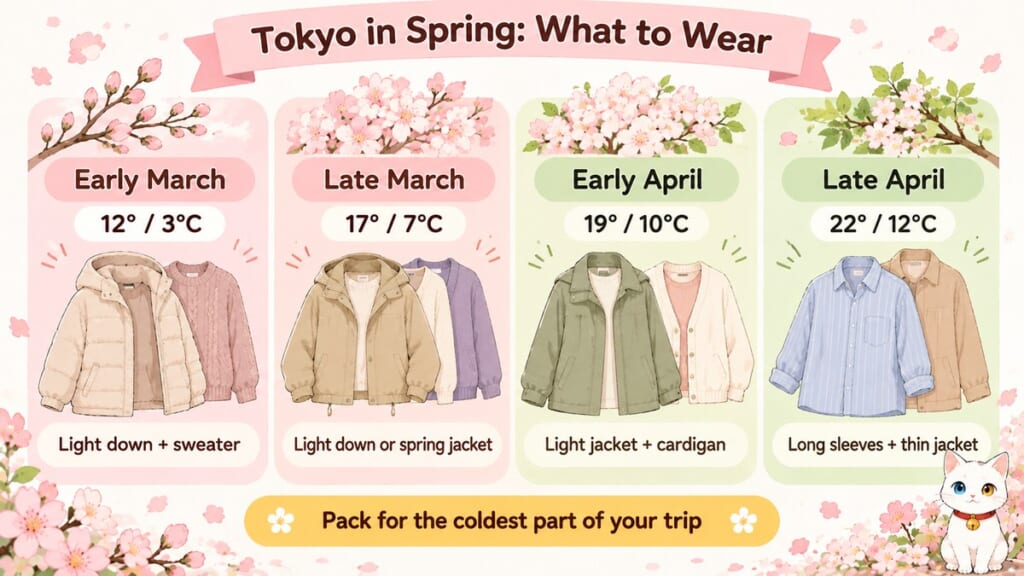
Don’t pack for March or April as though the whole month has the same weather. Tokyo’s average temperatures rise steadily through spring, so the dates on your flight ticket really do matter.
The table below uses Tokyo’s daily climate normals to give you four practical packing periods.
| Travel period | Tokyo temperature reference | What I’d pack |
|---|---|---|
| Early March | Mar 1: 12.1 / 3.3°C (54 / 38°F) | Lightweight down jacket, sweater, long sleeves, long pants |
| Late March | Mar 31: 16.5 / 7.0°C (62 / 45°F) | Light down or spring jacket, cardigan, long sleeves |
| Early April | Mar 31: 16.5 / 7.0°C (62 / 45°F) to Apr 15: 19.3 / 9.7°C (67 / 49°F) | Light jacket, cardigan, long-sleeved tops |
| Late April | Apr 30: 21.9 / 12.3°C (71 / 54°F) | Long sleeves, lighter bottoms, thin jacket for cooler hours |
The dates are temperature reference points, not averages for the entire period. All figures are Tokyo’s 1991–2020 daily climate normals.
If Your Trip Covers Two Different Periods
Pack for the colder part of your itinerary, then remove layers as the weather warms up. A cardigan takes much less luggage space than an extra heavy coat, and it lets you adjust throughout the day.
For example, if your holiday starts in late March and finishes in early April, bring one warmer outer layer rather than packing a completely separate wardrobe for each week. You can wear your lighter combinations as spring progresses.
In Japan, many schools are on spring break from late March to early April, when the new school year begins.
Popular cherry blossom areas and transportation can be busy, so it’s worth planning your sightseeing around the crowds.
How to Avoid Crowds in Japan
The Spring Layering Formula: Do You Need a Down Jacket?
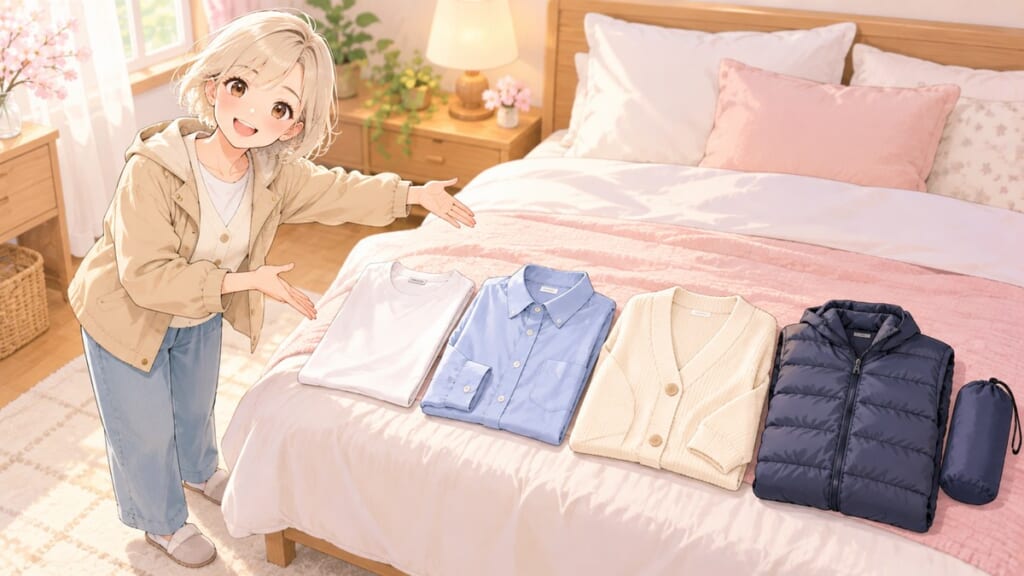
You don’t need to fill your suitcase with heavy winter coats for Tokyo, Kyoto, or Osaka in March. But a lightweight, packable down jacket can still be a very useful piece of clothing, particularly at the beginning of the month.
 The trick is to wear several thinner layers rather than relying on one thick coat.
Four Layers That Work Together
Start with a comfortable, relatively thin inner top, then add a long-sleeved shirt or blouse. Your third layer can be a cardigan, sweatshirt, or light fleece, depending on how easily you get cold.
The final layer is your outer jacket. For March, a packable down jacket is a practical option; for April, a lightweight jacket or rain jacket will often be sufficient in central Japan.
| Layer | What to pack |
|---|---|
| Base | Lightweight inner top |
| Main | Long-sleeved shirt or blouse |
| Middle | Cardigan, sweatshirt, or thin fleece |
| Outer | Packable down for March; light jacket for April |
This combination also works when the weather changes halfway through your sightseeing day. You can take off the outer layer at lunch without needing to change your whole outfit.
A Packable Jacket Is Easier to Carry
For a March trip, consider a packable down jacket that folds into a small bag when you’re not wearing it. It gives you another option for colder mornings without taking up as much room as a bulky winter coat.
Packable Down Jacket (women)
A light down layer that folds into a small bag for cold March mornings and evenings. The same jacket works for a late-autumn trip.
Prices change often — please check the latest price on each store.
If you’re already in Japan and need an extra layer, you can also look at a MUJI packable down option.
MUJI Lightweight Pocketable Down Jacket (women)
MUJI’s own light down that packs into its pocket. Japanese sizes often run small, so check the size chart. Not sold by Amazon US; Amazon Japan sells it directly and ships it overseas.
Prices change often — please check the latest price on each store.
What About Heating on Trains and Inside Shops?
Trains, department stores, and other indoor spaces may still have heating running when the outdoor air feels chilly. A thick coat can quickly become uncomfortable once you step inside.
Choose outerwear you can unzip or take off without removing several other pieces. You can find more advice about handling outdoor temperatures and indoor heating in my November clothing guide.
What to Wear in Japan in November
Cherry Blossom Season: Night Viewing and Hanami
Cherry blossoms look soft and delicate in photographs, but the air around them isn’t always warm. If you’re planning to enjoy the blossoms early in the morning or after sunset, prepare for colder conditions than you might expect from the daytime forecast.
 I’ve been to see cherry blossoms at night, and it felt colder than during the day. It’s the kind of outing where you’re often standing still to admire the flowers rather than walking continuously.
For evening blossom viewing, I’d bring a jacket that closes at the neck, a scarf or neck warmer, and lightweight gloves if the forecast looks cold. Small disposable hand warmers, called kairo in Japan, are another option when your fingers start feeling chilly.


Stick-On Heat Packs (kairo), Japan import
Japanese disposable warmers that stick to the inside of a jacket. Handy for night cherry blossom viewing. Outside the US, the Amazon Japan button links to a 90-pack of Hokkairo stick-on warmers that ships to many countries.
Prices change often — please check the latest price on each store.
Sitting Under Cherry Blossoms
You may see groups enjoying hanami, the Japanese custom of appreciating cherry blossoms, while sitting on the ground. Even when the afternoon sunshine feels comfortable, the ground can still feel cold against your legs and bottom.
Choose pants that are comfortable for sitting, and consider warmer socks if you expect to stay seated for a while. Personally, I don’t think travelers need to bring a separate picnic groundsheet all the way to Japan just for cherry blossom viewing.
You can enjoy the flowers while walking, too. If you do want to sit down, check the park’s rules about where picnicking is allowed.
When Do Cherry Blossoms Normally Bloom?
The flowering season doesn’t arrive everywhere on the same day. These are the normal flowering and full-bloom dates for Somei Yoshino cherry trees, not predictions for 2027.
| City | Normal first bloom | Normal full bloom |
|---|---|---|
| Tokyo | March 24 | March 31 |
| Kyoto | March 26 | April 4 |
| Osaka | March 27 | April 4 |
| Fukuoka | March 22 | March 31 |
| Sendai | April 8 | April 13 |
| Sapporo | May 1 | May 6 |
Source: Japan Meteorological Agency, 1991–2020 normals.
Actual flowering can be earlier or later each year, so check the latest cherry blossom forecast before your departure. Don’t rely on these normal dates as a guarantee that the trees will be in full bloom during your visit.
Cherry Blossoms After Dark, on a Boat, or from a Train
For nighttime sightseeing, you can look into the Nakameguro Night Cherry Blossom Tour, a three-hour guided evening tour in English. Remember that an evening outing may call for warmer clothing than the same walk in the afternoon.
In Kyoto, another option to investigate is the Fushimi Jikkokubune Cherry Blossom Tour, a half-day tour. A waterside outing is a good reason to keep an extra layer available, especially when you’re not moving around much.
If you’re interested in combining a scenic train ride with spring sightseeing, take a look at the Sagano Romantic Train as well.
Because cherry blossom timing varies each year, check the dates of the blossom-focused tours before booking.
For Kyoto accommodation planning around cherry blossom season, see:
Where to Stay in Kyoto for Cherry Blossom Season
Rain, Wind and Umbrellas in Spring
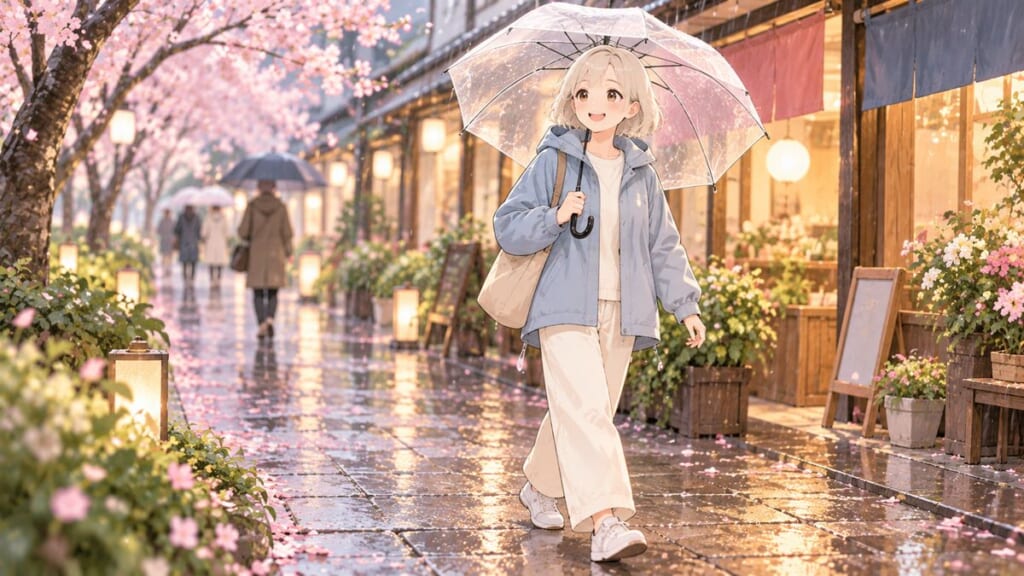
Spring rain is another reason not to pack only sweaters and warm coats. A lightweight water-resistant or waterproof outer layer can make a rainy sightseeing day more comfortable, and it can also help block the wind.
According to the Japan Meteorological Agency’s 1991–2020 normals, Tokyo has 9.2 days with at least 1 mm of precipitation in March and 9.5 in April. Kyoto has 9.5 and 9.4 days respectively, so rain deserves a place in your packing plans for either month.
A Rain Jacket or an Umbrella?
A rain jacket is especially convenient if you’re managing luggage, looking after children, or walking in gusty weather. Check whether the jacket is actually waterproof or merely water-resistant, because the two aren’t the same.
Here are separate women’s and men’s shopping options to consider:
Packable Waterproof Rain Jacket (women)
A thin hooded shell for spring showers and wind that packs down small.
Prices change often — please check the latest price on each store.


Columbia Watertight II Rain Jacket (men)
A lightweight waterproof hooded jacket for rainy sightseeing days.
Prices change often — please check the latest price on each store.
A small folding umbrella is handy for walking between shops, stations, and attractions. If you prefer to pack one in advance, here’s another option.


Repel Compact Folding Umbrella
A small windproof umbrella that fits in a day bag.
Prices change often — please check the latest price on each store.
If you’d rather pack an umbrella from a Japanese brand, Snow Peak — an outdoor company from Niigata — makes a very light folding one.


Snow Peak Ultralight Umbrella
A lightweight folding umbrella from a Japanese outdoor brand.
Prices change often — please check the latest price on each store.
 You can also buy the familiar clear plastic umbrellas sold at Japanese convenience stores. That means you don’t have to bring a large umbrella from home just in case it rains.
Remember that a rain jacket won’t necessarily keep your trousers or shoes dry in prolonged rain. For a wet forecast, think about your footwear as well as your outer layer.
Shoes for Long Walking Days (and Taking Them Off)
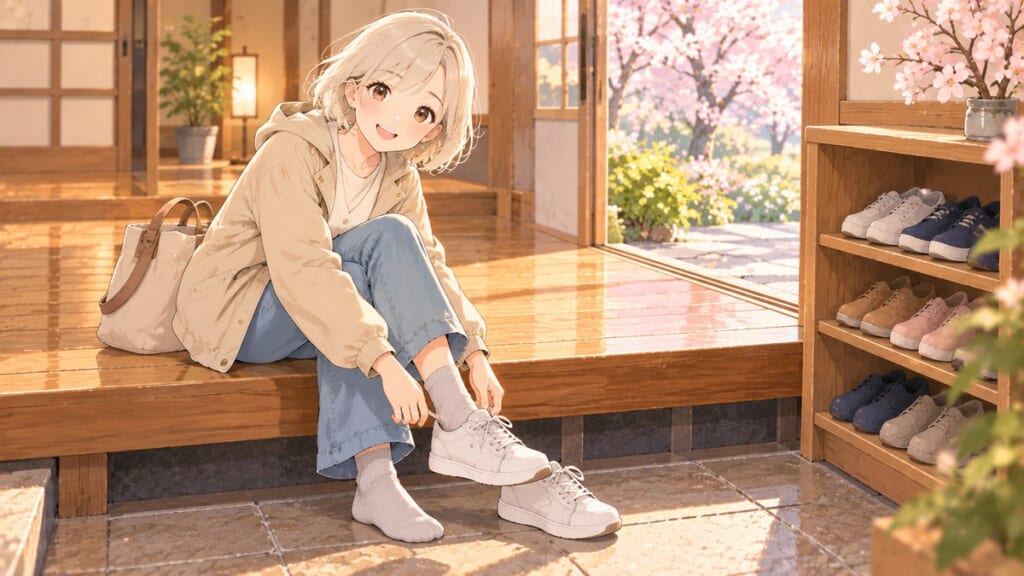
Your shoes will probably matter more than your most fashionable spring outfit. Japan sightseeing often involves plenty of walking, stairs, and time spent standing, so start with footwear you already know is comfortable.
 Don’t buy completely new shoes just before your flight and expect them to feel good for a full sightseeing day. Wear them beforehand, check that your socks don’t rub, and make sure there’s enough room for your toes.
Choose Shoes You Can Remove Easily
At some temples, ryokan, traditional indoor spaces, and shops, you may be asked to take your shoes off. Shoes that slip on and off without a struggle make those visits easier.
I also recommend packing socks without holes, since your feet may be visible when you remove your shoes. Clean socks are a small detail, but a helpful one when you’re moving between sightseeing stops.
What About Rainy Days?
If your forecast includes wet weather, waterproof or water-resistant walking shoes are worth considering. Ordinary fabric sneakers may stay damp after you walk through puddles or spend a long time outdoors.
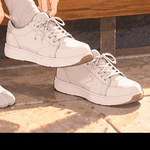
Skechers Go Walk Joy Waterproof Sneakers (women)
Slip-on walking shoes with a waterproof upper, easy to take off at temples and ryokan.
Prices change often — please check the latest price on each store.
For people shopping in Japan, ASAHI Top Dry footwear is another option to investigate.
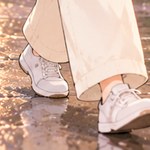
ASAHI Top Dry Waterproof Walking Shoes
Japanese waterproof walking shoes. Japanese sizes are in centimeters, so check the size chart. Not sold by Amazon US; Amazon Japan sells them directly and ships them overseas.
Prices change often — please check the latest price on each store.
Waterproof footwear isn’t automatically suitable for icy or slippery roads.
If your feet get tired after long sightseeing days, I’ve put together another guide focused on that problem.

Sore Feet in Japan: How to Recover
Cherry Blossom Photo Outfits and Kimono Rental
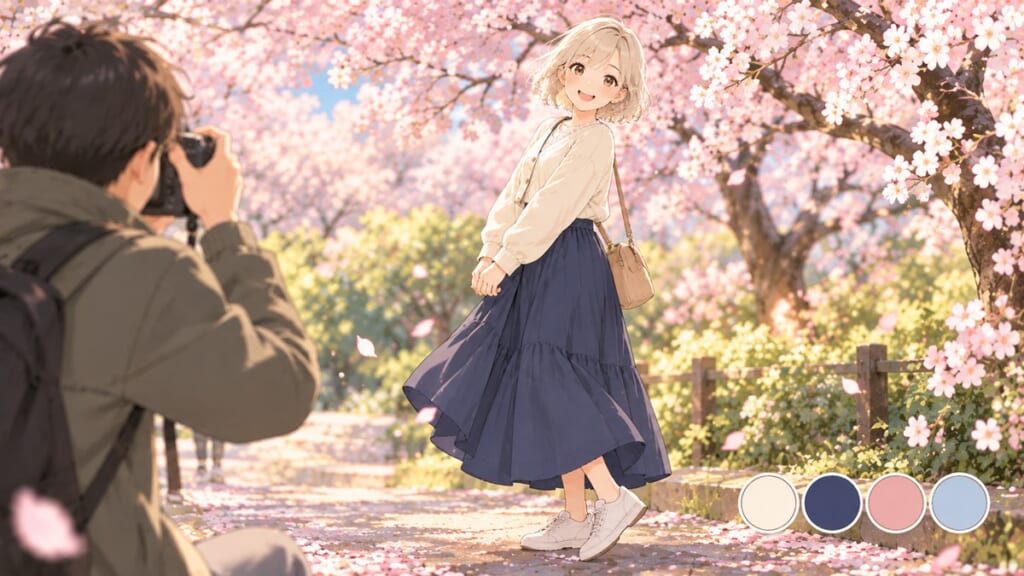
You don’t need a special outfit to enjoy beautiful cherry blossom photographs. But if you’re choosing clothes for a day among the pale pink blossoms, soft colors and simple combinations can make it easier to keep the flowers visible in the picture.
White, ivory, navy, and muted colors such as dusty blue or gentle green are easy starting points. You can choose a lighter top against the blossoms or use navy to create a little contrast.
Are There Colors You Should Avoid Wearing in Japan?
There isn’t a general rule saying tourists must avoid particular clothing colors in Japan. Wear colors you enjoy rather than worrying about a strict spring dress code.
At temples and shrines, though, it’s considerate to avoid excessively revealing clothing and follow any posted visitor instructions. Comfortable, respectful everyday clothing is usually a sensible choice.
Why Japan Does It This Way: Spring Is a Season of New Beginnings
Japan’s school year begins in April, which makes March and April a season of graduations, entrance ceremonies, and fresh starts. During graduation and entrance ceremonies, you’ll see parents in suits and children in formal ceremony clothes.
April also brings new employees starting their working lives, so you may notice young people wearing suits around stations and business districts. These outfits reflect particular occasions, not a dress code that visitors are expected to follow.
Renting a Kimono During Cherry Blossom Season
A rented kimono can be a lovely choice for spring photographs, especially if you’d like to experience traditional Japanese clothing. But remember that the weather won’t necessarily feel warm just because the blossoms are open.
Ask the rental shop what outer layers are available and whether your chosen outfit can accommodate the day’s temperature. Your feet may also feel colder than usual in traditional footwear, especially if you’re outside for an extended photo session.
For Kyoto, you can consider the Kyoto Kimono Rental. If you’re visiting Tokyo instead, there’s also the Asakusa Kimono Rental.
Kimono Rental in Kyoto or Tokyo
Kyoto (Kiyomizu area) is rated 5.0/5 and Asakusa 4.9/5 by Klook users (Oct 2026).
Prices and tour dates change with the season — check the latest on Klook.
Choose a booking time that leaves room for getting dressed and enjoying the area without rushing. For me, comfort matters just as much as the finished photograph.
Hokkaido and Tohoku in March: It’s Still Winter
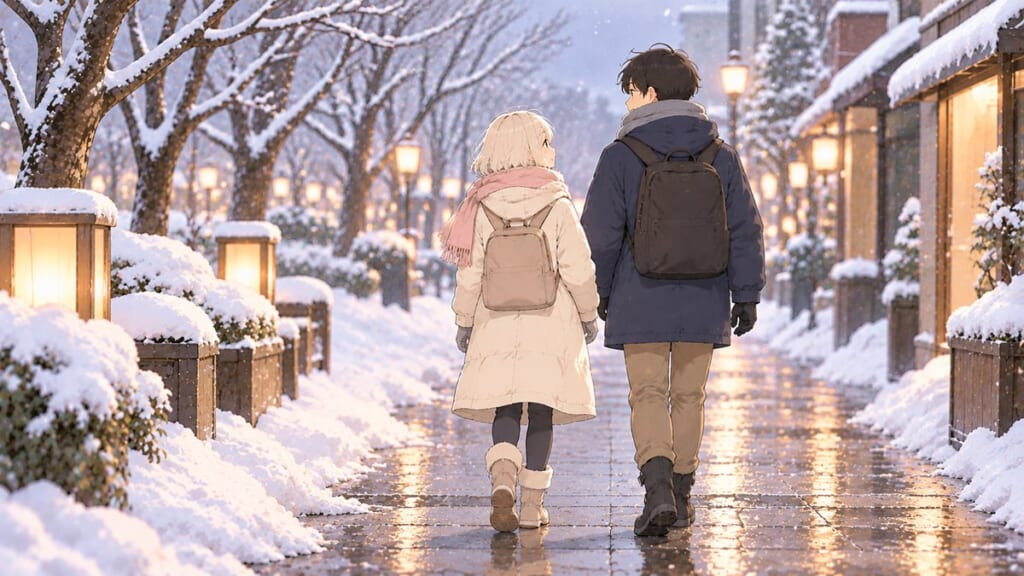
If your March itinerary includes Hokkaido or the colder parts of Tohoku, don’t use a Tokyo spring packing list. Northern Japan can still feel like winter even while cherry blossoms are beginning to appear farther south.
Sapporo’s normal March average high is 4.5°C (40°F), and its average low is -2.4°C (28°F). That means freezing temperatures are still relevant when you’re deciding what to wear.
What to Pack for Sapporo in March
Bring a proper winter coat rather than relying on an unlined spring jacket. Warm inner layers, gloves, and footwear suitable for snow and slippery conditions belong in your suitcase.
Waterproof boots with soles designed for better grip are especially worth considering where snow or ice remains. Even appropriate footwear doesn’t eliminate the risk of slipping, so take care on icy paths.
Sendai is milder than Sapporo on average, but its March average low is still only 1.4°C (35°F). Check the forecast for each northern destination rather than assuming that all of Tohoku needs exactly the same clothing.
Hokkaido’s Cherry Blossom Season Comes Later
Sapporo’s normal Somei Yoshino first-bloom date is May 1, with full bloom normally around May 6. If you hope to see cherry blossoms in Sapporo, early May is a good starting point for planning. Check the latest forecast before your trip, as the blooming dates vary each year.
April can still require warm layers in northern Japan, particularly early in the month. For a more complete explanation of winter coats, snow footwear, and cold-weather packing, use my winter clothing guide.
What to Wear in Japan in Winter
Spring in Japan with Kids
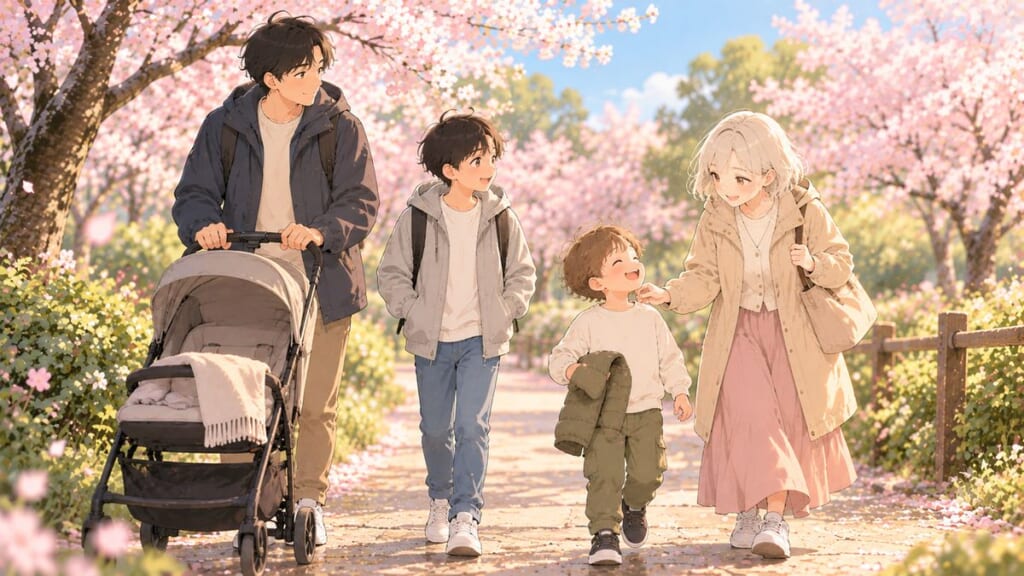
Children can get warm very quickly when they’re running around, then feel chilly again when they stop for a snack or sit outside. In March and April, clothes that are easy to put on and take off are often more useful than a single thick outfit.
For children, consider a long-sleeved top with a front-opening cardigan, vest, or light jacket. A zipped layer is easier to remove during a busy sightseeing day than something that has to be pulled over the head.
How I Decide My Children’s Spring Jackets
 As a Japanese mom, I don’t have one fixed date when I switch my children’s clothes from winter to spring. In March and April, I look at that morning’s weather and temperature before deciding which jacket they need.
You can use the same approach during your trip. Check the forecast each morning, then make sure there’s somewhere to carry the extra layer once your child gets warm.
Strollers, Evening Walks, and Extra Warmth
If you’re traveling with a baby or toddler, consider a lightweight blanket for stroller breaks, cooler mornings, and evening cherry blossom viewing. Check that it doesn’t obstruct the child’s breathing or become tangled in the stroller.
Children sitting in a stroller may need different clothing from the adults who are walking and pushing it. Feel your child’s neck or torso periodically and adjust layers if they become too warm or cold.
Spring is also pollen season in Japan. If someone in your family is sensitive to pollen, keep that in mind when planning clothing and outdoor activities.
For more family travel planning:
Japan with Kids: A Japanese Mom’s Guide
Should You Bring a Stroller to Japan?
What to Buy in Japan: Uniqlo, GU and Sizing
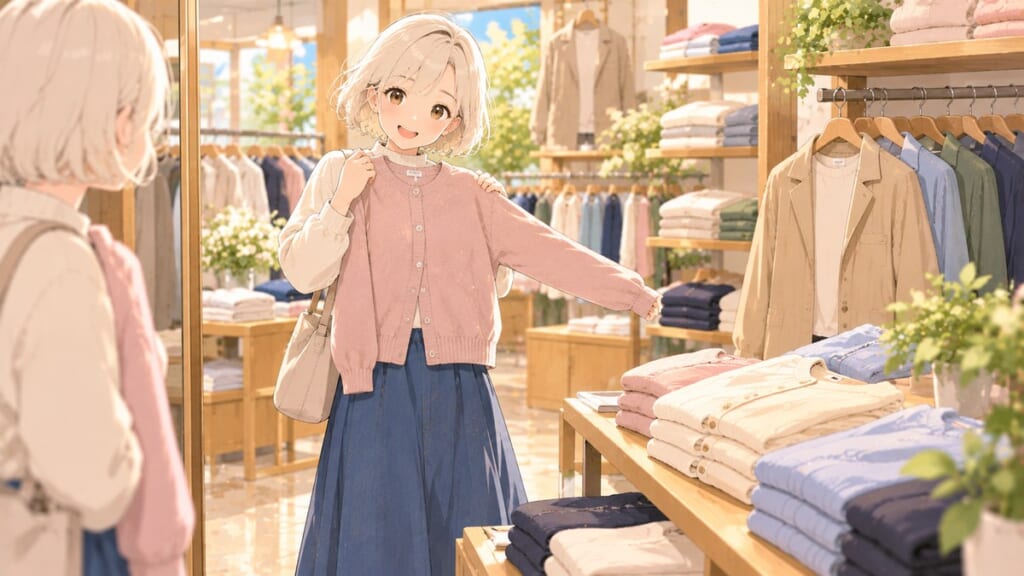
You don’t have to bring every possible spring layer from home. If you arrive in Japan and discover that your suitcase is missing a cardigan or lighter inner top, clothing stores may give you another way to adjust.
Uniqlo and GU are two Japanese clothing retailers worth checking for everyday basics. Their exact spring collections, store stock, colors, and available sizes will depend on the location and timing of your visit.
Pay Attention to Japanese Clothing Sizes
The size you normally buy may not fit the same way in every Japanese clothing line. Don’t assume a familiar letter size will guarantee a familiar fit.
Try clothing on when possible, and check the garment’s measurements, particularly for jackets you plan to wear over several layers. Shoulder width, sleeve length, and room around the chest can make a real difference.
If you plan to shop during your Japan trip, this guide explains the basics of tax-free shopping.
Japan Tax-Free Shopping Guide
One More Thing for April: Sun Protection
As the days become brighter and you spend more time outdoors, sun protection deserves a place in your daily routine. A hat, comfortable clothing coverage, and suitable sunscreen can be useful when you’re walking between cherry blossom spots.
For Japanese sunscreen options and what to check before buying, see:
The Best Japanese Sunscreens
Japan Spring Packing List: March vs. April
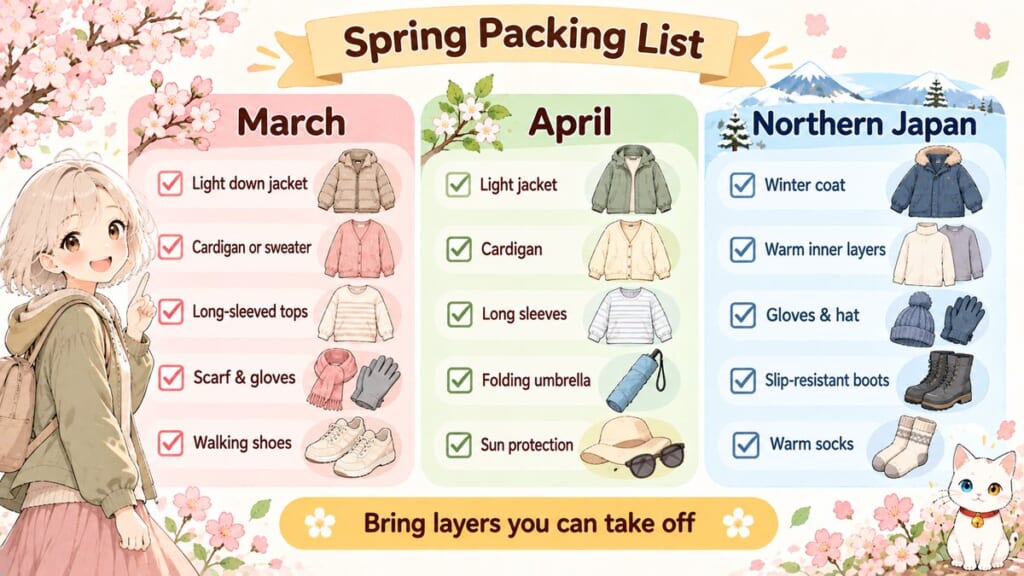
Your suitcase doesn’t need to contain four different spring wardrobes. The easiest plan is to choose a small collection of clothes you can wear together, then change your outer layers according to the month and the cities you’re visiting.
These lists are suggested starting quantities for roughly a week with access to laundry. Bring more or fewer items depending on your trip length, clothing preferences, and how often you want to wash clothes.
March Packing List — Tokyo, Kyoto, and Osaka
- 1 lightweight down jacket or warmer spring coat
- 1 cardigan, sweater, or light fleece
- 4–5 long-sleeved tops
- 2–3 pairs of comfortable pants
- 1 lightweight inner layer for colder days
- 1 set of comfortable sleepwear
- Underwear and socks for your laundry schedule
- 1 pair of broken-in walking shoes
- 1 compact umbrella or lightweight rain jacket
- 1 scarf or neck warmer
- Lightweight gloves and disposable hand warmers (kairo) for colder evenings
- A small day bag for layers you remove
April Packing List — Tokyo, Kyoto, and Osaka
- 1 lightweight spring jacket or rain jacket
- 1 cardigan or thin sweater
- 4–5 tops, mainly long-sleeved
- 2–3 bottoms suitable for walking
- 1 extra layer for cooler mornings and evenings
- 1 set of comfortable sleepwear
- Underwear and socks for your laundry schedule
- 1 pair of broken-in walking shoes
- 1 folding umbrella if preferred
- A small day bag for your jacket
- Sun protection for outdoor sightseeing
Extra Items for Hokkaido and Colder Northern Areas
- 1 warm winter coat for cold March conditions
- Warm inner layers
- An additional insulating sweater or fleece
- Gloves and a warm scarf
- A winter hat when the forecast calls for one
- Waterproof, slip-resistant boots suitable for local conditions
- Warm socks
Can You Use the 3-3-3 or 5-4-3-2-1 Packing Rule?
Yes — either packing rule can be a useful way to limit the number of clothes you bring, but don’t follow the numbers so strictly that you leave your only warm jacket behind. For spring in Japan, choose a flexible mix of tops and bottoms, then add outerwear suitable for the coldest part of your itinerary.
Spring Clothing and Rain Gear Worth Considering
You don’t need every product below. Choose only the pieces that fill a genuine gap in the clothes and shoes you already own.
| Item | Best for | Buy |
|---|---|---|
|
Women’s Packable Down Jacket |
Chilly March mornings and evenings | |
|
Women’s Rain Jacket |
Spring rain and wind | |
|
Men’s Rain Jacket |
Spring rain and wind | |
|
Folding Umbrella |
Showers during sightseeing | |
| Women’s Waterproof Sneakers |
Rainy walking days | |
| MUJI Packable Down |
Extra warm layer for shoppers in Japan | |
|
Stick-On Heat Packs (kairo) |
Night cherry blossom viewing and cold March evenings | |
| ASAHI Top Dry |
Wet-weather footwear for shoppers in Japan |
If you’re looking for other small items that make long travel days easier, see:
Travel Accessories for Long Days in Japan
Your best packing decision is the one that lets you enjoy the trip without worrying about the temperature at every stop. A few removable layers, comfortable shoes, and one dependable outer jacket will usually make more sense for central Japan than a suitcase full of clothes for every possible forecast.
FAQ
Is Japan Very Cold in March?
March can still be cold, especially early in the month, after sunset, and in northern Japan. Tokyo’s normal March average low is 5.0°C (41°F), so bring a lightweight warm jacket and layers rather than packing only spring shirts.
Is Japan Cold During April?
April is generally milder in Tokyo, Kyoto, and Osaka, but mornings and evenings can still feel cool. A light jacket, cardigan, and long sleeves are practical choices, while northern destinations may need warmer clothing.
Do I Need a Down Jacket in Japan in March?
A lightweight down jacket is useful for many March trips to central Japan, particularly when you plan early starts or evening sightseeing. A bulky winter down coat isn’t usually necessary for Tokyo, Kyoto, or Osaka, but you’ll need to reconsider if you’re visiting colder northern areas.
What Should I Wear During Cherry Blossom Season?
Wear comfortable layers, long pants, and walking shoes that you already know fit well. Add a warm jacket, scarf, or gloves for night viewing, because standing outside admiring the blossoms can feel colder than walking around during the day.
Are There Any Colors to Avoid Wearing in Japan?
There’s no general rule requiring visitors to avoid specific clothing colors. Wear what you like, and choose modest clothing and follow local instructions when visiting temples and shrines.
Final Thoughts: What to Wear in Japan in March and April
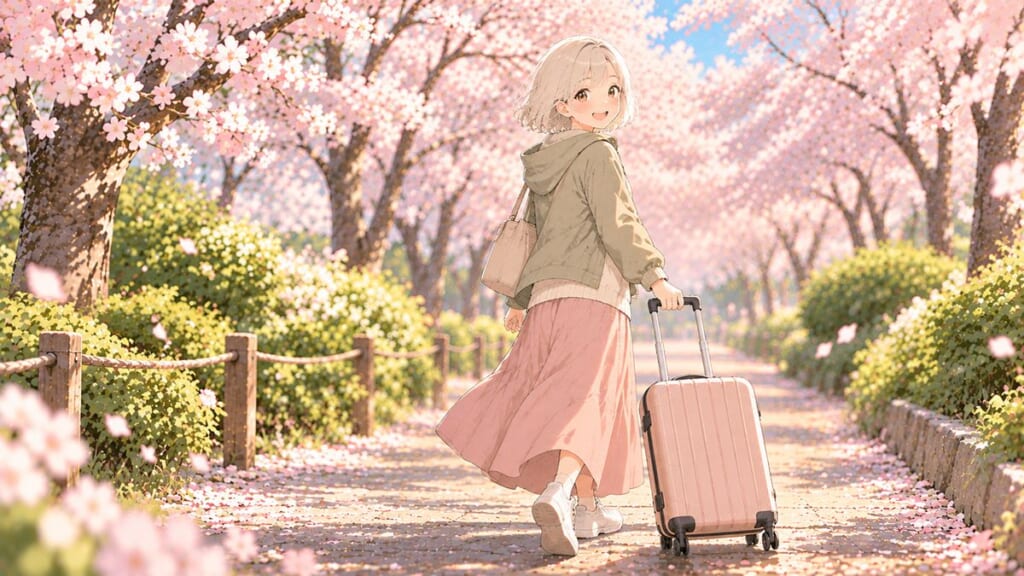
Spring in Japan can give you warm sunshine, chilly mornings, rainy afternoons, and beautiful cherry blossoms — sometimes during the same trip. You don’t need a separate outfit for every possibility, but you do need clothes that let you adapt.
For March in Tokyo, Kyoto, and Osaka, start with a lightweight warm jacket and removable layers. For April, focus on a lighter jacket, long sleeves, and something extra for mornings and evenings; for northern Japan, check the colder conditions separately.
Spend less time worrying about what to wear and more time enjoying the season, from your first morning walk to the blossoms glowing after dark.
What to Read Next
- What to Wear in Japan in Winter
- What to Wear in Japan in November
- What to Wear in Japan in Autumn
- How to Plan Your First Trip to Japan: 7 Steps
- Where to Stay in Kyoto for Cherry Blossom Season
If you’re preparing for a spring trip to Japan, I’d love to hear where you’re going and what you’re planning to pack. Feel free to leave a comment below.
I hope this guide has answered one of your questions and helped you feel a little closer to Japan.
May your Japan journey be filled with wonderful discoveries and memories you’ll treasure for years to come.
See you in the next guide.
Comments