If you have only one Disney day in Tokyo, Tokyo Disneyland is usually the easier first choice for families with younger or shorter children. If your child is 117 cm (about 3’10”) or taller, enjoys bigger thrills, or your family cares as much about scenery, food, and Fantasy Springs as rides for little ones, Tokyo DisneySea becomes a stronger choice.
The middle is where it gets tricky: at 102 cm (about 3’4″), several DisneySea attractions suddenly become available, so age alone doesn’t tell you enough. Your child’s height, comfort with darkness and drops, and patience for a long park day matter more.
I’ve put this together from Tokyo Disney Resort’s official information and what traveling families report.
Disclosure: This article contains affiliate links. If you buy through one, I may earn a small commission at no extra cost to you.
Quick links
- A 1-Day Passport for whichever park you pick: Klook 1-Day Passport
- Tokyo Disney Resort information: official website
- How to buy your ticket: my Tokyo Disney tickets guide

- Short on Time? Pick Your Park in 30 Seconds
- Height Limits in cm: What Your Child Can Actually Ride
- By Age: Toddlers, Preschoolers, Elementary Kids, Teens & Mixed Ages
- The Vibe: Fantasy & Parades vs Scenery, Food & a Glass of Wine
- Crowds & Wait Times: Fantasy Springs, Construction & Which Days to Avoid
- Rain, Heat, Strollers & Getting There
- Can You Do Both in One Day? And If You Have Two Days, Which First?
- Buying Tickets for the Park You Picked + FAQ
- Final Thoughts
Short on Time? Pick Your Park in 30 Seconds
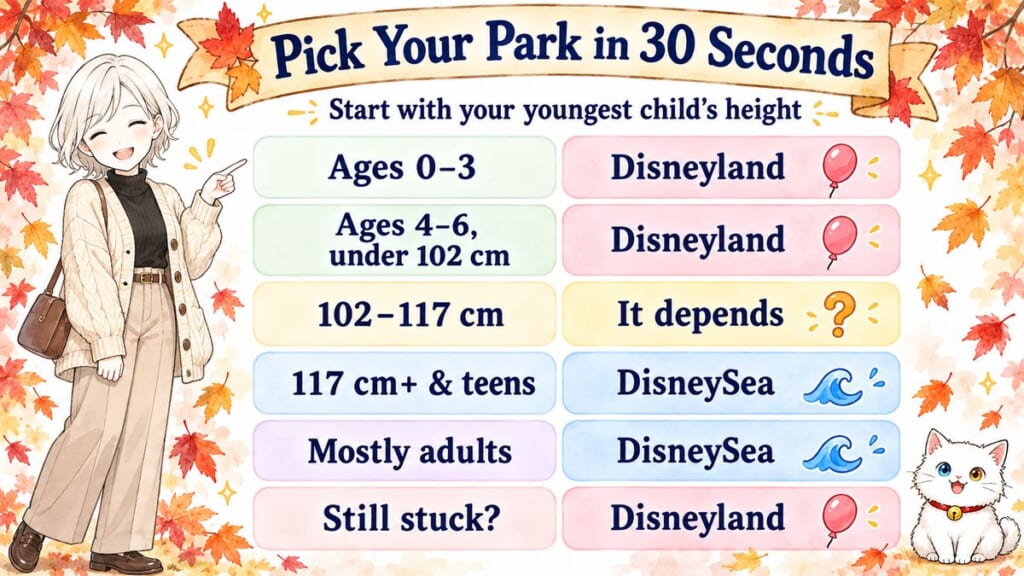
Start with your youngest child’s height, then ask what the rest of the family wants most from the day.
| Your family | My first pick | Why |
|---|---|---|
| Ages 0–3 | Tokyo Disneyland | An easier first pick when your smallest child is below most height limits |
| Ages 4–6, especially under about 102 cm | Tokyo Disneyland | More of the Disney day can revolve around fantasy, characters, and gentler choices instead of height thresholds |
| Elementary age, 102–117 cm | It depends | DisneySea opens up much more at 102 cm, but Disneyland may still suit children who dislike dark or thrilling rides |
| 117 cm+ and teens | Tokyo DisneySea | The 117 cm mark unlocks three more DisneySea thrill attractions |
| Siblings with a big age gap | Disneyland if the younger child sets the pace; DisneySea if the older child is the priority | Rider Switch can help, but it doesn’t make the younger child’s day less tiring |
| Mostly adults with kids who can keep up | Tokyo DisneySea | Strong choice if scenery, meals, and a slower grown-up break are part of what you want |
| Still completely stuck | Tokyo Disneyland | For a first one-day visit with children, it’s the simpler default |
There are good reasons to choose the other park in almost every row, so don’t treat this as a rulebook. Think of it as the fastest way to get from “I have no idea” to a sensible first choice.
Once you’ve picked a park, you can check dates for a 1-Day Passport for Tokyo Disneyland or Tokyo DisneySea on Klook. For the official site, Klook differences, payment problems, and what to do after booking, use my Tokyo Disney tickets guide.
Tokyo Disney Resort 1-Day Passport (Tokyo Disneyland or Tokyo DisneySea)
Rated 4.8/5 by Klook users (Oct 2026) · English checkout · Pay in your own currency · Smartphone ticket, no printing
Prices change with the date and season — check the latest price and availability on Klook.
Height Limits in cm: What Your Child Can Actually Ride
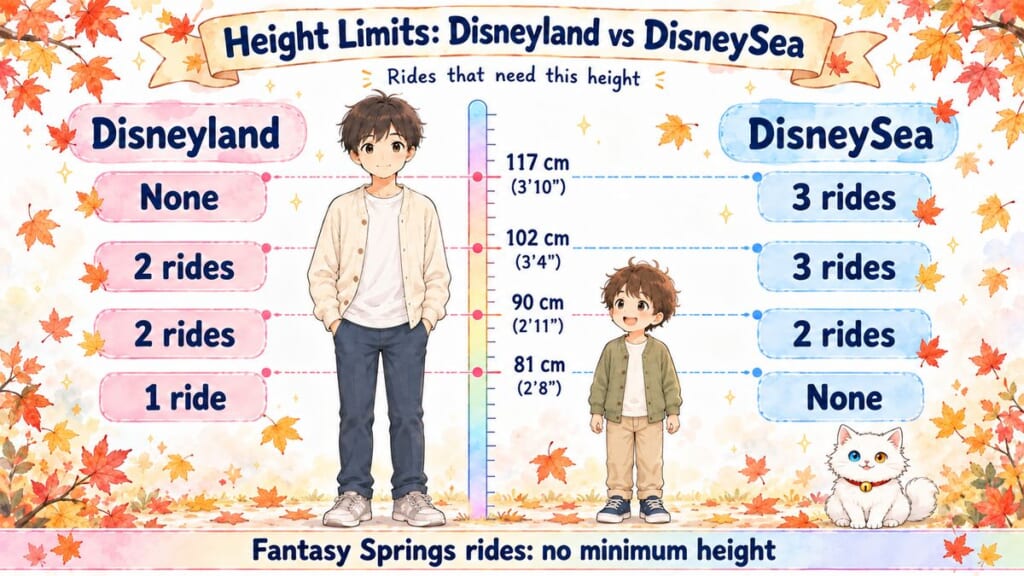
Height is the number I would check before anything else. A six-year-old at 105 cm and a six-year-old under 90 cm can have very different attraction choices, especially at DisneySea.
The table below lists attractions with an official minimum height requirement. It does not mean children below 81 cm have nothing to ride — both parks also have attractions without a listed minimum height.
| Height | Tokyo Disneyland | Tokyo DisneySea |
|---|---|---|
| 81 cm (about 2’8″) | The Happy Ride with Baymax | None at this height |
| 90 cm (about 2’11”) | Splash Mountain; Gadget’s Go Coaster | Nemo & Friends SeaRider; Flounder’s Flying Fish Coaster |
| 102 cm (about 3’4″) | Big Thunder Mountain; Star Tours: The Adventures Continue | Soaring: Fantastic Flight; Tower of Terror; Peter Pan’s Never Land Adventure |
| 117 cm (about 3’10”) | None at this height | Indiana Jones Adventure: Temple of the Crystal Skull; Raging Spirits; Journey to the Center of the Earth |
 Raging Spirits also has an upper height limit of 195 cm (about 6’5″). Tokyo Disney Resort doesn’t set a general age restriction for attractions, but children under age 7 must be accompanied by a guest age 16 or older. These requirements are current as of October 2026 and are worth checking again on the official Tokyo Disney Resort website before your visit.
Fantasy Springs is one reason not to dismiss DisneySea automatically with a small child. Anna and Elsa’s Frozen Journey, Rapunzel’s Lantern Festival, and Fairy Tinker Bell’s Busy Buggies have no minimum height requirement, although a child who cannot sit in the ride properly on their own may not be able to use them. Peter Pan’s Never Land Adventure is the exception at 102 cm (about 3’4″).
 If one child is too short for a height-restricted attraction, ask about Rider Switch Service. With at least two adults, one adult rides while the other stays with the child; afterward, the second adult can return at the time recorded by a Cast Member instead of joining the regular queue from the beginning. It is available for attractions with height restrictions, with each guest using it once per attraction.
The original Space Mountain at Disneyland is closed and isn’t included in the height table. Its replacement, Space Mountain Earthrise, is scheduled to open in 2027.
So before choosing your park, look at your child’s actual height and ask a very practical question: Which side of this table gives your family more rides they genuinely want to do?
By Age: Toddlers, Preschoolers, Elementary Kids, Teens & Mixed Ages
Age helps, but height and temperament often decide the day. A child who loves dark adventures and meets the height requirement may be thrilled by choices that another child of the same age wants nothing to do with.
Children ages 3 and under enter free. Ages 4–11 use the child ticket category and ages 12–17 use the junior category; for ticket details, go to my Tokyo Disney tickets guide.
Under 3
For a baby or toddler’s first visit, Tokyo Disneyland is usually the easier first choice unless Fantasy Springs is one of your family’s main reasons for going.
At this age, naps, meals, stroller time, noise, darkness, and simply getting from one place to another can shape the schedule more than the number of attractions you fit into the day.
DisneySea still has options for very young children, and Fantasy Springs has rides with no minimum height — see the height section above. But if the smallest child will set the family’s pace, Disneyland is usually the simpler choice.
Ages 4–6
For preschoolers, check 90 cm and 102 cm before you choose.
Under 102 cm, Disneyland is usually the easier first choice. Once a child reaches 102 cm, DisneySea adds Soaring, Tower of Terror, and Peter Pan’s Never Land Adventure — but “tall enough” doesn’t mean “will enjoy it.”
Darkness, sudden movement, drops, loud sounds, and a long wait can matter as much as height. If your child is easily frightened, don’t let the measuring stick make the decision for you.
Ages 7–11
This is the age range where the answer becomes much less automatic.
A child who is 102 cm or taller can access several major rides in both parks, while a child who reaches 117 cm gains three more DisneySea options. If your elementary-age child likes bigger adventures and Fantasy Springs is high on the wish list, DisneySea can make a lot of sense.
If characters, a classic fantasy atmosphere, and a day with fewer “Will this be too scary?” decisions sound better, Disneyland may fit your family more comfortably.
For the rest of a family trip — trains, hotels, food, and the little things that get harder with children — see my guide to traveling in Japan with kids.
Teens
For many families with teens who meet the 117 cm requirement, DisneySea is the natural place to start.
That height opens Indiana Jones Adventure, Raging Spirits, and Journey to the Center of the Earth, on top of the DisneySea attractions available from 102 cm. DisneySea also makes sense when teenagers and adults want the waterfront scenery, meals, and time to wander to be part of the experience.
But a teen who cares much more about Disneyland’s atmosphere or particular characters is a perfectly good reason to choose Disneyland instead. This is a family day, not a height-chart competition.
Siblings With a Big Age Gap
A four-year-old and a twelve-year-old are exactly the kind of pair that makes a simple “Land for kids, Sea for older children” answer fall apart.
 If I were choosing for our two — a 12-year-old brother and a 4-year-old brother — the first step would be to check the younger child’s height, then ask whose wish list matters most for this one Disney day. If the younger child is likely to set the pace, Disneyland is the easier choice; if the older child is excited about DisneySea and the adults are comfortable using Rider Switch when needed, DisneySea becomes much easier to justify.
You don’t need a park that is perfect for both children every minute. You need the park where the compromises still leave everyone with enough of the day to enjoy.
The Vibe: Fantasy & Parades vs Scenery, Food & a Glass of Wine
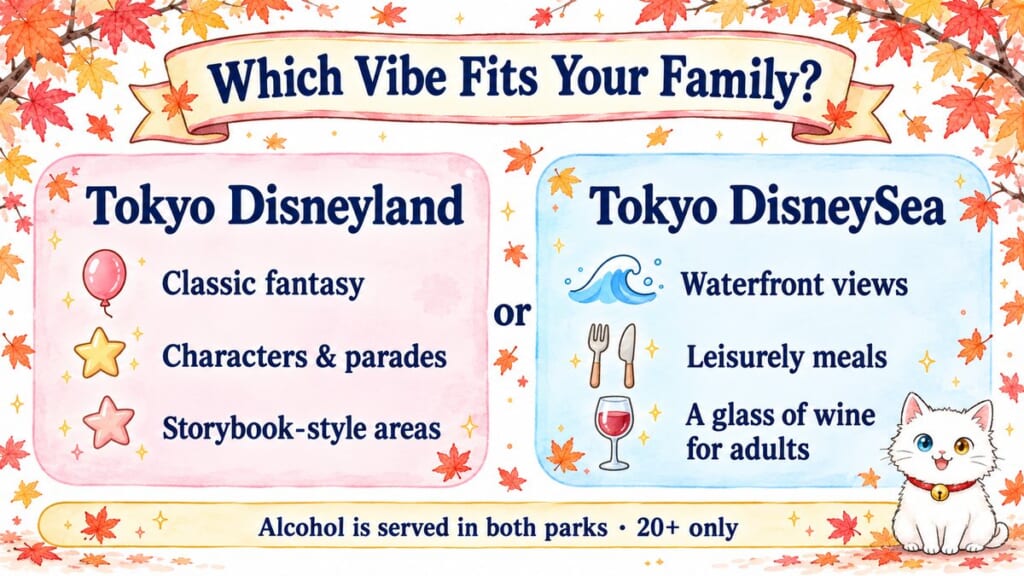
If the height chart hasn’t decided it for you, choose the atmosphere your family wants to spend a full day inside.
Tokyo Disneyland leans into the classic fantasy-park feeling: characters, parades, colorful themed areas, and a storybook-style setting. For a child whose idea of Disney is meeting favorite characters and watching the park come alive around them, that can matter more than having access to one extra thrill ride.
Tokyo DisneySea has a different rhythm. Its ports, waterfront views, restaurants, and more dramatic scenery can make simply walking, stopping for a meal, and looking around feel like part of the day rather than time between attractions.
Alcohol isn’t a Disneyland-versus-DisneySea rule anymore. It is served at a number of restaurants in both parks, and guests under 20 cannot drink alcohol. The difference is softer: DisneySea can suit a family where the adults want scenery, a leisurely meal, and perhaps a drink to be part of the park day, rather than treating every hour as a race between rides.
Neither atmosphere is “better.” Pick the one that sounds more like the day your family actually wants.
Crowds & Wait Times: Fantasy Springs, Construction & Which Days to Avoid
Fantasy Springs is still a major reason families choose DisneySea, so don’t build your DisneySea plan around the idea that it will be a quiet corner of the park.
Its attractions now have regular standby lines. Disney Premier Access prices can change by date; when I checked in October 2026, they were ¥2,500 (about $16) for Anna and Elsa’s Frozen Journey and ¥2,000 (about $13) each for Rapunzel’s Lantern Festival and Peter Pan’s Never Land Adventure. Fairy Tinker Bell’s Busy Buggies isn’t currently included.
For all dollar amounts in this article, I’m using a fixed reference of ¥157 to US$1, checked in October 2026. For how Premier Access works, use my Tokyo Disney tickets guide instead of planning it from this article.
There are also temporary changes worth knowing about. Disneyland’s original Space Mountain is closed while Tomorrowland changes for 2027, and Sugar Rush: Sweet Rescue is scheduled for spring 2027. At DisneySea, Peter Pan’s Never Land Adventure is scheduled to close temporarily from March 9 through March 16, 2027, which matters if you’re planning a spring-break trip.
DisneySea is also celebrating its 25th anniversary with “Sparkling Jubilee” from April 15, 2026 through March 31, 2027. Special events, attraction closures, and seasonal programs can all change which part of a park attracts people, so check your exact date rather than relying on a generic “Land is busier” or “Sea is busier” rule.
From a Japan-based parent’s point of view, the calendar matters just as much as the weekday. Japanese public holidays and three-day weekends, Golden Week from late April into early May, summer vacation from late July through August, the school break from late March into early April, and the year-end/New Year period put many families’ free days into the same windows.
That is also why date-specific planning matters so much here: when many families have the same limited days available, the calendar itself becomes part of your crowd strategy. Before you lock in a date, check my guide to avoiding crowds in Japan.
Rain, Heat, Strollers & Getting There
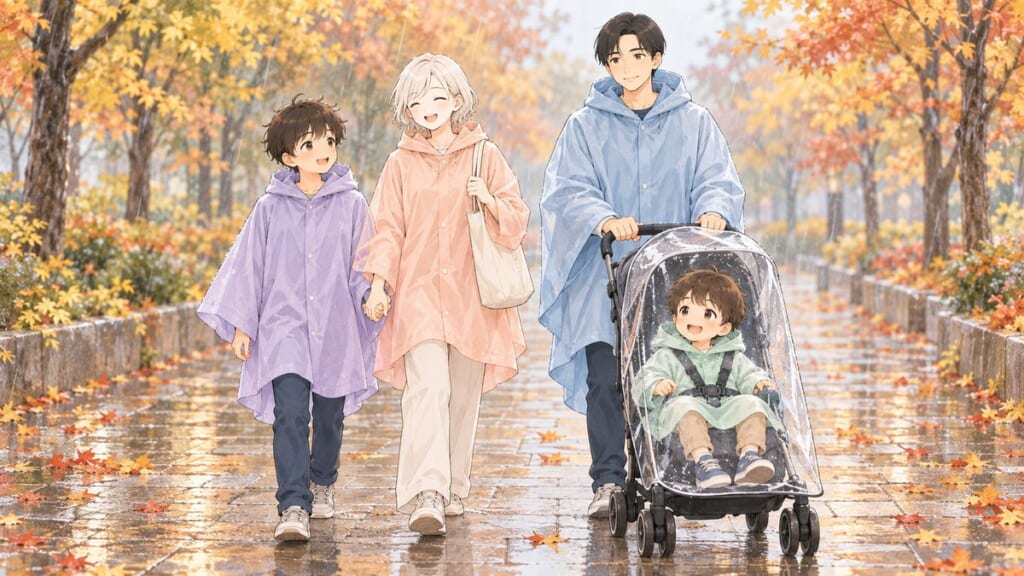
On a rainy day, you don’t need to choose between the parks by trying to count indoor attractions. Traveling families often report that DisneySea’s longer outdoor walks can feel more tiring in steady rain, especially with a stroller and bags.
Summer heat can also turn a normal walking day into a much harder family day, so leave room for indoor breaks instead of filling every minute. In winter, the open waterfront areas at DisneySea can feel especially exposed when the wind picks up.
You can bring your own stroller if it meets Tokyo Disney Resort’s safety requirements: it must be pushed from behind, have lockable wheels, and not be self-propelled unless it can be switched to manual mode. Wagons, stroller carts, and trikes aren’t allowed.
You can also rent a stroller inside either park for ¥1,000 (about $6) per day. The rental stroller is for a child who can sit without assistance, is at least 7 months old, is no taller than 100 cm (about 3’3″), and weighs no more than 15 kg. For dealing with a stroller on trains and during the rest of your trip, see my guide to using a stroller in Japan.
Both parks use JR Maihama Station as the main rail gateway. Tokyo Disneyland is about a five-minute walk from Maihama Station, while for DisneySea you can walk from the south exit to Resort Gateway Station and use the Disney Resort Line. If you’d rather sleep close to the parks, see my guide to where to stay for Tokyo Disney with kids.
The Resort Line has four stations and takes about 13 minutes for a complete loop. A single ride is ¥300 (about $2) for ages 12+ and ¥150 (about $1) for children 11 and under; up to two children under 6 can ride free with one paying adult.
If staying together in one room is the harder part of your Tokyo planning, use my guide to Tokyo hotels for a family of 4.
Can You Do Both in One Day? And If You Have Two Days, Which First?
With a normal 1-Day Passport, choose one park and give it the day.
Tokyo Disneyland and Tokyo DisneySea have separate park tickets. If you tried to enter both parks on the same day using ordinary tickets, you would need separate admission for each park, and you would lose time leaving one park, traveling to the other, and starting again.
Tokyo Disney Resort has sold a limited-time Park Hopper Passport in some seasons, but it isn’t on sale as of October 2026, and no dates have been announced for 2027. The most recent 2026 summer version was valid only through September 14.
 Travelers do sometimes fit both parks into one day, but the common trade-off is more rushing, fewer chances to stop, and less flexibility when a child gets tired. With only one day, a family plan built around park-hopping is hard to recommend.
If you have two days, put the park that matters most to your children first. With small children, that may mean Disneyland on Day 1 while everyone has fresh legs, then DisneySea on Day 2 with a slower plan.
With older children or teens who are most excited about DisneySea, reverse it: DisneySea first, then Disneyland the next day. There is no prize for doing them in a particular order — protect the day your family cares about most from end-of-trip exhaustion.
Buying Tickets for the Park You Picked + FAQ
Once you’ve made the choice, the next step is simple: buy the ticket for that park and that date.
Klook’s 1-Day Passport page for Tokyo Disneyland and DisneySea lets you choose Tokyo Disneyland or Tokyo DisneySea during booking. You choose the park when you buy, and the booked date and park cannot be changed on the day, so check both before payment.
Tokyo Disney Resort 1-Day Passport (Tokyo Disneyland or Tokyo DisneySea)
Rated 4.8/5 by Klook users (Oct 2026) · English checkout · Pay in your own currency · Smartphone ticket, no printing
Prices change with the date and season — check the latest price and availability on Klook.
If you want the full walkthrough — official site versus Klook, payment-card problems, the app, and what happens after booking — go to my Tokyo Disney tickets guide.
Is Tokyo DisneySea OK for a 2-year-old?
Yes. Children ages 3 and under enter free, and DisneySea has attractions suitable for very young children. Fantasy Springs also has rides with no minimum height; see the height section above for the details.
For a one-day first visit, Disneyland is usually the easier choice if the two-year-old will set the family’s pace. DisneySea makes more sense when Fantasy Springs or DisneySea’s atmosphere is a major family priority.
Which park is less crowded, Tokyo Disneyland or DisneySea?
There isn’t a reliable rule that one park is always less crowded. Fantasy Springs, seasonal events, temporary closures, weekends, public holidays, and school breaks can all change where people gather.
Pick the park that fits your children first, then choose the least difficult date you can from your own schedule.
Is Fantasy Springs worth it with small kids?
It can be, especially because Anna and Elsa’s Frozen Journey, Rapunzel’s Lantern Festival, and Fairy Tinker Bell’s Busy Buggies don’t have a minimum height requirement. Peter Pan’s Never Land Adventure does require 102 cm (about 3’4″).
DisneySea makes sense when Fantasy Springs itself is something your family genuinely wants to experience — not because every attraction there will work for every toddler.
Can I bring or rent a stroller at Tokyo Disney?
Yes. You can bring a stroller that meets the park’s safety requirements, or rent one inside either park for ¥1,000 (about $6) per day.
Check the rental age, height, and weight limits before relying on the park stroller for an older preschooler.
Final Thoughts
If your child is still small or below the major height thresholds, Tokyo Disneyland is the simpler first pick for one Disney day. If your child is 117 cm or taller, likes bigger adventures, or your family is choosing DisneySea for Fantasy Springs, scenery, and food as much as rides, DisneySea may fit your day better.
For the 102–117 cm middle ground, don’t choose by age alone. Look at the height table, think about darkness and thrills, and choose the park where your child can enjoy the attractions they actually want.
Then stop comparing and check your date. You have the rest of your Japan trip to plan, and my Japan trip planning guide can take you through it one step at a time.
How old are your kids? Did your family choose Tokyo Disneyland or DisneySea? I’d love to hear what tipped the decision for you.
I hope this guide has answered one of your questions and helped you feel a little closer to Japan.
May your Japan journey be filled with wonderful discoveries and memories you’ll treasure for years to come.
See you in the next guide.
Comments