As an Amazon Associate, I earn from qualifying purchases.
A cold Japanese winter often catches you in the spaces between warm rooms: the hallway, the changing area outside the bath, a chilly floor, or that first moment under cold bedding. Those are exactly the little pockets of cold that many Japanese winter goods are made for.
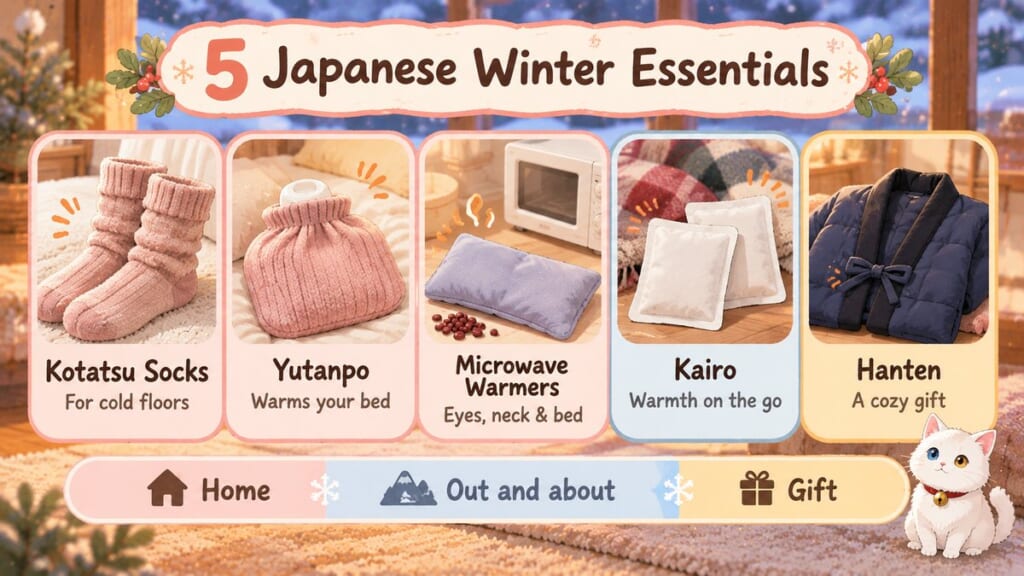
At home, I use yutanpo hot water bottles, Marude Kotatsu-style socks, kairo heat packs, and Azuki no Chikara. My children use yutanpo and kairo too. You don’t need to import a full kotatsu table to bring some of that cozy winter feeling home. Start with one of these five: socks for cold feet, a yutanpo or microwave warmer for home, kairo for going out, or a small Japanese warmer as a winter gift.

- The Quick Answer: 5 Japanese Winter Essentials
- Why Japanese Homes Have Cold Floors and Hallways
- Part 1: At Home
- Yutanpo: Japanese Hot Water Bottles & Safe Use
- Microwave Warmers: Yutapon and Azuki no Chikara (Red Bean Heat Pad)
- Kotatsu Socks: Marude Kotatsu, Oyasumi & Hakuraku
- Part 2: Out and About
- Kairo Heat Packs: Types, Safe Use & Flying
- Leg Warmers and Outdoor Kotatsu Socks for Sightseeing Days
- Part 3: Gifts
- Which One to Give: A Quick Gift Guide by Person
- How to Order From Amazon Japan (and What We Checked for the US)
- Safety Notes Before You Use Them
- FAQ
- Bring One Small Piece of a Japanese Winter Home
The Quick Answer: 5 Japanese Winter Essentials
| Japanese winter essential | What it is for | Best fit | Where to order |
|---|---|---|---|
 Okamoto Marude Kotatsu socks |
Thick warm socks for cold floors and relaxing at home | Home / gift |
Amazon Japan ships the checked women’s styles to the US |
 Tange / Maruka yutanpo (Japanese hot water bottle) |
Warms bedding before sleep and gives you a reusable source of warmth at home | Home |
Amazon Japan ships the checked models to the US |
  Azuki no Chikara / Yutapon |
Microwave warmers for your eyes, shoulders, feet, or bedding depending on the product | Home / gift |
Amazon Japan; selected versions also appear on Amazon.com |
  Hokkairo disposable heat packs |
Portable warmth for commuting, sightseeing, errands, and other cold days outside | Out and about / gift |
Amazon.com; the checked non-stick mini is also on Amazon Japan |
![Edoten] Made in Japan handmade insulated short coat Kurume Hanten Original pattern 9807-3 One size](https://m.media-amazon.com/images/I/41kheqF1dGL._SL160_.jpg)  Edoten Kurume hanten |
A traditional padded Japanese jacket | Gift |
Amazon.com |
 If you want the shortest shopping list, this is it:
- Okamoto Marude Kotatsu socks — Amazon Japan
- Tange / Maruka yutanpo — Amazon Japan
- Azuki no Chikara / Yutapon — Amazon Japan; Sumikko Gurashi Yutapon and Azuki no Chikara Eye Mask also have Amazon.com listings
- Hokkairo heat packs — Amazon.com; non-stick mini on Amazon Japan
- Edoten Kurume hanten — Amazon.com
Why Japanese Homes Have Cold Floors and Hallways
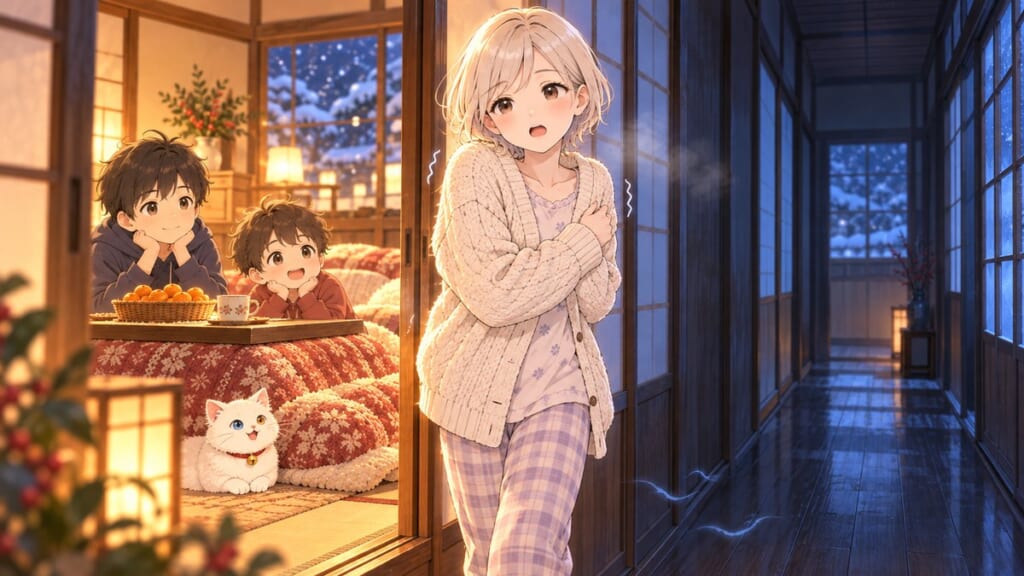
Many homes in Japan heat individual rooms rather than keeping every part of the house at the same temperature. That can leave hallways, the changing area outside the bath, toilets, floors, and bedrooms feeling noticeably colder than the room you’ve just left.
Those are the places I notice most in winter too. Floors and feet get cold, stepping into the hallway can be unpleasant, and getting into cold bedding at night has its own little shock. I remember the cold around my feet at my parents’ house especially well.
Ryokan and older homes can also have chilly floors in winter. A hotel’s room temperature and dryness, however, depend on the property and the individual room, so I wouldn’t treat every stay the same. If dry indoor air bothers you in winter, I have a separate guide for that: my Japanese winter dry-skin kit. For a traditional inn stay, see my first-timer’s onsen guide.
Why Japan does it this way
This is why so many Japanese winter products focus on warming you or one small space rather than heating an entire house. A yutanpo warms the bed, thick socks deal with a cold floor, and a kairo goes into your winter routine when you leave home.
 A real kotatsu is lovely, but it is a big piece of furniture to import. Weight, shipping, and electrical compatibility can make it an awkward first purchase from abroad. These smaller warmers give you a much easier place to start.
Part 1: At Home
Yutanpo: Japanese Hot Water Bottles & Safe Use
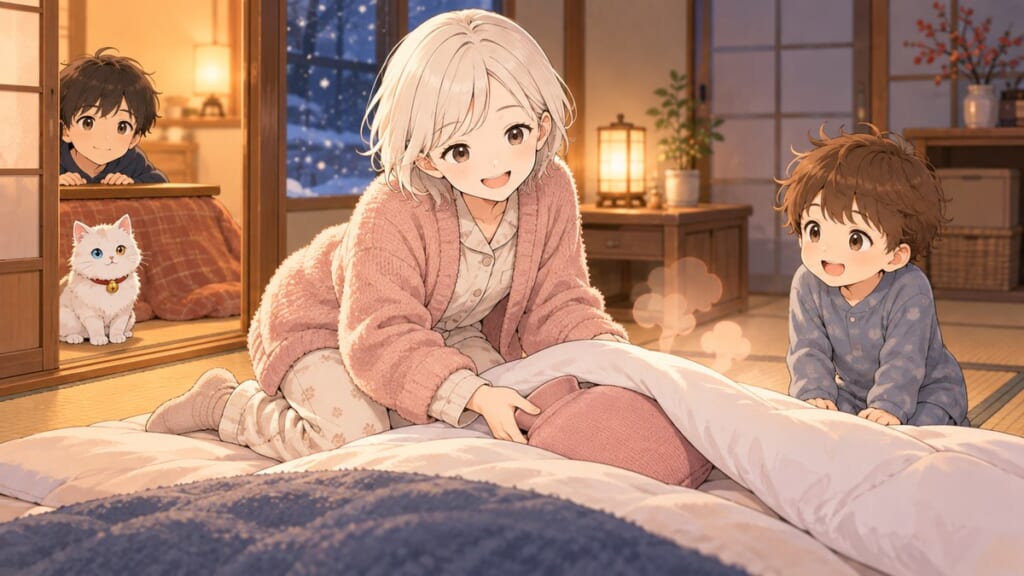
A yutanpo (Japanese hot water bottle) is a container filled with hot water and used to warm a bed or keep you warm at home. Unlike an electric blanket, there is no cable once you’ve filled it — but because you’re handling hot water, how you fill and use it matters.
I use yutanpo at home, and my children use them too. For an overseas reader trying one for the first time, I would treat it as a home winter item rather than something to pack for a hotel stay.
Check Tange yutanpo on Amazon Japan
Tange 2.6L vs Maruka 600ml
The Tange Standing Yutanpo holds 2.6 liters, so it is the larger choice of the two. Tange says to use water at a temperature suitable for the person using it and fill the bottle to the mouth, since underfilling may deform it. The cap should be firmly tightened and checked for leaks before use.
The 600ml Maruka mini is much smaller. That makes the two products easy to separate by purpose before you even get into colors or covers: Tange is the larger traditional bottle, while Maruka’s 600ml size is the compact option.
Check Maruka 600ml yutanpo on Amazon Japan
How to use a yutanpo safely
Tange warns that even a comfortable temperature can cause a low-temperature burn if the same area of skin stays in contact for a long time. Its instructions say to use a cover, keep the bottle from directly touching your skin, and — for the most reliable prevention while sleeping — warm the bedding before bed and remove the yutanpo when you get in.
Maruka likewise warns about burns and low-temperature burns, instructs users to put its hot water bottle inside a cloth bag, and says the cap should face upward during use.
 A cover alone doesn’t make prolonged contact safe. Warm the bedding, keep the bottle covered and away from bare skin, and follow the instructions for the exact yutanpo you buy.
Microwave Warmers: Yutapon and Azuki no Chikara (Red Bean Heat Pad)
A microwave warmer gives you the same small-area approach to winter without boiling water. The two names worth knowing here are Hakugen Earth’s Yutapon, a reusable gel warmer, and Kobayashi Pharmaceutical’s Azuki no Chikara, a red bean (azuki) heat pad.
I use Azuki no Chikara myself. I’ve put together the Yutapon details using Hakugen Earth’s official information.
Yutapon: the gel-style option
Yutapon L is a Made-in-Japan gel-type warmer designed for bedding. The maker says its warmth lasts about seven hours when used in a futon, although room temperature and conditions affect that time. For the L size, Hakugen Earth specifies a two-stage heating procedure at 600W — three minutes, turn the folded product over, then another three minutes — and says not to exceed the stated microwave output or heating time.
Check Yutapon L on Amazon Japan
There is also a neck-and-shoulder version. That model is designed for about 30 minutes of warmth rather than the long bedding use of the standard Yutapon.
Check Yutapon Neck & Shoulder on Amazon Japan
If you’re using one outside Japan, read the wattage and heating directions on the package before putting it in your microwave. Don’t rely on an automatic heating mode when the maker gives a specific output and time.
Azuki no Chikara: real beans inside
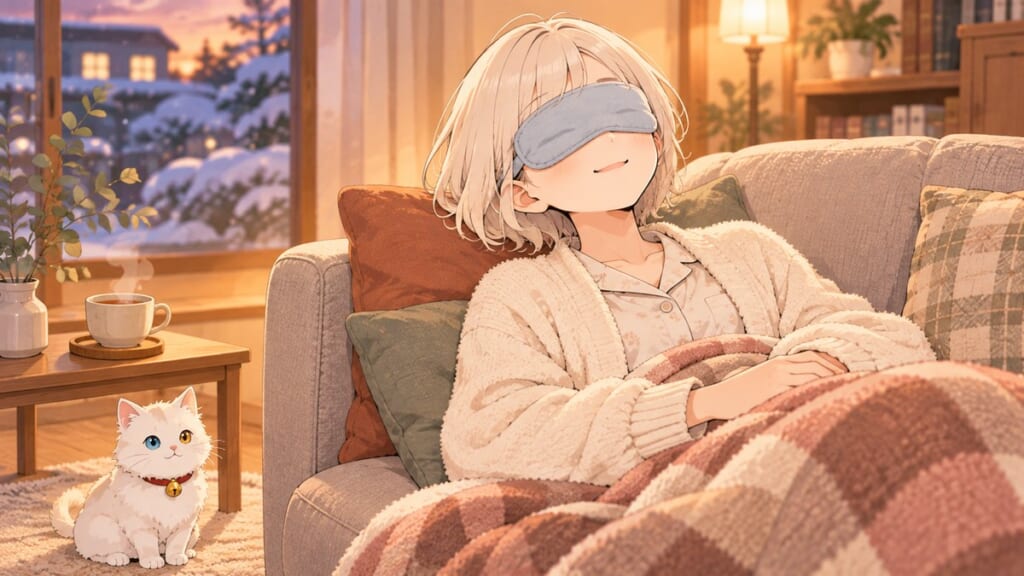
Azuki no Chikara uses azuki beans and, in the eye version, mung beans inside the pad. The eye mask is something to use before sleeping, not while you are asleep.
Kobayashi’s instructions say not to heat the eye mask above 600W, to stay near the microwave while it is heating, and to use it for about 10 minutes. The maker says not to use the eye mask on children, anyone unable to remove it themselves, or anyone who is asleep.
Azuki no Chikara Eye Mask (microwave)
A reusable bean-filled eye warmer to use for about 10 minutes before sleep. Outside the US, the Amazon Japan button links to the Japanese version of the same eye mask.
Prices change often — please check the latest price on each store.
There is also a belt-style Azuki no Chikara for areas such as the shoulders or waist.
Check Azuki no Chikara Belt on Amazon Japan
 One extra issue applies if you physically carry an azuki-filled product into the United States. US Customs requires travelers to declare agricultural and plant products, and admissibility is decided at entry, so I would declare an azuki-filled warmer rather than assuming the beans inside are exempt.
Kotatsu Socks: Marude Kotatsu, Oyasumi & Hakuraku
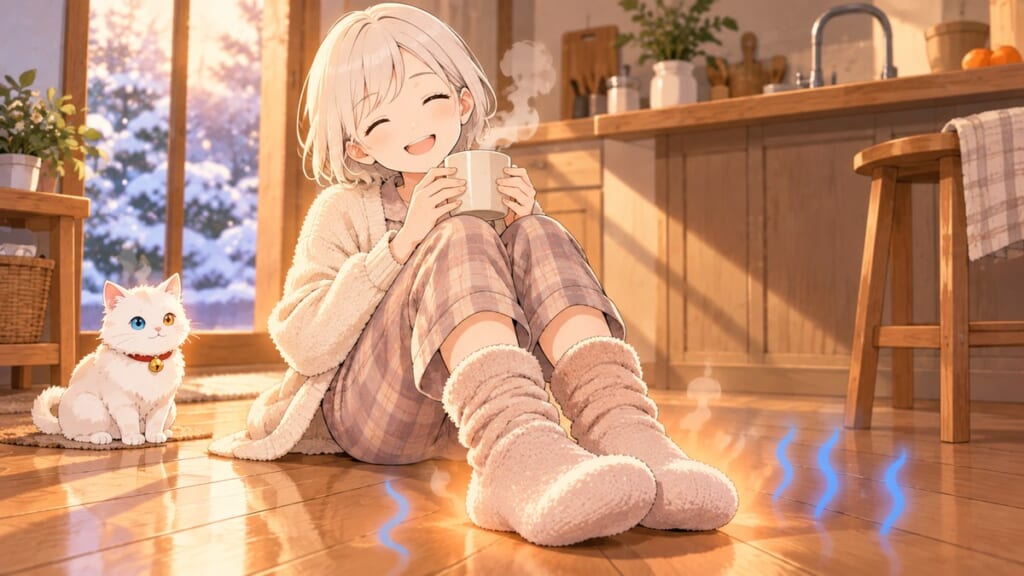
If your main winter problem is cold flooring, start with socks. Okamoto makes Marude Kotatsu socks and other warm sock styles, including Hakuraku, for different situations.
I use Marude Kotatsu-style socks at home. For me, this category makes immediate sense in a Japanese winter because your feet notice a cold floor before the rest of you has even decided the room feels chilly.
Check Marude Kotatsu socks on Amazon Japan
Marude Kotatsu Socks
The standard women’s Marude Kotatsu Socks are the room-focused version. Okamoto is a Japanese sock maker. Its standard women’s socks come in sizes 23–25cm, and the checked styles are made in Thailand.
The regular socks are thick, so think about how you will use them before buying. They make more sense around the house than squeezed into a fitted shoe.
Oyasumi Switch
Oyasumi Switch is the sleeping version. Okamoto’s women’s model is 22–25cm, with an open-toe design; the company specifically recommends Oyasumi Switch for sleep instead of its standard Marude Kotatsu Socks.
Check Oyasumi Switch on Amazon Japan
 This is also the sock in this article that makes sense to consider for bedtime during a winter trip, because it doesn’t require hot water or a hotel microwave. For the rest of your winter outfit, see my guide to what to wear in Japan in winter.
Hakuraku fleece-lined socks
Hakuraku is the room-use alternative in this group, not a dedicated sleeping sock. The checked fleece-lined version is Made in Japan.
Check Hakuraku fleece-lined socks on Amazon Japan
Most of the checked options in this group are centered on women’s sizing. Men’s Marude Kotatsu products do exist — Okamoto, for example, lists standard men’s socks at 25–27cm — but the men’s item I checked for this guide did not ship to the US from Amazon Japan.
Part 2: Out and About
Kairo Heat Packs: Types, Safe Use & Flying
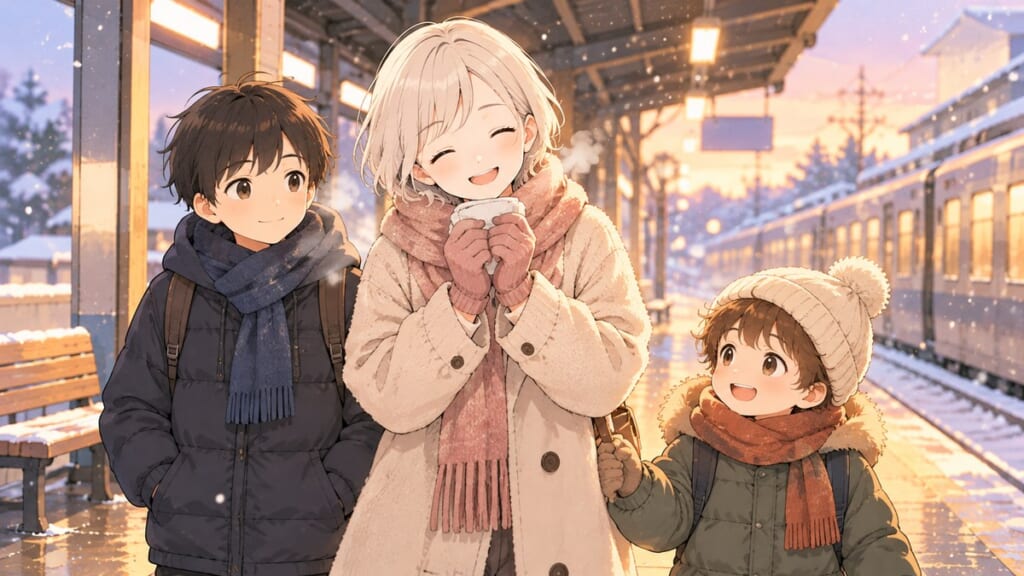
A kairo (disposable heat pack) is one of those Japanese winter products that makes much more sense the first time you’re standing outside waiting for a train. Inside the pouch, iron powder reacts with oxygen in the air and releases heat as it oxidizes.
My children and I use kairo in winter. The important thing is choosing the right type rather than treating every packet the same.
Hokkairo Stick-On Heat Packs, 30-pack
Disposable warmers that attach to clothing for commutes and days outside.
Prices change often — please check the latest price on each store.
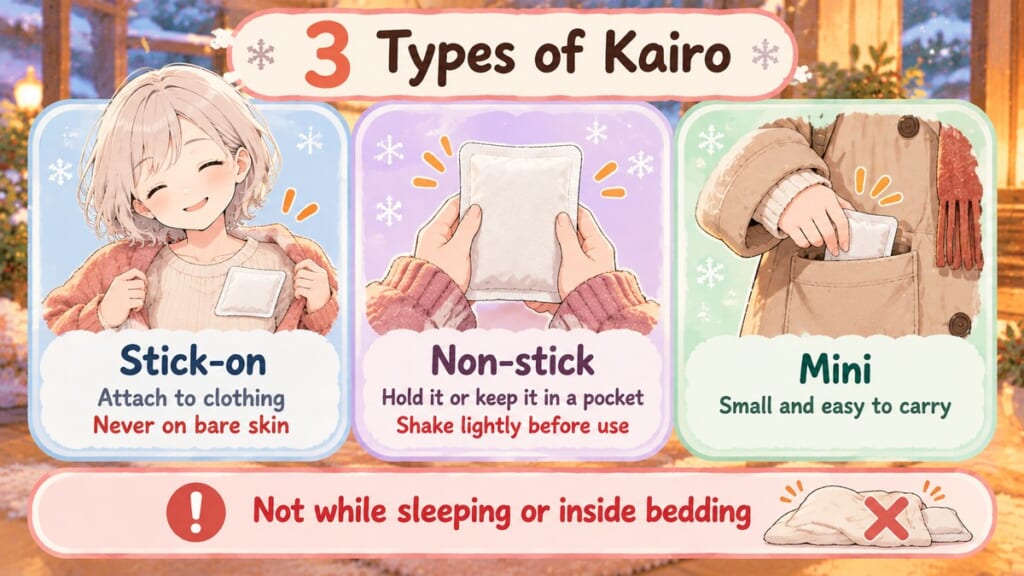
Stick-on, non-stick, or mini?
A stick-on kairo attaches to clothing. It should not be stuck directly onto your skin; Kobayashi’s instructions also say not to use its regular stick-on kairo while sleeping, inside bedding, or together with heating equipment.
A non-stick kairo is the type you hold or keep separated from bare skin by clothing or fabric. Kobayashi says to take it out just before use, shake it lightly a few times, and avoid direct skin contact.
A mini is simply easier when you want a smaller packet. That can be handy for a coat pocket or when the regular size feels unnecessarily large.


Mini Stick-On Heat Packs, 30-pack (Japan import)
A smaller stick-on size for a coat layer or when a regular pack feels too big.
Prices change often — please check the latest price on each store.
Check Hokkairo non-stick mini on Amazon Japan
Travelers sometimes compare Japanese kairo with packs sold abroad. Temperature and duration depend on the product.
For skin care around dry winter weather, keep that question separate from where to place a heat pack: my Japanese winter dry-skin kit.
Can you take kairo on a plane?
For US airport screening, TSA currently lists “Hand Warmers” as allowed in both carry-on and checked bags. That is useful for ordinary disposable warmers, but airline and destination rules still matter if your itinerary involves another country or a different type of warmer.
Japanese airline rules also distinguish ordinary items from fuel-based warmers. ANA, for example, specifically prohibits oil-filled pocket warmers because they use flammable fuel.
 So don’t use a rule for a disposable iron-powder kairo to make assumptions about fuel warmers, rechargeable devices, or other heated products.
Leg Warmers and Outdoor Kotatsu Socks for Sightseeing Days
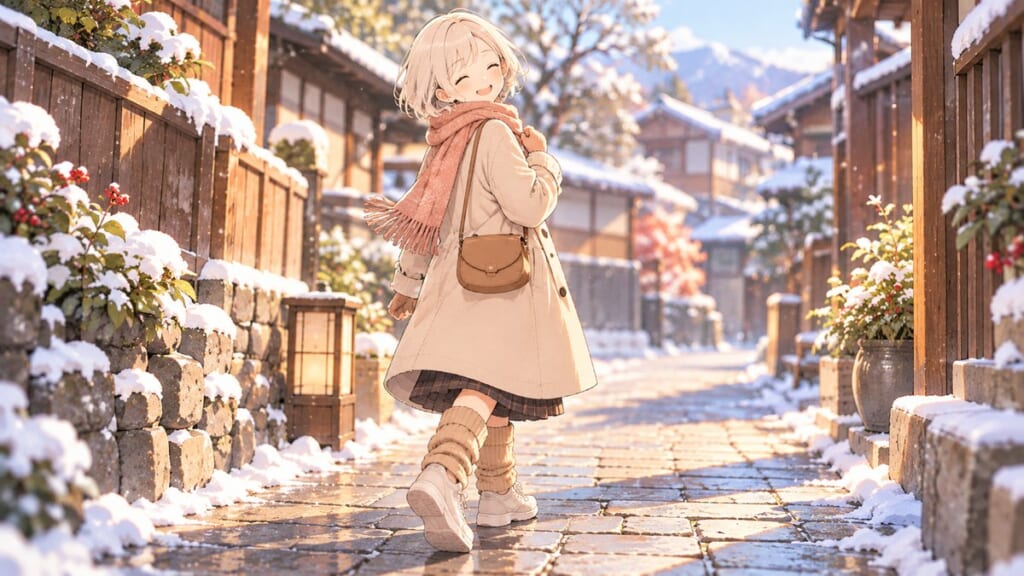
Okamoto also makes Marude Kotatsu products for the gap between house socks and a full winter outfit. The leg warmers are useful when you want your lower legs covered without putting a thick sock inside your shoes.
Check Marude Kotatsu Leg Warmers on Amazon Japan
The women’s Marude Kotatsu Leg Warmers are a free-size product made in Thailand. Okamoto also makes an outdoor Marude Kotatsu sock with a slimmer shape for going out.
 The outdoor version is the one to look at if you actually want to wear this idea with boots or sneakers. Even then, leave a little room in your footwear: a winter sock that makes your shoe uncomfortably tight isn’t a good sightseeing setup.
For the rest of the outfit, use the weather and month rather than building everything around one warm sock. See my guide to what to wear in Japan in winter and, if you’re traveling earlier, my November packing guide.
Part 3: Gifts
Which One to Give: A Quick Gift Guide by Person
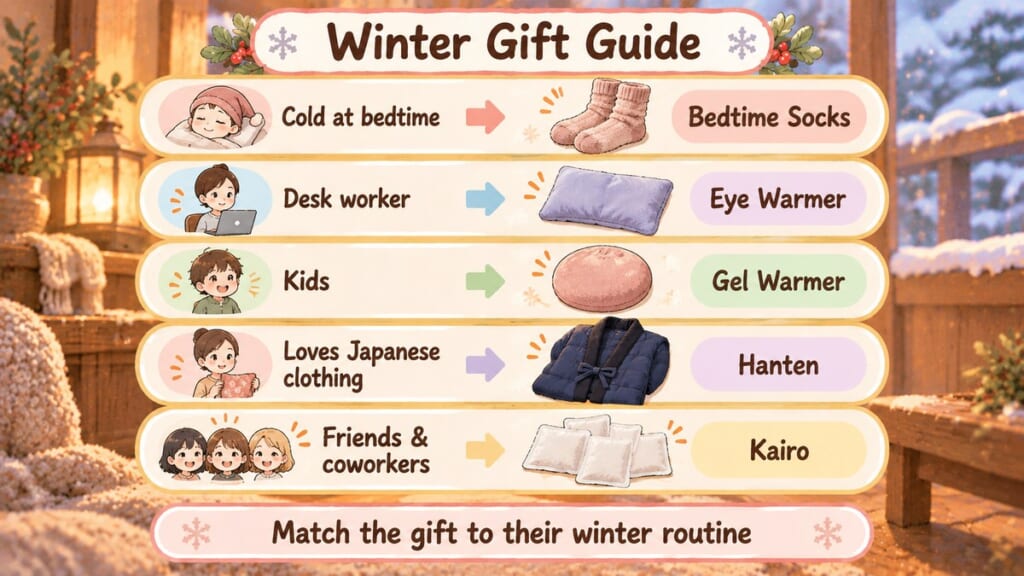
You don’t need to explain every Japanese winter gadget when you’re choosing a gift. Match the item to the person’s normal winter routine, then keep sizing and heating instructions easy to understand.
| Who you’re buying for | Pick | Size / pattern point |
|---|---|---|
| A parent who gets cold at bedtime | 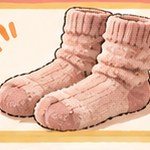 Oyasumi Switch |
Women’s 22–25cm |
| A desk-working friend |
Azuki no Chikara Eye Mask |
No clothing size to choose |
| A child or character fan |
  Sumikko Gurashi Yutapon |
Character cover; follow the maker’s heating and child-safety directions |
| Someone who loves Japanese clothing |
Edoten Kurume hanten |
Check the listed garment size; see my Japanese loungewear guide |
| Several friends or coworkers |
Box of kairo |
Easy to divide into individual packets |
Sumikko Gurashi Yutapon (microwave warmer with cover)
A character-cover gel warmer; adults heat it and follow the maker’s directions.
Prices change often — please check the latest price on each store.
Edoten Kurume Hanten (padded short jacket)
A traditional padded jacket listed as made in Japan and handmade.
Prices change often — please check the latest price on each store.
The Edoten Kurume hanten listing describes it as Made in Japan and handmade.
How to Order From Amazon Japan (and What We Checked for the US)
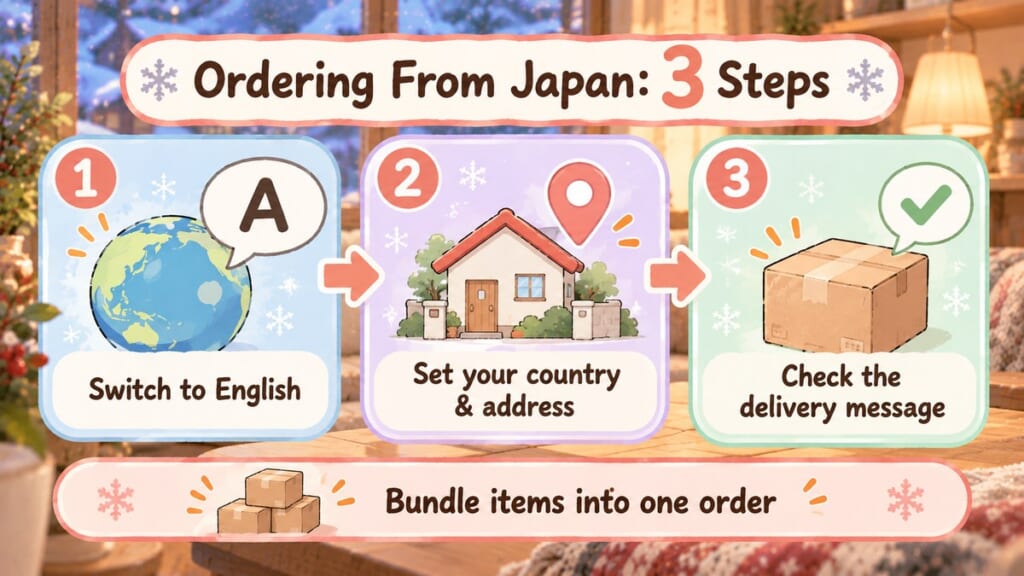
Amazon Japan can be switched to English for browsing and shopping. Its language settings currently offer English, although Amazon notes that some features, messages, product information, and manuals may still not be available in English.
For the products in this guide, set your delivery country and address before deciding an item can ship to you. International availability can change by product, seller, and destination.
I checked the listed routes for a US delivery address in October 2026. The checked women’s Marude Kotatsu items, Tange and Maruka yutanpo, Yutapon products, Azuki no Chikara products, and the listed non-stick mini Hokkairo had Amazon Japan options that could be sent to the US. The men’s Marude Kotatsu item I checked did not.
Shipping is charged per order and can run into several thousand yen for an international order, so bundling a few Japanese winter items together may make the order easier to justify. Import duties, taxes, and import fees depend on the destination and the order.
The specific items I checked did not offer delivery to Singapore or Australia at that time. That is a result for those listings, not a rule for every Amazon Japan product or every address in either country.
Here’s how to check an order on Amazon Japan:
- Switch the site language to English if you prefer.
- Set your delivery country and actual address.
- Read the delivery message on each product page before adding items to your cart.
Safety Notes Before You Use Them
These products are cozy because they create or hold heat, so the small instructions on the package matter.
- For a hot-water yutanpo: Use the correct cover, tighten the cap, and check for leaks. Keep it away from direct skin contact and follow the maker’s bedtime precautions.
- For microwave warmers: Follow the exact wattage and heating time. Overheating can damage the product or cause burns.
- For Azuki no Chikara Eye Mask: Use it while awake. The maker says not to use it on children or anyone unable to remove it themselves.
- For ordinary stick-on kairo: Attach them to clothing, never bare skin. Don’t use them while sleeping, inside bedding, or with another heater.
- With children: Kobayashi asks parents or guardians to take extra care when young children or anyone unable to respond to excessive heat use its regular stick-on kairo. Children should not heat Yutapon or remove it from the microwave by themselves.
FAQ
What is a yutanpo?
A yutanpo is a Japanese hot water bottle: you fill the container with hot water and use it to warm bedding or keep warm at home. Traditional versions are reusable and don’t need electricity while you are using them.
What is Japanese kairo?
Kairo are disposable heat packs used in cold weather. Some stick to clothing, while non-stick versions are held or kept in a pocket or behind a layer of fabric.
They are small and portable, which is why they are so common for winter commutes, errands, and days outside.
How do Japanese heat packs work?
Disposable kairo usually contain iron powder along with ingredients that help control the reaction. When oxygen reaches the iron, oxidation produces heat.
That is also why the packet stays sealed until you are ready to use it.
How do Japanese people stay warm in winter?
There isn’t one single Japanese solution. In homes where hallways or floors feel colder than heated rooms, small warmers such as yutanpo, thick room socks, and microwave warmers can target the place where you actually feel cold.
Outside, disposable kairo add portable warmth without changing your whole outfit.
Is it okay to sleep with a hot water bottle every night?
Follow the instructions for the exact bottle you own rather than treating every yutanpo the same. Tange warns that prolonged contact can cause low-temperature burns and recommends using the bottle to warm your bedding, then removing it before sleep.
If you want something specifically designed to wear while sleeping, Okamoto’s Oyasumi Switch is the bedtime sock in this guide.
Bring One Small Piece of a Japanese Winter Home
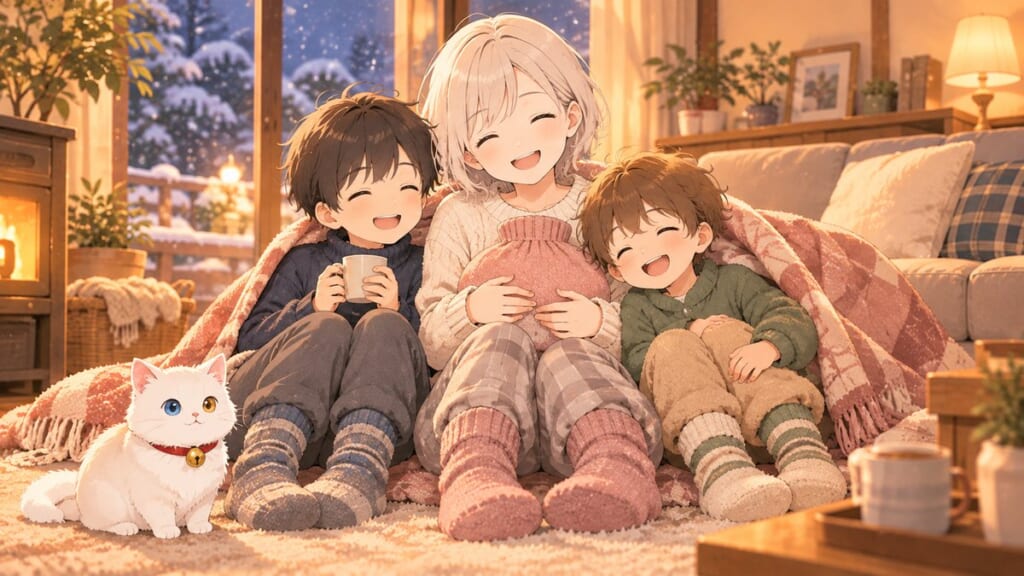
For home, start with a yutanpo or a pair of warm socks. For days outside, kairo are the easiest of these five to carry. If you’re choosing a gift, use the person-by-person table rather than trying to find one winter product that suits everybody.
If you’re ordering several Japanese-market items from abroad, check Amazon Japan with your actual delivery address and consider putting them into one order rather than paying international shipping repeatedly.
For the rest of your winter planning, see my guide to what to wear in Japan in winter, my Japanese winter dry-skin kit, and my 7-step guide to planning your first trip to Japan.
Have you tried a Japanese winter warmer, or is there one you’re curious about? Tell me in the comments.
I hope this guide has answered one of your questions and helped you feel a little closer to Japan.
May your Japan journey be filled with wonderful discoveries and memories you’ll treasure for years to come.
See you in the next guide.


Comments