
- The Short Answer: Start With One Teapot
- What Each Tea Tool Does (and What to Skip)
- Your First Kyusu: Glass or Clay?
- Add Later: Canister, Cups and a Fine Strainer
- For Matcha: A Bowl and a Whisk
- Everyday Care: Washing and Clogged Strainers
- Buying Teaware in Japan: Where to Look
- Getting Teaware Home Without Breaking It
- FAQ: Japanese Teaware for Beginners
- One Teapot Is Enough to Begin
The Short Answer: Start With One Teapot
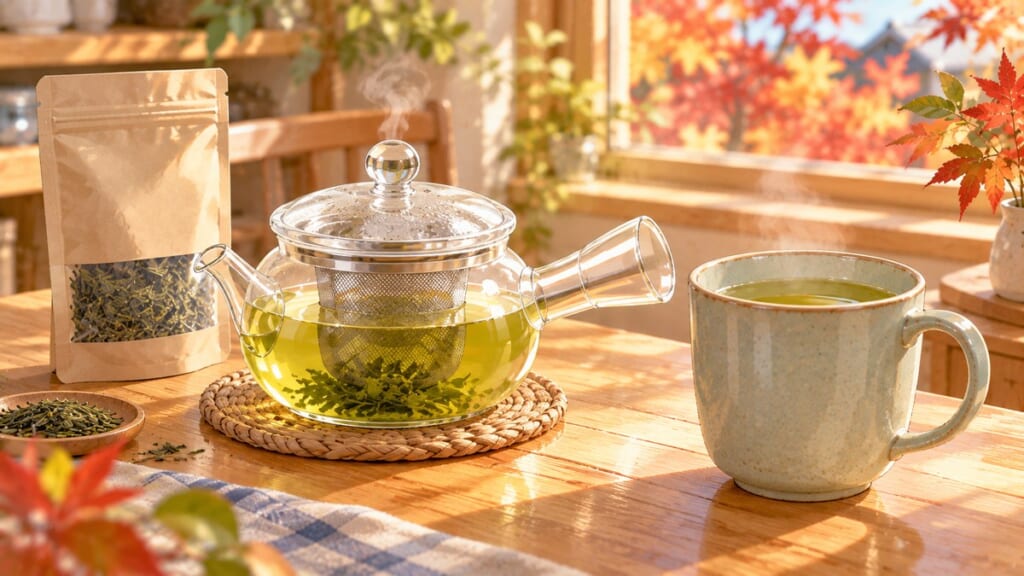
Think Japanese tea is just matcha? In my house, it’s a big pitcher of barley tea (mugicha) in the fridge. And when I make tea in a teapot, my setup is pretty simple: a glass kyusu from a local supermarket or home improvement store, an ordinary mug, and tea leaves already packed in a tea bag.
If you’re looking at beautiful Japanese tea sets and wondering whether you need all those pieces, you can relax. If you want to brew loose-leaf tea in a kyusu, start with one teapot that already includes a strainer. You can also brew tea directly in a mug with a suitable strainer. No matching cups, special canister, or complete tea ceremony set required.
Here’s where I’d start.
As an Amazon Associate, I earn from qualifying purchases.
Quick picks — Amazon US


HARIO Chacha Kyusu — Glass teapot, 450ml


Tokoname Kyusu (Black, 420ml) — Clay teapot with a fine stainless steel strainer


Nagao Tea Strainer — For straining tea into a mug or catching finer leaves


Matcha Whisk (resin, Made in Japan) — Only if you’re making matcha
You can add a tea canister when your storage needs change, yunomi cups when you want them, and a separate fine strainer if your current filter isn’t doing the job. A matcha bowl and whisk belong on a different shopping list — one for people who actually want to prepare matcha.
Still deciding which tea leaves to try? Start with my Japanese tea guide for beginners before buying more equipment.
What Each Tea Tool Does (and What to Skip)
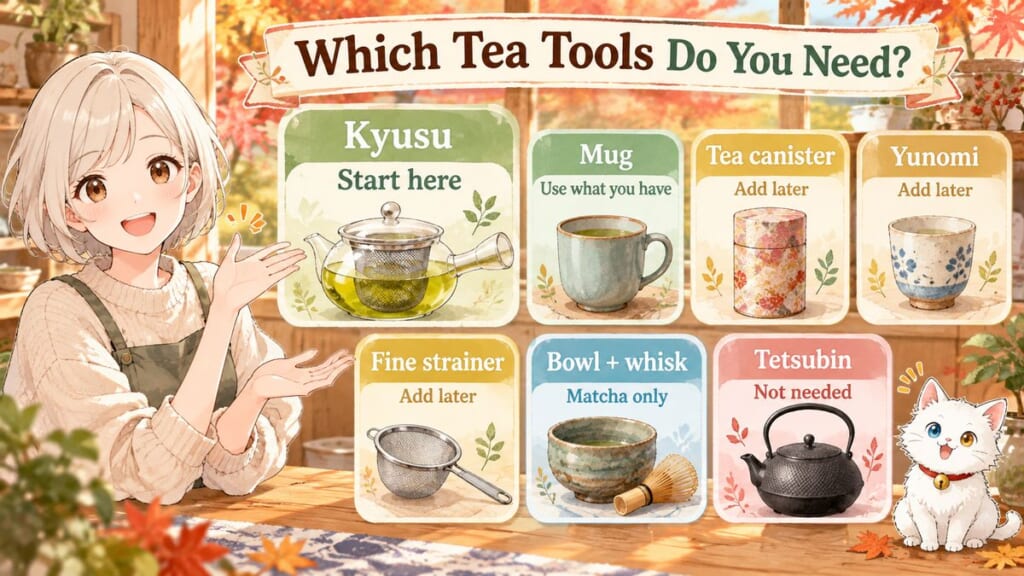
Japanese teaware has plenty of lovely names, but you don’t need to memorize them before your first cup.
Here’s what each one does, and what you can use instead.
| Tool | What it does | Need it first? | What you can use instead |
|---|---|---|---|
| Kyusu (急須) | Brews tea and separates the leaves from the drink, usually with a built-in strainer | Only if you want a teapot | A mug with a suitable strainer or a tea bag |
| Yunomi (湯のみ) | A cup for drinking Japanese tea | No | Your everyday mug |
| Tea strainer (茶こし) | Catches tea leaves as you pour or brew | No, if your teapot already has one | The included kyusu filter or a tea bag |
| Tea canister (茶筒) | Holds tea leaves between uses | No | The original tea package, properly closed, or a suitable airtight container |
| Matcha bowl (chawan / 茶碗) | Provides room for preparing and whisking matcha | Only for matcha | A suitably sized bowl |
| Matcha whisk (chasen / 茶筅) | Mixes powdered matcha with water | Only for matcha | A suitable everyday whisk, depending on how you prepare matcha |
| Tetsubin (鉄瓶) | A traditional iron kettle used to heat water | No | Your existing kettle |
 One detail matters when you’re shopping: a kyusu and its strainer may already be sold together. Check what’s included before adding a separate filter to your cart.
Your First Kyusu: Glass or Clay?
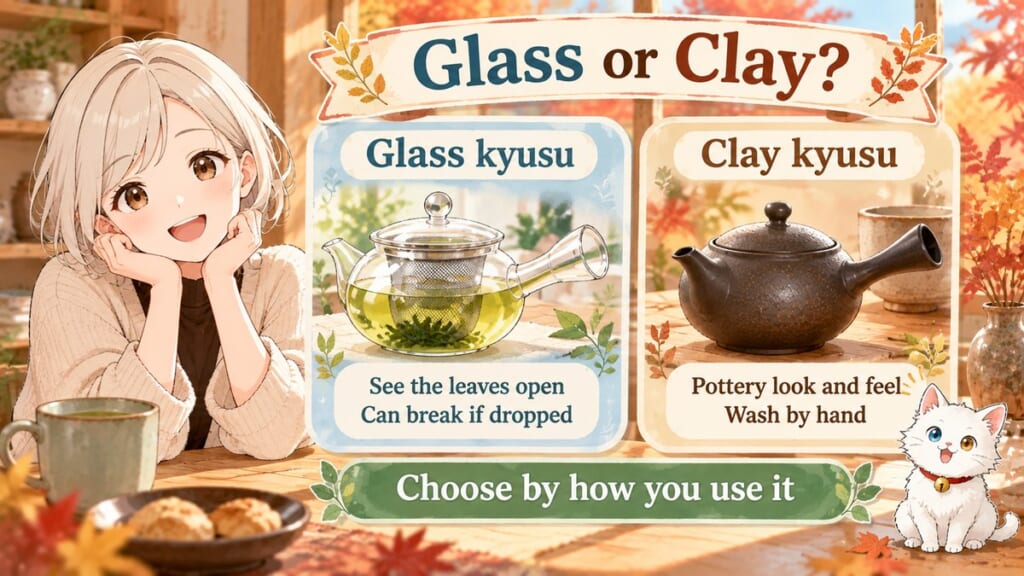
A glass kyusu and a clay kyusu can both work in an everyday kitchen. Choose by how you make tea and wash dishes, not by which sounds more traditional.
My own teapot is glass, bought locally at a supermarket or home improvement store. It’s a reminder that the teapot you use regularly doesn’t have to be an expensive or elaborate piece.
| What to compare | Glass kyusu | Clay kyusu |
|---|---|---|
| Example in this guide |
|
|
| Cleaning | Smooth glass surfaces are easy to see and inspect; check the filter separately | Usually best washed by hand; pay attention to the spout and filter |
| Can you see inside? | Yes, through clear glass | No, but you can enjoy the shape and texture |
| Breakage | Can break if dropped or knocked against a hard surface | Can chip or break if dropped |
| Dishwasher information | HARIO Chacha Kyusu: dishwasher-safe listing | Tokoname model: handwash only, without detergent |
| Strainer | HARIO: removable stainless steel strainer | Tokoname model: fine stainless steel mesh |
Glass kyusu: HARIO Chacha Kyusu Maru 450ml
HARIO Chacha Kyusu Maru (glass, 450ml)
Glass pot and lid made in Japan; the removable stainless steel strainer is made in China. Dishwasher-safe listing.
Prices change often — please check the latest price on each store.
The HARIO Chacha Kyusu Maru 450ml is a practical starting point if you like seeing your tea as it brews. The transparent pot lets you watch the leaves move and open, and the removable stainless steel strainer keeps the loose leaves separate when you pour.
The glass pot and lid are made in Japan, while the stainless steel strainer is made in China.
HARIO says the glass pot can be used in a microwave after removing the metal strainer. Its Amazon listing also identifies the teapot as dishwasher-safe, although you’ll still want to follow the care instructions for each component.
Glass is easy to inspect while washing, but it isn’t unbreakable. Drop it onto a hard kitchen floor, and it can break.
Clay kyusu: Tokoname Black 420ml
Tokoname Kyusu, Black (clay, 420ml)
Made in Tokoname, Aichi. Fine stainless steel mesh strainer. Wash by hand without detergent.
Prices change often — please check the latest price on each store.
The Tokoname Black 420ml Kyusu, sold by Japanese Tea KIMIKURA, is another option if you like the look and feel of pottery. Its listing identifies it as made in Tokoname, Aichi Prefecture, Japan.
This model includes a fine stainless steel mesh strainer. The product description specifically says the filter can handle the smaller leaves found in deep-steamed sencha.
 That last detail is important. Fine leaves call for an appropriately fine strainer, not simply a clay teapot. Check the filter design on the particular kyusu you’re considering.
The black finish and pottery texture give it a different feel in your hands and on your table. Its seller advises washing it by hand without detergent.
How big should your first kyusu be?
Don’t choose capacity based only on the number of people in your household. Think about the cups you’ll actually pour into: a small yunomi and a generous everyday mug can require very different amounts of tea.
The HARIO model has a stated capacity of 450ml, while the Tokoname model is listed at 420ml. Compare those figures with the size of your favorite cup and the number of servings you plan to make.
A final shopping detail: “Tokoname” and “Mino” are useful pottery terms, but a style name alone doesn’t prove where a particular product was manufactured. For more on reading Japanese product labels, see my guide to checking whether a Japanese knife is really made in Japan.
Add Later: Canister, Cups and a Fine Strainer
Once you can brew and drink tea, buy the next tool only when you notice a problem: an awkward tea package, a wish for a special cup, or tiny leaves slipping through your filter.
Tea canister: Noguchi Kumataro Tea Garden


Noguchi Kumataro Shikisai Tea Canister
Made in Japan. Washi-covered steel canister with a double lid. Hand wash.
Prices change often — please check the latest price on each store.
The Noguchi Kumataro Shikisai Tea Canister is a Japanese-made steel canister decorated with washi paper. It has an outer metal lid and an inner polyethylene lid, with a listed tea-leaf capacity of approximately 200g.
The double lid is a useful feature, but it doesn’t guarantee an airtight seal, so follow the storage advice on your tea package.
It requires handwashing. If your existing tea package closes properly and works for your storage needs, you can happily leave this purchase for another day.
Yunomi cups: Mino ware set of two


Mino Ware Yunomi Cups, Set of Two
Made in Japan. About 400ml each — closer to a mug size. Microwave- and dishwasher-safe listing.
Prices change often — please check the latest price on each store.
The Mino Ware Yunomi Set includes two Japanese-made cups, listed as microwave- and dishwasher-safe.
But you don’t need yunomi to drink Japanese tea. I use an ordinary mug at home.
I’ve broken cups before, too, so my children use cups that won’t shatter.
Fine tea strainer: Nagao Tsubame-Sanjo
Nagao Tsubame-Sanjo Tea Strainer
Made in Japan from 18-8 stainless steel. Fine 200-mesh filter for small tea particles.
Prices change often — please check the latest price on each store.
The Nagao Tsubame-Sanjo Tea Strainer is made in Japan from 18-8 stainless steel. Its listed 200-mesh twill-weave filter makes it worth considering when smaller tea particles are getting through a coarser strainer.
You can also use it when pouring brewed tea from another container into your mug. If you’d rather steep tea directly in a mug, choose an infuser designed to sit securely inside it.
For a beginner, though, it’s an optional tool. The HARIO kyusu already comes with its own stainless steel strainer, so don’t buy this automatically as a second filter.
The one we actually use most: a mugicha pitcher
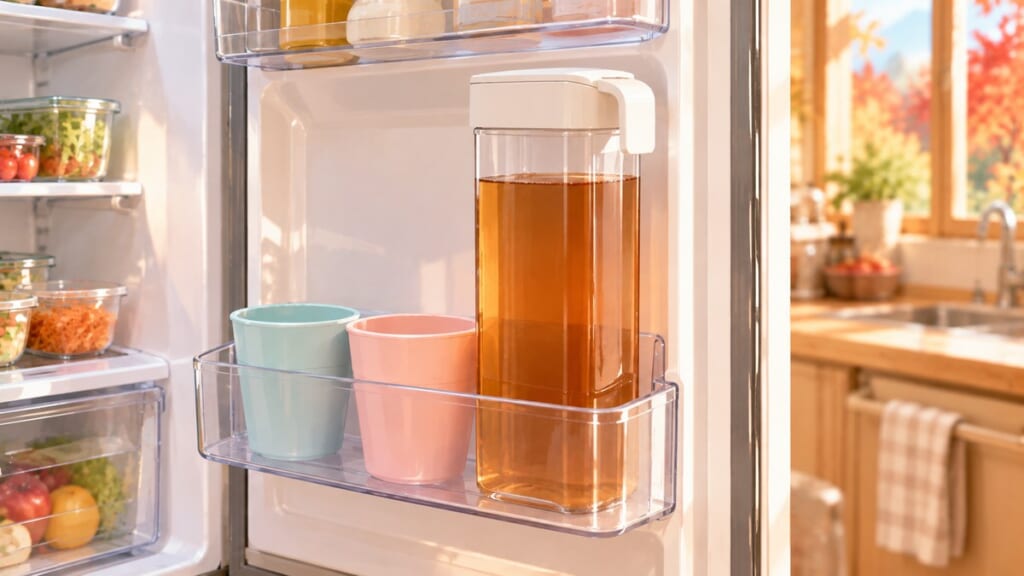
The tea-related container that gets the most use in my home isn’t a fancy kyusu. It’s a plastic pitcher of mugicha in the refrigerator.
My children drink mugicha rather than green tea.
 Mugicha is roasted barley tea, not tea made from tea leaves. It’s a familiar everyday drink in Japanese homes.
Lustroware QuickServe Airtight Pitcher (2.1L)
Made in Japan from BPA-free SAN plastic. Flat shape for the fridge door. Sold by the maker.
Prices change often — please check the latest price on each store.
If you’d like a similar plastic pitcher, the Lustroware QuickServe Airtight Pitcher (2.1L) is listed as made in Japan from BPA-free SAN plastic. Its flat shape is designed to fit in the fridge, and you can open the lid with one hand.
There’s no ritual here. Follow the instructions on your barley tea package and the temperature limits of your pitcher.
For Matcha: A Bowl and a Whisk
If your goal is to whisk powdered matcha, you’ll need a slightly different setup from the one used for steeping loose-leaf tea. A kyusu isn’t the usual tool for preparing whisked matcha.
Two matcha bowls to consider


Yamakiikai Mino Tenmoku Matcha Bowl
Made in Japan. Dark tenmoku glaze. Hand washing recommended.
Prices change often — please check the latest price on each store.
The Yamakiikai Mino Tenmoku Matcha Bowl is listed as made in Japan. Its tenmoku-style finish offers a darker ceramic look for a matcha setup.
 The product information contains conflicting dishwasher instructions, so I’d recommend washing this bowl by hand.


Handcrafted Yuki Shino Matcha Bowl (Mino ware)
Made in Japan. Soft beige glaze. Hand washing recommended.
Prices change often — please check the latest price on each store.
The Handcrafted Yuki Shino Matcha Bowl (Mino ware) is another Japanese-made choice, with a soft beige glaze. The listing describes it as porcelain and dishwasher-safe, but also recommends handwashing to avoid damage.
Handwashing is the cautious choice here as well. Think about the bowl’s shape, how comfortably you can hold it, and whether it leaves enough room for the whisk you plan to use.
Bamboo chasen or a resin matcha whisk?
The traditional chasen is a bamboo whisk with many fine tines. If you want to prepare matcha with this kind of tool, look at tea shops and tea ceremony utensil shops in Japan, where you can ask about the whisk’s construction and origin before buying.
A bamboo chasen needs gentle handling. Rinse it after use, avoid bending or pulling the delicate tines, and let it dry thoroughly in a well-ventilated place.
Made-in-Japan Resin Matcha Whisk
Made in Japan. Resin, not bamboo. Hand wash only — no dishwasher or microwave.
Prices change often — please check the latest price on each store.
The Made-in-Japan Resin Matcha Whisk is a different approach. It isn’t a bamboo chasen, and its listing specifies handwashing only, with no dishwasher or microwave use.
If you prefer a non-bamboo utensil for everyday preparation, it may be worth considering. Just don’t assume a resin whisk will produce exactly the same foam or mixing experience as a traditional bamboo chasen.
For choosing matcha itself and learning about preparation, see my Japanese tea guide for beginners.
Everyday Care: Washing and Clogged Strainers

I wash my glass kyusu by hand with dishwashing detergent. That’s the method I use at home, even though some glass teapots have dishwasher-safe listings.
If your kyusu has a removable strainer, take it out carefully after the pot has cooled enough to handle. Empty the leaves, rinse the filter, and check the mesh for any pieces caught around the edges.
What about the dishwasher?
Don’t treat all Japanese teaware as dishwasher-safe just because it looks sturdy. Materials, glazes, decorative finishes, and separate components can have different care requirements.
The HARIO Chacha Kyusu has a dishwasher-safe listing, and the Mino yunomi set is also listed as dishwasher-safe. The Tokoname clay kyusu should be washed by hand without detergent, as its seller instructs. The Nagao strainer, the resin matcha whisk and the two matcha bowls are also better washed by hand.
When the strainer gets clogged
Small leaves can collect in a fine metal mesh, especially if the openings are narrow. Rinse the strainer from both sides with water and gently loosen any remaining particles with a soft brush if the manufacturer’s care instructions permit it.
 Avoid forcing a sharp object through the mesh. Damaging the fine wires can change the way the filter works.
For bamboo whisks, keep the care routine separate from your ordinary dishwashing. Gentle rinsing and thorough drying matter more than scrubbing.
Buying Teaware in Japan: Where to Look
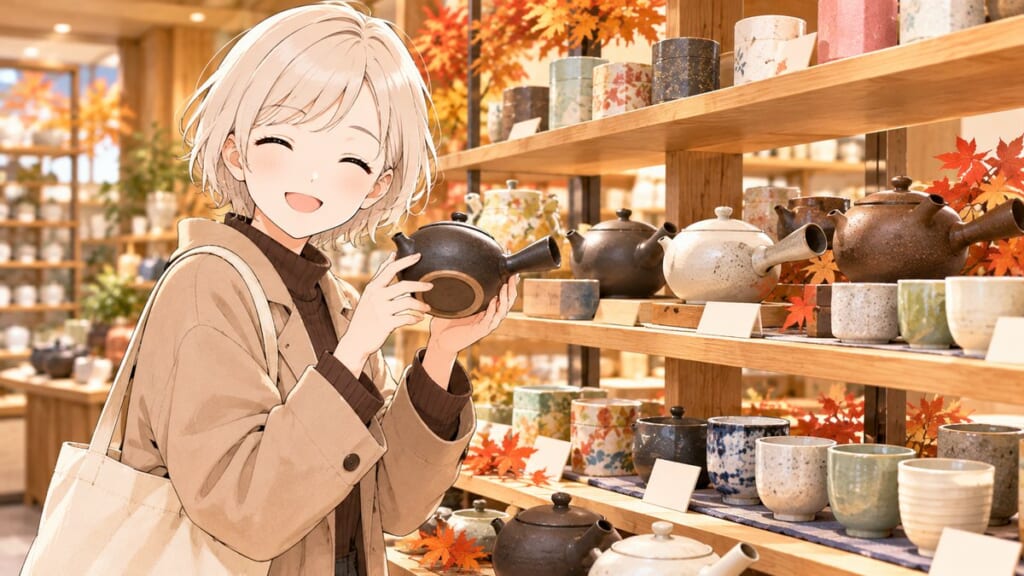
If you’re visiting Japan, shopping for teaware can be part of the fun. You don’t have to start at a specialized pottery gallery — everyday shops, department stores, and traditional utensil sellers each offer a different way to explore.
| Where | What to look for | Good to know |
|---|---|---|
| Kappabashi Kitchenware Town, Tokyo | Practical kyusu, yunomi, Japanese tableware, matcha bowls | Specialty shops such as Kappabashi Maeda and Utsuwa no Tosei; check each store’s opening days |
| Department store tableware floors | Pottery, gift-ready pieces, ceramics with maker information | Daimaru Shinsaibashi Main Building 8F has TUNAGUYA and ASAHIDO |
| Tea shops and tea ceremony utensil shops | Bamboo chasen, tea canisters, traditional utensils | Ask about origin, materials, and care instructions |
| Supermarkets and home improvement stores | Everyday glass teapots, practical tea tools, mugicha pitchers | A useful starting point for ordinary household equipment |
Kappabashi: Kitchenware shopping in Tokyo
Kappabashi is an area of Tokyo known for kitchenware and restaurant supplies. For tea equipment, look for shops that specialize in Japanese dishes and ceramics.
Kappabashi Maeda, at 1-10-10 Matsugaya in Taito City, lists kyusu, yunomi, and matcha bowls among its products. Utsuwa no Tosei, at 4-24-1 Matsugaya, is another shop to look into for teapots and cups.
Some shops in Kappabashi close on Sundays or public holidays, so check each store’s opening days before making a special trip.
Department stores: Ceramics and gift shopping
If you’d like to browse tableware in a department store, Daimaru Shinsaibashi in Osaka offers two relevant shops on the eighth floor of its main building.
TUNAGUYA carries Japanese and Western tableware along with kitchen goods. ASAHIDO specializes in ceramics and crafts, including Kyo-yaki and Kiyomizu-yaki pottery.
A department store is handy for gifts. Ask the staff about the maker, the box, and how to clean the piece.
How can you tell what you’re buying?
A mark on the base, a maker’s name, a box, or a stated production area can all give you clues. But a mark or a familiar pottery name alone doesn’t prove where a piece was made, so ask the seller if origin matters to you.
Why Japan does it this way: Traditional tea tools and ordinary household equipment can sit comfortably alongside each other. A kyusu is useful for brewing tea, a yunomi is simply a drinking cup, and a mugicha pitcher serves a different everyday purpose. You can choose each item for its job without needing to assemble a formal matching set.
A note about tax-free shopping from November 2026
Ceramic tableware may qualify for tax-free shopping when the purchase and traveler meet the applicable conditions. However, Japan’s tax-free shopping procedure changes for purchases made from November 1, 2026 (Japan Tourism Agency).
Under the new refund system, eligible shoppers pay tax at the store and receive a refund after the required departure verification. There’s a minimum purchase amount per store per day, and the departure check must take place within 90 days of purchase.
You must still have all the eligible purchased goods with you for the departure verification, before checking in the relevant baggage. This makes airport timing especially important if you’re buying fragile ceramics.
See my Japan tax-free shopping guide for the procedure, eligibility requirements, and documents to prepare.
If you’re organizing the rest of your visit around a shopping day, my 7-step Japan trip planning guide can help you fit it into your travel plans.
Getting Teaware Home Without Breaking It
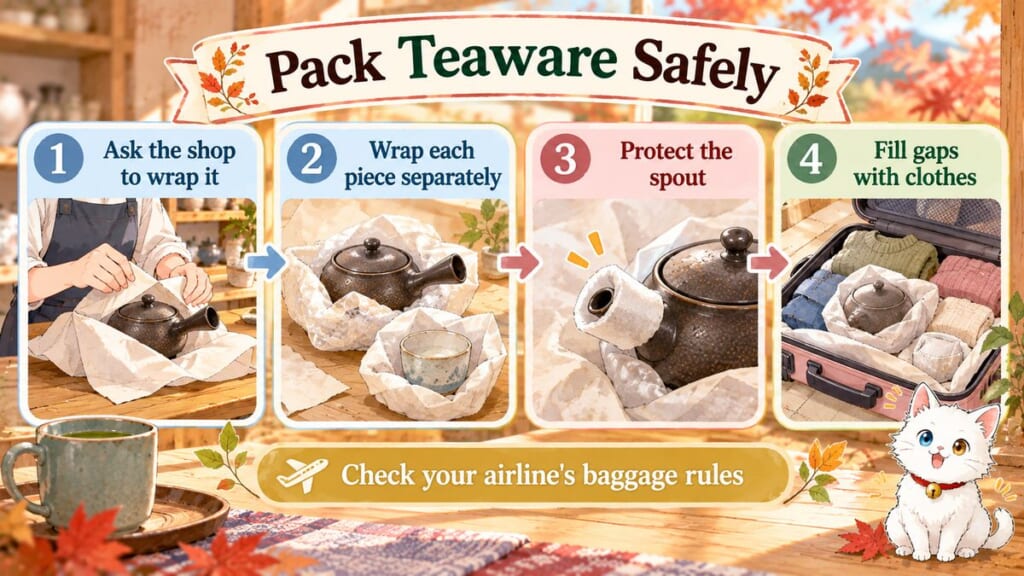
You’ve found a beautiful kyusu. Now, how do you get it home in one piece?
Start by asking the shop to package fragile items carefully. If a cup or bowl comes with a protective box, keep it, and don’t assume a decorative gift box alone provides enough cushioning for travel.
Wrap each breakable piece separately with suitable padding, then use clothing around the protected pieces to reduce movement. Keep lids, handles, and spouts from pressing directly against hard objects or other ceramics. Pay extra attention to the kyusu spout, and fill gaps so the pot can’t slide around.
Carry-on or checked baggage?
There isn’t one answer for every item or flight. Small, carefully packed ceramics may be easier to keep with you, but carry-on size and weight rules still apply.
For checked baggage, the main concern is that fragile objects can be damaged during handling. JAL identifies pottery and glassware as fragile, while ANA warns that damage to fragile items may not always be covered.
Check your airline’s current baggage guidance before deciding where each purchase belongs. Don’t assume that labeling something “fragile” guarantees careful handling or compensation.
Bringing home a bamboo chasen
 A bamboo matcha whisk is a plant-derived product, so travelers entering the United States should declare it to U.S. Customs and Border Protection. Declaration doesn’t automatically mean an item is prohibited; the relevant authorities determine whether it meets entry requirements.
Keep the packaging that shows the material, and check the latest requirements for your destination before departure, particularly when bringing home plant-based items.
What if you bought more than you can carry?
Shipping may be worth investigating if your purchases no longer fit comfortably in your luggage. Start with my luggage forwarding guide to understand the options, and check whether the service accepts fragile contents and what protection is available. If you’re claiming a tax-free refund, though, keep the eligible goods with you for the departure check instead of shipping them.
And if you get home wishing you’d bought one more item, you can return to the glass and clay kyusu choices above, or explore my guide to Japanese gifts you can buy without going to Japan without planning another flight.
FAQ: Japanese Teaware for Beginners
Is a kyusu worth it?
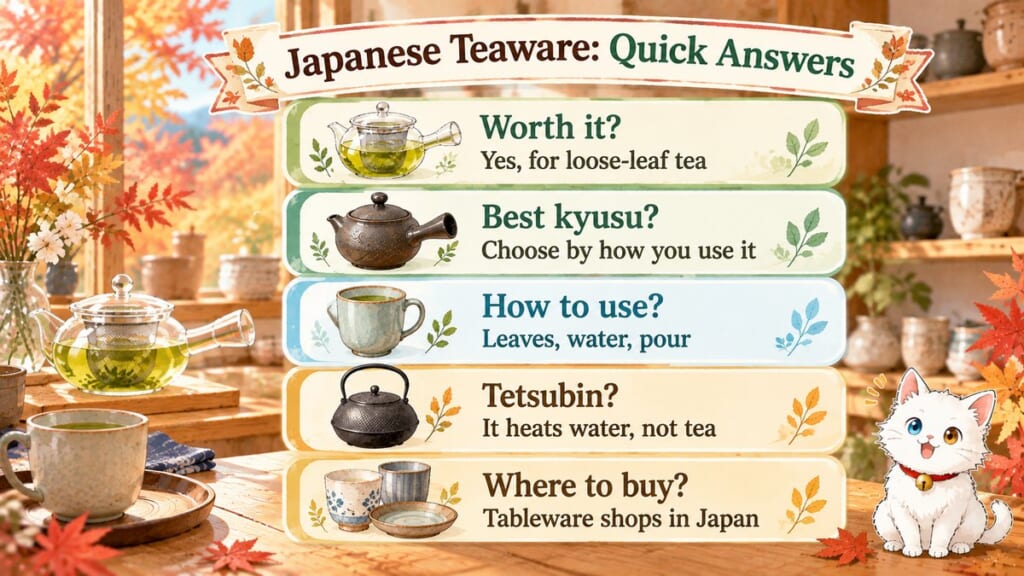
Yes, if you enjoy brewing loose-leaf Japanese tea and want a dedicated pot with a strainer. If you’re happy using tea bags or brewing directly in a mug, there’s no need to rush into buying one.
What is the best kyusu teapot?
The right choice depends on how you use it: the HARIO glass kyusu lets you watch the leaves and has a removable strainer, while the Tokoname clay kyusu offers a pottery finish and a fine stainless steel filter. Compare cleaning needs, cup size, and filter design before choosing.
How do you use a kyusu teapot?
First, put your tea leaves into the pot or its appropriate filter; next, add water according to the tea’s brewing instructions; finally, pour the tea into your cup, using the strainer to hold back the leaves. For water temperature and steeping time, see my Japanese tea guide for beginners.
What is the difference between a tetsubin and a kyusu?
A traditional tetsubin is an iron kettle used for heating water, while a kyusu is a teapot used to brew tea. Some iron teapots resemble tetsubin but have enamel-lined interiors and are intended for brewing rather than boiling water, so always check the product’s stated purpose.
Where can I buy authentic Japanese tea sets?
Start with Japanese tableware shops, department store ceramics sections, or tea utensil specialists, depending on what you want. Look for clear maker and origin information, ask questions about the materials, and use the shopping guide above to choose where to browse.
One Teapot Is Enough to Begin
Your first Japanese tea setup doesn’t have to look like a carefully arranged tea ceremony display. If you want to brew with a kyusu, choose one teapot with a suitable strainer, use the mug you already own, and add other tools when you know why you need them.
If you’re visiting Japan, browse the ceramics and everyday kitchenware, choose something you’ll enjoy using, and pack it well for the trip home.
You can also explore my Japan Finds page for more Japanese items that fit naturally into everyday life.
What does your tea setup look like right now — a mug, a kyusu, or something else? I’d love to hear which Japanese tea tool you’re curious about trying.
I hope this guide has answered one of your questions and helped you feel a little closer to Japan.
May your Japan journey be filled with wonderful discoveries and memories you’ll treasure for years to come.
See you in the next guide.


Comments