
- The Short Answer: Which Japanese Tea to Buy First
- Matcha, Sencha, Hojicha: The 2-Minute Difference (and Why We Skip the Textbook)
- Pick by Taste First: Grassy, Toasty or Full-On Matcha
- Tea Bags, Loose Leaf or Powder? Start Here, Not With the Fancy Tin
- Hojicha: The Easiest First Tea — but Not All Hojicha Tastes the Same
- Sencha: Everyday Green Tea, and How Not to Make It Bitter
- Matcha: Buy Small, Buy Unsweetened — and Read About the 2026 Shortage First
- Morning, With Meals or Evening: Matching Tea to the Moment
- Our First-Tea Picks You Can Actually Buy Outside Japan
- ITO EN Oi Ocha Organic Matcha, 30 g
- ITO EN Organic Matcha Green Tea Tea Bags, 50 count
- ITO EN Oi Ocha Premium Matcha Genmaicha Tea Bags, 50 count × 2
- Yamamotoyama Sencha Green Tea Bags, 90 bags
- Maeda-en Japanese Genmai-cha Tea Bags, 100 bags
- Yamamotoyama Hojicha Roasted Green Tea Bags, 16 bags × 6
- ITO EN Oi Ocha Hojicha Premium Tea Bags, 50 count
- Buying From Japan Directly: Official Shops That Ship Overseas (and When It’s Not Cheaper)
- Buying Tea in Japan as a Souvenir: Supermarket, Department Store or the Tea Shop
- Keep It Fresh: How to Store Tea Bags, Loose Leaf and Matcha
- FAQ
The Short Answer: Which Japanese Tea to Buy First
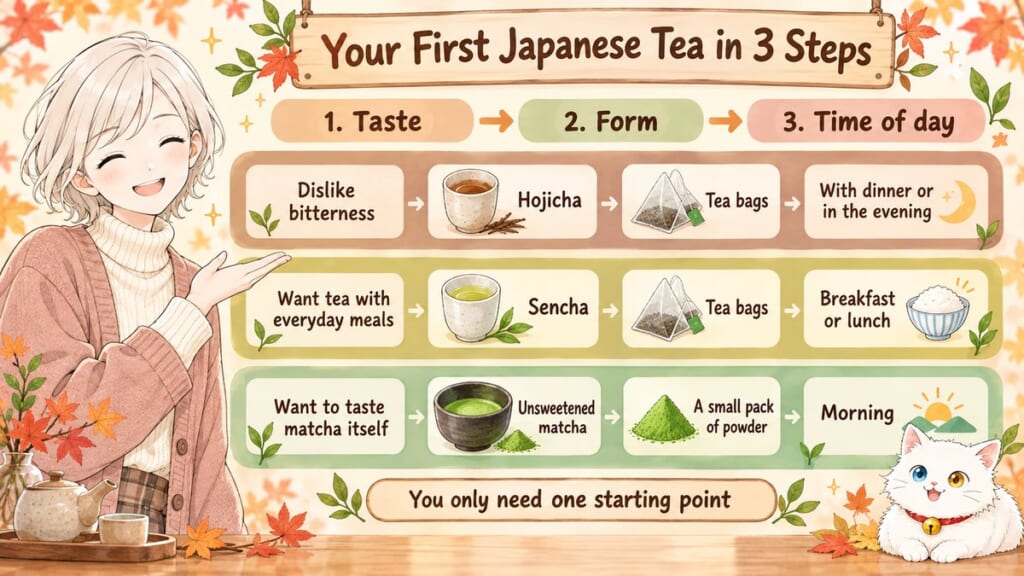
You search for Japanese tea, open a few listings, and suddenly even choosing a bag feels complicated. Start with hojicha tea bags if bitterness puts you off, sencha tea bags for everyday meals, or a small pack of unsweetened matcha powder if you want to taste matcha itself.
Picture the cup you actually want: something toasty beside dinner, fresh green tea with lunch, or matcha you take a moment to whisk in the morning. Choose the flavor first, the preparation second, and the time of day third. You only need one starting point.
| If you… | Start with | Form | Best time |
|---|---|---|---|
| Dislike bitterness |
  Hojicha |
Tea bags | With dinner or in the evening |
| Want tea with everyday meals |
  Sencha |
Tea bags | Breakfast or lunch |
| Want to taste matcha itself |
  Unsweetened matcha |
A small pack of powder | Morning |
As an Amazon Associate I earn from qualifying purchases.
Quick shopping list — Amazon US
 Check the pack size before ordering: the hojicha comes as six boxes, and the sencha is a 90-bag pack. Choose the one flavor you expect to drink regularly; the product section below explains each option.
Matcha, Sencha, Hojicha: The 2-Minute Difference (and Why We Skip the Textbook)
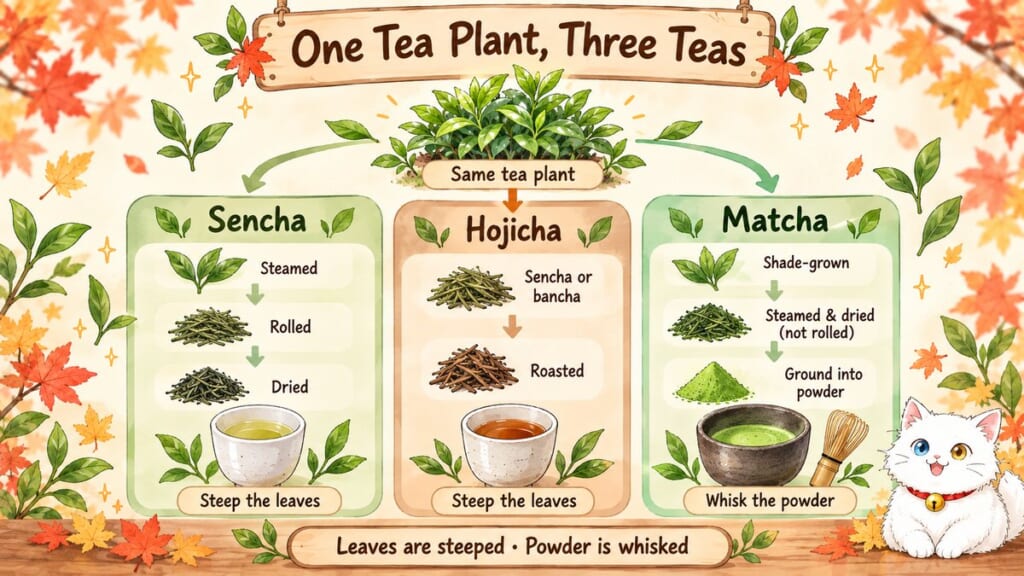
All three come from the same tea plant. Growing and processing methods give you different flavors and different ways to prepare the cup, which is the useful part when you’re shopping.
Sencha is made by steaming, rolling, and drying fresh tea leaves. Hojicha is sencha or bancha roasted over strong heat. Matcha is finely ground tencha: leaves grown under shade, then steamed and dried without rolling before being milled.
You’ll also see gyokuro, shaded for about 20 days before picking, and kabusecha, shaded for about a week. Genmaicha combines sencha or bancha with roasted brown rice. Keep that last name in mind if green tea plus a toasted-rice aroma sounds appealing.
 For your first order, the practical distinction is simple: sencha and hojicha leaves are steeped and removed, while matcha powder is whisked into the water. That difference tells you more about tomorrow’s cup than a long list of growing regions.
Pick by Taste First: Grassy, Toasty or Full-On Matcha
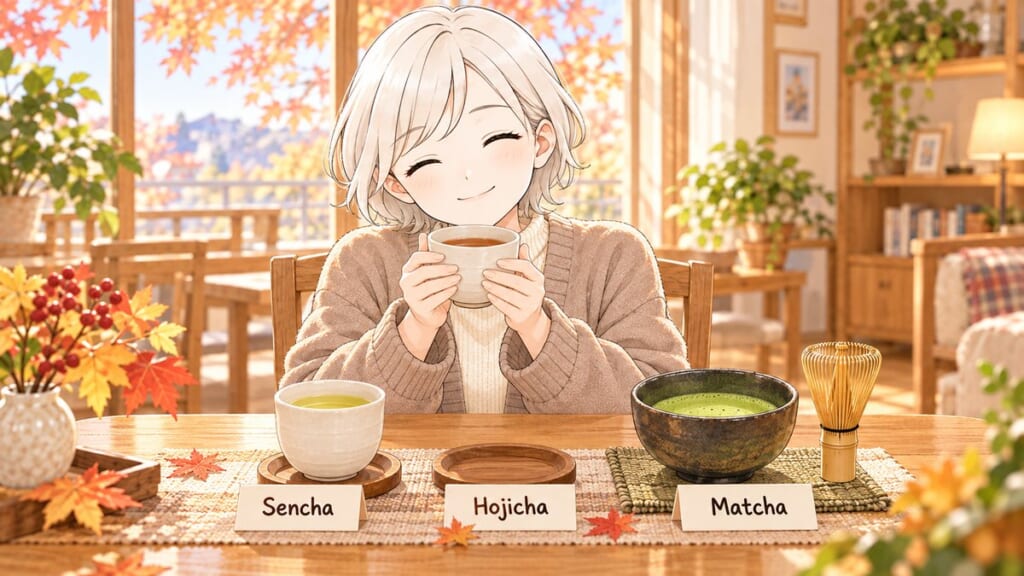
Choose hojicha when you want roasted aroma and relatively little astringency, sencha for a fresh, grassy flavor with some sweetness, and matcha for a concentrated taste that can include bitterness. Astringency means that slightly dry, puckering feeling in your mouth.
If you like sweet drinks, hojicha is a useful place to begin, but its toasted flavor isn’t sugar sweetness. Matcha made with water will also taste different from a sweet café latte, where milk and sugar are part of what you enjoy.
Many new tea drinkers on Reddit say the choices feel overwhelming, and some say they like sweet flavors but not bitter or grassy ones. That points to a helpful shopping question: which flavor would you willingly drink a whole cup of?
Give that answer more weight than an impressive tin. A mild, toasty tea that sounds inviting is a better first choice for a bitterness-averse beginner than a concentrated matcha bought only because the name is familiar.
Tea Bags, Loose Leaf or Powder? Start Here, Not With the Fancy Tin
Tea bags are the easiest starting format when you want one cup with little preparation. The amount of tea is already portioned, and a mug and hot water are enough; follow the packet’s instructions and remove the bag when the time is up.
Loose leaf gives you more room to adjust the amount and explore different preparations. You’ll need a way to strain the leaves, commonly a Japanese teapot called a kyusu, and a little more washing up afterward. Choose it if preparing the tea is part of what interests you.
Not sure which kyusu to buy, or what else you actually need? My Japanese teaware guide for beginners starts with one teapot and shows what you can skip.
For matcha powder, plan on a bamboo whisk, called a chasen, and a bowl with room to whisk. This format suits someone who wants to make matcha itself and is happy to add that preparation step.
At home, the adults in my family drink green tea made with tea bags, and I also buy bottled green tea. Tea bags fit ordinary family life very well: you can start with the preparation you’ll actually make time for.
Hojicha: The Easiest First Tea — but Not All Hojicha Tastes the Same
Hojicha is the easiest first choice here if grassy flavors and a dry finish put you off. Its roasted character gives you a different place to start, and it’s one of the teas I drink at home.
Look beyond the word “hojicha” when comparing bags. Some versions contain more stems, others more leaves, and the strength of the roast also changes the result. Check the ingredient list and the seller’s description for clues about the leaf or stem content and roasting style; one hojicha won’t represent every version.
Also check the form before you order. Hojicha powder is ground tea, while a hojicha tea bag is steeped in water and removed. For the simplest first cup, the tea-bag format keeps the preparation familiar.
For loose-leaf hojicha, a standard starting method is boiling water and a short steep of about 30 seconds. Follow the package for tea bags, including its water quantity and timing, so your first mug has a useful starting point for the next one.
Sencha: Everyday Green Tea, and How Not to Make It Bitter
Sencha is the straightforward choice for fresh green tea alongside an everyday meal. If the first cup turns bitter, check the water temperature and steeping time before deciding the tea isn’t for you.
For loose-leaf sencha, start around 70–80°C (about 160–175°F) for 1–2 minutes. Tea bags can have different instructions, so use the temperature and time printed on their box rather than automatically applying the loose-leaf method.
One easy kitchen step is to pour freshly boiled water into your cup first and let it cool before adding it to the tea. A transfer helps the water lose heat; use a thermometer if you want to check the temperature. Once the steeping time is up, separate the drink from the leaves or remove the bag.
A tea bag is also how the adults in my family usually make green tea at home. For your own meal, a tea bag gives you a simple way to try sencha beside lunch without making a pot.
Matcha: Buy Small, Buy Unsweetened — and Read About the 2026 Shortage First
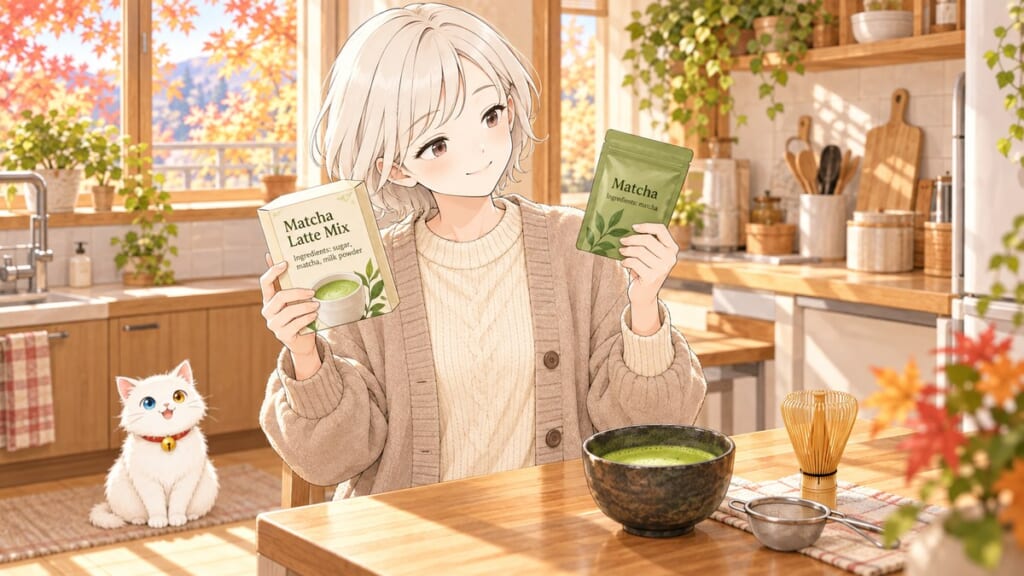
Buy a small pack of unsweetened powder when your aim is to discover matcha’s own flavor. Read the ingredients for matcha alone: sweetened sticks and latte mixes make a different drink, so use the ingredients rather than the package shape to choose.
Sifting helps with lumps. A standard thin-matcha preparation uses 2 g of sifted matcha and 60 mL of water at about 80°C (about 175°F), whisked together; this makes a small serving, rather than a full mug. Start with the maker’s directions when preparing your chosen powder.
As of October 2026, some shops still have matcha shortages and purchase restrictions. If your chosen pack is unavailable, start with sencha or hojicha and return to matcha later; there’s no need to make your first cup depend on a restock.
I also drink green tea with added matcha. A matcha-blended green tea bag is an approachable introduction to that combination, while whisked matcha gives you the taste of the powder itself. Treat “ceremonial grade” and “culinary grade” as sellers’ descriptions rather than official grades; the FAQ explains how to read them.
Morning, With Meals or Evening: Matching Tea to the Moment
Pick a moment that already exists in your day. Sencha or matcha can fit the morning; sencha, hojicha, or genmaicha can sit beside a meal; hojicha’s roasted flavor makes it an appealing evening choice. All three main teas contain caffeine, so check the product’s labeling for information about the amount.
At home, I keep mugicha, a caffeine-free drink made from roasted barley rather than tea leaves, for my children. The adults drink green tea, and the children occasionally have a little green tea too. Mugicha is separate from the three tea-leaf choices in this guide.
 Why Japan does it this way: In Japan, tea served with food is usually unsweetened, both at home and in restaurants. It’s often there to accompany the meal, so you become familiar with the flavor of tea without adding sugar. For a first cup, trying it beside food gives that unfamiliar taste an everyday setting.
For tea to take with you instead of a bottled drink, choose a bottle that fits your daily routine with my guide to Japanese vacuum flasks. Decide on the tea you enjoy at home first, then think about how you’ll carry it.
Our First-Tea Picks You Can Actually Buy Outside Japan
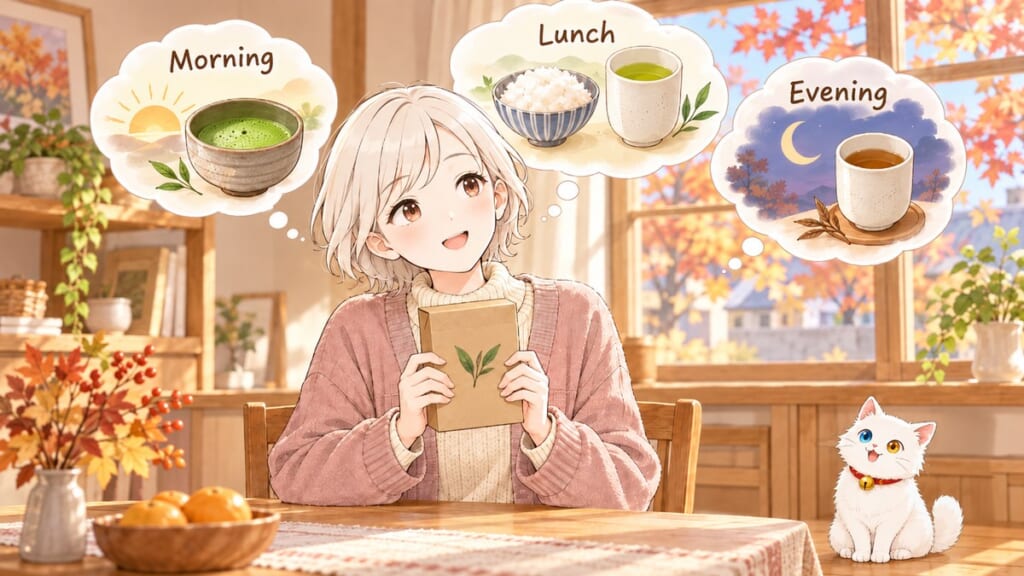
If the listings still feel crowded, return to the cup you pictured earlier. Choose one flavor and one preparation you can repeat at home, then buy that first pack. I selected these options using official information and product-page details; the descriptions below focus on ingredients, format, and where each could fit into your day.
ITO EN Oi Ocha Organic Matcha, 30 g
ITO EN Oi Ocha Organic Matcha is a powder from Japanese tea company ITO EN, with matcha as its only ingredient. It suits you if tasting matcha itself is the goal: sift a small serving into a bowl and whisk it with water in the morning.
ITO EN Oi Ocha Organic Matcha, 30 g
Matcha is the only ingredient. Sift a small serving and whisk it with water.
Prices change often — please check the latest price on each store.
ITO EN Organic Matcha Green Tea Tea Bags, 50 count
ITO EN Organic Matcha Green Tea Tea Bags contain green tea and matcha, and the listing identifies them as made in Japan. Choose this matcha-blended green tea if you want a tea-bag preparation; make a cup beside breakfast using the box’s directions.


ITO EN Organic Matcha Green Tea Tea Bags, 50 count
Green tea blended with matcha, in tea bags. Listed as made in Japan.
Prices change often — please check the latest price on each store.
ITO EN Oi Ocha Premium Matcha Genmaicha Tea Bags, 50 count × 2
ITO EN Oi Ocha Premium Matcha Genmaicha Tea Bags combine rice, green tea, and matcha, with “Made in Japan” on the listing. This two-pack suits someone drawn to toasted rice with green tea: steep a bag to have beside lunch.


ITO EN Oi Ocha Premium Matcha Genmaicha Tea Bags, 50 count × 2
Rice, green tea and matcha. A toasty cup to have beside lunch.
Prices change often — please check the latest price on each store.
Yamamotoyama Sencha Green Tea Bags, 90 bags
Yamamotoyama Sencha Green Tea Bags list green tea as their ingredient. The 90-bag pack suits a household planning to drink sencha regularly; make a mug with a meal, following the box’s temperature and timing.
Yamamotoyama Sencha Green Tea Bags, 90 bags
Everyday sencha in a 90-bag pack. Follow the box for temperature and timing.
Prices change often — please check the latest price on each store.
Maeda-en Japanese Genmai-cha Tea Bags, 100 bags
Maeda-en Japanese Genmai-cha Tea Bags contain roasted brown rice and green tea, with Japan listed as the country of origin. Choose this 100-bag format if toasted-rice tea is your everyday direction, and prepare a cup alongside dinner.


Maeda-en Japanese Genmai-cha Tea Bags, 100 bags
Roasted brown rice and green tea. Japan is listed as the country of origin.
Prices change often — please check the latest price on each store.
Yamamotoyama Hojicha Roasted Green Tea Bags, 16 bags × 6
Yamamotoyama Hojicha Roasted Green Tea Bags contain roasted green tea. The six-box listing suits regular hojicha drinking at home; steep a bag in a mug when you want a toasty cup after dinner.
Yamamotoyama Hojicha Roasted Green Tea Bags, 16 bags × 6
Roasted green tea, sold as six boxes. A toasty cup after dinner.
Prices change often — please check the latest price on each store.
ITO EN Oi Ocha Hojicha Premium Tea Bags, 50 count
ITO EN Oi Ocha Hojicha Premium Tea Bags are a Japanese-market product, with green tea of Japanese origin on the label. Choose this 50-bag box if you want ITO EN’s hojicha for cups at home, made according to the packet’s instructions. This listing is sold and shipped by a third-party seller rather than Amazon, so check the delivery estimate, the best-before date and the condition of the bag when it arrives.


ITO EN Oi Ocha Hojicha Premium Tea Bags, 50 count
A Japanese-market hojicha sold by a third party. Check the best-before date on arrival.
Prices change often — please check the latest price on each store.
If you’re also browsing Japanese products for the shopping season, see my guide to Japanese brands on Black Friday. Keep your tea choice tied to the flavor and format you’ll use.
Buying From Japan Directly: Official Shops That Ship Overseas (and When It’s Not Cheaper)

Official shops give you another route once you know the type of tea you want. Compare the full order, including shipping, duties, and delivery time: ordering directly from Japan isn’t automatically cheaper. The shipping information below is current as of October 2026.
Fukujuen ships from Japan to the United States using DHL. Orders are processed and dispatched within 1–2 weeks, with transit afterward; applicable duties, taxes, and DHL processing fees are collected separately. Its US shipping notice says orders are subject to duties and taxes regardless of value following the August 29, 2025 change.
Nakamura Tokichi uses DHL for international delivery. Allow 5–10 business days for preparation, plus about one week for delivery; applicable import charges are usually paid at checkout, depending on the destination and payment option.
Ippodo serves the United States and Canada from US stock, making this the domestic-shipping option for US readers. Its standard US service takes 3–4 business days in transit. Ippodo withdrew from Amazon US in December 2024 and identifies remaining Amazon sellers as unauthorized third parties, so use its official US shop for Ippodo tea.
Marukyu Koyamaen offers international shipping through EMS or express couriers such as DHL, UPS, and FedEx. Check whether your country is selectable at checkout and consult the shop’s homepage for restock announcements.
For Amazon.co.jp, set your actual delivery address before checking eligibility. Pack sizes can have different shipping availability even when the tea name is the same, so inspect the exact listing you plan to order.
Buying Tea in Japan as a Souvenir: Supermarket, Department Store or the Tea Shop
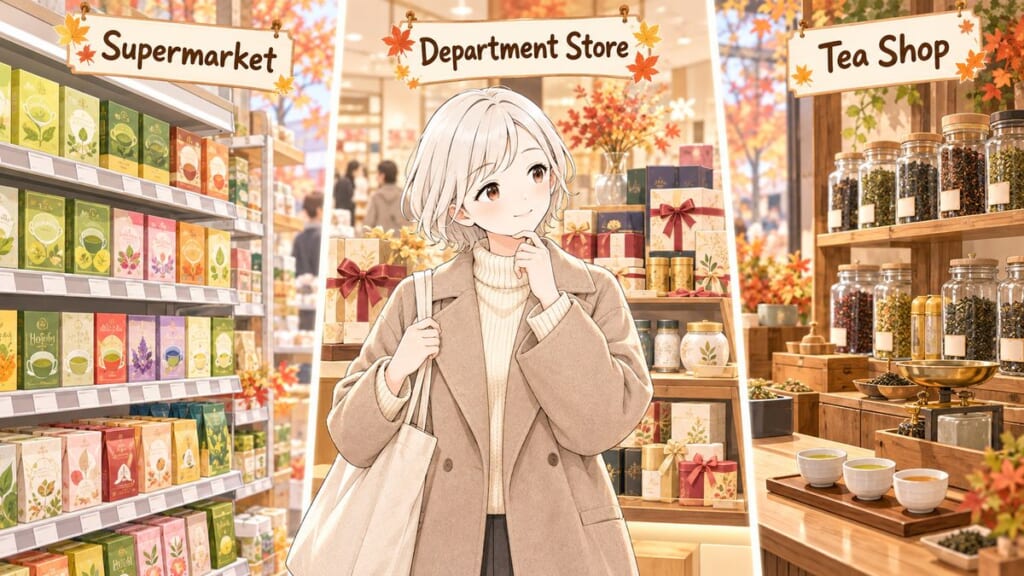
Supermarkets are a useful place to look for everyday brands such as ITO EN and tea-bag formats. Department stores offer gift boxes, while some specialist tea shops, including in Kyoto and Uji, offer tastings or tea sold by weight. Choose the stop that fits what you want to take home.
For a present, match the tea’s preparation to the recipient’s kitchen. More gift ideas are in my guide to Japanese gifts you can buy without going to Japan; for organizing your shopping within a trip, see my Japan trip planning guide. Want something to nibble with the tea? I compare Japanese snack boxes you can buy once, with no subscription.
 At Narita Airport, Fa-So-La ITOEN in Terminal 1’s South Wing, third floor, is after international security and lists 8:00 a.m.–8:00 p.m. hours as of October 2026.
 Plain tea is allowed into many destinations; keep the original packaging and declare it on arrival. Declaration lets officers assess the item—it doesn’t guarantee entry, particularly for blends with added ingredients such as rice or herbs.
| Country | What to do |
|---|---|
| United States | Declare agricultural products. APHIS allows any quantity of products containing only tea leaves; check added ingredients separately. |
| Australia | Declare your tea. Plain black or green tea must be in clean, new, unopened packaging and free of insects or contamination. |
| Canada | Declare all food. Tea for personal use is allowed up to 20 kg. |
| New Zealand | Declare all food, including tea, for biosecurity assessment. |
For other destinations, check your country’s customs guidance before packing. Keeping the ingredient label attached makes it easier to explain what you have.
Keep It Fresh: How to Store Tea Bags, Loose Leaf and Matcha
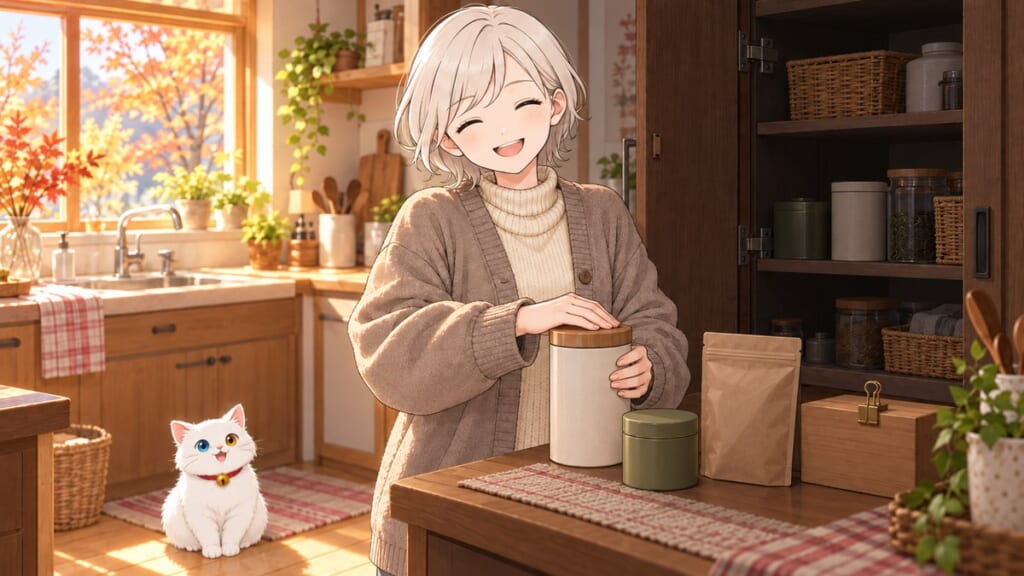
Keep all three formats tightly sealed, away from light, moisture, and strong smells, and use them promptly after opening. Tea bags still need care: close the outer pack properly, and keep loose leaves in a well-sealed bag or container.
For matcha, follow the maker’s storage directions; refrigeration is an option. If you refrigerate it, let the closed container return to room temperature before opening so moisture doesn’t condense on the cold powder.
On Japanese packaging, 賞味期限 means best-before, the period during which the unopened product should retain its expected quality when stored as directed. 消費期限 means use-by, a different date tied to safe consumption. Once the tea is open, follow its storage instructions and aim to finish it while fresh rather than treating the printed date as a countdown for the opened pack.
FAQ
Is hojicha a good tea for beginners?
Yes, particularly if you prefer toasted aromas and little astringency. Tea bags make a simple starting format, and checking the roast description helps you choose among different hojicha styles.
What’s the difference between matcha and sencha?
Matcha is powdered tencha whisked into water, while sencha is steamed, rolled, and dried tea steeped in water. Choose matcha for its concentrated flavor and sencha for a fresh green-tea cup.
Does hojicha have caffeine?
Yes, hojicha contains caffeine because it’s made from tea leaves. Check the product’s labeling for information about the amount.
Is matcha still hard to buy in Japan in 2026?
As of October 2026, some shops still have shortages and purchase restrictions. Check the shop’s current stock information and choose sencha or hojicha if the matcha you want is unavailable.
Can I bring Japanese tea home in my suitcase?
Many countries allow plain tea for personal use, subject to their entry conditions. Declare it on arrival, keep the original packaging, and check all ingredients if you’re bringing a blend.
What does “ceremonial grade” actually mean?
It’s a seller’s description, not an official standardized grade; “culinary grade” is also a selling term. Read the ingredients and preparation guidance to choose a powder intended for the way you want to drink it.
Which sounds like your first cup: toasty hojicha, fresh sencha, or matcha? Tell me in the comments what you choose and how you plan to drink it.
I hope this guide has answered one of your questions and helped you feel a little closer to Japan.
May your Japan journey be filled with wonderful discoveries and memories you’ll treasure for years to come.
See you in the next guide.


Comments