You can enjoy Japan’s fall foliage without spending the whole day on your feet: take a sightseeing train and watch the fall colors over lunch, a bento, or cake. Some trains serve a reserved course meal; others let you buy something after boarding. The difference matters before you book.
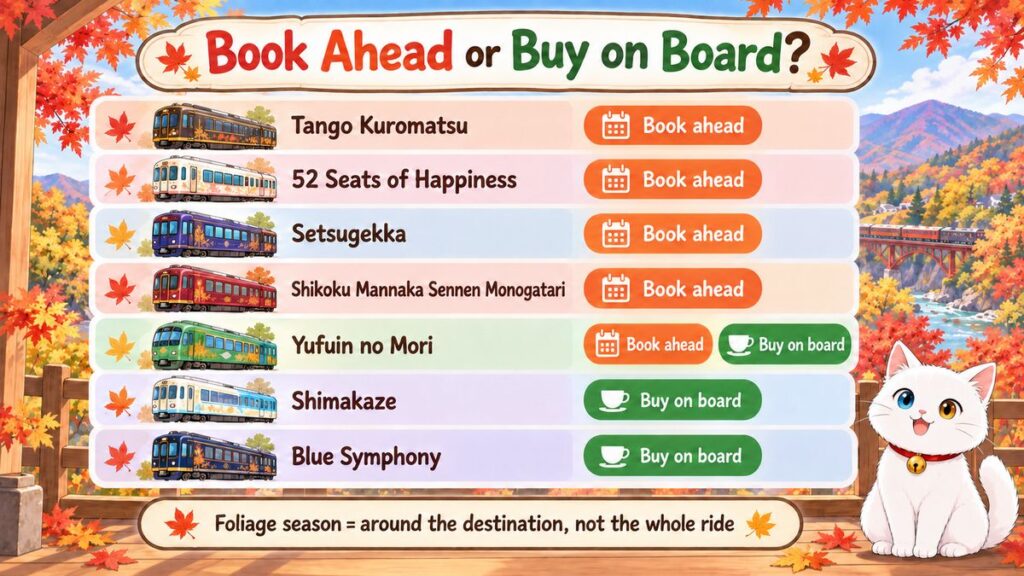
For a full meal, start with Tango Kuromatsu, 52 Seats of Happiness, Setsugekka, or Shikoku Mannaka Sennen Monogatari. For a reserved bento with optional onboard snacks, choose Yufuin no Mori; for food sold onboard, look at Shimakaze or Blue Symphony. A reserved seat makes the ride less tiring, but the food arrangements—and the amount of foliage visible from the train—vary.

- The 7 Trains at a Glance
- Can You Actually Eat on a Train in Japan?
- How These Trains Work: The Seat and the Meal Are Booked Separately
- Tango Kuromatsu (Black Pine Dining Train) — Amanohashidate
- 52 Seats of Happiness — Chichibu / Nagatoro
- Setsugekka — Myoko and Joetsu
- Shikoku Mannaka Sennen Monogatari — Oboke Gorge
- Yufuin no Mori — Hakata to Yufuin
- Shimakaze — Osaka, Kyoto and Nagoya to Ise-Shima
- Blue Symphony (Ao no Symphony) — Osaka to Yoshino
- Which Train Should You Pick?
- Where to Stay Along These Routes
- FAQ
- Your Autumn Choice
The 7 Trains at a Glance
Disclosure: This article contains affiliate links. If you book through one, I may earn a small commission at no extra cost to you.
In a hurry? Where to book each train
- Tango Kuromatsu — WILLER TRAVEL (official English booking)
- 52 Seats of Happiness — Seibu’s English reservation site
- Setsugekka — WILLER TRAVEL (official English booking)
- Shikoku Mannaka Sennen Monogatari — JR Shikoku sightseeing trains
- Yufuin no Mori — seats on Klook
- Shimakaze and Blue Symphony — Kintetsu’s English e-ticket site
Meal deadlines differ by train. Check each section below before you book. Dollar amounts are rough conversions at ¥155 = US$1 (September 2026).
Use this table to choose your food style first. The foliage windows are approximate seasonal guides for the named areas, not a promise of colorful trees throughout your ride.
| Train name | Where | What you eat | Book ahead or Buy on board | Best foliage weeks |
|---|---|---|---|---|
| Tango Kuromatsu / Black Pine Dining Train | Northern Kyoto / Amanohashidate | Reserved dining course | Book ahead: reserve your dining course in advance | Early to late November around Amanohashidate |
| 52 Seats of Happiness | Chichibu; Nagatoro on a special departure | Course meal | Book ahead: normally 11 days before | Mid–late November around Chichibu / Nagatoro |
| Setsugekka | Myoko / Joetsu / Itoigawa | Regional meal | Book ahead: noon, 3 days before | Mid–late October around Myoko |
| Shikoku Mannaka Sennen Monogatari | Oboke Gorge | Reserved regional meal | Book ahead: 4 days before via tabiwa; other channels vary | Mid–late November around Oboke |
| Yufuin no Mori | Hakata–Yufuin | Reserved bento; onboard sweets and drinks | Book ahead: bento, 3 business days before; Buy on board: snacks | Early–mid November around Yufuin / Kyusuikei |
| Shimakaze | Osaka / Kyoto / Nagoya–Ise-Shima | Café dishes and bento | Buy on board: food is sold onboard | Foliage is secondary; timing varies along the route |
| Blue Symphony | Osaka-Abenobashi–Yoshino | Cake set and persimmon-leaf sushi | Buy on board: food is sold onboard | Early November to early December around Yoshino |
For seat comfort and the wider Kansai train comparison, use 8 Kansai Trains Worth Paying Extra For. Here, the focus is what you can eat and how to arrange it.
Can You Actually Eat on a Train in Japan?
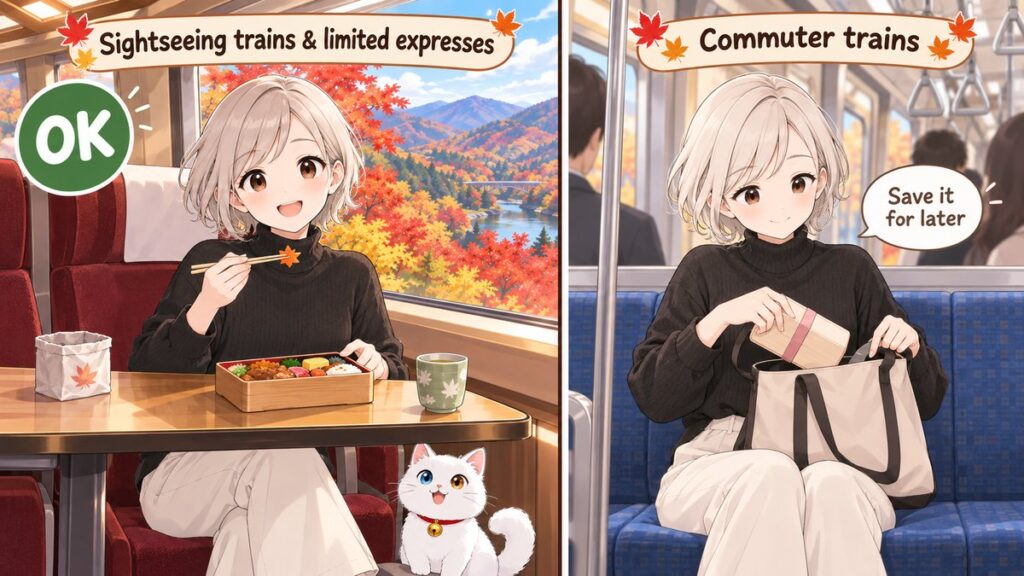
Yes—eating is normal on sightseeing trains designed for dining, long-distance limited expresses, and the Shinkansen. Buying an ekiben, a boxed station meal, before a Shinkansen journey is a familiar part of rail travel in Japan; on commuter trains and short local journeys, save your meal for later.
 Choose food without a strong smell, and keep wrappers together in a small bag to take away. If you drink alcohol where it is permitted, keep it quiet and follow the train’s rules; you can enjoy a drink with lunch while keeping the carriage peaceful.
 As a mother in Japan, I’d leave a little room in the day for a child’s appetite, too. Restaurant trains can restrict outside food, so ask about a child’s lunch before packing it; for a less tiring itinerary beyond the train, see my guide to avoiding crowds in Japan.
How These Trains Work: The Seat and the Meal Are Booked Separately
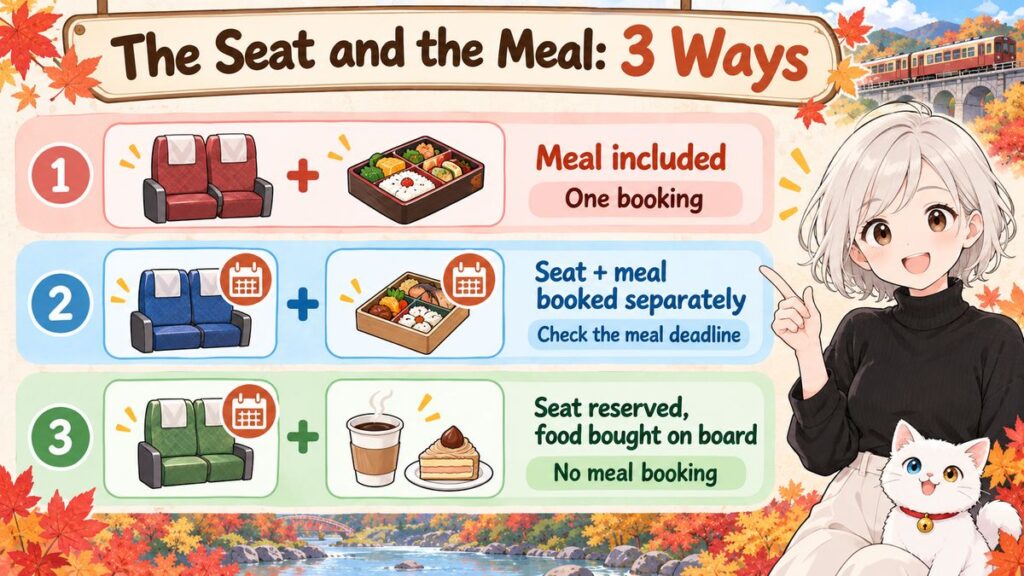
Your seat and your meal are the two parts to arrange. Some dining trains bring them together in one meal-inclusive package; on Yufuin no Mori, you reserve a bento separately from your seat. Putting the food deadline beside the travel date keeps both easy to follow.
 Food-related deadlines range from 3 days or 3 business days before departure to 11 days ahead. Business days exclude weekends and Japanese public holidays; Shikoku’s deadline also varies by sales channel, so use the deadline on the booking page you actually choose.
Start planning before arrival: autumn seats can fill quickly, and some are sold through dedicated operator pages. Restaurant trains may open bookings earlier than ordinary tickets.
A nationwide Japan Rail Pass covers a reserved seat on Yufuin no Mori without an extra charge. Shikoku Mannaka Sennen Monogatari is entirely Green Car seating: with an Ordinary Car pass, both the Green Car charge and limited-express charge are extra, plus the ¥6,300 (about $41) meal. The other five trains are operated by non-JR companies and are outside the pass; Is the Japan Rail Pass Worth It? helps with the wider calculation.
Tango Kuromatsu (Black Pine Dining Train) — Amanohashidate
Tango Kuromatsu, also called the Black Pine Dining Train, suits you if food is the main event of your northern Kyoto day. Start with the English reservation calendar at WILLER TRAVEL’s Tango Kuromatsu page. I’d choose the course first, then build the day around its starting and finishing points.
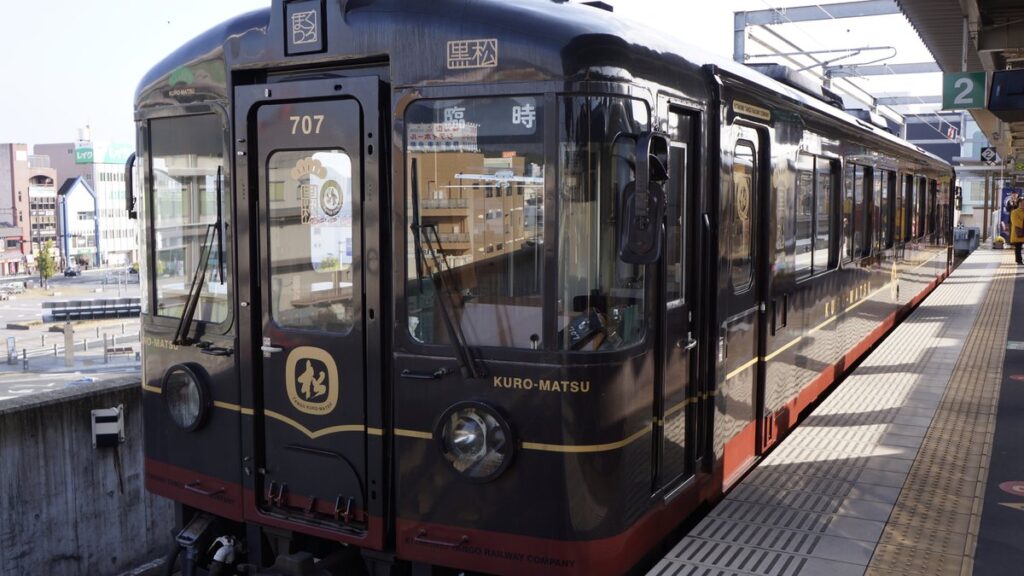
For October 2026 through March 2027, the morning course costs ¥6,800 (about $44) and runs from Fukuchiyama to Amanohashidate in about 1 hour 40 minutes. It leaves the afternoon free to explore around Amanohashidate.
The lunch course costs ¥15,000 (about $97) and runs from Amanohashidate to Nishi-Maizuru in about 1 hour 45 minutes. The local fish course also connects Amanohashidate and Nishi-Maizuru, at ¥7,500 (about $48) for about 1 hour 20 minutes. Choose by the meal and direction together, rather than treating these as different seat prices for the same journey.
Operating days are Fridays, Saturdays, Sundays, and public holidays. Reserve your dining course in advance through the calendar, keeping the course name and departure details together for the station.
Children pay the adult price; children under 3 can ride free on an adult’s lap without a meal. For a family, deciding who needs a meal of their own will help you see the whole cost before choosing a course.
Around Amanohashidate, early to late November is the foliage window. Coastal scenery is part of the appeal too, so think of this as a meal with varied views and autumn leaves in the surrounding area.
Stay overnight? Stays around Amanohashidate on Agoda let you compare a local base for time around Amanohashidate or an onward visit to Ine. Choose somewhere convenient for the end of your course.
52 Seats of Happiness — Chichibu / Nagatoro
52 Seats of Happiness brings a course meal into a day out from Tokyo. Use the 52 Seats of Happiness English reservation site for its dedicated English reservation site, where you book the train journey and meal together.
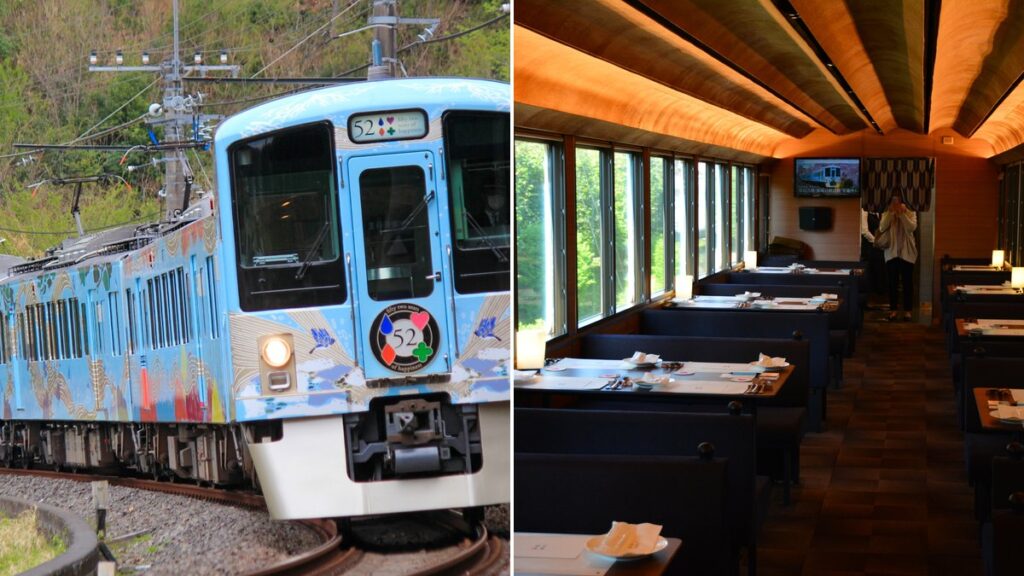
For autumn 2026, the brunch course costs ¥16,000 (about $103) and takes about 2 hours 30 minutes to 3 hours. The dinner course costs ¥19,000 (about $123) and takes about 2 hours 30 minutes. A daytime course gives you more light for the leaves; dinner suits a day when the meal is your main event.
Here is the detail I’d put first for a solo traveler: reservations are for 2–4 people sharing a table, so you cannot book for one person. Children, including infants, pay the same price as adults. If you are planning a family outing, count everyone when working out the total.
Outside food and drinks are not allowed. Read the menu together before choosing a departure, and ask directly about any dietary needs so the meal suits everyone at your table.
The normal booking cutoff is 11 days before departure. Dates are released month by month, and January 2027 bookings open on October 8, 2026. When I checked in mid-September, the brunch course was already sold out from October through December, so look at the official calendar early and keep a backup date in mind.
Nagatoro’s foliage window is mid- to late November. The separate Nagatoro foliage train is scheduled for November 21, 2026, at ¥27,000 (about $174) per person for groups of 2 to 4. Booking for this special departure is in Japanese only.
Choose the special departure if Nagatoro is the journey you want. Keeping the regular Chichibu service and that special trip separate makes it easier to match your reservation to the autumn day you have in mind.
Setsugekka — Myoko and Joetsu
Setsugekka is a splurge option for an autumn visit to Myoko and Joetsu. Book through WILLER TRAVEL’s Setsugekka page and choose the direction that fits the rest of your route.
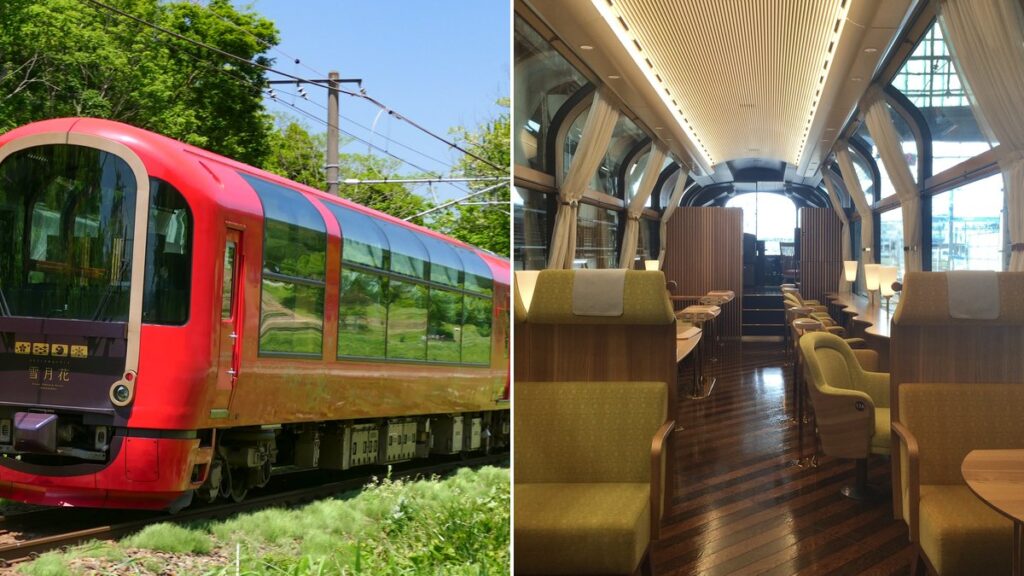
For autumn 2026, the price is ¥29,800 (about $192) for adults and children alike, with food supplied by four local establishments. If it were my family’s trip, the menu and the cost for everyone would be the starting point for choosing this special meal.
Unlike 52 Seats of Happiness, Setsugekka accepts a booking for one person in Car 1. That makes it an option when you want a dining-train day on your own, without needing someone else to share the reservation.
From September 19 to November 29, the schedule has a morning and an afternoon departure. The morning journey leaves Joetsumyoko at 10:35 and reaches Itoigawa at 13:16; the afternoon leaves Itoigawa at 13:59 and reaches Joetsumyoko at 16:45. Allow about 2 hours 40–45 minutes for the ride.
Online bookings close at noon 3 days before departure. Keeping the meeting instructions with your reservation leaves you free to enjoy the day once you reach the departure station.
Across the wider Myoko area, autumn color stretches from late September to early November; Imori Pond’s window is mid- to late October. Use mid–late October around Myoko as your starting point for this itinerary, allowing for seasonal variation. Treat a visit to a particular foliage spot as a separate part of the day from the rail journey.
Stay overnight? Myoko and Akakura Onsen stays on Agoda are useful for adding an onsen stay. A manageable transfer from your arrival station helps the evening feel as relaxed as the ride.
Shikoku Mannaka Sennen Monogatari — Oboke Gorge
If river valleys appeal more than another city stop, I’d make room for Shikoku Mannaka Sennen Monogatari. Start with JR Shikoku’s sightseeing train page: the train connects Tadotsu and Oboke, with different meals in each direction.
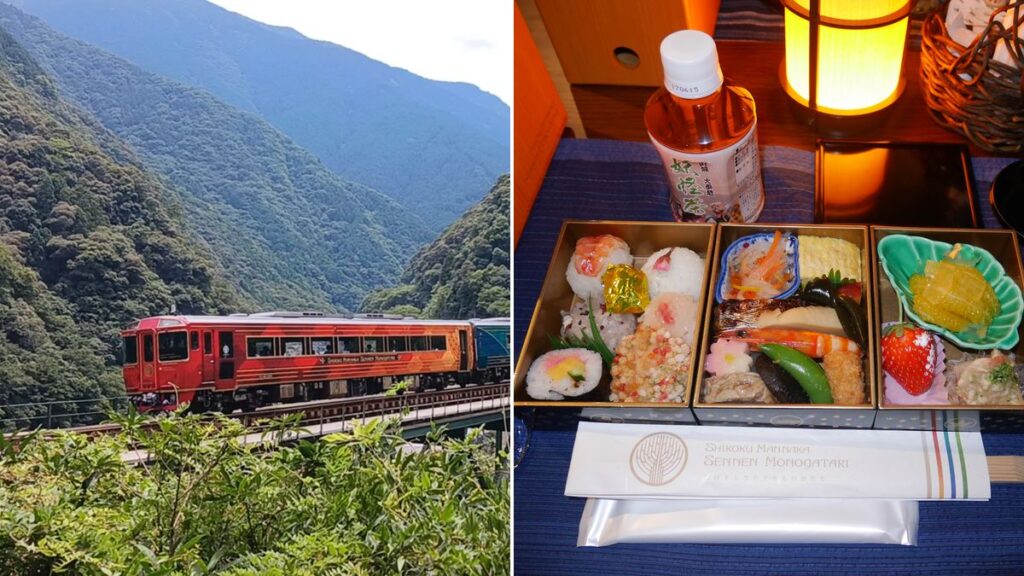
The meal costs ¥6,300 (about $41) for journeys from October 2, 2026, with rail tickets paid separately. Allow about 2 hours 30 minutes outbound and 3 hours on the return journey. Oboke’s foliage window is mid- to late November; the train has 32 operating days across October and November, mainly Fridays, weekends, and public holidays.
For an online meal order before leaving home, use tabiwa by WESTER. It accepts orders until 4 days before travel, and provides an electronic ticket to show on your smartphone. You need a free WESTER membership and a card in your own name (Visa, Mastercard, JCB, or Diners; not American Express). The site does not say whether cards issued outside Japan work, so have a backup plan. Arrange your train seat first so you have the details for the food order.
Other meal-booking routes include station counters until 4 days before travel and JR Shikoku’s reservation center until 10 days before, with payment by bank transfer. Keeping to one route makes the food deadline easier to follow.
Seats for solo travelers are available. For children aged 6 to under 12, the basic fare and limited-express charge are half the adult amounts, while the Green Car charge is the same as an adult’s. The train is entirely Green Car seating, so allow for both the Green Car and limited-express charges if using an Ordinary Car Japan Rail Pass.
Stay overnight? Stays in the Oboke and Iya area on Agoda can turn the onward valley journey into a more relaxed visit. Choose a property with a manageable station transfer, especially when keeping the walking light is part of your plan.
Yufuin no Mori — Hakata to Yufuin
Yufuin no Mori suits you if you want scenery, something local to eat, and freedom after arriving in Yufuin. You can book a seat through Klook’s Yufuin no Mori page; a bento is a separate order from your train seat.
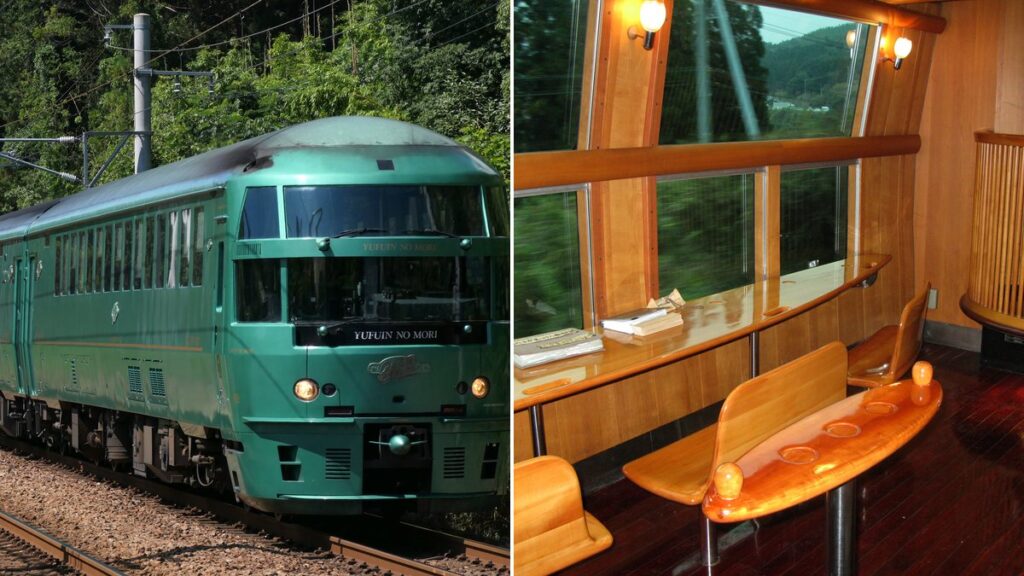
You can reserve a bento or buy sweets and drinks onboard when the usual service is operating. That leaves room for either a planned lunch or a lighter ride, depending on your appetite.
Bento orders open 1 month before travel and close 3 business days before; only weekdays count, excluding Japanese public holidays. JR Kyushu’s official bento instructions explain the ordering route. You need a Google or LINE account to log in, and payment is taken in advance by card or QR payment, not onboard. The ordering site does not say whether cards issued outside Japan are accepted, and it is designed to work in Google Chrome.
I’d keep the seat and bento details together, especially on a family trip with several reservations. Matching the date and train before ordering makes the food part easier to manage.
For your ticket, book the train seat on its own: Klook’s Yufuin no Mori page lets you choose your date and train, and JR Kyushu’s English reservation service is the official alternative.
Be careful with day tours from Hakata that put Yufuin no Mori in the title. The popular one I checked is mainly a bus tour: you ride only a short section of the line, and that train ticket is not included in the price.
The Kyudai Main Line brings countryside and valley scenery into the journey. Early to mid-November is the foliage window around Yufuin’s Lake Kinrin and Kyusuikei; these destination-area windows help you plan your trip, rather than promising continuous color from the train.
For October–November 2026, service continues throughout the period, but the train you choose matters for food. On October 14–16, October 19–23, and November 30, Yufuin no Mori Nos. 3 and 4 are replaced by the regular Yufu limited express, with no onboard sales. If eating onboard is part of your plan, choose Nos. 1, 2, 5, or 6 on those dates; these use the older trainset then.
Vehicle faults also caused cancellations of Nos. 3 and 4 this summer, so take a final look at the official operating information before departure. It is a small step that helps you choose the journey you are looking forward to.
Stay overnight? Yufuin stays on Agoda let you compare an unhurried afternoon and a local stay with returning to Hakata. For a family, that breathing room may be more useful than adding another stop.
Shimakaze — Osaka, Kyoto and Nagoya to Ise-Shima
On the next two trains, food is sold onboard. Shimakaze is a useful choice when you want to decide after boarding whether lunch, a bento, or something lighter suits your appetite.
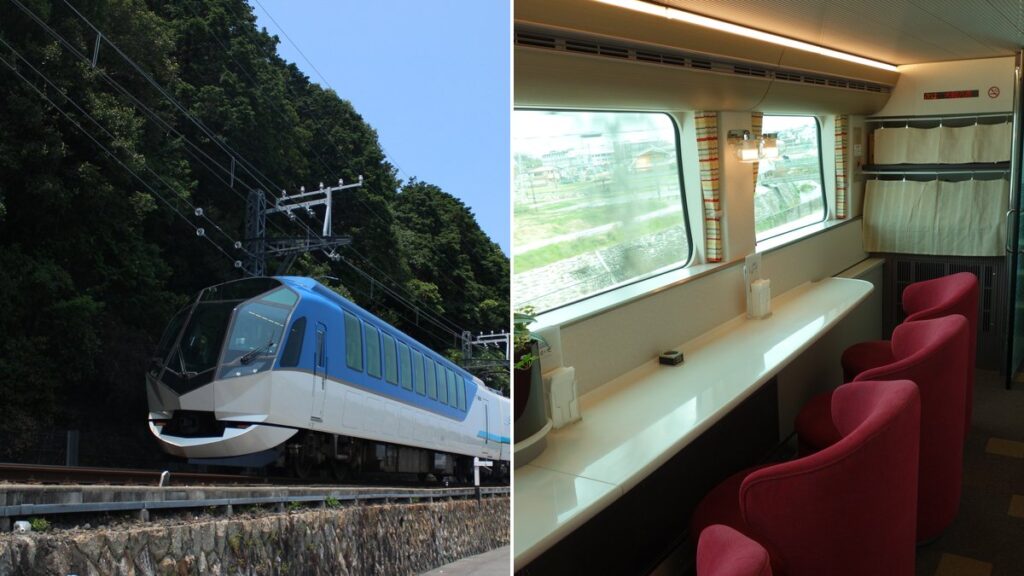
Its café car makes eating part of the journey to Ise-Shima. Menu prices as of September 2026 include the Matsusaka beef rice box at ¥2,000 (about $13) and the Shimakaze bento at ¥1,600 (about $10); these are food prices, separate from the cost of travel. The departure’s current menu will give you your choices, with availability depending on the service and remaining stock.
Arrange the rail journey through Kintetsu’s English e-ticket service, which sells the limited-express reservation. Allow for the basic fare and the applicable Shimakaze supplement too. With the travel arranged, you can leave the food choice until you are onboard.
The café is a shared space, and there may be a wait for a table. For children, choosing a couple of appealing food options early leaves more time to enjoy the view. Having another choice in mind helps if the first sells out.
Food and Ise-Shima are the main reasons to choose Shimakaze. Autumn color can add to the mountainous Osaka route, while each starting route offers different scenery.
Osaka-Namba–Kashikojima services take about 2 hours 23 minutes and have Tuesdays off. Kyoto–Kashikojima takes about 2 hours 45 minutes, with Wednesdays off; Kintetsu-Nagoya–Kashikojima takes about 2 hours, with Thursdays off.
For the seat comparison, go to 8 Kansai Trains Worth Paying Extra For; stay overnight using Ise-Shima stays on Agoda only if that gives you a more relaxed visit the following morning.
Blue Symphony (Ao no Symphony) — Osaka to Yoshino
Blue Symphony, also called Ao no Symphony, suits a Yoshino outing when cake and a drink sound more appealing than a formal lunch. Reserve the train through Kintetsu’s English e-ticket site, then choose your food from the onboard sales menu.
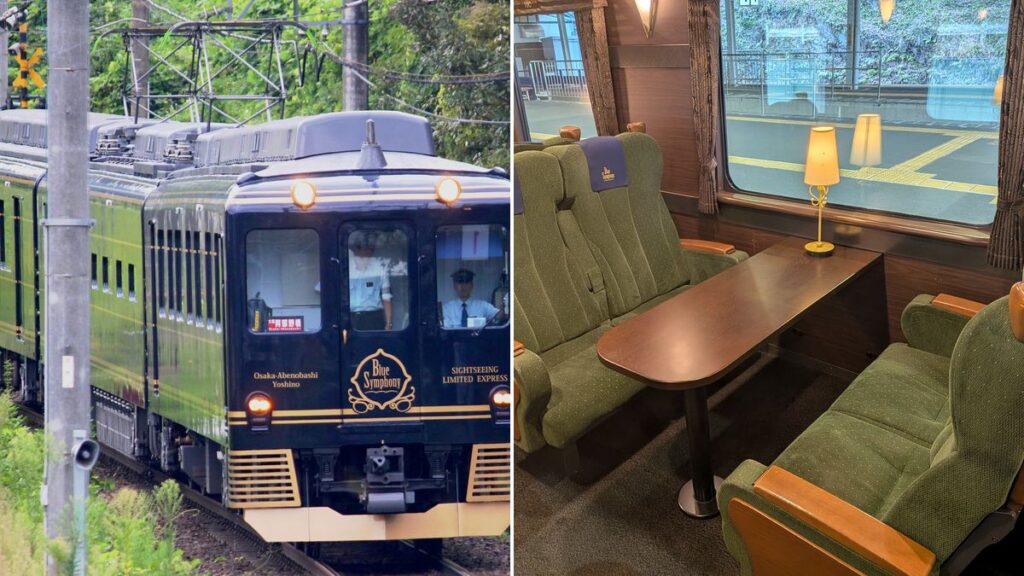
For autumn 2026, the seasonal original cake set is ¥1,500 (about $10) with coffee or tea, and persimmon-leaf sushi is ¥550 (about $4). These are food charges in addition to the train fare, and limited quantities mean your preferred item may sell out.
The lounge car offers a café-like pause for food and drinks. Allow a little time if the tables are busy.
The journey from Osaka-Abenobashi to Yoshino takes about 1 hour 17 minutes, with two round trips on operating days and Wednesdays off. Choosing the outward and return journeys together leaves a comfortable amount of time in Yoshino. Search for Osaka-Abenobashi as your departure station; it is separate from Osaka Station.
Early November to early December is the foliage window around Yoshino. Much of Yoshino’s autumn sightseeing continues beyond the station. If hills are difficult, choose an arrival-day plan that suits your pace, with the train providing a seated break along the way.
For seats, see 8 Kansai Trains Worth Paying Extra For. Stay overnight? Compare Yoshino stays on Agoda alongside Kyoto Autumn Leaves Without the Crowds, which includes Yoshino accommodation, and choose somewhere you can reach comfortably from the station.
Which Train Should You Pick?
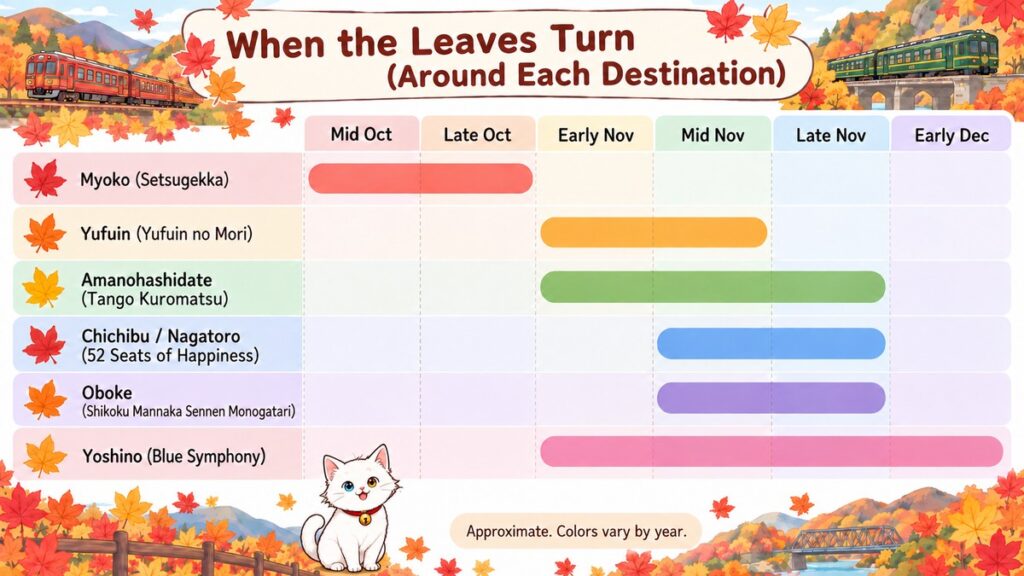
Start with your travel week, then your appetite and budget. These windows can move with the season, so use them to narrow the region rather than promise a particular shade of red.
| Decision | How to choose |
|---|---|
| Budget band | Lighter food spending: Yufuin no Mori, Shimakaze, Blue Symphony, plus rail fares. Reserved dining: Tango Kuromatsu and Shikoku. Splurge: 52 Seats of Happiness and Setsugekka. Compare complete travel costs, not a meal-only price with a package. |
| Foliage week | Mid–late October around Myoko; early–mid November around Yufuin / Kyusuikei; early to late November around Amanohashidate; mid–late November around Nagatoro and Oboke; early November to early December around Yoshino. |
| Journey length | Tango Kuromatsu: about 1 hr 20 min–1 hr 45 min by course; 52 Seats of Happiness: about 2 hr 30 min–3 hr; Setsugekka: about 2 hr 40–45 min; Shikoku Mannaka Sennen Monogatari: about 2 hr 30 min outbound / 3 hr return; Yufuin no Mori: about 2 hr 15 min; Shimakaze: about 2 hr–2 hr 45 min by departure city; Blue Symphony: about 1 hr 17 min. |
| Children | Adult prices apply to children on Tango Kuromatsu, 52 Seats of Happiness, and Setsugekka; Tango Kuromatsu has a free under-3 lap/no-meal exception. 52 Seats requires 2–4 people and prohibits outside food and drinks; Setsugekka accepts solo bookings. On Shikoku, ages 6–under 12 pay half the basic fare and limited-express charge, but the adult Green Car charge. |
| Booking difficulty | Shimakaze and Blue Symphony sell food onboard. Yufuin no Mori needs a separate bento order; dining trains use meal packages or separate food reservations. Shikoku’s food deadline depends on the sales channel. |
Allow for a cool platform and a warmer carriage when packing. What to Wear in Japan in Autumn helps you choose layers for both.
Where to Stay Along These Routes
Stay nearby for a gentler evening or an earlier start. Popular places may still be busy, but you gain more choice over your timing.
Compare a stay in Yufuin with returning to Hakata after Yufuin no Mori. For Blue Symphony, Yoshino stays on Agoda and Kyoto Autumn Leaves Without the Crowds cover local stay options.
After Tango Kuromatsu, stays around Amanohashidate on Agoda can help you find a base for more time around the coast. Allow a separate onward journey if adding Ine.
For Setsugekka, consider Myoko and Akakura Onsen stays when adding an onsen stay, and stays near Oboke and Iya after Shikoku Mannaka Sennen Monogatari when the valley is part of your plan. Both choices need a realistic station-to-hotel transfer.
After Shimakaze, a stay in Ise is worth comparing with a Toba base if you want more time in Ise-Shima. If you only want the train and a short visit, keeping your existing hotel may be simpler.
FAQ
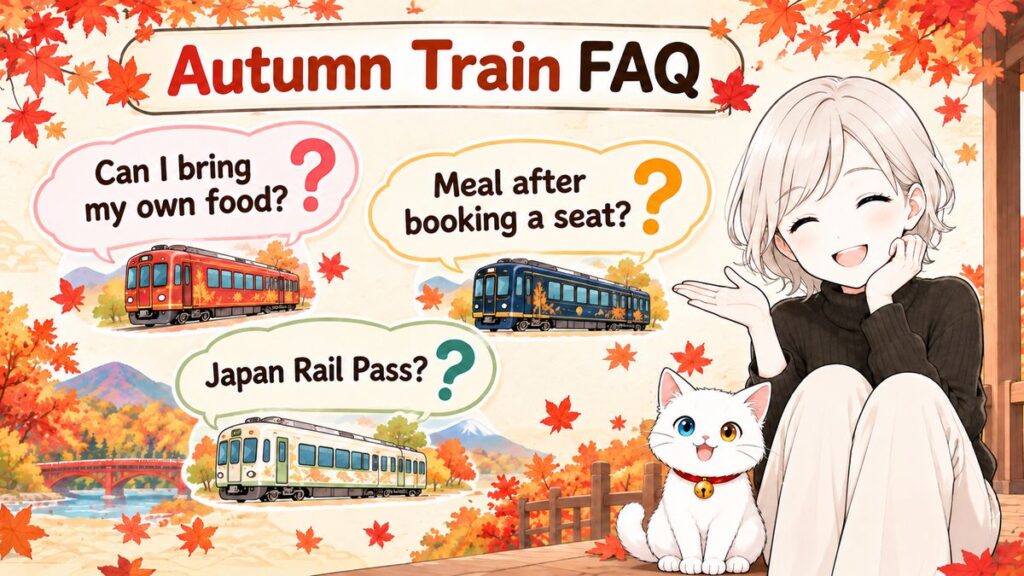
Can I eat my own food on a Japanese train?
Usually yes on the Shinkansen and long-distance trains where eating at your seat is normal; avoid meals on commuter trains. Dining trains can restrict outside food, so check the specific service and take your rubbish with you.
Can I book just the meal after I already have a seat reservation?
Yes where a separate food reservation is offered and the deadline has not passed, such as Yufuin no Mori’s advance-order bentos. For a meal-inclusive dining package, follow the package conditions instead of buying a second meal reservation.
Can I use the Japan Rail Pass on these trains?
Yufuin no Mori: the nationwide Japan Rail Pass covers a reserved seat without an extra charge.
Shikoku Mannaka Sennen Monogatari: an Ordinary Car pass requires both the Green Car and limited-express charges, plus the ¥6,300 (about $41) meal.
Tango Kuromatsu, 52 Seats of Happiness, Setsugekka, Shimakaze, and Blue Symphony: these non-JR trains are not covered; see Is the Japan Rail Pass Worth It?.
Your Autumn Choice
- Tango Kuromatsu: a reserved dining course paired with northern Kyoto scenery.
- 52 Seats of Happiness: a dining package from the Tokyo area, with Nagatoro available as a separate special departure.
- Setsugekka: a regional meal and a Myoko-area autumn itinerary.
- Shikoku Mannaka Sennen Monogatari: Oboke Gorge, with rail travel and food both arranged.
- Yufuin no Mori: a reserved bento or onboard snacks on your way to Yufuin.
- Shimakaze: café food bought onboard during an Ise-Shima journey.
- Blue Symphony: cake or persimmon-leaf sushi on the way to Yoshino.
Choose a ride that fits your route and appetite, then start with its booking window. Build the day around that meal and view. My 7-step Japan trip planning guide can help you place it in the wider trip.
Check Yufuin no Mori seats on Klook
Which one would you like to ride this autumn? Tell me in the comments.
I hope this guide has answered one of your questions and helped you feel a little closer to Japan.
May your Japan journey be filled with wonderful discoveries and memories you’ll treasure for years to come.
See you in the next guide.


Comments